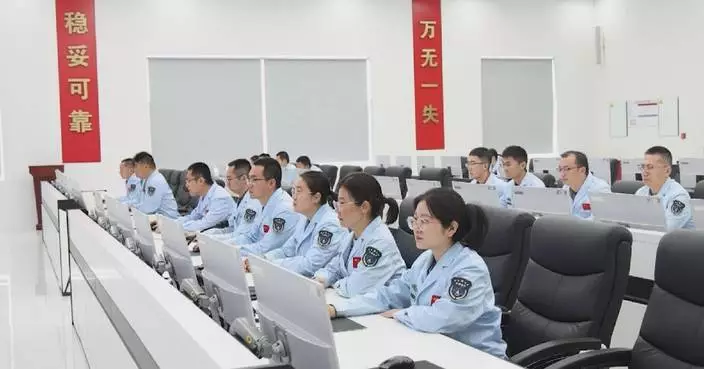
Chinese engineers are focusing on the research and development of a next-generation crewed spacecraft named Mengzhou (literally meaning "Dream Craft"), after it completed a zero-altitude escape flight test on Tuesday, marking a key milestone in the country's lunar exploration program.
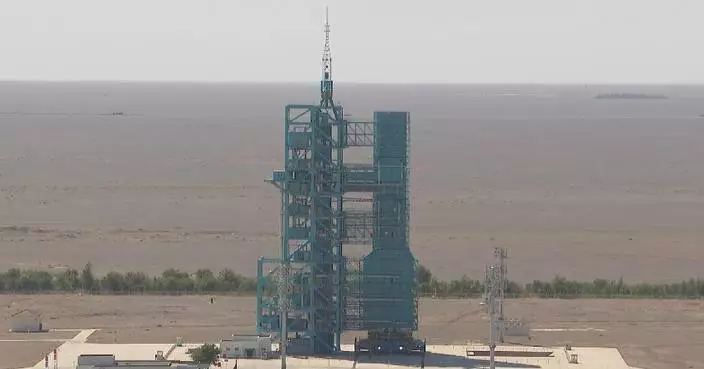
The test was carried out at the Jiuquan Satellite Launch Center in northwest China at 12:30 Beijing time (0430 GMT). The spacecraft's escape engine ignited successfully, propelling the capsule-tower assembly upward. About 20 seconds later, the return capsule separated from the escape tower at the predetermined altitude. Two minutes later, the capsule landed safely in the designated area using an airbag cushioning system.
It was the country's first zero-altitude escape test for a manned spacecraft in 27 years. China's last such test was in 1998 for the Shenzhou manned spacecraft.
Mengzhou has previously completed a number of tests, including verification of the electronic system and testing of the entire ship. A flight test will be conducted in future to comprehensively verify its overall performance.
"The Mengzhou manned spacecraft is in the final stage of prototype sample development. After completing this zero-altitude escape test, our entire development team will shift all focus onto the prototype development, targeting the maiden flight of the Mengzhou manned spacecraft," said Yu Kang, a manned spacecraft designer with China Aerospace Science and Technology Corporation.
Mengzhou is a new-generation manned space-to-ground round-trip transport vehicle which is independently developed by China for the subsequent manned spaceflight missions.
Consisting of a return capsule and a service module, the spacecraft is planned to have two core types -- the low-Earth version capable of carrying up to seven astronauts to and from China's space station and the lunar version capable of sending three astronauts to the moon.

Chinese engineers focus on research, development of next-generation crewed spacecraft
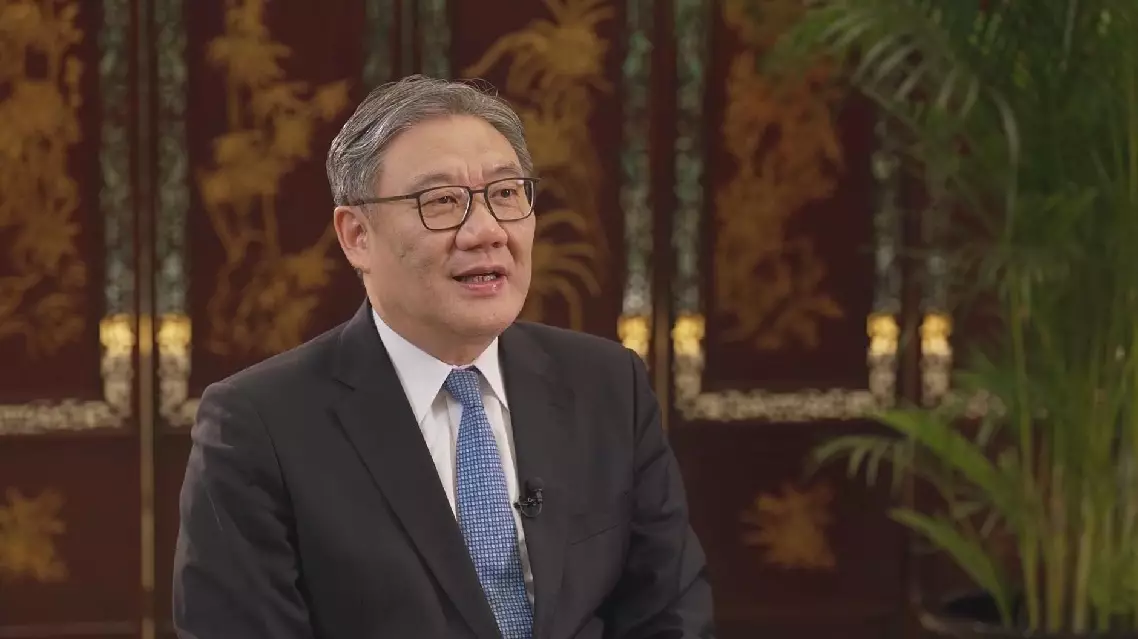
China's Minister of Commerce Wang Wentao outlined the key priorities of the 32nd Asia-Pacific Economic Cooperation (APEC) Ministers Responsible for Trade Meeting, which opened on Friday in Suzhou, East China's Jiangsu province.
In an interview with CGTN ahead of the two-day meeting, Wang said free trade, digital cooperation and green economy are high on the agenda of the meeting.
"The key areas include advancing regional economic integration and the Free Trade Area of the Asia-Pacific, supporting the World Trade Organization (WTO) in strengthening digital cooperation and developing green economy. At present, the international situation is marked by intertwined turbulence and chaos, with intensified geopolitical instability. The rise of unilateralism and protectionism poses serious challenges to the international economic and trade order, disrupting global and Asia-Pacific development. Against this backdrop, all parties have higher expectations for this trade ministers' meeting, hoping that it can build consensus and deliver outcomes," Wang said.
This year marks China's third time hosting the APEC meetings and the 35th anniversary of its membership.
By 2025, China had become the largest trading partner of 13 APEC economies. Trade between China and APEC economies reached 3.7 trillion U.S. dollars, accounting for 57.8 percent of China's total foreign trade.
China has signed 24 free trade agreements or economic and trade arrangements with 31 countries and regions, including 15 APEC economies. In recent years, China has also completed upgrades of free trade agreements with APEC economies such as Singapore and Peru.
The minister said that China has always been a firm supporter and an important contributor to APEC.
"We have actively shared our vast market and development opportunities with all parties. China's door to the world will only open wider and wider. Facing the common challenges, China will continue to fulfill its responsibilities as a major country, further deepen reform, expand high-standard opening-up, and continue to provide new opportunities for the Asia-Pacific region and the world with its new achievements in Chinese modernization," the minister said.
China's Commerce Minister outlines priorities for 32nd APEC trade ministers' meeting