Skip to Content Facebook Feature Image

In rural Alaska, a village turns to solar and biomass energies to cut diesel and save money

News

In rural Alaska, a village turns to solar and biomass energies to cut diesel and save money
News

News

In rural Alaska, a village turns to solar and biomass energies to cut diesel and save money

2025-06-19 06:03 Last Updated At:06:12

GALENA, Alaska (AP) — Eric Huntington built his dream cabin nestled in the wilderness of central Alaska, eventually raising two daughters there. But over the years, he learned that living in this quiet, remote village came with a hefty cost.

Every year, the Huntington family spent about $7,000 on diesel to heat the cabin during bone-chilling winters, and a few years back, a power outage at the town's diesel plant left residents freezing in minus 50 F (about minus 45 C). When power finally returned hours later, water pipes had frozen, leaving about two dozen homes without running water for days.

More Images
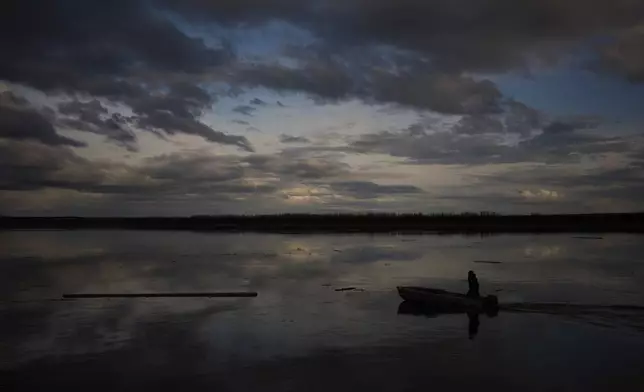
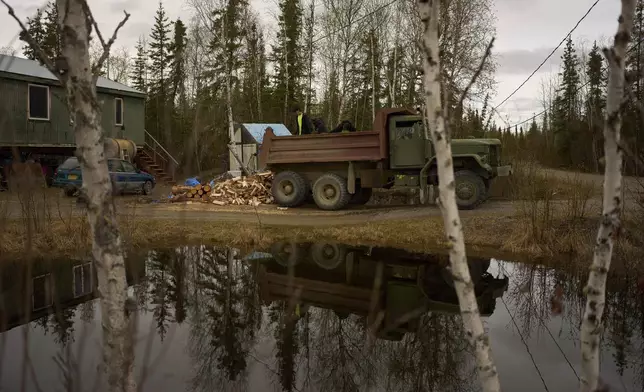
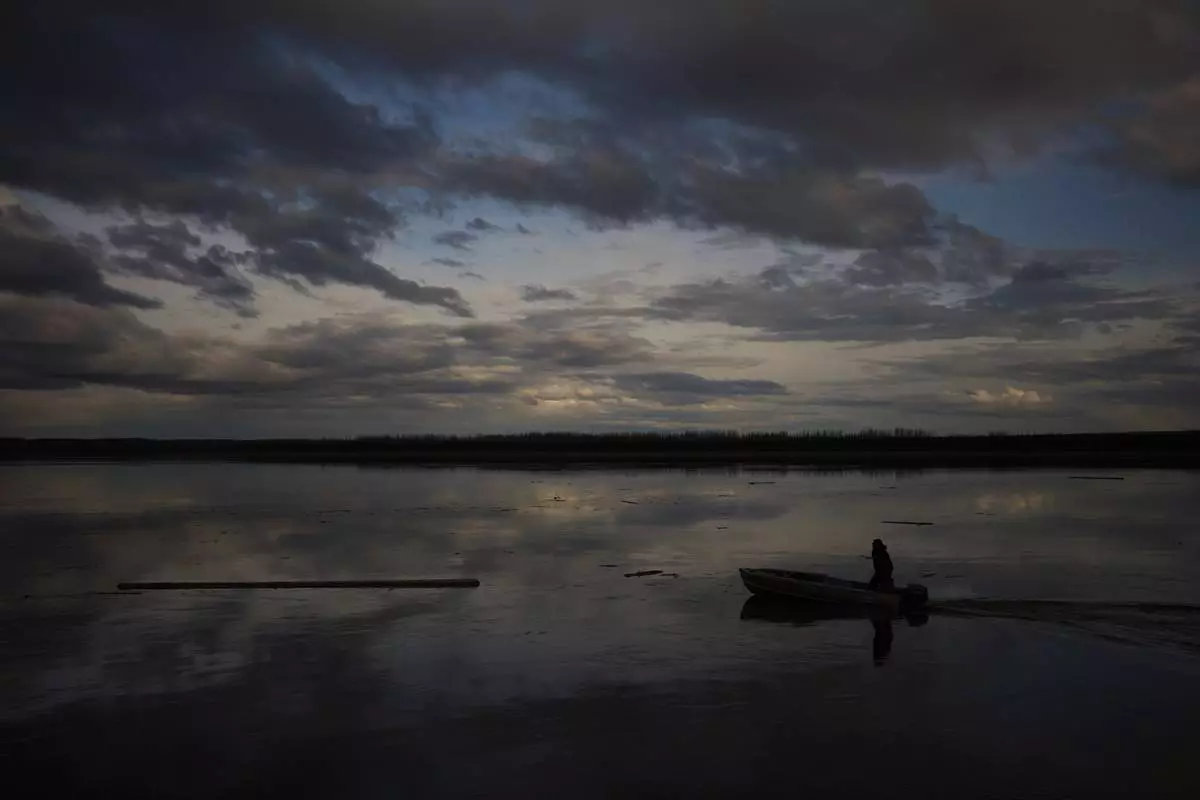
Jake Pogrebinsky collects a log floating down the Yukon River to be used for firewood or construction Tuesday, May 20, 2025, in Galena, Alaska. (AP Photo/John Locher)
Jake Pogrebinsky collects a log floating down the Yukon River to be used for firewood or construction Tuesday, May 20, 2025, in Galena, Alaska. (AP Photo/John Locher)

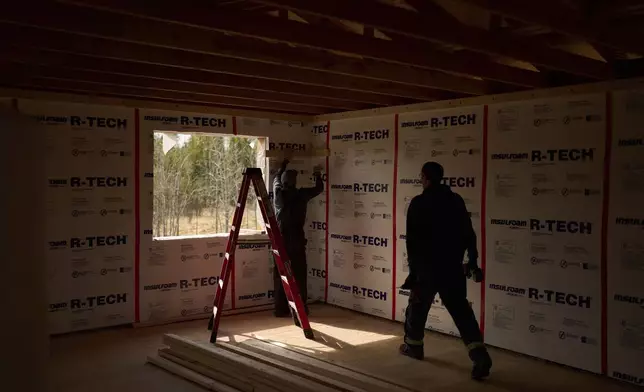
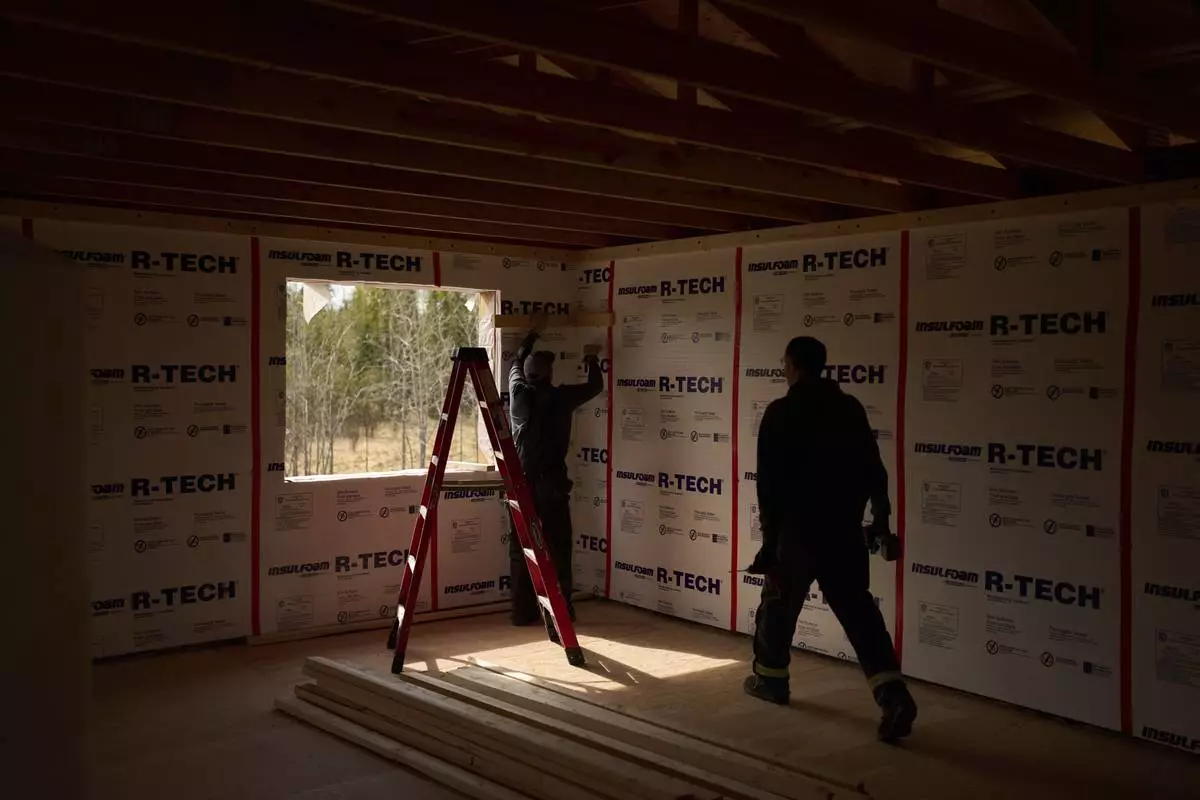
Joe Cleaver II, left, and Derrick Esmailka build an energy efficient home Thursday, May 22, 2025, in Galena, Alaska. (AP Photo/John Locher)
Joe Cleaver II, left, and Derrick Esmailka build an energy efficient home Thursday, May 22, 2025, in Galena, Alaska. (AP Photo/John Locher)

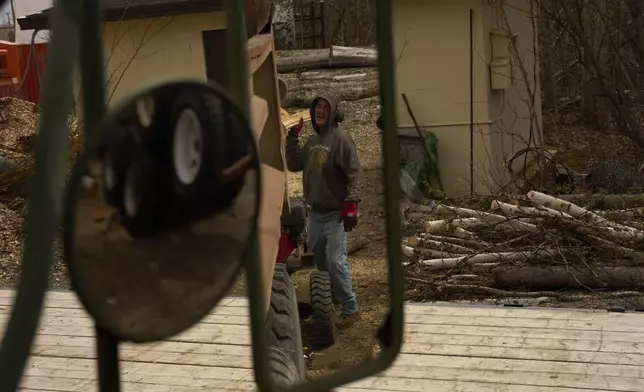
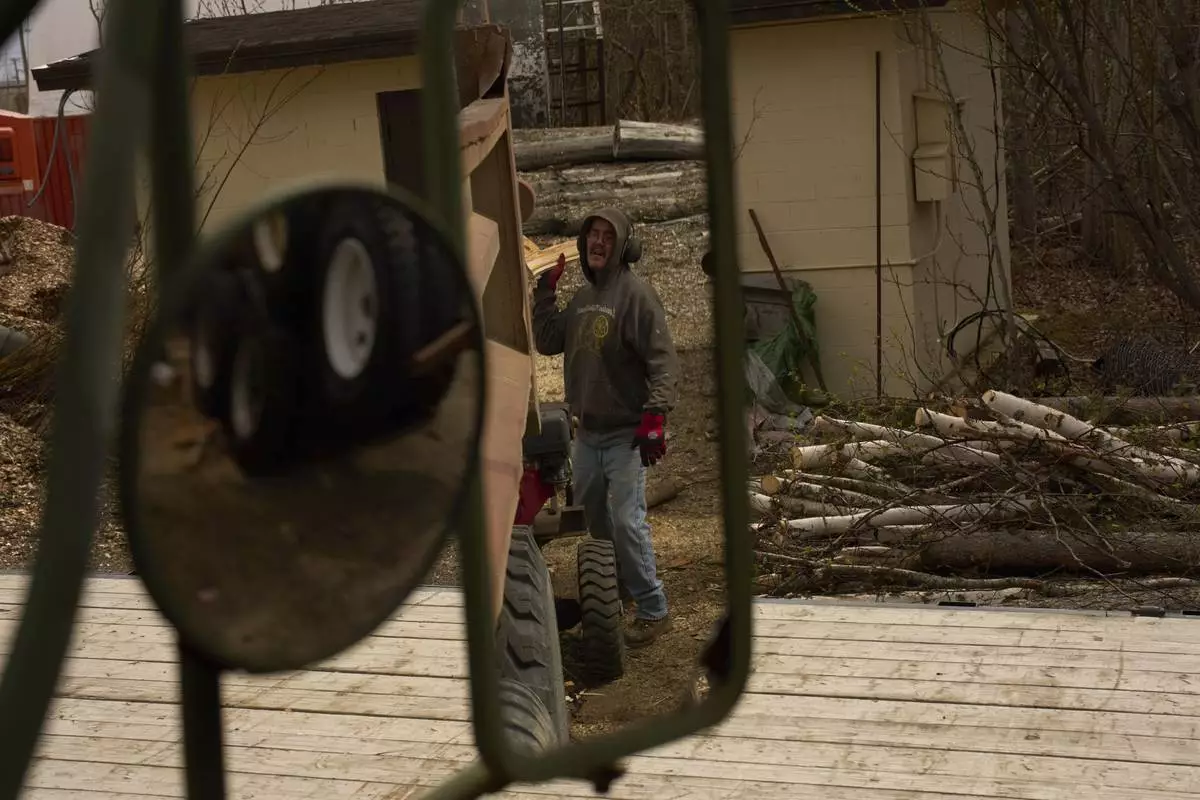
Morris Demoski tosses a split log into the back of a dump truck Thursday, May 22, 2025, in Galena, Alaska. (AP Photo/John Locher)
Morris Demoski tosses a split log into the back of a dump truck Thursday, May 22, 2025, in Galena, Alaska. (AP Photo/John Locher)

Nathan Moses, from left, Morris Demoski and Marissa McCarty deliver wood to an elder Monday, May 19, 2025, in Galena, Alaska. (AP Photo/John Locher)
Nathan Moses, from left, Morris Demoski and Marissa McCarty deliver wood to an elder Monday, May 19, 2025, in Galena, Alaska. (AP Photo/John Locher)

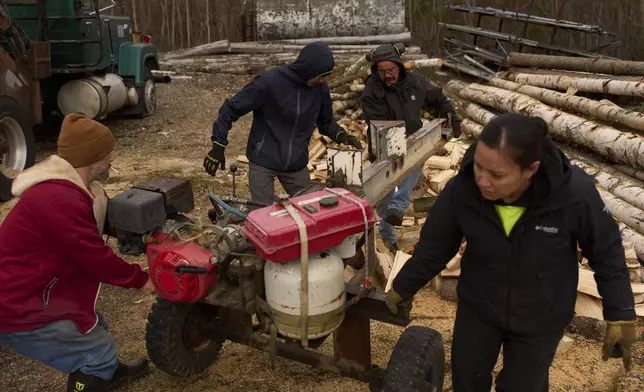
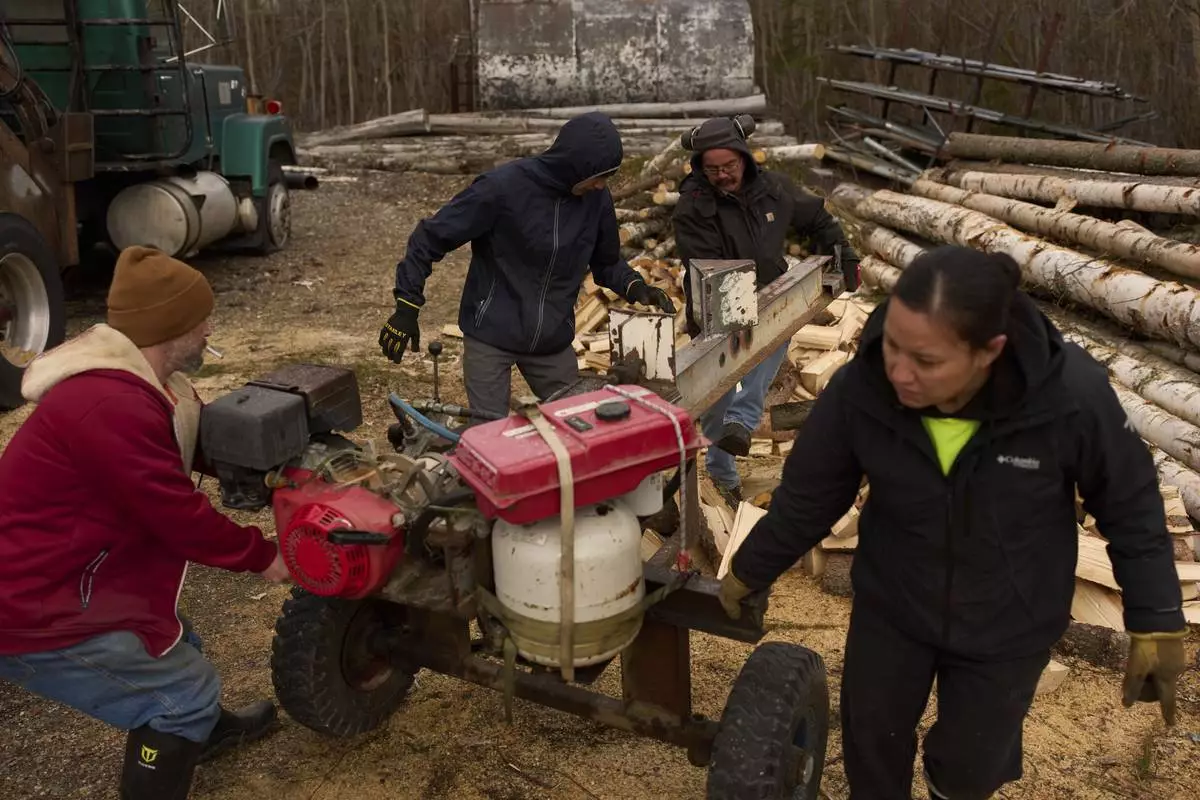
Workers with the Sustainable Energy for Galena, Alaska, from left, James Strong, Nathan Moses, Morris Demoski and Marissa McCarty move a log splitting machine before cutting wood to deliver to elders in the community Monday, May 19, 2025, in Galena. (AP Photo/John Locher)

Workers with the Sustainable Energy for Galena, Alaska, from left, James Strong, Nathan Moses, Morris Demoski and Marissa McCarty move a log splitting machine before cutting wood to deliver to elders in the community Monday, May 19, 2025, in Galena. (AP Photo/John Locher)

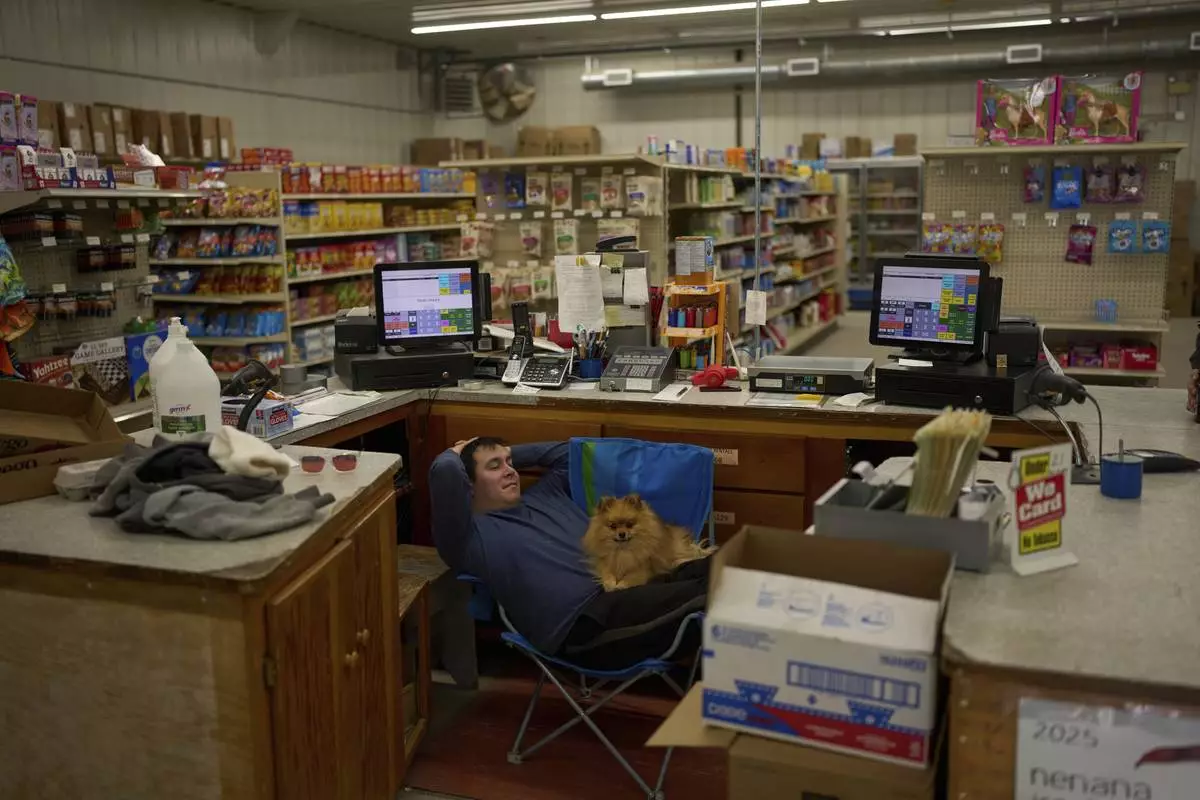
Brenden Sweetsir waits with dog Rex for customers at Sweetsirs store Wednesday, May 21, 2025, in Galena, Alaska. (AP Photo/John Locher)
Brenden Sweetsir waits with dog Rex for customers at Sweetsirs store Wednesday, May 21, 2025, in Galena, Alaska. (AP Photo/John Locher)

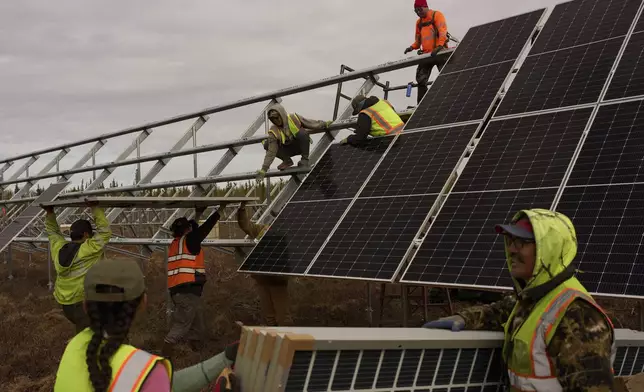
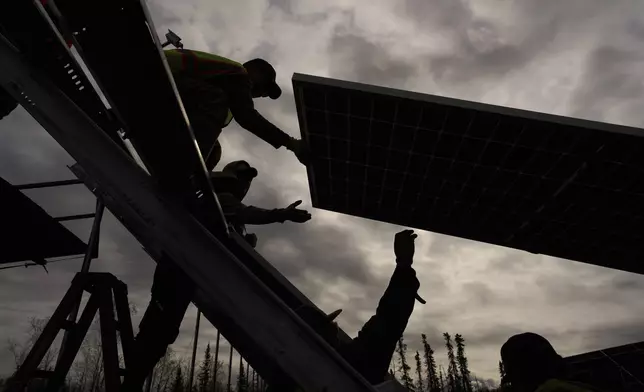
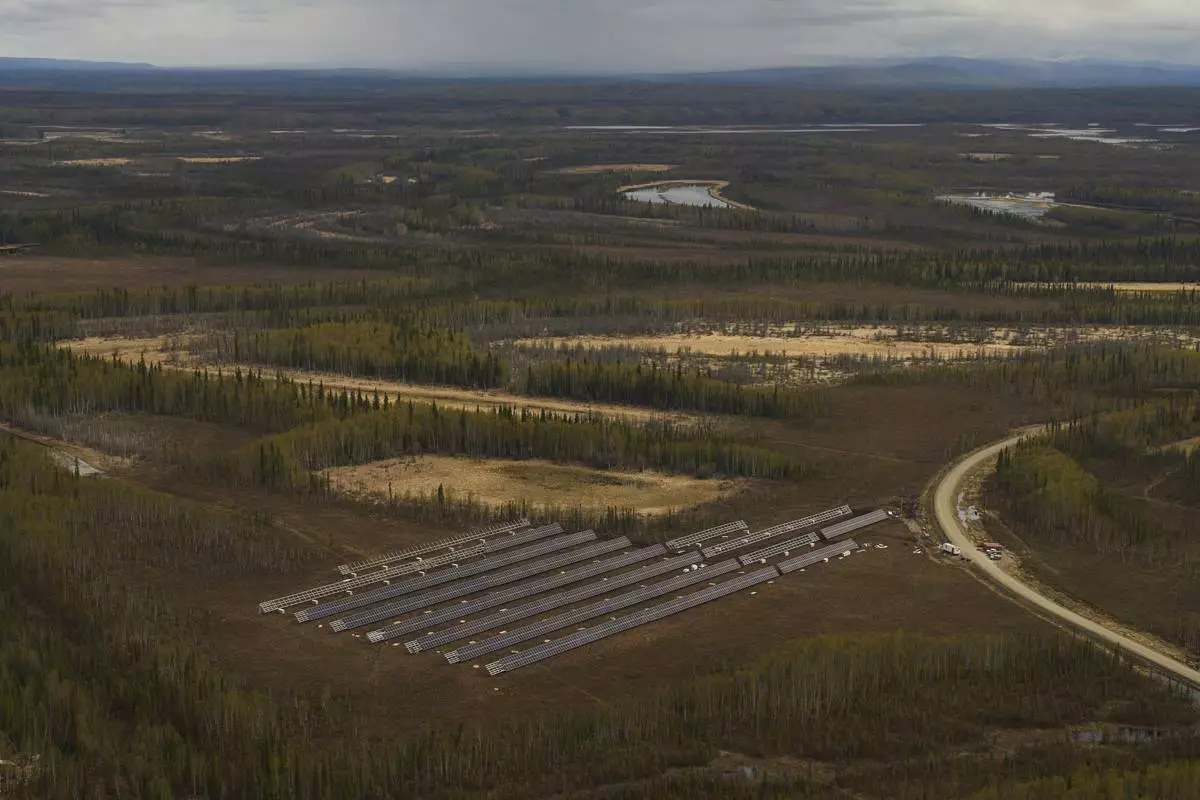
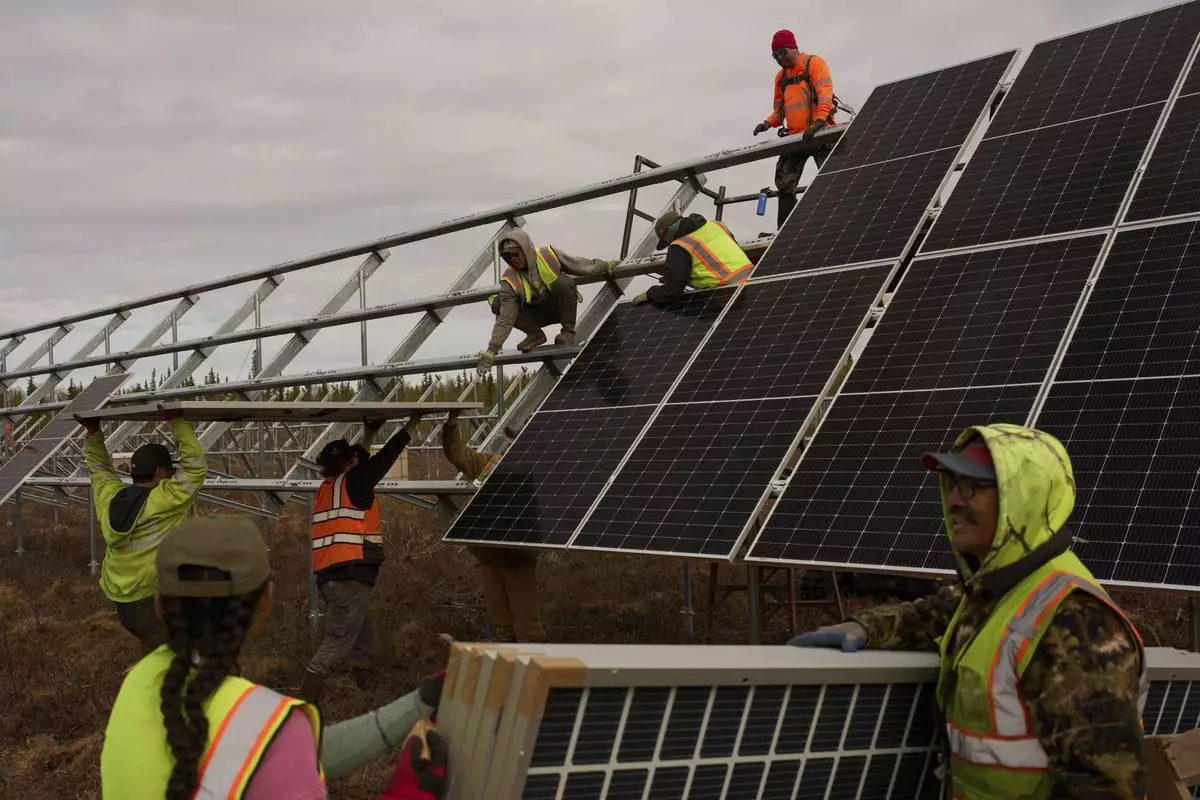
Workers install panels for a solar energy project Wednesday, May 21, 2025, in Galena, Alaska. (AP Photo/John Locher)
Workers install panels for a solar energy project Wednesday, May 21, 2025, in Galena, Alaska. (AP Photo/John Locher)

Workers install panels at a solar project Wednesday, May 21, 2025, in Galena, Alaska. (AP Photo/John Locher)
Workers install panels at a solar project Wednesday, May 21, 2025, in Galena, Alaska. (AP Photo/John Locher)

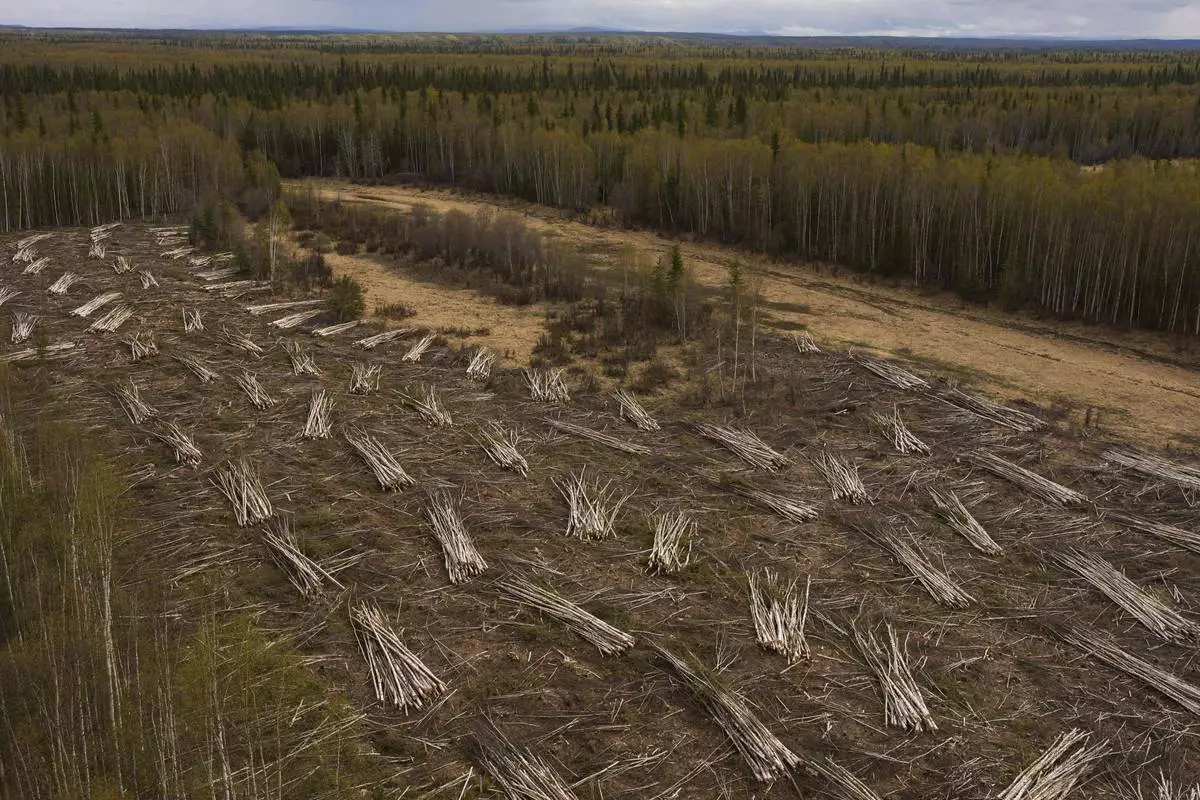
Piles of logs harvested by Sustainable Energy for Galena, Alaska, sit out to dry to be used in a biomass heating system at the Galena Interior Learning Academy, on Wednesday, May 21, 2025, in Galena. (AP Photo/John Locher)
Piles of logs harvested by Sustainable Energy for Galena, Alaska, sit out to dry to be used in a biomass heating system at the Galena Interior Learning Academy, on Wednesday, May 21, 2025, in Galena. (AP Photo/John Locher)

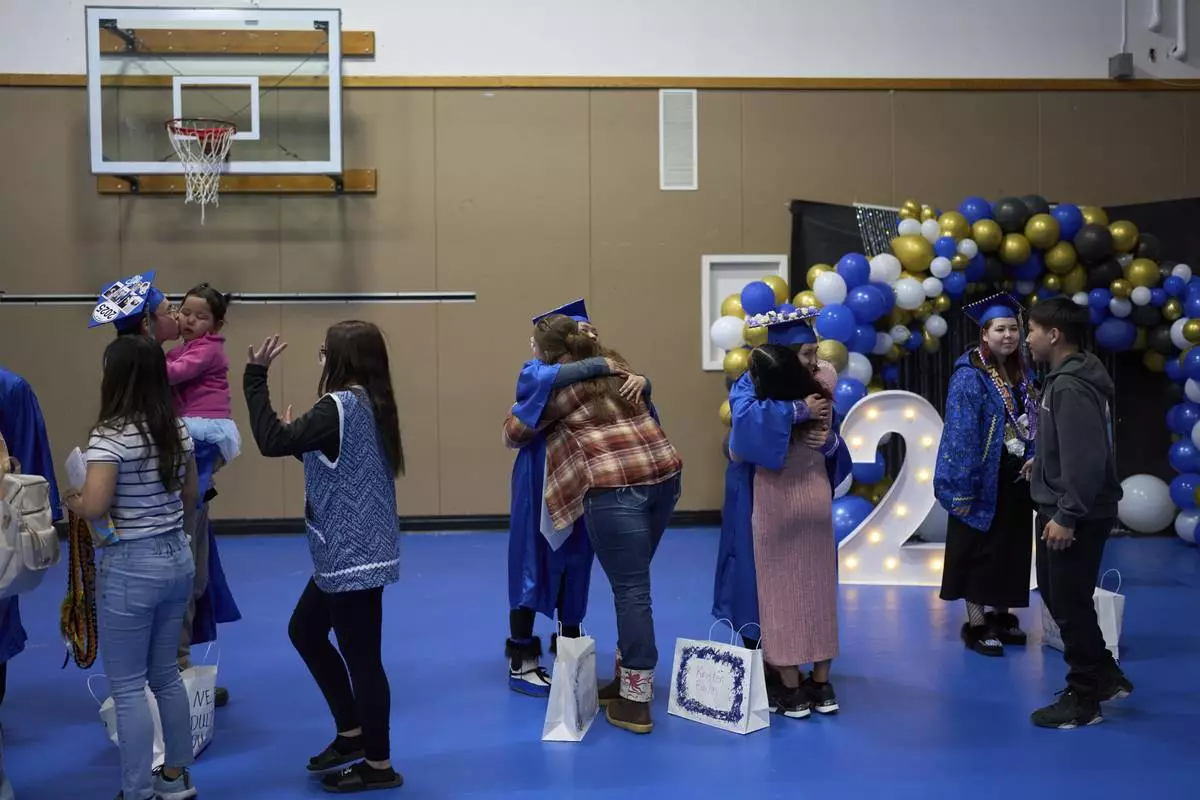
Community and family members congratulate graduating students from the Galena Interior Learning Academy during a ceremony Wednesday, May 21, 2025, in Galena, Alaska. (AP Photo/John Locher)

Community and family members congratulate graduating students from the Galena Interior Learning Academy during a ceremony Wednesday, May 21, 2025, in Galena, Alaska. (AP Photo/John Locher)

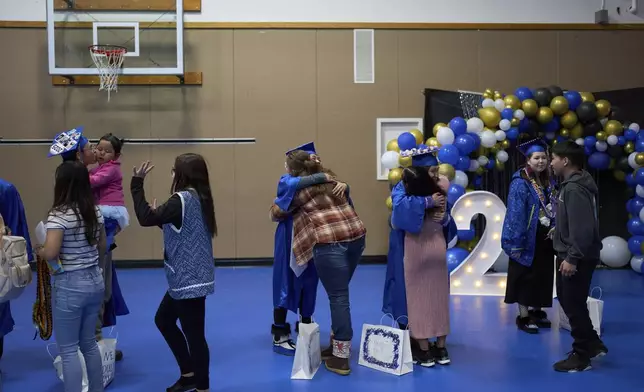
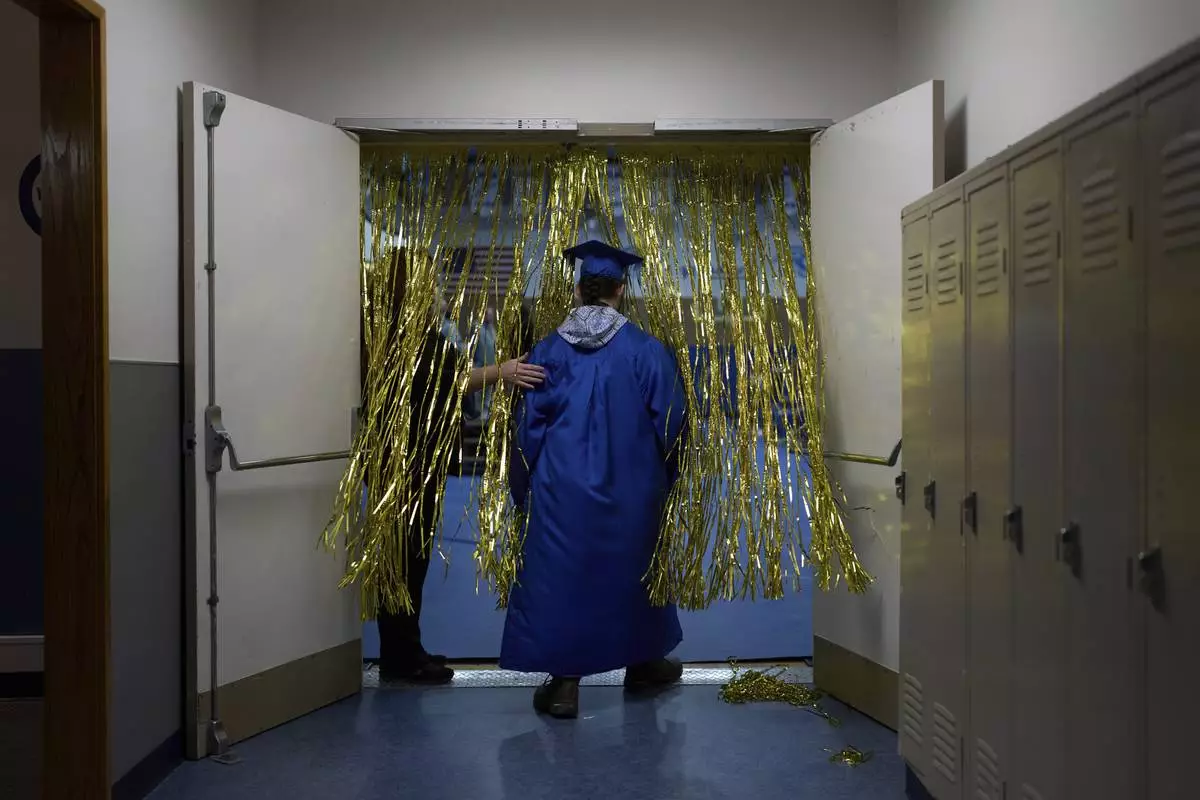
A student from the Galena Interior Learning Academy enters a gym during a graduation ceremony for the school Wednesday, May 21, 2025, in Galena, Alaska. (AP Photo/John Locher)
A student from the Galena Interior Learning Academy enters a gym during a graduation ceremony for the school Wednesday, May 21, 2025, in Galena, Alaska. (AP Photo/John Locher)

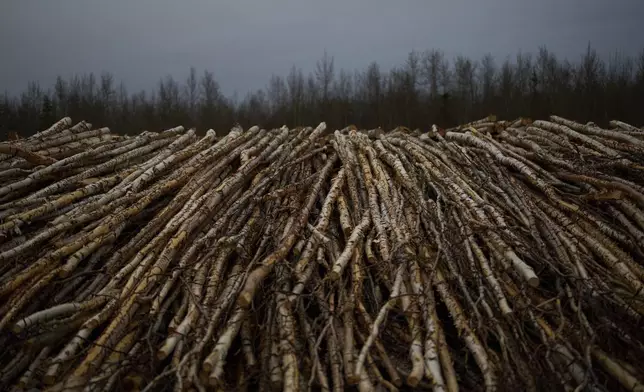
Stacks of logs sit to dry, to be used for the biomass heating system for Galena Interior Learning Academy, on Sunday, May 18, 2025, in Galena, Alaska. (AP Photo/John Locher)
Stacks of logs sit to dry, to be used for the biomass heating system for Galena Interior Learning Academy, on Sunday, May 18, 2025, in Galena, Alaska. (AP Photo/John Locher)

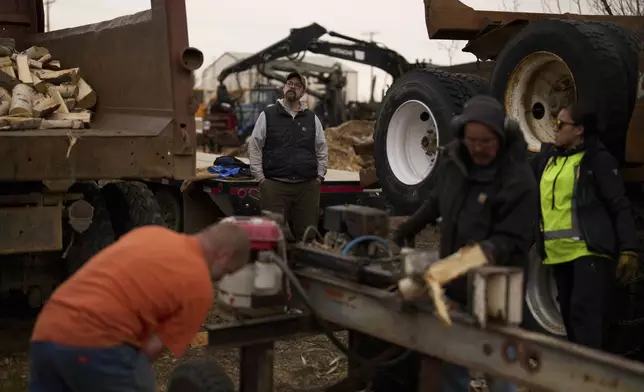
Tim Kalke, general manager of Sustainable Energy for Galena, Alaska, watches as some of his workers split logs Monday, May 19, 2025, in Galena. (AP Photo/John Locher)
Tim Kalke, general manager of Sustainable Energy for Galena, Alaska, watches as some of his workers split logs Monday, May 19, 2025, in Galena. (AP Photo/John Locher)

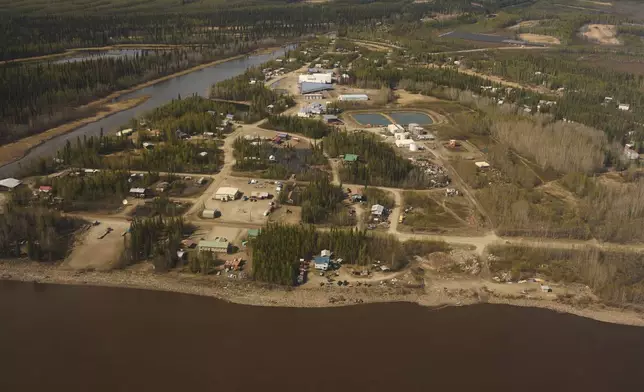
Buildings line dirt roads near the Yukon River, front, Friday, May 23, 2025, in Galena, Alaska. (AP Photo/John Locher)
Buildings line dirt roads near the Yukon River, front, Friday, May 23, 2025, in Galena, Alaska. (AP Photo/John Locher)

Workers install panels at a solar project Wednesday, May 21, 2025, in Galena, Alaska. (AP Photo/John Locher)

Workers install panels at a solar project Wednesday, May 21, 2025, in Galena, Alaska. (AP Photo/John Locher)

"We just didn’t open our door all morning until the lights came back on,” said Huntington, a member of the local Louden Tribe.

In Galena, a sprawling village of 400 people on the banks of the Yukon River, a community built around a former military base is shifting to clean energy in an effort to reduce its reliance on expensive, imported diesel. Local leaders say their nearly completed solar farm, along with an existing biomass plant, will boost the town's savings and protect residents from blackouts during extreme weather. The technology has the potential to provide clean backup power in emergencies and improve the power grid's resiliency, all while diversifying the village's energy sources and providing job opportunities for locals.

The projects come at a precarious time for renewable energy transition in the United States. The Trump administration has canceled billions of dollars of clean energy grants in an effort to bolster fossil fuel production, and billions more in investments have been scrapped or delayed this year. So far, the village's federal grants for the solar array haven't been impacted, but local leaders know the risk remains. Whatever the future of public funding, the village is an example of how renewable energies can save costs, boost reliability during extreme weather and create jobs.

Once online, the solar array will ensure that the village’s power grid has a backup system, said Tim Kalke, general manager of Sustainable Energy for Galena Alaska — or SEGA — a nonprofit that will operate it. So when the power goes out, it doesn’t result in tens of thousands of dollars in repairs, he added, and heat is guaranteed in times of extreme cold.

“You’re dealing with life, health and safety,” he said.

In May, dozens of high school students in navy blue caps and gowns stood with nervous excitement in a locker-brimmed hallway, each waiting their turn to walk through yellow tinsel into a packed auditorium. It was graduation day for Galena Interior Learning Academy.

The school's vocational training courses and cultural offerings attract some 200 students annually from across Alaska, boosting the village's population and energy needs.

Students here can take classes on sustainable energy, aviation, carpentry and much more. But in order to keep it running — especially during long, cold winters — it needs heat.

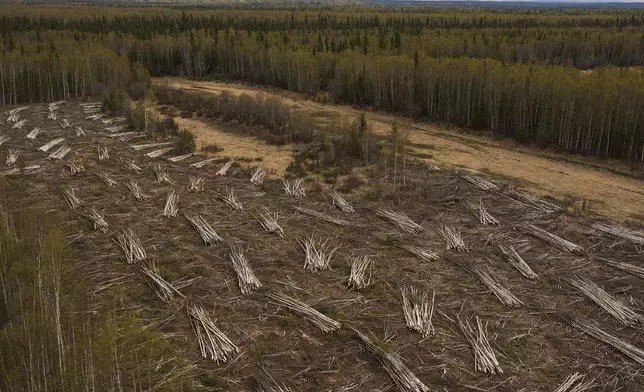
That's where the biomass project comes in. Every winter since 2016, trees (mostly paper birch) are locally harvested and shredded into wood chips that fuel a large boiler plant on campus, offsetting about 100,000 gallons (about 380,000 liters) of diesel annually for the school district and the city, said Brad Scotton, a Galena City Council member who also serves on SEGA's board. It's notable as one of the state's first large-scale biomass plants and is the most rural, he added.

Cost savings from using biomass has allowed the Galena City School District to hire certified professionals in trade jobs and do upkeep on campus facilities, said district superintendent Jason R. Johnson in an email.

It's also created a local workforce and a job base the village never used to have. “It's keeping the money that used to go outside within the community and providing pretty meaningful jobs for people," Scotton said.

In rural areas of Alaska, the costs for many goods can be high, as they must be brought in. Galena burns just under 400,000 gallons (1.5 million liters) of diesel annually to produce electricity, and an energy price hike around 2008 helped the village realize something needed to change. Scotton remembered when a gallon of diesel was $1.64 and then skyrocketed to $4.58 another year. At that wholesale price, the city was paying more than $1.8 million to keep the lights on.

“It was really quite a shock to everybody’s system in terms of trying to operate with those elevated costs,” said Scotton. “So that really got the community assessing whether or not we could continue business as usual with that reliance.” That's when they started looking for grants to build a solar array.

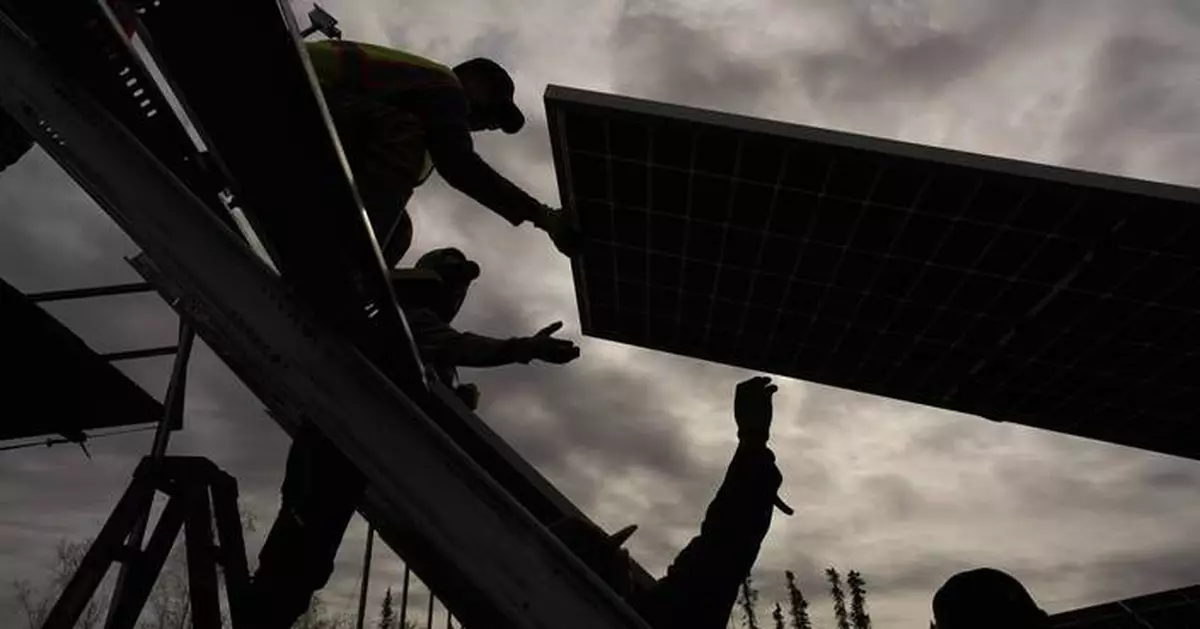
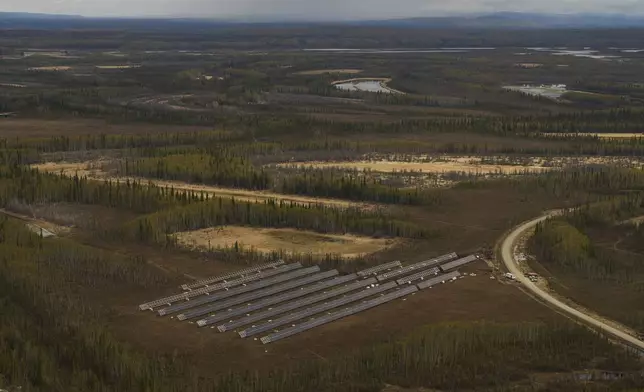
On an overcast May day, on a field flanked by boreal forests, workers in reflective safety vests slotted rectangular panels on a metal grid. They were working on the nearly-completed, 1.5 megawatt solar farm that will connect to a battery system.

Once in use, the community will be able to turn off its diesel engines and run on 100% clean, renewable energy on sunny summer days, and any excess power will be battery stored for nights, emergencies or heating the local indoor pool. The solar array will allow them to shut off the diesel operation between 800 to 1,000 hours a year, totaling about 100,000 gallons (about 380,000 liters).

The solar farm won’t necessarily lower people’s electricity bills. But like the biomass plant, the hope is that it will stabilize energy costs, allowing those savings to go back into the community, all while providing work opportunities for residents like Aaren Sommer.

Last year, the 19-year old graduated from the academy, where he learned about solar energy. Now he's helping to install the solar array. “That’s going to reduce the diesel usage a whole bunch over at the power plant, which is going to help us out,” he said.

In addition to the solar farm and biomass project, the Louden Tribe is building new energy-efficient homes that will help members be less reliant on diesel. Some of the siding used in the homes comes from wood harvested in the area.

In November, the Huntington family moved into a new, stilted house with a solar-compatible roof, 13-inch (33-centimeter) walls and 18 inches (46 centimeters) of insulation to keep the cold at bay. When they lived in the cabin, the $7,000 a year Huntington spent on diesel was a good chunk of his annual income.

The new home's energy-efficient features are already saving them money. The 300-gallon (1,130-liter) diesel tank Huntington filled before moving cost him about $2,400. Six months later, he still has unused fuel in the tank.

The Huntingtons are one of eight families the tribe has moved into sustainable homes, and they plan to turn over the keys to three more this year.

Kalke, SEGA's general manager, is often asked what Galena produces. He used to just say education.

"But since 2016 you can say education and wood chips. And soon, solar energy,” he said.

Pineda reported from Los Angeles. Associated Press journalist Alyssa Goodman in New York contributed to this report.

The Associated Press receives support from the Walton Family Foundation for coverage of water and environmental policy. The AP is solely responsible for all content. For all of AP’s environmental coverage, visit https://apnews.com/hub/climate-and-environment
Jake Pogrebinsky collects a log floating down the Yukon River to be used for firewood or construction Tuesday, May 20, 2025, in Galena, Alaska. (AP Photo/John Locher)
Jake Pogrebinsky collects a log floating down the Yukon River to be used for firewood or construction Tuesday, May 20, 2025, in Galena, Alaska. (AP Photo/John Locher)

Joe Cleaver II, left, and Derrick Esmailka build an energy efficient home Thursday, May 22, 2025, in Galena, Alaska. (AP Photo/John Locher)
Joe Cleaver II, left, and Derrick Esmailka build an energy efficient home Thursday, May 22, 2025, in Galena, Alaska. (AP Photo/John Locher)

Morris Demoski tosses a split log into the back of a dump truck Thursday, May 22, 2025, in Galena, Alaska. (AP Photo/John Locher)
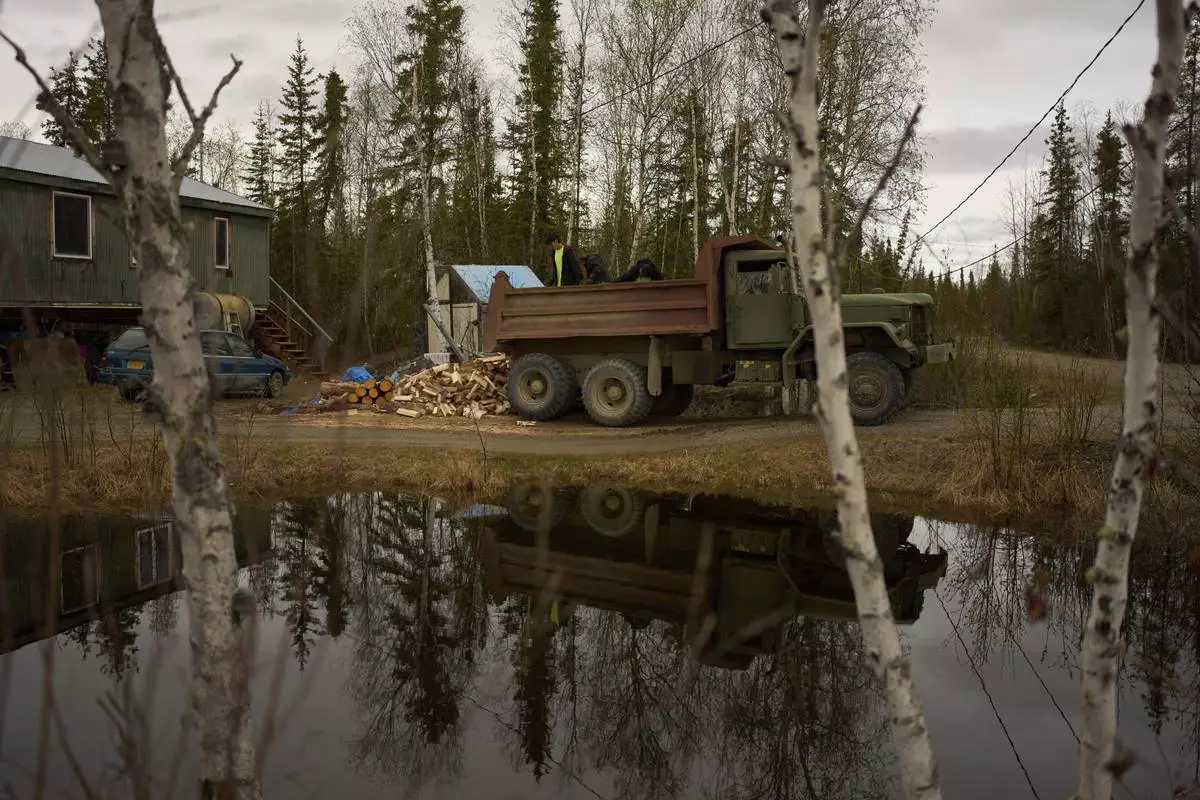
Morris Demoski tosses a split log into the back of a dump truck Thursday, May 22, 2025, in Galena, Alaska. (AP Photo/John Locher)

Nathan Moses, from left, Morris Demoski and Marissa McCarty deliver wood to an elder Monday, May 19, 2025, in Galena, Alaska. (AP Photo/John Locher)
Nathan Moses, from left, Morris Demoski and Marissa McCarty deliver wood to an elder Monday, May 19, 2025, in Galena, Alaska. (AP Photo/John Locher)

Workers with the Sustainable Energy for Galena, Alaska, from left, James Strong, Nathan Moses, Morris Demoski and Marissa McCarty move a log splitting machine before cutting wood to deliver to elders in the community Monday, May 19, 2025, in Galena. (AP Photo/John Locher)
Workers with the Sustainable Energy for Galena, Alaska, from left, James Strong, Nathan Moses, Morris Demoski and Marissa McCarty move a log splitting machine before cutting wood to deliver to elders in the community Monday, May 19, 2025, in Galena. (AP Photo/John Locher)

Brenden Sweetsir waits with dog Rex for customers at Sweetsirs store Wednesday, May 21, 2025, in Galena, Alaska. (AP Photo/John Locher)
Brenden Sweetsir waits with dog Rex for customers at Sweetsirs store Wednesday, May 21, 2025, in Galena, Alaska. (AP Photo/John Locher)

Workers install panels for a solar energy project Wednesday, May 21, 2025, in Galena, Alaska. (AP Photo/John Locher)
Workers install panels for a solar energy project Wednesday, May 21, 2025, in Galena, Alaska. (AP Photo/John Locher)

Workers install panels at a solar project Wednesday, May 21, 2025, in Galena, Alaska. (AP Photo/John Locher)
Workers install panels at a solar project Wednesday, May 21, 2025, in Galena, Alaska. (AP Photo/John Locher)

Piles of logs harvested by Sustainable Energy for Galena, Alaska, sit out to dry to be used in a biomass heating system at the Galena Interior Learning Academy, on Wednesday, May 21, 2025, in Galena. (AP Photo/John Locher)
Piles of logs harvested by Sustainable Energy for Galena, Alaska, sit out to dry to be used in a biomass heating system at the Galena Interior Learning Academy, on Wednesday, May 21, 2025, in Galena. (AP Photo/John Locher)

Community and family members congratulate graduating students from the Galena Interior Learning Academy during a ceremony Wednesday, May 21, 2025, in Galena, Alaska. (AP Photo/John Locher)
Community and family members congratulate graduating students from the Galena Interior Learning Academy during a ceremony Wednesday, May 21, 2025, in Galena, Alaska. (AP Photo/John Locher)

A student from the Galena Interior Learning Academy enters a gym during a graduation ceremony for the school Wednesday, May 21, 2025, in Galena, Alaska. (AP Photo/John Locher)
A student from the Galena Interior Learning Academy enters a gym during a graduation ceremony for the school Wednesday, May 21, 2025, in Galena, Alaska. (AP Photo/John Locher)

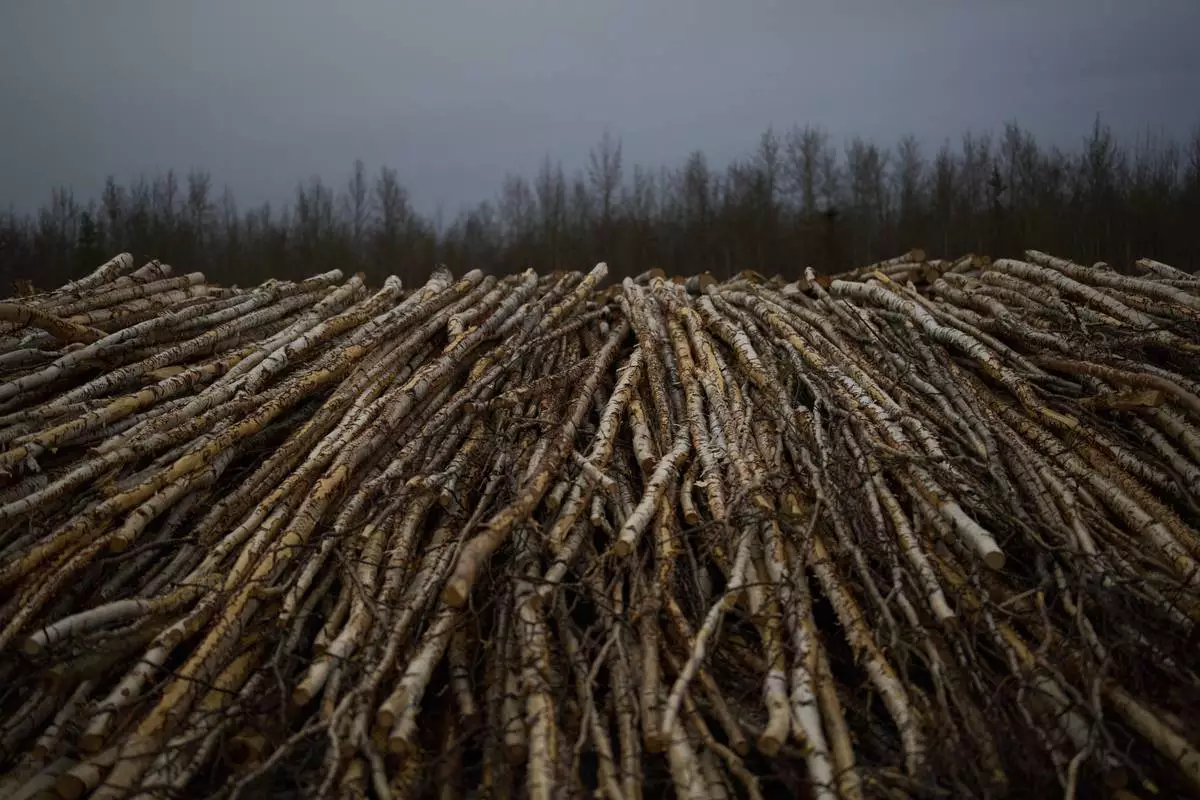
Stacks of logs sit to dry, to be used for the biomass heating system for Galena Interior Learning Academy, on Sunday, May 18, 2025, in Galena, Alaska. (AP Photo/John Locher)
Stacks of logs sit to dry, to be used for the biomass heating system for Galena Interior Learning Academy, on Sunday, May 18, 2025, in Galena, Alaska. (AP Photo/John Locher)

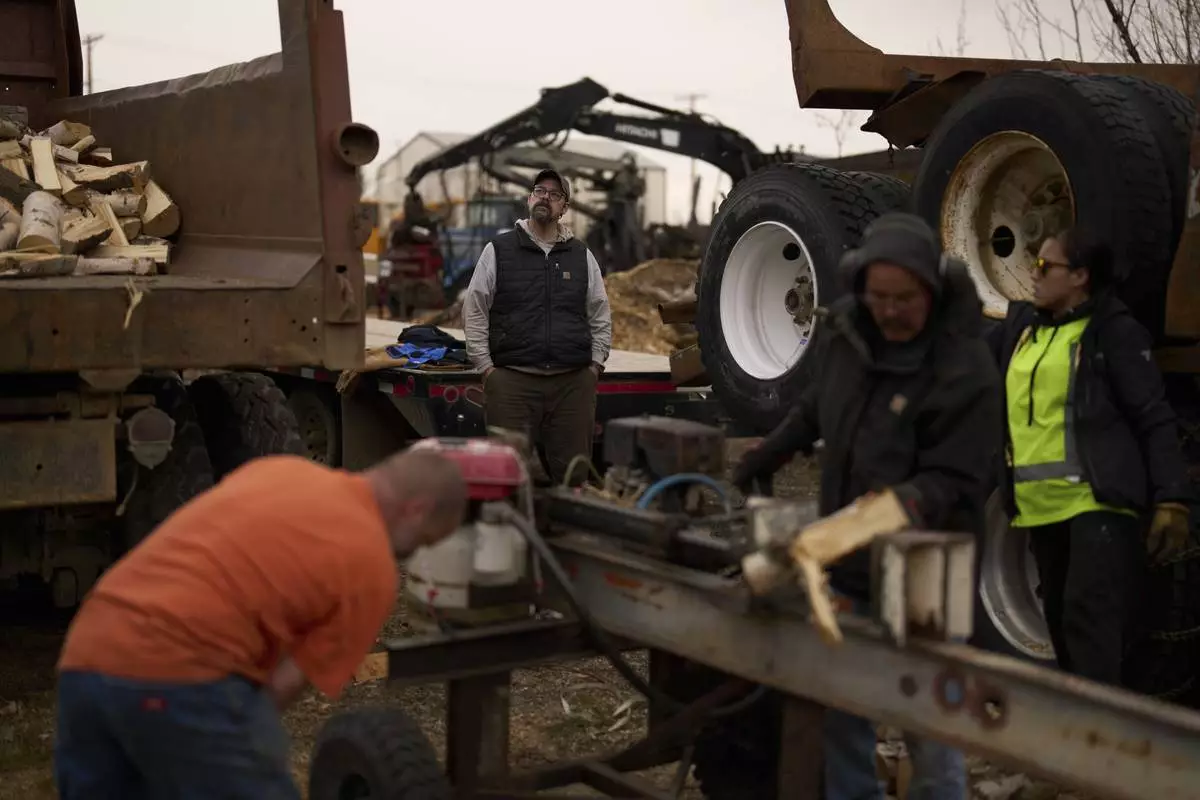
Tim Kalke, general manager of Sustainable Energy for Galena, Alaska, watches as some of his workers split logs Monday, May 19, 2025, in Galena. (AP Photo/John Locher)
Tim Kalke, general manager of Sustainable Energy for Galena, Alaska, watches as some of his workers split logs Monday, May 19, 2025, in Galena. (AP Photo/John Locher)

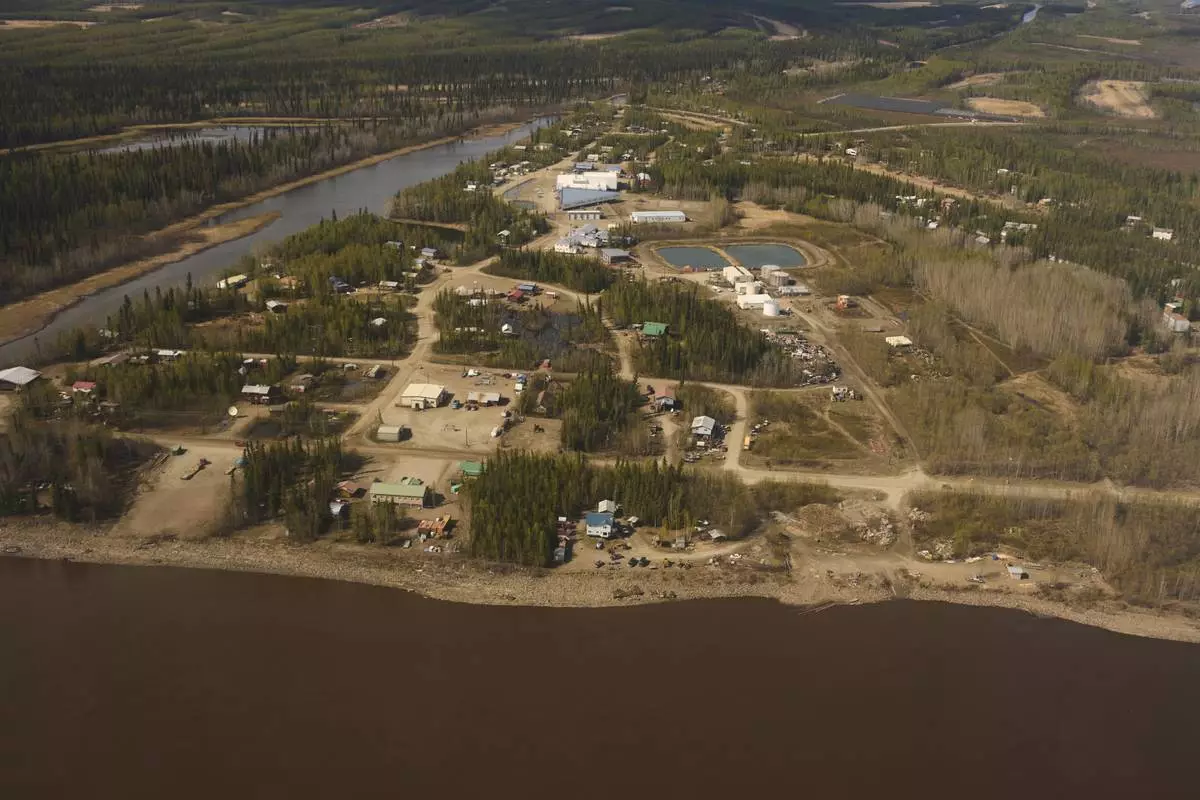
Buildings line dirt roads near the Yukon River, front, Friday, May 23, 2025, in Galena, Alaska. (AP Photo/John Locher)
Buildings line dirt roads near the Yukon River, front, Friday, May 23, 2025, in Galena, Alaska. (AP Photo/John Locher)

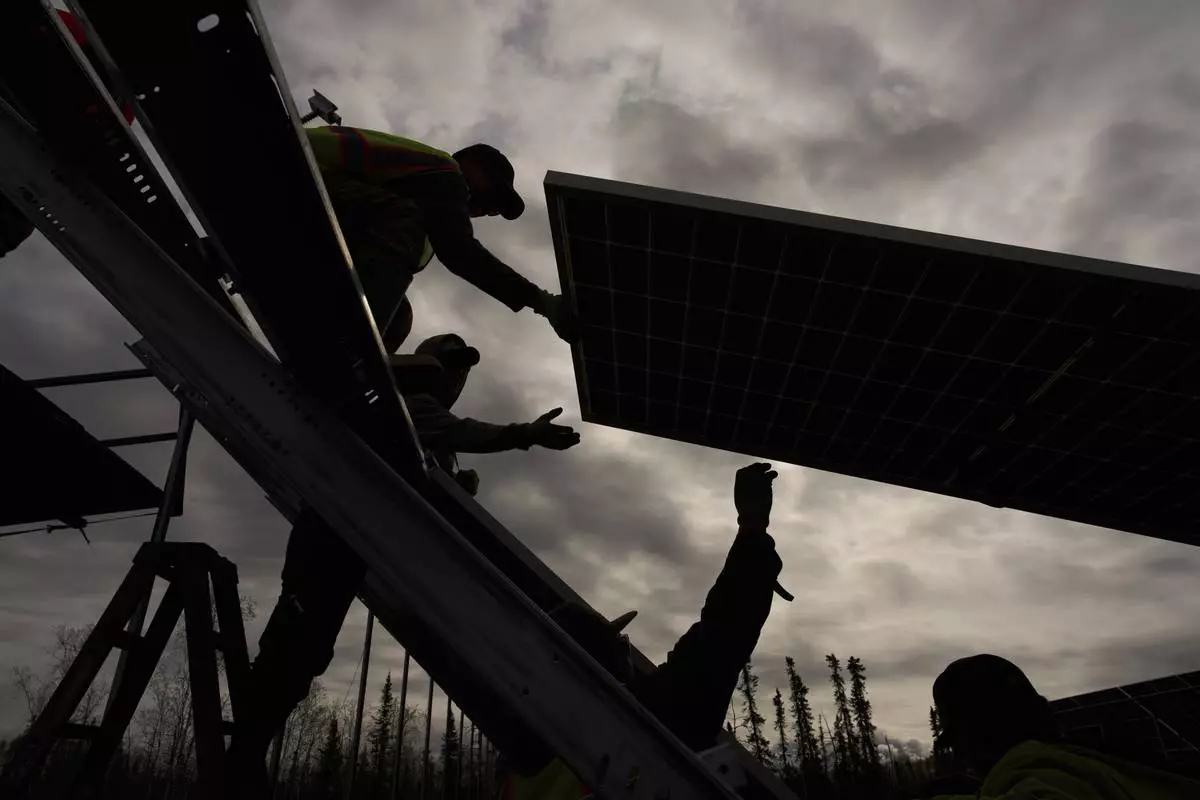
Workers install panels at a solar project Wednesday, May 21, 2025, in Galena, Alaska. (AP Photo/John Locher)
Workers install panels at a solar project Wednesday, May 21, 2025, in Galena, Alaska. (AP Photo/John Locher)
GUANARE, Venezuela (AP) — Freedom came too late for Edilson Torres.

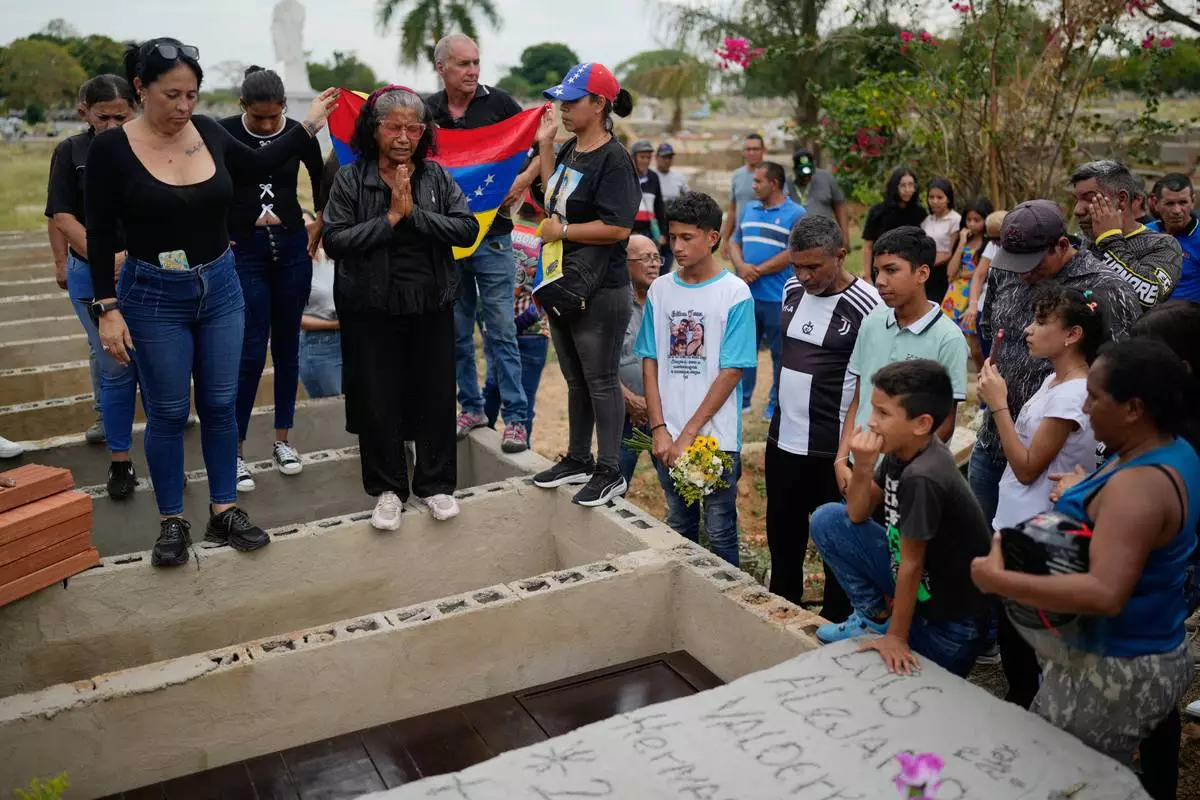
The police officer was buried Tuesday in his humble, rural hometown following his death in a Venezuelan prison, where he was held incommunicado since being detained in December on what his family said were politically motivated accusations.

Torres, 51, died of a heart attack Saturday, just as his family awaited the government's promised release of prisoners following the U.S. capture of then-President Nicolás Maduro. The loss left his family reeling.

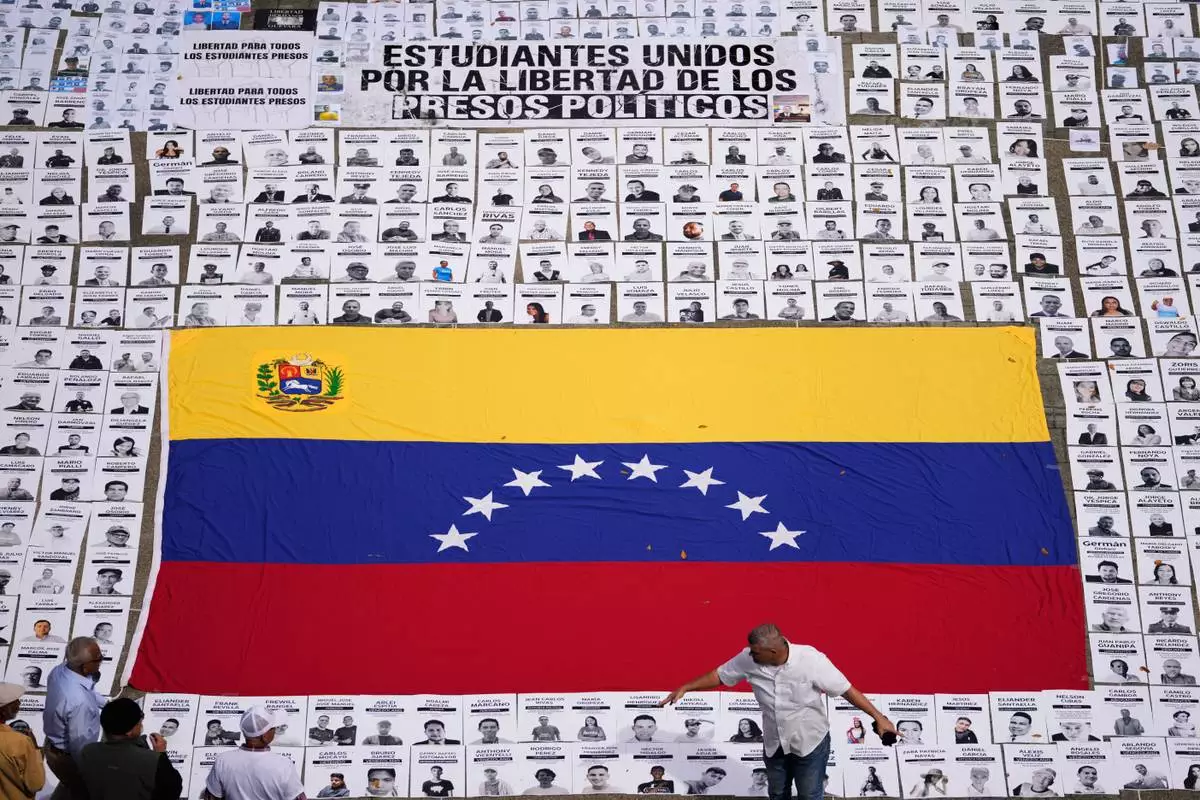
Now scores of families — who once hesitated to approach advocacy groups — are coming forward to register their loved ones as “political prisoners" in the hope that they might have a more optimistic future than Torres.

Foro Penal, which tracks and advocates for Venezuelan prisoners, has received a “flood of messages” from families since last week, said Alfredo Romero, director of the nongovernmental organization.

“They didn’t report it out of fear, and now they’re doing it because, in a way, they feel that there is this possibility that their families will be freed,” Romero said. “They see it as hope, but more importantly, as an opportunity.”

The head of Venezuela’s national assembly, Jorge Rodríguez, said last week that a “significant number” of Venezuelan and foreigners imprisoned in the country would be released as a gesture to “seek peace” following the operation that captured Maduro in the early hours of Jan. 3. The U.S. and Venezuela's opposition have long demanded the widespread release of detained opposition figures, activists and journalists, whom they claim are used as a political tool by the ruling party.

Venezuela’s government denies that there are prisoners unjustly detained, accusing them of plotting to destabilize Maduro’s government.

Following Torres' death, Venezuela's Attorney General Tarek William Saab said in a statement that the case had been assigned to a terrorism unit and “was linked to criminal activities detected by state security agencies.” He did not offer any details, but the vague language tracks with past accusations leveled against real or perceived government critics.

Romero said that of the roughly 300 families who reached out to Foro Penal, about 100 cases so far have been confirmed as politically motivated. Most of those reported over the past few days, he said, once worked for Venezuela's military. That is on top of more than 800 people that the organization says continue to be detained for political reasons in Venezuela.

As of Tuesday evening, Foro Penal had confirmed 56 prisoners it said were detained for political reasons had been freed. The group criticized the lack of government transparency over the releases. Venezuela’s government negated the organization's count, and reported a far higher figure of 400 Tuesday afternoon.

But the government did not provide evidence of the releases, a time range in which they were carried out nor identify those freed, making it impossible to determine whether those freed were behind bars for political or other reasons.

Before Torres' funeral on Tuesday, a procession of cars and motorcycles stopped at a local jail, where his wife remains detained on disputed accusations.

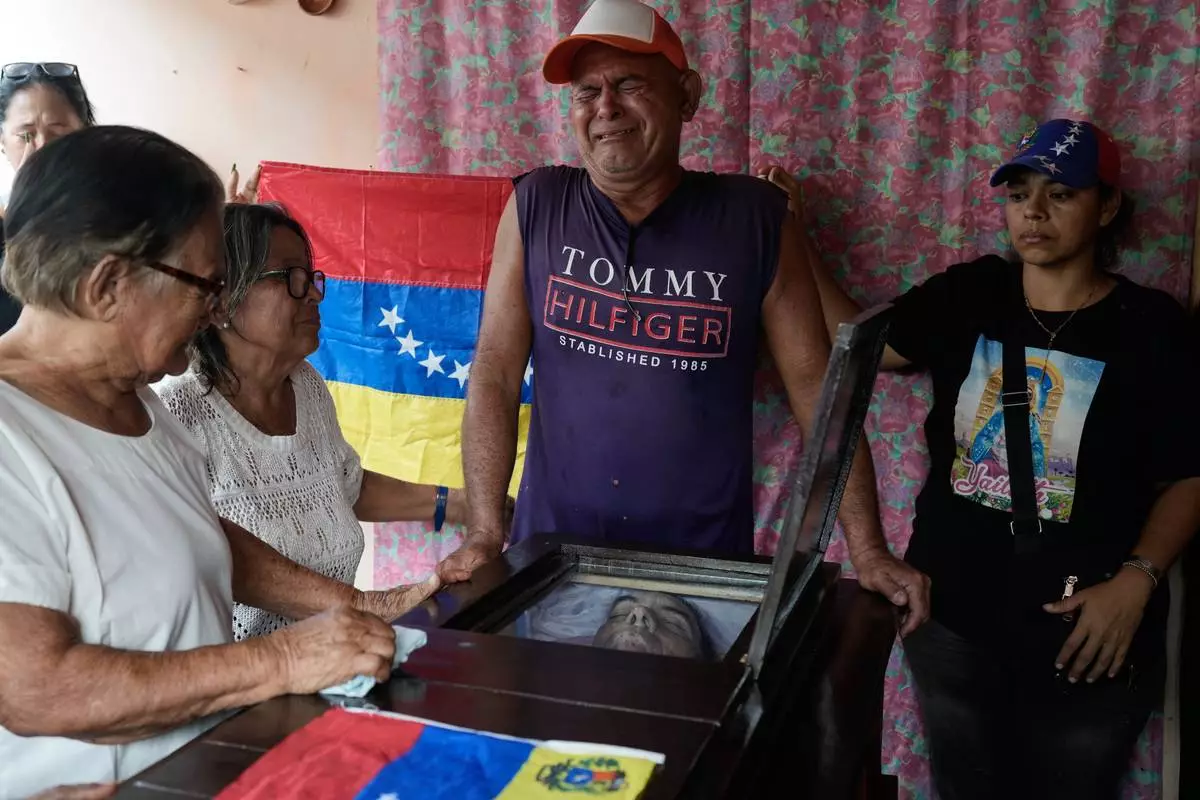
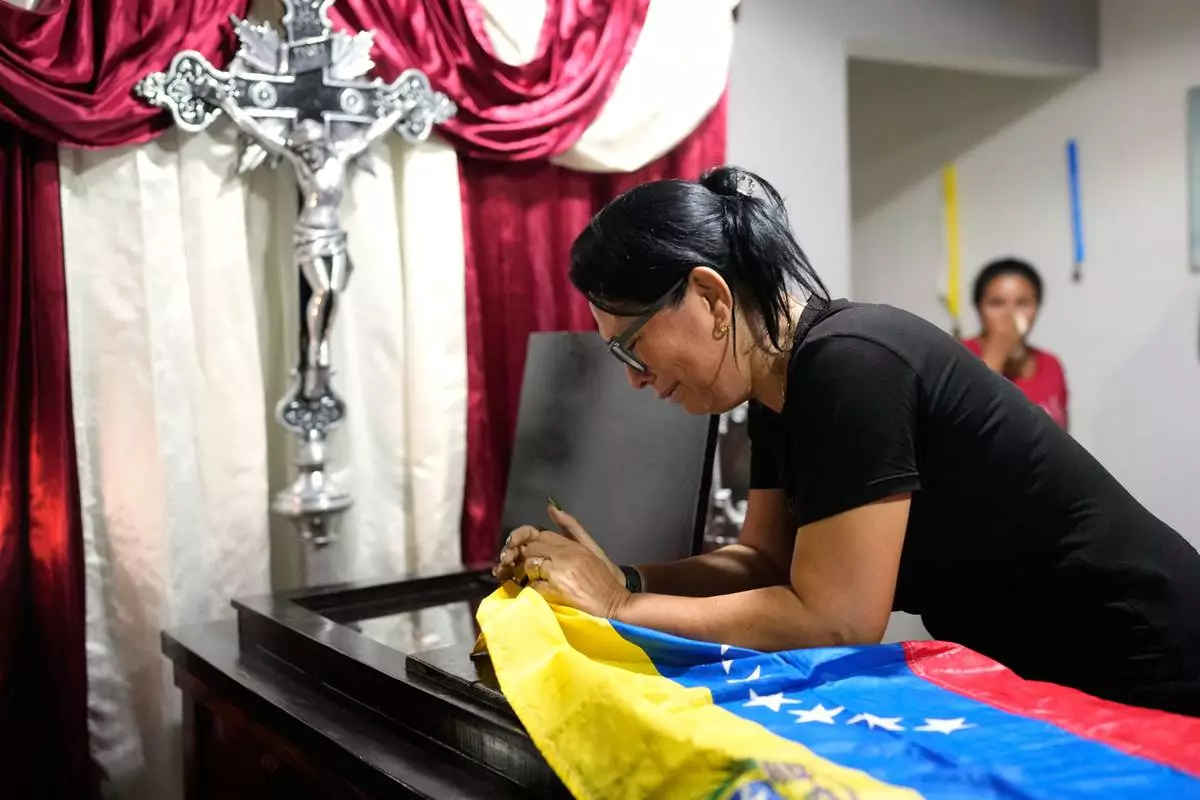
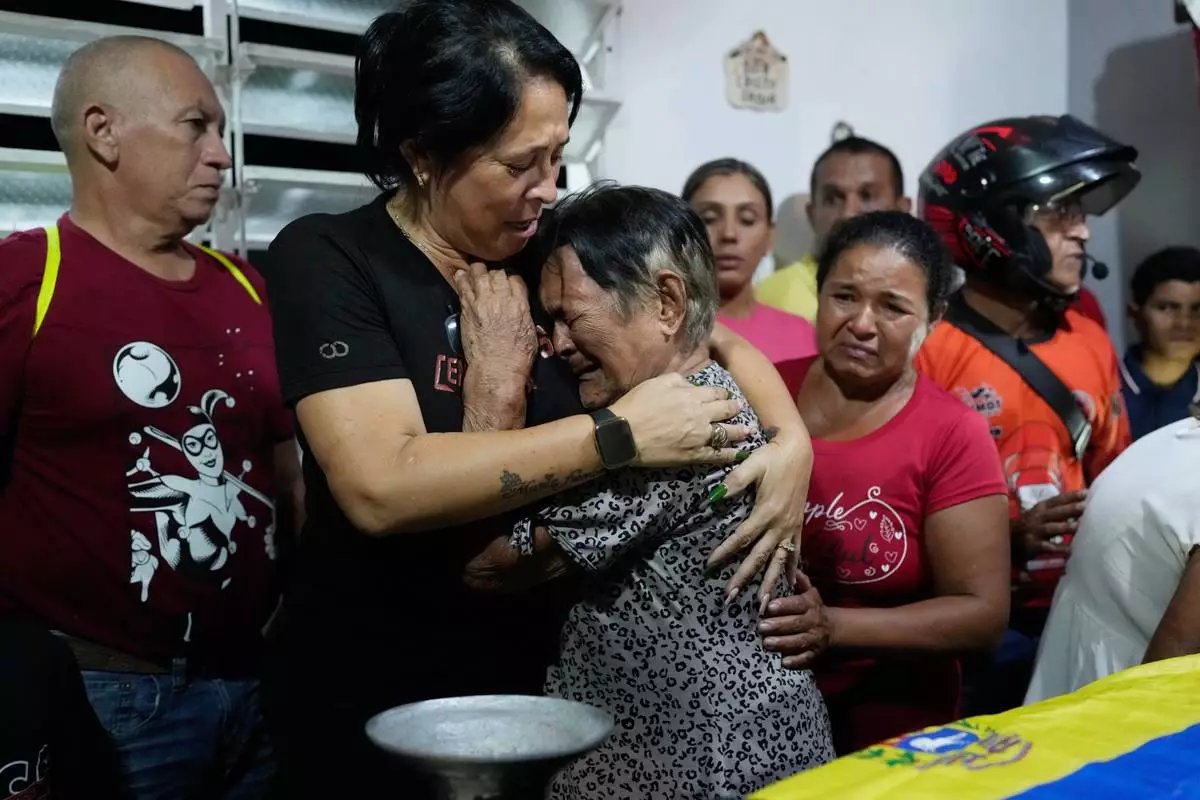
“My little brother, my little brother,” Emelyn Torres said between sobs after his casket, cloaked in Venezuela's flag, arrived at her home for the wake. A few feet away, their grandmother nearly fainted as dozens of people crammed into the living room to pay their respects.

Hours earlier, as a minivan transported the body of her brother 267 miles (430 kilometers) from the capital, Caracas, to Guanare, Torres learned that other men linked to the WhatsApp group that led to her brother's arrest had just been released from prison. She wailed.

Among those who have been released are: human rights attorney Rocío San Miguel, who immediately relocated to Spain; Biagio Pilieri, an opposition leader who was part of Nobel Peace Prize winner María Corina Machado’s 2024 presidential campaign; and Enrique Márquez, a former electoral authority and presidential candidate.

Italian businessman Marco Burlò, who was released from prison Monday, told reporters outside a Rome airport Tuesday that he was kept isolated throughout his detention, which he characterized as a “pure and real kidnapping.”

“I can’t say that I was physically abused, but without being able to talk to our children, without the right to defense, without being able to speak to the lawyer, completely isolated, here they thought that I might have died,” he said.

The small set of releases over the past few days continues to fuel criticisms by families, human rights watchdogs at the United Nations and U.S. politicians, who have accused the government of not following through on their word of a wider release.

But the rapid political shifts in the Latin American nation and the distant possibility of release simultaneously marked a rare moment of hope for many families who have spent years wondering if their loved ones would ever be freed.

Part of the reason that Romero said he believed so many people had not come forward is the government's ongoing crackdown on dissent since Venezuela's tumultuous 2024 election, which Maduro claimed to have won despite ample credible evidence to the contrary.

As mass street protests broke out, authorities said they detained more than 2,000 people. In the month after July elections, Venezuela's government passed a law — dubbed the “anti-NGO law” by critics — making it easier for the government to criminalize human rights groups.

That had a chilling effect, Romero said, making families hesitant to come forward — until now.

Janetsky reported from Mexico City.

Follow AP’s coverage of Latin America and the Caribbean at https://apnews.com/hub/latin-america

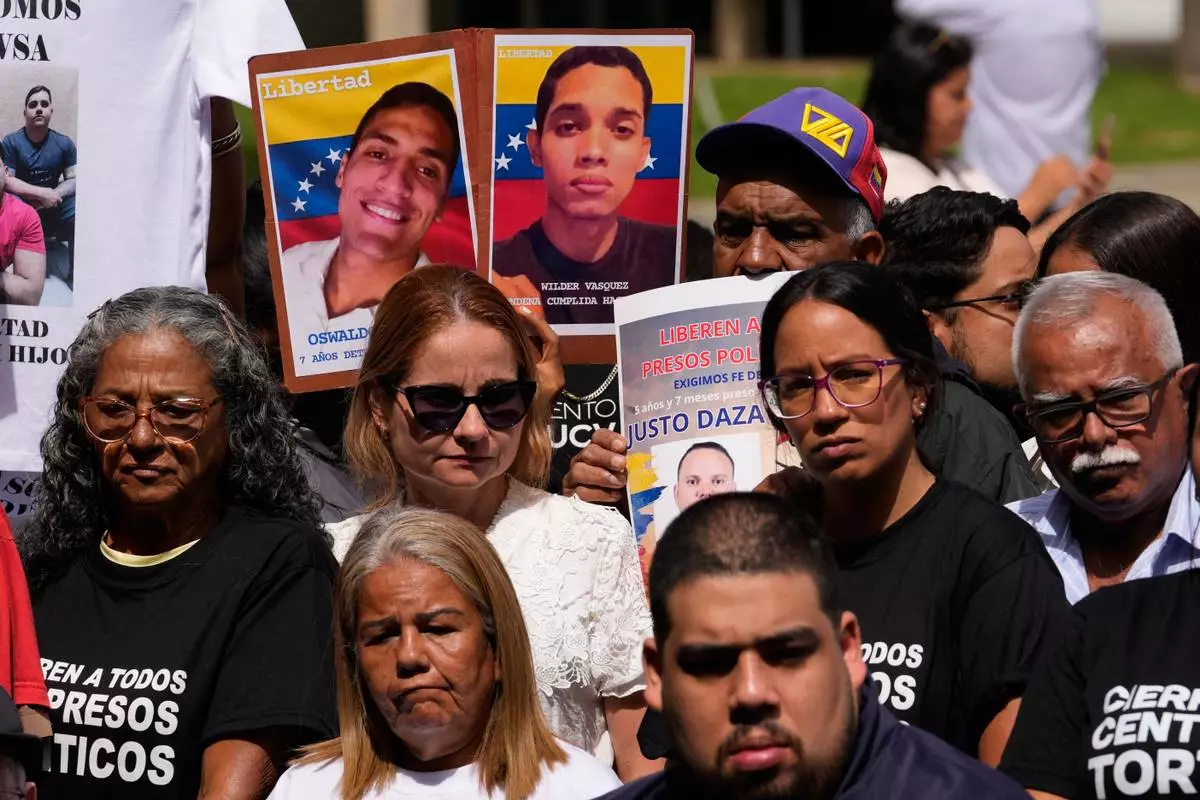
Relatives of political prisoners gather at the Central University of Venezuela to call for their release in Caracas, Venezuela, Tuesday, Jan. 13, 2026. (AP Photo/Matias Delacroix)

Relatives of political prisoners gather at the Central University of Venezuela to call for their release in Caracas, Venezuela, Tuesday, Jan. 13, 2026. (AP Photo/Matias Delacroix)

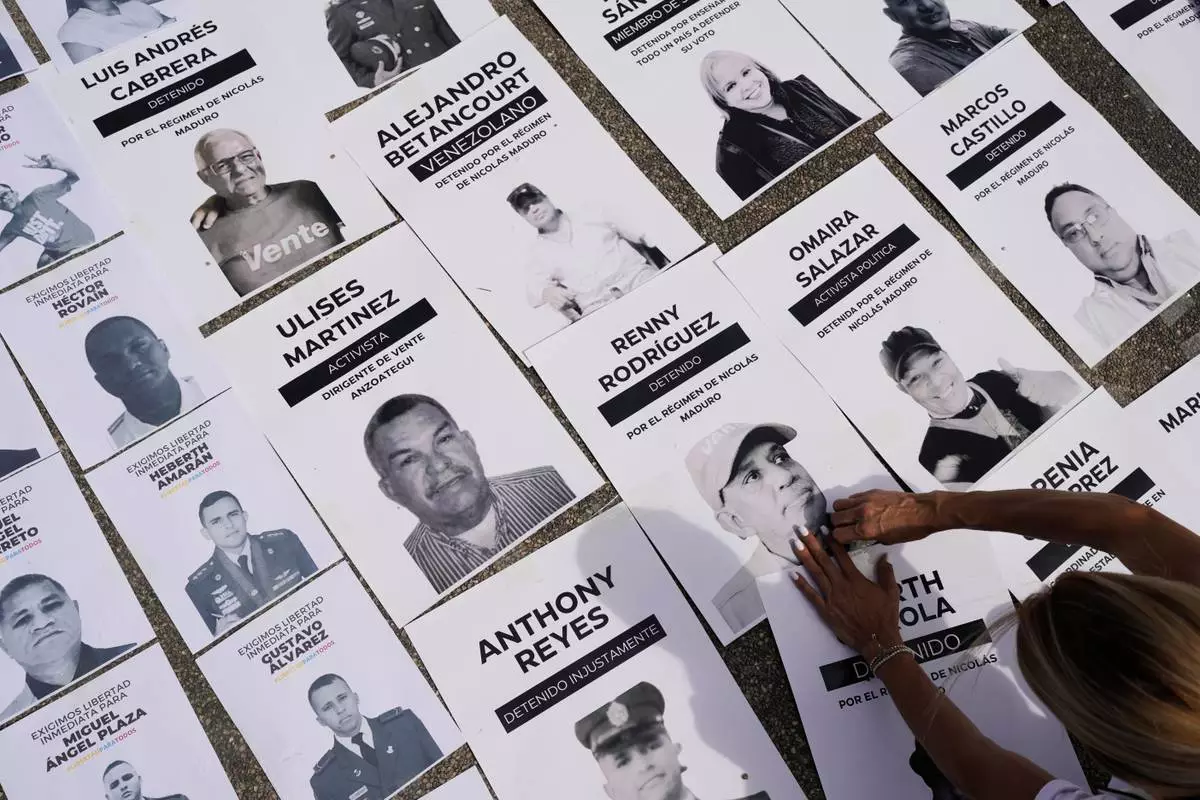
Jacklin Ibarreto, whose father Miguel Ibarreto is detained, lays out photos of political prisoners at the Central University of Venezuela in Caracas, Venezuela, Tuesday, Jan. 13, 2026. (AP Photo/Matias Delacroix)

Jacklin Ibarreto, whose father Miguel Ibarreto is detained, lays out photos of political prisoners at the Central University of Venezuela in Caracas, Venezuela, Tuesday, Jan. 13, 2026. (AP Photo/Matias Delacroix)

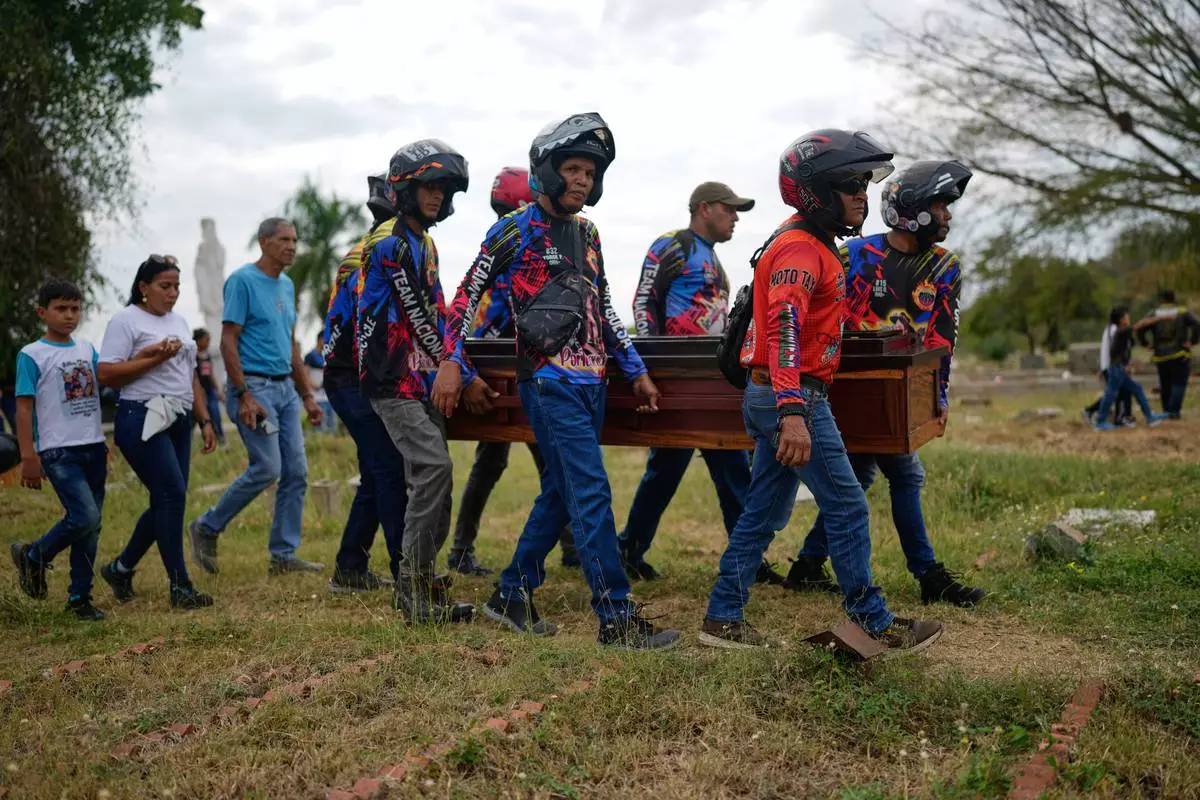
Members of a motorcycle club, friends of Edilson Torres, a Venezuelan police officer who died in prison a month after being arrested on accusations of treason, carry his coffin at a cemetery in Guanare, Venezuela, Tuesday, Jan. 13, 2026. (AP Photo/Ariana Cubillos)

Members of a motorcycle club, friends of Edilson Torres, a Venezuelan police officer who died in prison a month after being arrested on accusations of treason, carry his coffin at a cemetery in Guanare, Venezuela, Tuesday, Jan. 13, 2026. (AP Photo/Ariana Cubillos)

Relatives stand by the coffin of Edilson Torres, a Venezuelan police officer who died in prison a month after being arrested on accusations of treason, in Guanare, Venezuela, Tuesday, Jan. 13, 2026.. (AP Photo/Ariana Cubillos)

Relatives stand by the coffin of Edilson Torres, a Venezuelan police officer who died in prison a month after being arrested on accusations of treason, in Guanare, Venezuela, Tuesday, Jan. 13, 2026.. (AP Photo/Ariana Cubillos)

Relatives of Edilson Torres, a Venezuelan police officer who died in prison a month after being arrested on accusations of treason, gather around his grave during his funeral in Guanare, Venezuela, Tuesday, Jan. 13, 2026. (AP Photo/Ariana Cubillos)

Relatives of Edilson Torres, a Venezuelan police officer who died in prison a month after being arrested on accusations of treason, gather around his grave during his funeral in Guanare, Venezuela, Tuesday, Jan. 13, 2026. (AP Photo/Ariana Cubillos)

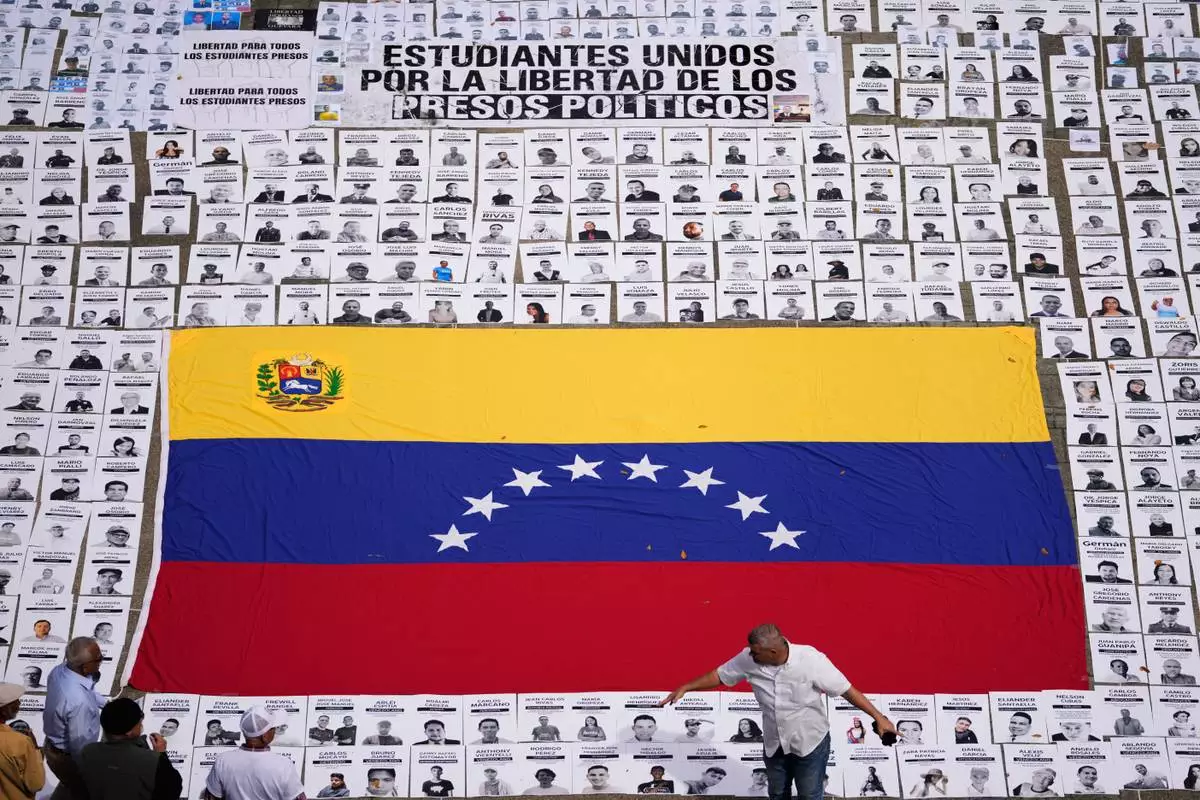
Students lay out photos of people they consider political prisoners at the Central University of Venezuela in Caracas, Venezuela, Tuesday, Jan. 13, 2026. (AP Photo/Matias Delacroix)

Students lay out photos of people they consider political prisoners at the Central University of Venezuela in Caracas, Venezuela, Tuesday, Jan. 13, 2026. (AP Photo/Matias Delacroix)

Jacklin Ibarreto, whose father Miguel Ibarreto is detained, waits outside the Rodeo I prison in Guatire, Venezuela, Friday, Jan. 9, 2026, after National Assembly President Jorge Rodriguez said the government would release Venezuelan and foreign prisoners. (AP Photo/Matias Delacroix)

Jacklin Ibarreto, whose father Miguel Ibarreto is detained, waits outside the Rodeo I prison in Guatire, Venezuela, Friday, Jan. 9, 2026, after National Assembly President Jorge Rodriguez said the government would release Venezuelan and foreign prisoners. (AP Photo/Matias Delacroix)

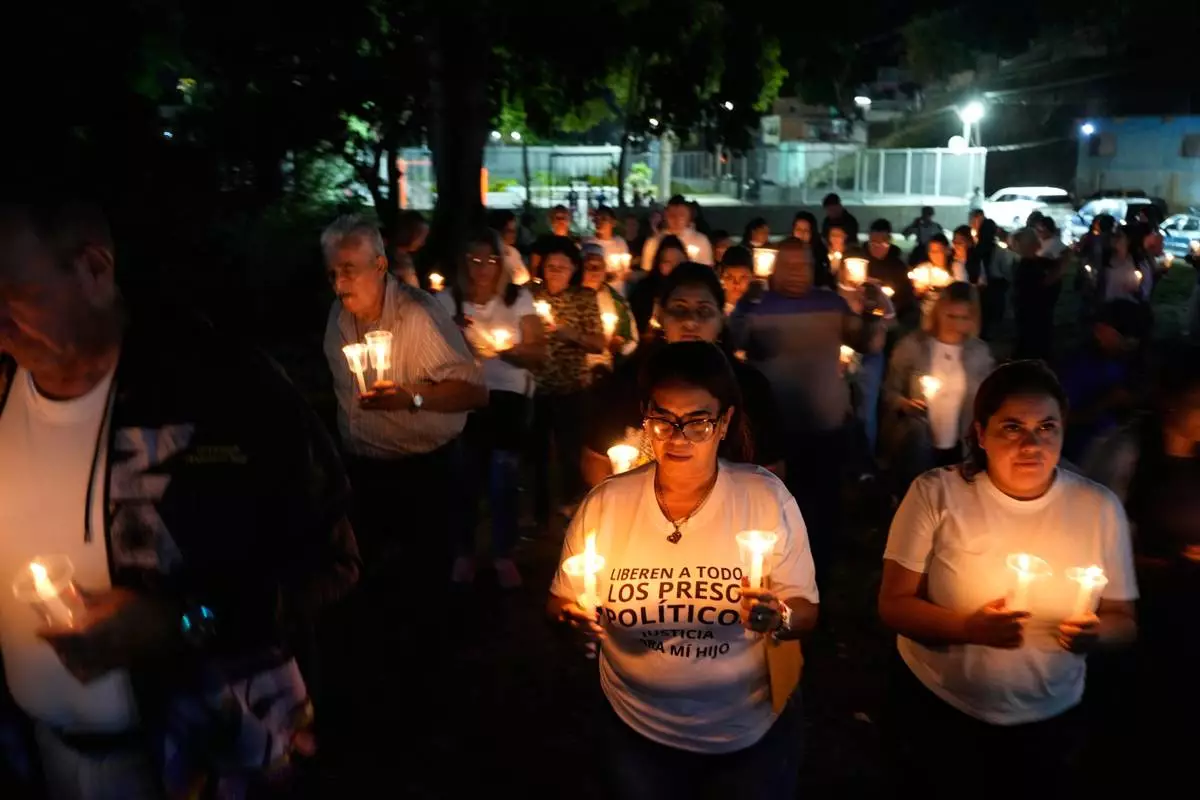
Relatives and friends of political prisoners hold candles calling for their loved ones to be set free outside the Rodeo I prison in Guatire, Venezuela, Friday, Jan. 9, 2026 after the government announced prisoners would be released. (AP Photo/Matias Delacroix)

Relatives and friends of political prisoners hold candles calling for their loved ones to be set free outside the Rodeo I prison in Guatire, Venezuela, Friday, Jan. 9, 2026 after the government announced prisoners would be released. (AP Photo/Matias Delacroix)

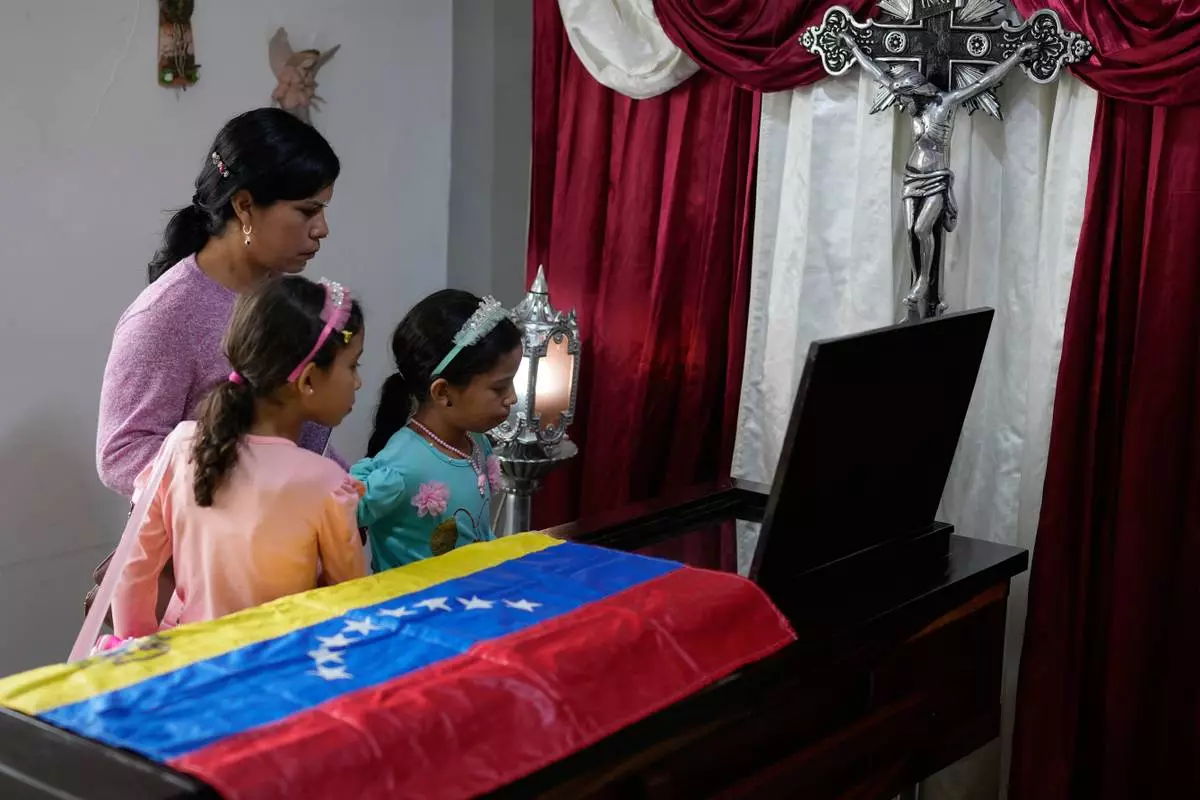
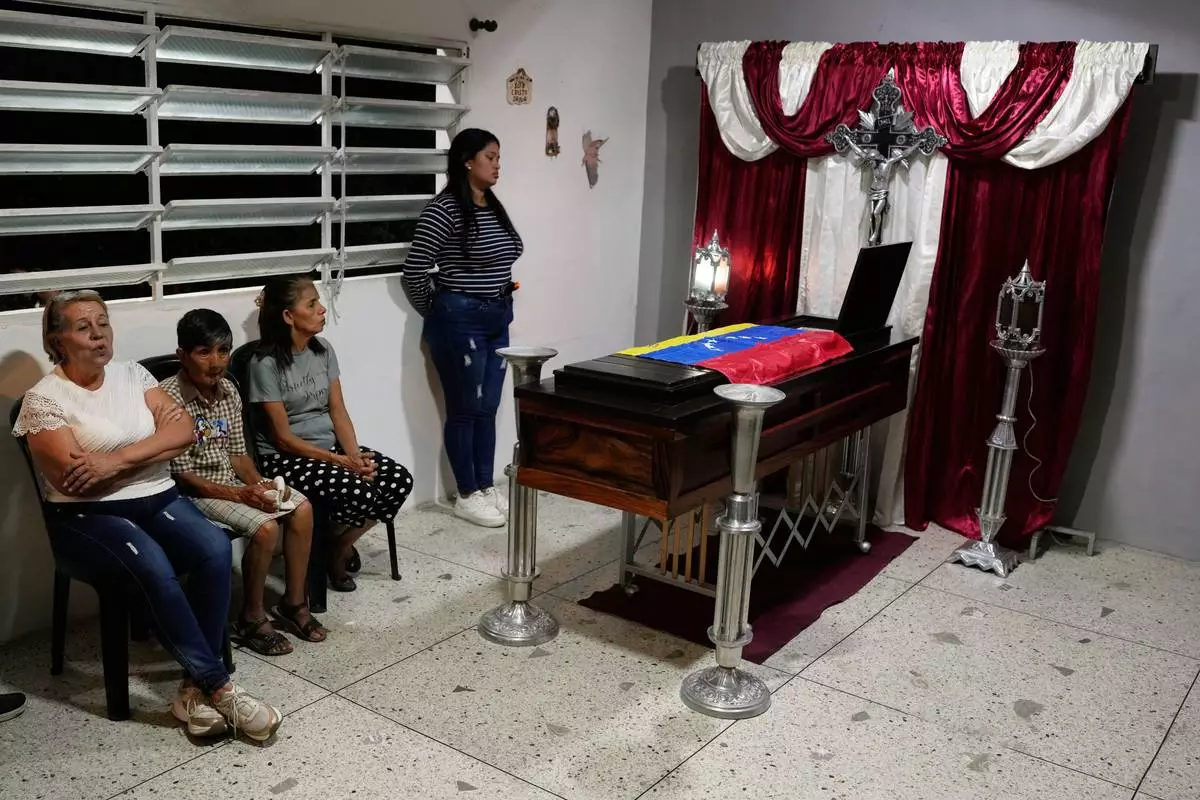
Relatives stand beside the coffin during the wake of Edilson Torres, a Venezuelan police officer who died in prison a month after being arrested on accusations of treason, in Guanare, Venezuela, Tuesday, Jan. 13, 2026. (AP Photo/Ariana Cubillos)

Relatives stand beside the coffin during the wake of Edilson Torres, a Venezuelan police officer who died in prison a month after being arrested on accusations of treason, in Guanare, Venezuela, Tuesday, Jan. 13, 2026. (AP Photo/Ariana Cubillos)

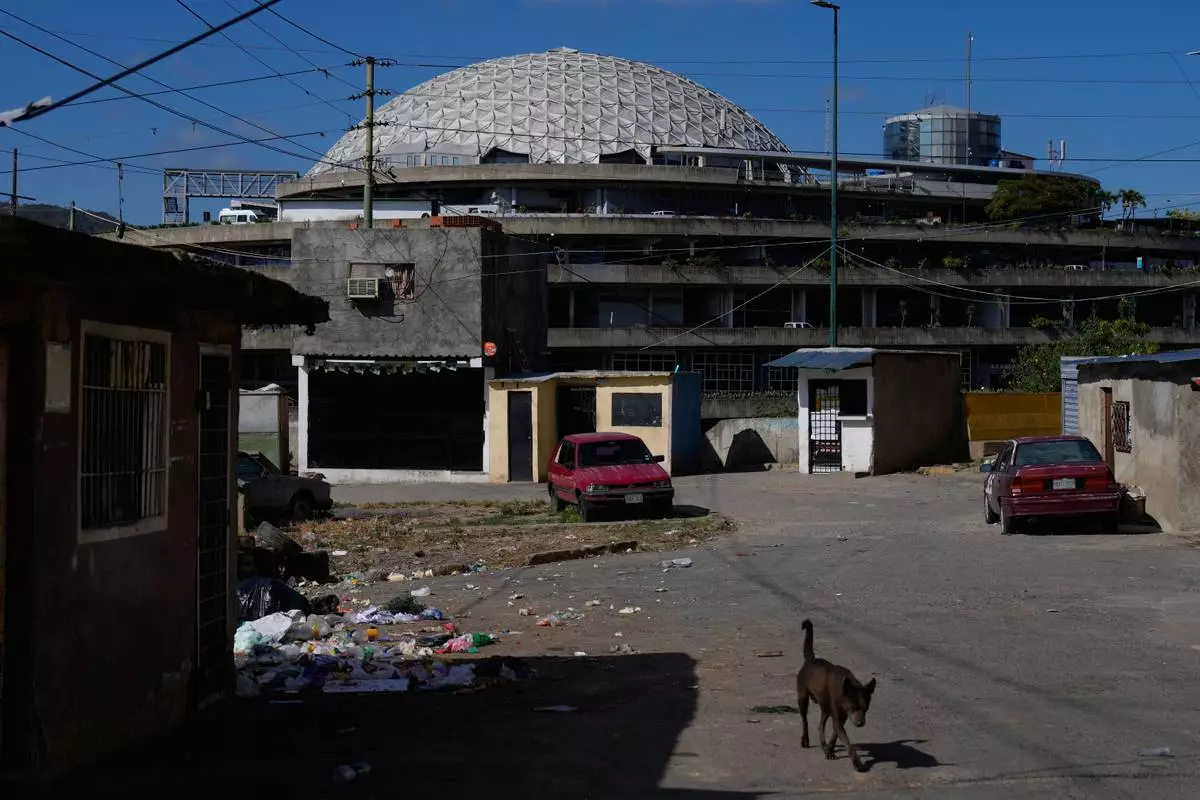
El Helicoide, the headquarters of Venezuela's intelligence service and detention center, stands in Caracas, Venezuela, Friday, Jan. 9, 2026, after National Assembly President Jorge Rodriguez said the government would release Venezuelan and foreign prisoners. (AP Photo/Ariana Cubillos)

El Helicoide, the headquarters of Venezuela's intelligence service and detention center, stands in Caracas, Venezuela, Friday, Jan. 9, 2026, after National Assembly President Jorge Rodriguez said the government would release Venezuelan and foreign prisoners. (AP Photo/Ariana Cubillos)

Students lay out photos of people they consider political prisoners at the Central University of Venezuela in Caracas, Venezuela, Tuesday, Jan. 13, 2026. (AP Photo/Matias Delacroix)

Students lay out photos of people they consider political prisoners at the Central University of Venezuela in Caracas, Venezuela, Tuesday, Jan. 13, 2026. (AP Photo/Matias Delacroix)

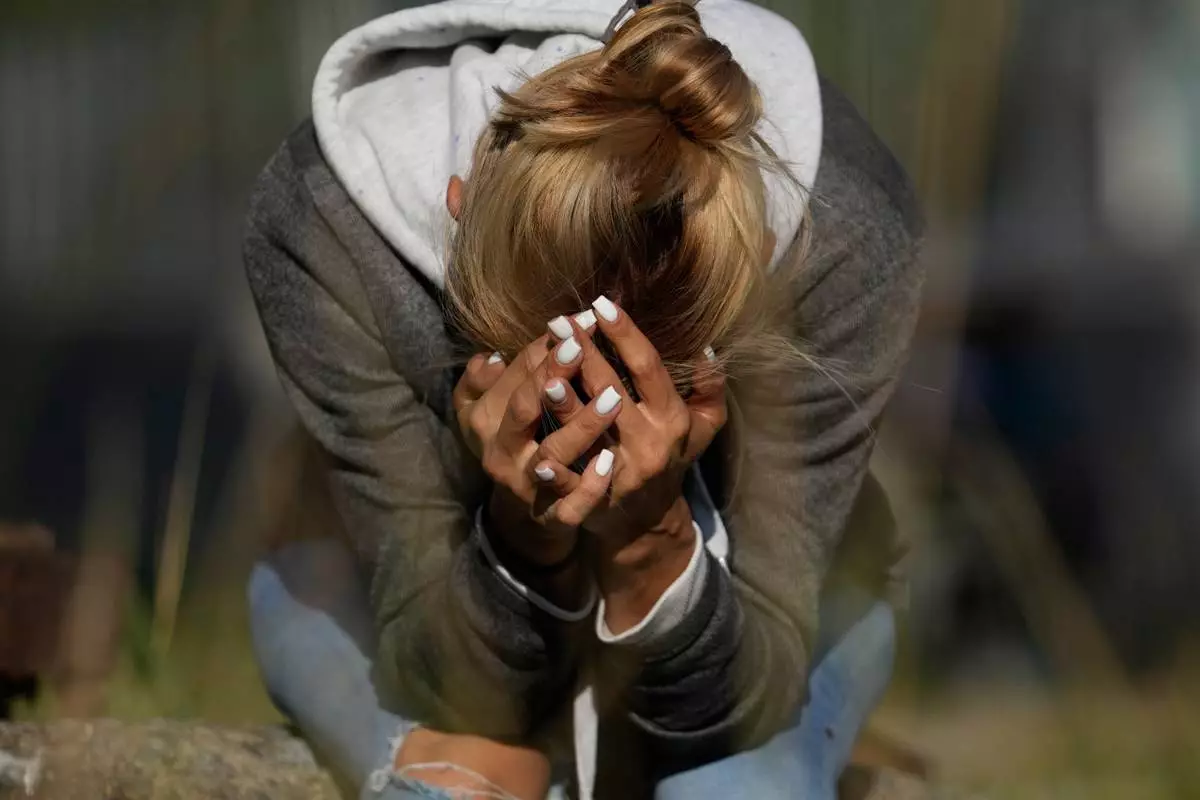
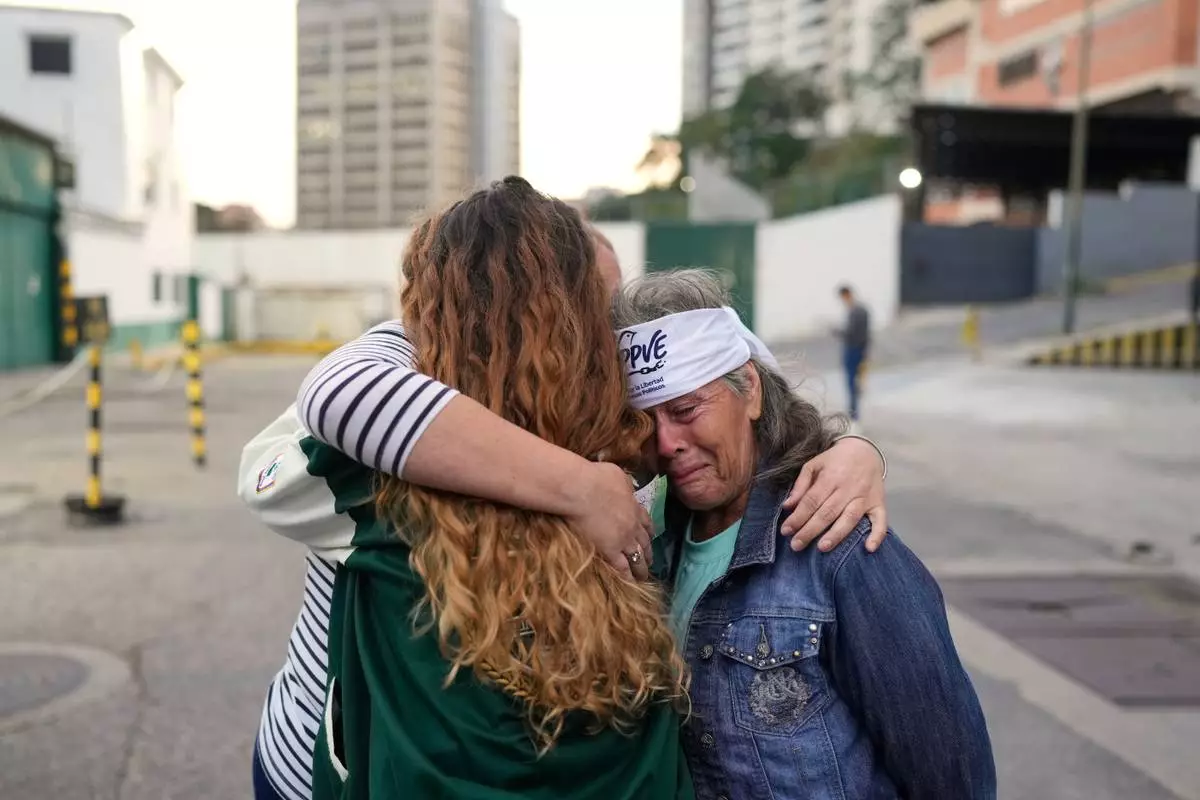
Flor Zambrano, whose son, Rene Chourio, she says is detained at Zone 7 of the Bolivarian National Police for political reasons, embraces relatives of other detainees outside the facility in Caracas, Venezuela, Monday, Jan. 12, 2026. (AP Photo/Matias Delacroix)

Flor Zambrano, whose son, Rene Chourio, she says is detained at Zone 7 of the Bolivarian National Police for political reasons, embraces relatives of other detainees outside the facility in Caracas, Venezuela, Monday, Jan. 12, 2026. (AP Photo/Matias Delacroix)

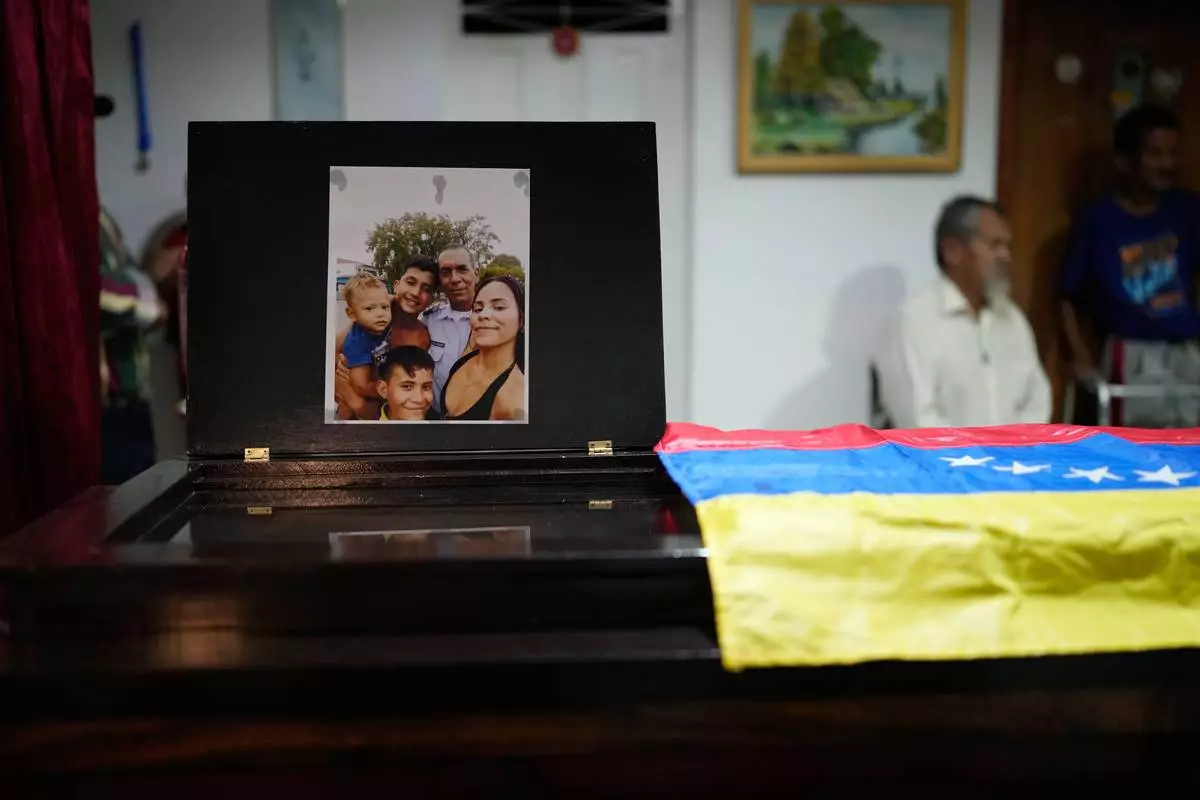
A photo of Edilson Torres, a Venezuelan police officer who died in prison a month after being arrested on accusations of treason, and his family adorns his coffin during his wake at his home in Guanare, Venezuela, Monday, Jan. 12, 2026. (AP Photo/Ariana Cubillos)

A photo of Edilson Torres, a Venezuelan police officer who died in prison a month after being arrested on accusations of treason, and his family adorns his coffin during his wake at his home in Guanare, Venezuela, Monday, Jan. 12, 2026. (AP Photo/Ariana Cubillos)

Relatives of Edilson Torres, a Venezuelan police officer who died in prison a month after being arrested on accusations of treason, sit by his coffin during his wake in Guanare, Venezuela, Monday, Jan. 12, 2026. (AP Photo/Ariana Cubillos)

Relatives of Edilson Torres, a Venezuelan police officer who died in prison a month after being arrested on accusations of treason, sit by his coffin during his wake in Guanare, Venezuela, Monday, Jan. 12, 2026. (AP Photo/Ariana Cubillos)

Emelyn Torres leans over the casket of her brother, Edilson Torres, a Venezuelan police officer who died in prison a month after being detained on accusations of treason, during his wake at his home in Guanare, Venezuela, Monday, Jan. 12, 2026. (AP Photo/Ariana Cubillos)

Emelyn Torres leans over the casket of her brother, Edilson Torres, a Venezuelan police officer who died in prison a month after being detained on accusations of treason, during his wake at his home in Guanare, Venezuela, Monday, Jan. 12, 2026. (AP Photo/Ariana Cubillos)

Emelyn Torres and Maria Cristina Fernandez, the sister and grandmother of Edilson Torres, a Venezuelan police officer who died in prison after being detained on accusations of treason, embrace during his wake at his home in Guanare, Venezuela, Monday, Jan. 12, 2026. (AP Photo/Ariana Cubillos)

Emelyn Torres and Maria Cristina Fernandez, the sister and grandmother of Edilson Torres, a Venezuelan police officer who died in prison after being detained on accusations of treason, embrace during his wake at his home in Guanare, Venezuela, Monday, Jan. 12, 2026. (AP Photo/Ariana Cubillos)

Recommended Articles