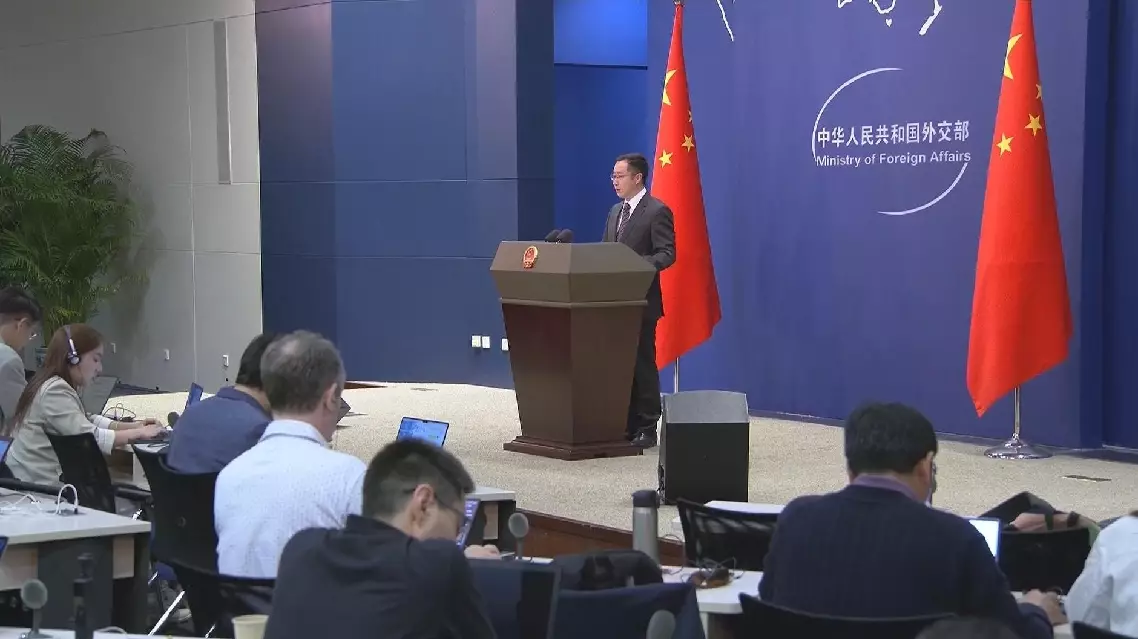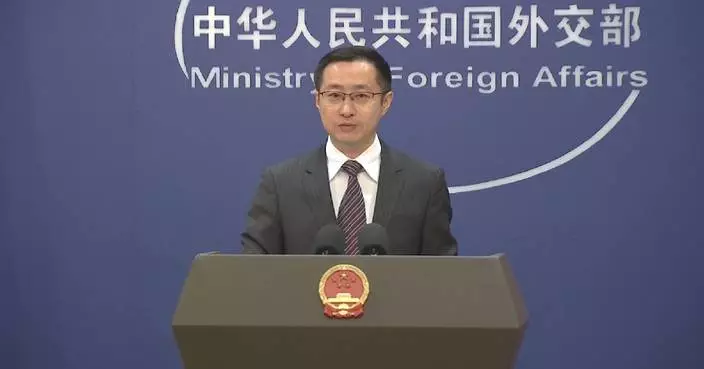
China's newly launched pilot program for electronic Apostille certificates took effect on Wednesday, marking China's latest effort to streamline cross-border circulation of public documents, Chinese Foreign Ministry spokesman Guo Jiakun said at a press briefing in Beijing on the same day.
The Convention Abolishing the Requirement of Legalization for Foreign Public Documents, or the Apostille Convention, became effective in China in 2023.
The Convention is to simplify the procedures for the cross-border circulation of official documents and facilitate international economic and trade and personnel exchanges.
The Ministry of Foreign Affairs (MFA) is the government agency responsible for managing and issuing Apostille certificates for public documents issued in the Chinese mainland.
Guo said that the latest step, a move encouraged under the Convention, will further enhance the efficiency.
"The relative measure is the latest step taken by China to streamline cross-border circulation of public documents. After the Convention Abolishing the Requirement of Legalisation for Foreign Public Documents (the Convention) entered into force in China in 2023, the verification procedure of cross-border circulation of public documents between China and other contracting countries was significantly simplified from a 'dual legalization' process to requiring only an Apostille. To make the process more efficient, our Ministry began issuing pilot electronic Apostilles today, a measure encouraged by the Convention," Guo said.
Guo introduced that the reform will slash the time and economic costs associated with the cross-border circulation of official documents between China and other countries.
"The pilot program fully eliminates off-line application procedures. When filing for public documents, the applicants can simultaneously apply for and acquire electronic Apostille online, which means they no longer need to go through any off-line procedures at consular authentication agencies. What’s more, the electronic Apostille supports online verification, thus enabling the applicants and agencies using the documents to enjoy better and more efficient service of cross-border document circulation. This measure will save Chinese and foreign nationals and businesses significant amounts of time and cost and offer tangible convenience," Guo said.
Guo added that the first pilot program will provide electronic Apostille for the Certificate of Origin issued by the China Council for the Promotion of International Trade (CCPIT). In the future, it will gradually expand to cover the various types of public documents issued in China. Guo reminded to refer to the official websites of the Ministry and China Consular Service for detailed specifications as to how to apply for an electronic Apostille.
The Apostille Convention was concluded on Oct 5, 1961 in Hague and entered into force on Jan 21, 1965.
Currently, 125 contracting countries joined in the Convention, accounting for about three-fifths of the total number of countries and regions in the world. They include countries in the European Union, the United States, Japan, South Korea, and other major trading partners of China, and the majority of countries participating in the Belt and Road Initiative.

China starts issuing pilot electronic Apostilles: spokesman