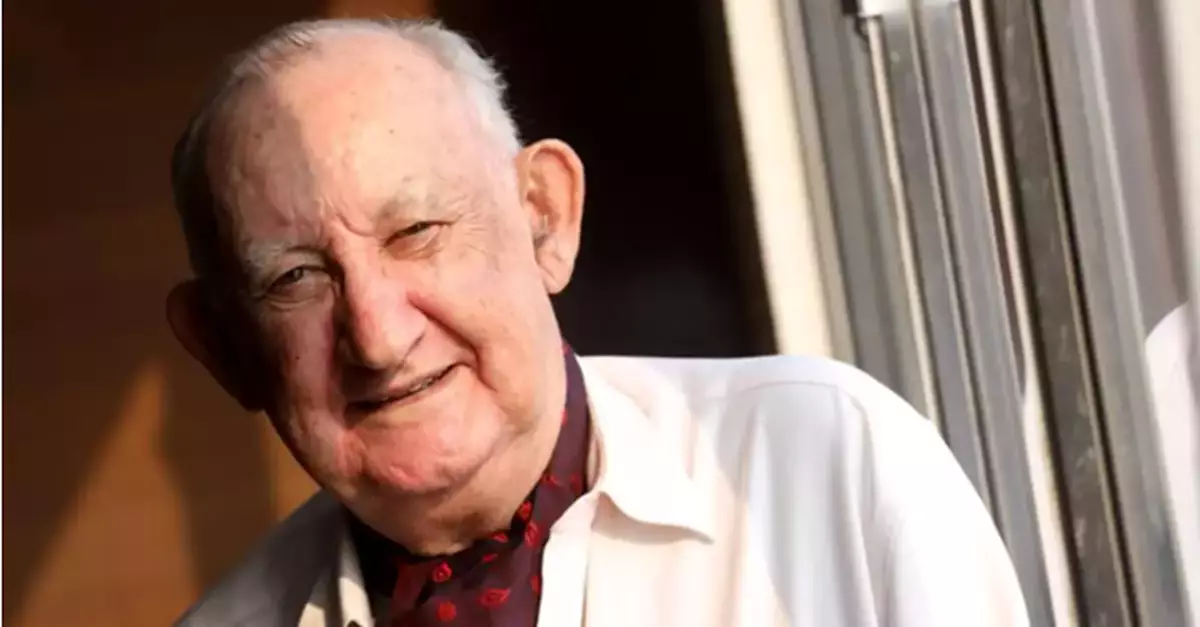
Mark Pinkstone/Former Chief Information Officer of HK government
Hong Kong has done it again, this time in the Arab world where it has been deemed the “Most Promising Muslim-Friendly Destination for the Year” and placed third among the non-Organization of Islamic Cooperation Destinations (non-OIC), according to the Global Muslim Travel Index (GMTI).
It was also placed first in the Muslim-Friendly Accessible Destination (non-OIC) category and second place in the Muslim Women Friendly Destination (non-IOC) category.
According to Hong Kong’s Chief Executive John Lee Ka-chiu, these international accolades fully recognize Hong Kong’s efforts in promoting Halal tourism.
And indeed, it does. The number of Halal-certified restaurants has surged from about 100 at the beginning of 2024 to about 190 today. Additionally, more than 60 hotels, attractions, and convention venues have received the “Crescent Rating” for Muslim-friendly services. Crescent Rating is a Singapore-based organization that researches Halal travel. The service predicts that by 2030, the Muslim traveller expenditure will reach US$235 billion world-wide.
During a trip to the Middle East in February, Lee met Vice-President and Prime Minister of the United Arab Emirates (UAE) and Ruler of Dubai HH Sheikh Mohammed bin Rashid Al Maktoum to discuss bilateral trade arrangements. The trip was so successful that Lee has decided to establish a Hong Kong Economic and Trade Office in Dubai.
He said the UAE is a key partner in China’s Belt and Road Initiative, which has developed several major projects in the Middle East, adding that Hong Kong possesses the necessary supporting facilities for the projects and can provide financing support, as well as any architectural design and related professional services that are required.
The UAE was Hong Kong’s 11th largest trading partner in the world, with bilateral trade exceeding US$135 billion and surpassing all European countries.
As of November 2022, there were 36 companies in Hong Kong representing parent companies located in the UAE, in which four of them are regional headquarters.
Hong Kong has become such an important trading and financial hub for the Arab countries that they have even established their own financial index linked to the Hong Kong Stock Exchange.
Known as the HK Islamic Index (HKII), it was established by the Arab Chamber of Commerce to support Hong Kong's ambitions to develop it into a Shariah-compliant, Islamic banking and financial centre and was the first time a chamber of commerce had taken the initiative to create its own equity index. Reuters, Bloomberg, and Quamnet have been contracted to disseminate the HK Islamic Index. The HKII comprises of 78 companies listed on the Hong Kong Stock Exchange, with 39 each from Hong Kong and mainland China. It has a market capitalization of HK$9,483.4 billion.
Shariah-compliant refers to financial practices and investments that adhere to Islamic law, prohibiting interest and unethical activities while promoting social responsibility. Its investments are governed by the principles of Shariah law, which is derived from the Quran and Hadith. It includes, among other things, prohibition of riba (interest) meaning that the charging or paying interest is strictly forbidden in Shariah-compliant finance. Instead, profit-sharing arrangements are encouraged, where investors share in the profits and losses of their investments.
According to the last 2016 census, Islam is practiced by 4.1 per cent of Hong Kong’s population, or about 300,000 Muslims, of which, 50,000 are Chinese, 150,000 are Indonesians and 30,000 are Pakistanis, with the rest from the Middle East and other parts of the world.
Lee and the Hong Kong Stock Exchange, which has made a couple of trips to the Middle East in recent times can see the value of the Arab countries to Hong Kong in bilaterial relations to boost the Belt and Road Initiative. But more has to be done to instill confidence in trading with Hong Kong.
Lee has suggested increased training with hotel receptionists and waiters learning Arabic as well as those in airline check-in counters. However, if the government is sincere in promoting Arabic language courses, perhaps it can reconsider its policy to provide subsidies to the Continuing Education Fund to reimburse those picking up the language at HKU SPACE as it does with other languages such as English, Japanese, Korean etc.
There have also been suggestions from the Arab Chamber of Commerce that banks could be more Arab-friendly and Chinese Embassies stationed in the Middle East could be more forthcoming in issuing visas to visit Hong Kong.
Mark Pinkstone
** 博客文章文責自負,不代表本公司立場 **