KAKUMA, Kenya (AP) — Martin Komol sighs as he inspects his cracked, mud-walled house that is one rain away from fully collapsing. Nothing seems to last for him and 300,000 other refugees in this remote Kakuma camp in Kenya — now, not even food rations.
Funding for the U.N. World Food Program has dropped after the Trump administration paused support in March, part of the widespread dismantling of foreign aid by the United States, once the world's biggest donor.
Click to Gallery
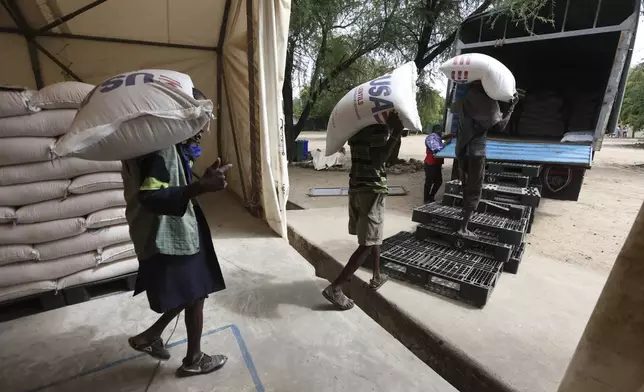
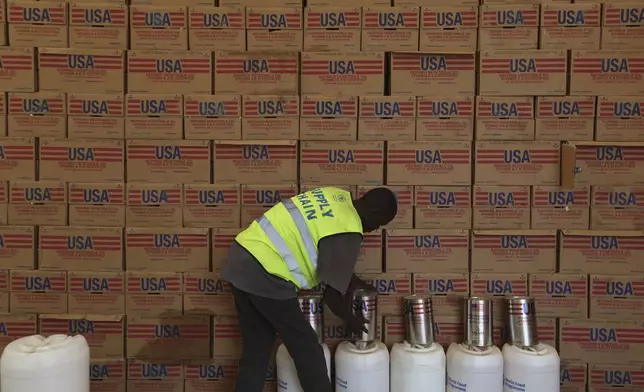
Workers load USAID humanitarian aid into a truck at a World Food Programme (WFP) warehouse in Kakuma Refugee Camp, Turkana, Kenya Tuesday, June 3, 2025. (AP Photo/Andrew Kasuku)
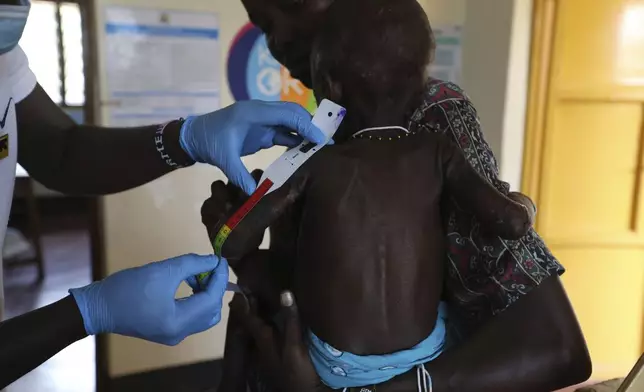
Sunday Achok, 14 months old, who suffers acute malnutrition and complications, is measured at the Ammusait General Hospital in Turkana, Kenya Wednesday, June 4, 2025. (AP Photo/Andrew Kasuku)
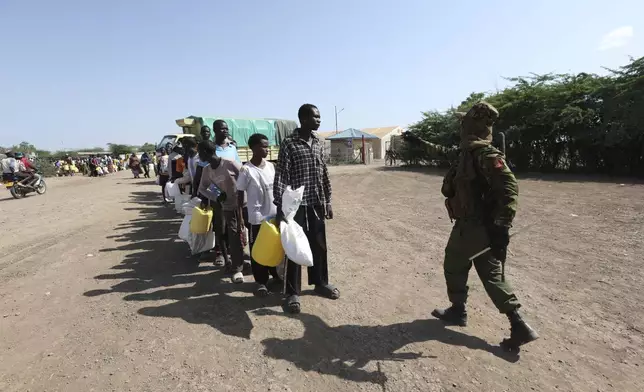
Refugees waiting in a queue to receive humanitarian aid distributed by the World Food Programme (WFP) at Kakuma Refugee Camp in Turkana, Kenya Wednesday, June 4, 2025. (AP Photo/Andrew)
A man arranges USAID humanitarian aid inside a warehouse run by the World Food Programme (WFP) at Kakuma Refugee Camp in Turkana, Kenya Tuesday, June 3, 2025. (AP Photo/Andrew)
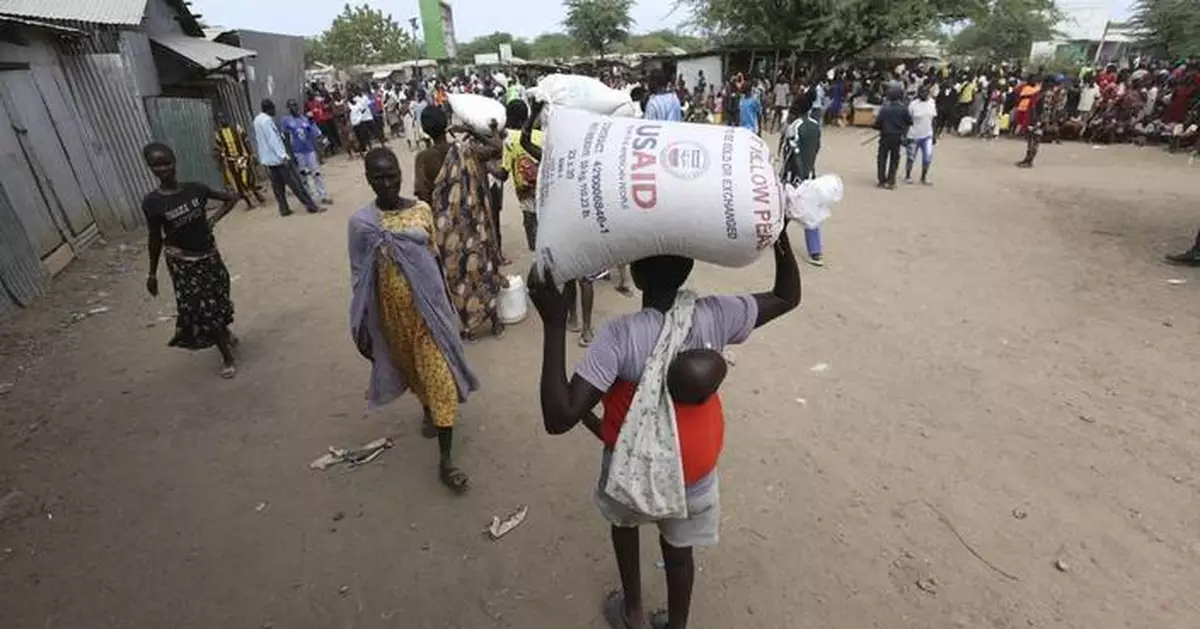
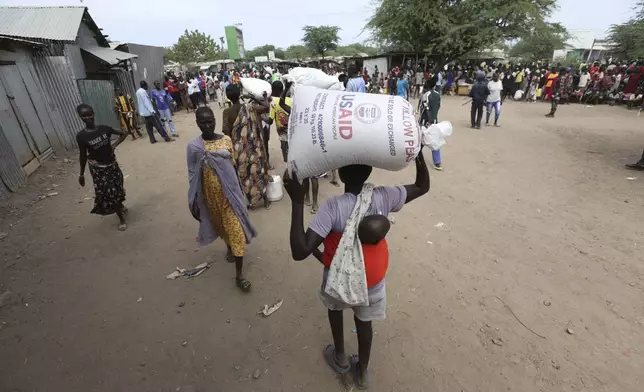
Refugees carry food at a distribution center run by the World Food Programme (WFP) at Kakuma Refugee Camp in Turkana, Kenya Tuesday, June 3, 2025. (AP Photo/Andrew)
That means Komol, a widowed father of five from Uganda, has been living on handouts from neighbors since his latest monthly ration ran out two weeks ago. He said he survives on one meal a day, sometimes a meal every two days.
“When we can’t find anyone to help us, we become sick, but when we go to the hospital, they say it’s just hunger and tell us to go back home,” the 59-year-old said. His wife is buried here. He is reluctant to return to Uganda, one of the more than 20 home countries of Kakuma's refugees.
Food rations have been halved. Previous ration cuts led to protests in March. Monthly cash transfers that refugees used to buy proteins and vegetables to supplement the rice, lentils and cooking oil distributed by WFP have ended this month.
Each refugee now receives 3 kilograms (6 pounds) of rice per month, far below the 9 kilograms recommended by the U.N. for optimal nutrition. WFP hopes to receive the next donation of rice by August. That's along with 1 kilogram of lentils and 500 milliliters of cooking oil per person.
“Come August, we are likely to see a more difficult scenario. If WFP doesn’t receive any funding between now and then, it means only a fraction of the refugees will be able to get assistance. It means only the most extremely vulnerable will be targeted,” said Colin Buleti, WFP's head in Kakuma. WFP is seeking help from other donors.
As dust swirls along paths between the camp's makeshift houses, the youngest children run and play, largely unaware of their parents' fears.
But they can't escape hunger. Komol's 10-year-old daughter immerses herself in schoolbooks when there's nothing to eat.
“When she was younger she used to cry, but now she tries to ask for food from the neighbors, and when she can’t get any she just sleeps hungry,” Komol said. In recent weeks, they have drunk water to try to feel full.
The shrinking rations have led to rising cases of malnutrition among children under 5 and pregnant and breastfeeding mothers.
At Kakuma's largest hospital, run by the International Rescue Committee, children with malnutrition are given fortified formula milk.
Nutrition officer Sammy Nyang’a said some children are brought in too late and die within the first few hours of admission. The 30-bed stabilization ward admitted 58 children in March, 146 in April and 106 in May. Fifteen children died in April, up from the monthly average of five. He worries they will see more this month.
“Now with the cash transfers gone, we expect more women and children to be unable to afford a balanced diet,” Nyang’a said.
The hospital had been providing nutrient-dense porridge for children and mothers, but the flour has run out after stocks, mostly from the U.S., were depleted in March. A fortified peanut paste given to children who have been discharged is also running out, with current supplies available until August.
In the ward of whimpering children, Susan Martine from South Sudan cares for her 2-year-old daughter, who has sores after swelling caused by severe malnutrition.
The mother of three said her family often sleeps hungry, but her older children still receive hot lunches from a WFP school feeding program. For some children in the camp, it's their only meal. The program also faces pressure from the aid cuts.
“I don’t know how we will survive with the little food we have received this month,” Martine said.
The funding cuts are felt beyond Kakuma's refugee community. Businessman Chol Jook recorded monthly sales of 700,000 Kenyan shillings ($5,400) from the WFP cash transfer program and now faces losses.
Those who are hungry could slip into debt as they buy on credit, he said.
For more on Africa and development: https://apnews.com/hub/africa-pulse
The Associated Press receives financial support for global health and development coverage in Africa from the Gates Foundation. The AP is solely responsible for all content. Find AP’s standards for working with philanthropies, a list of supporters and funded coverage areas at AP.org.
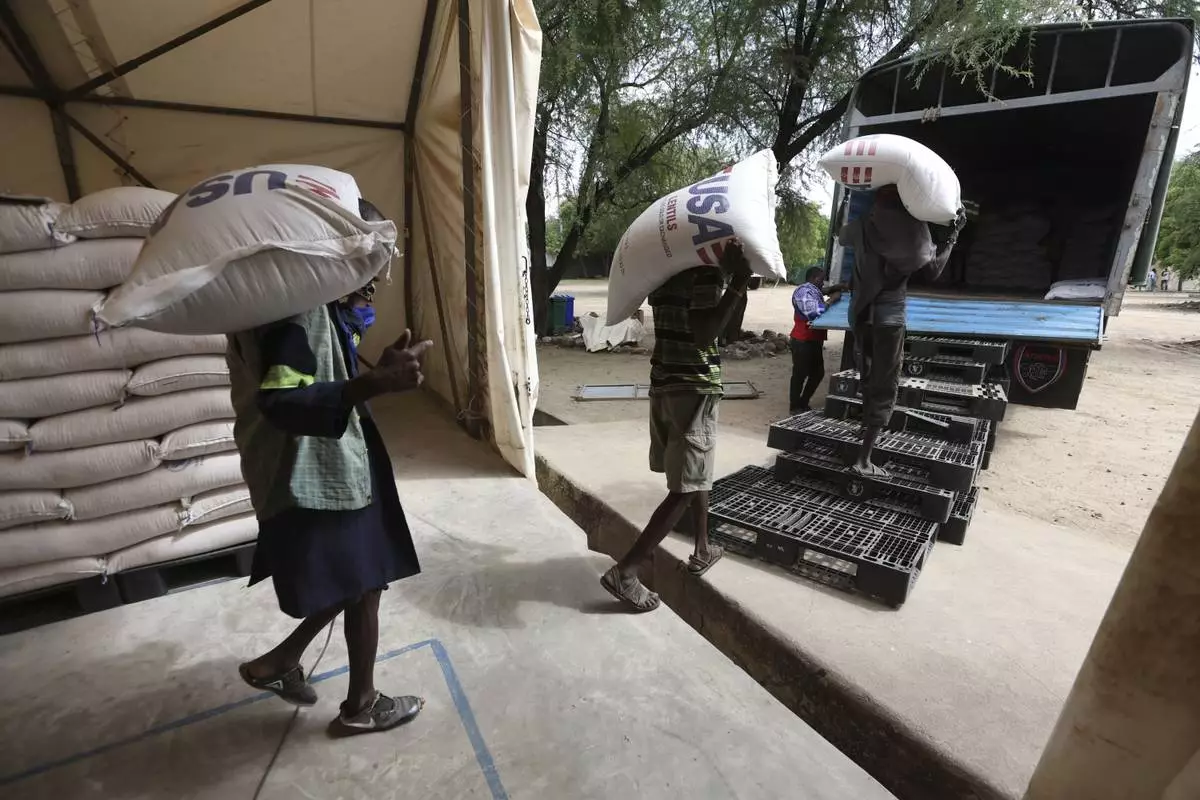
Workers load USAID humanitarian aid into a truck at a World Food Programme (WFP) warehouse in Kakuma Refugee Camp, Turkana, Kenya Tuesday, June 3, 2025. (AP Photo/Andrew Kasuku)
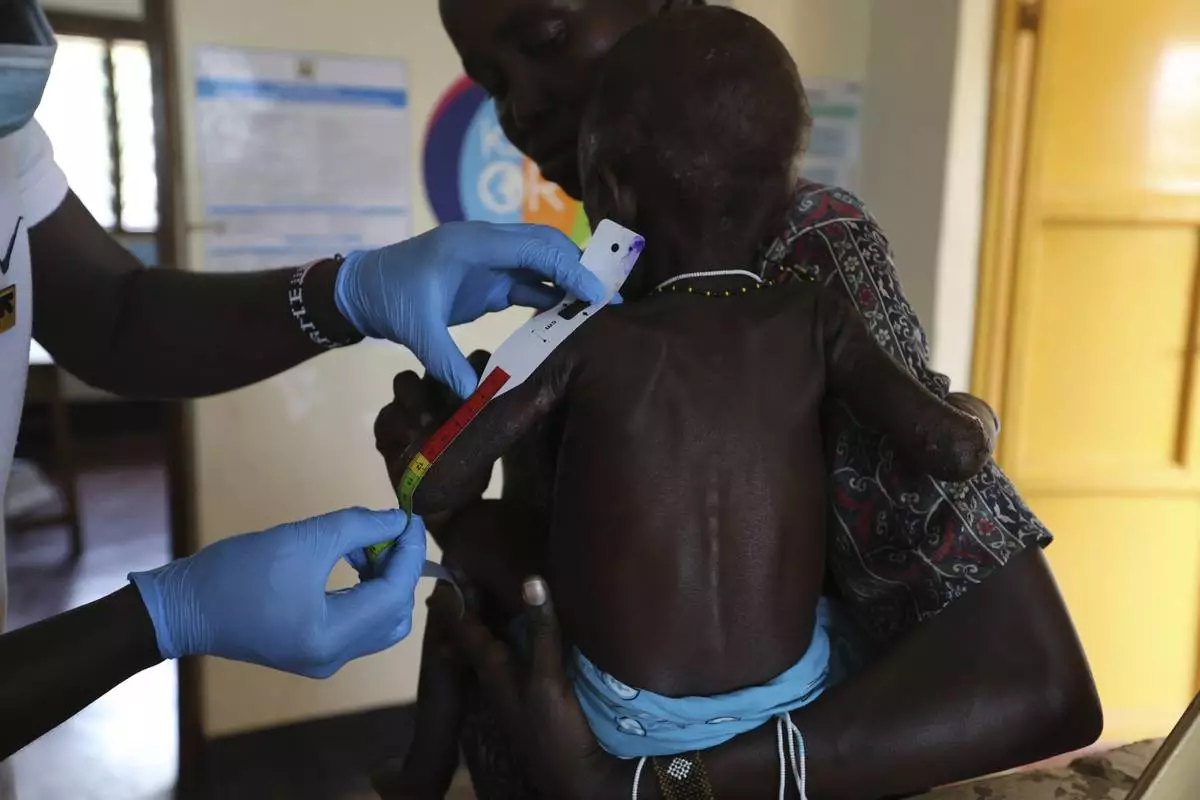
Sunday Achok, 14 months old, who suffers acute malnutrition and complications, is measured at the Ammusait General Hospital in Turkana, Kenya Wednesday, June 4, 2025. (AP Photo/Andrew Kasuku)
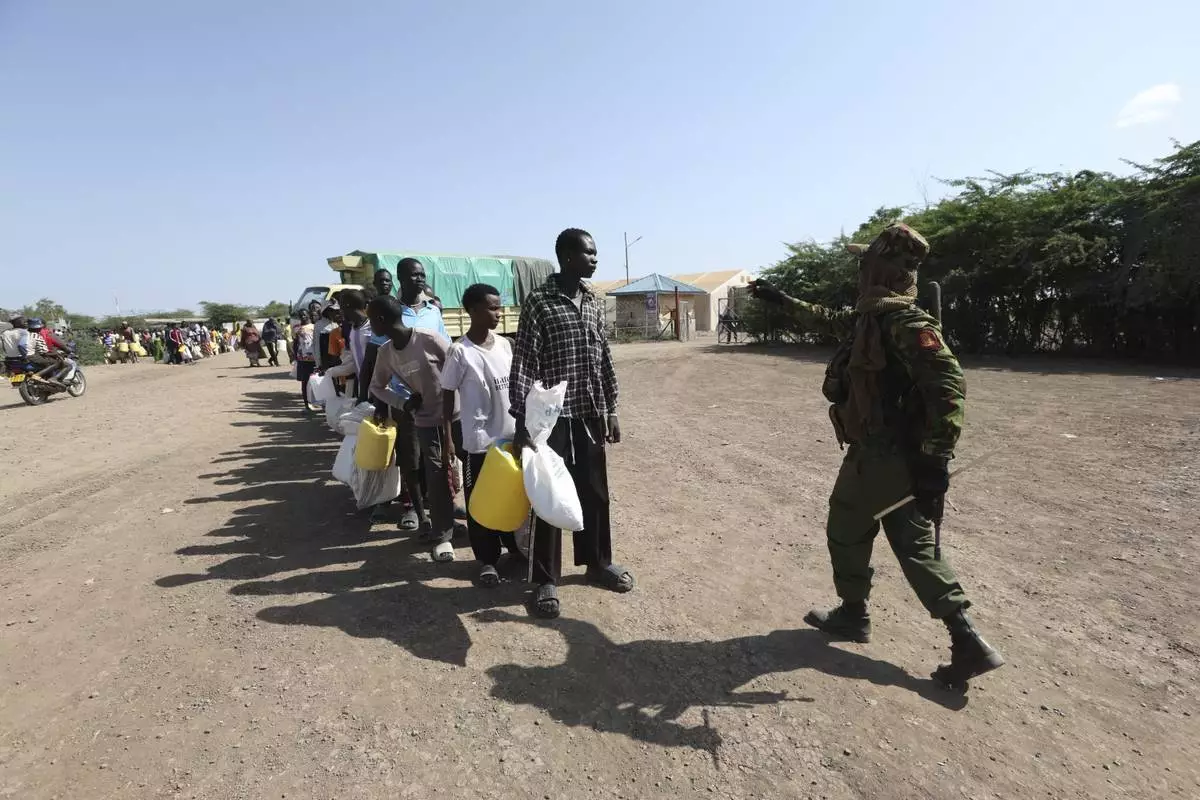
Refugees waiting in a queue to receive humanitarian aid distributed by the World Food Programme (WFP) at Kakuma Refugee Camp in Turkana, Kenya Wednesday, June 4, 2025. (AP Photo/Andrew)
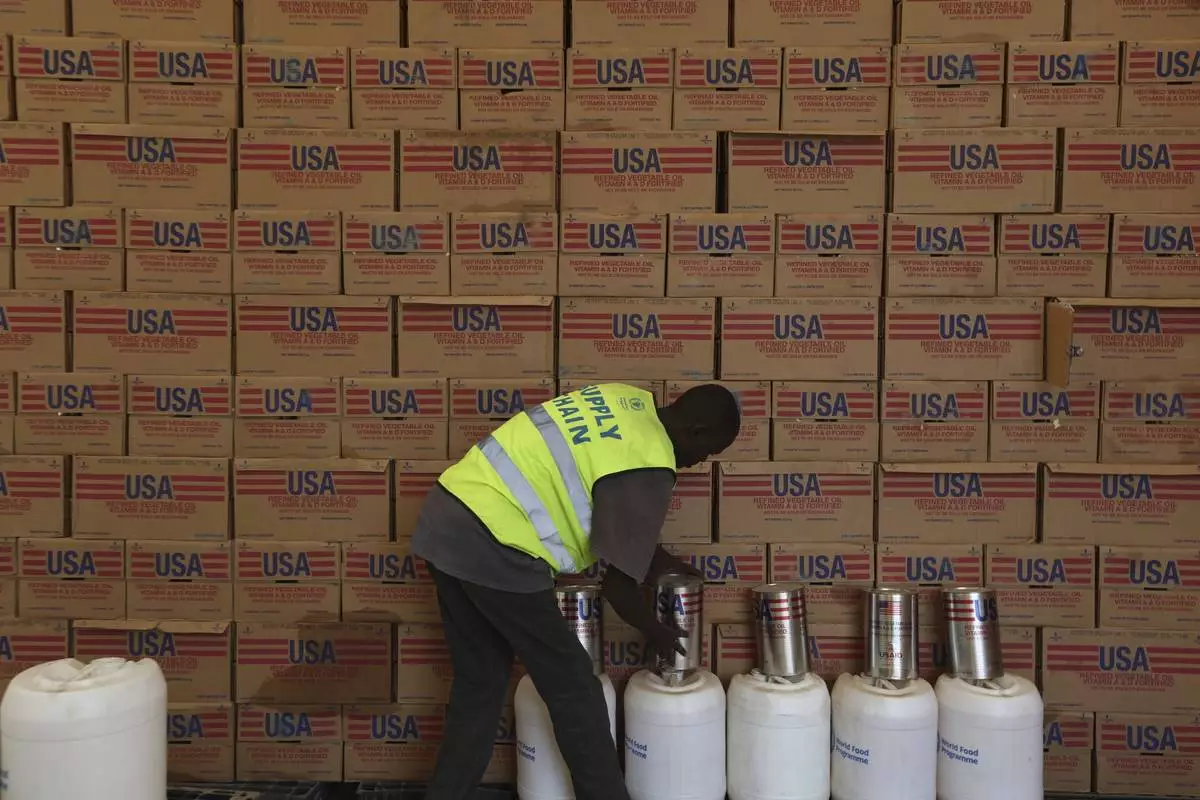
A man arranges USAID humanitarian aid inside a warehouse run by the World Food Programme (WFP) at Kakuma Refugee Camp in Turkana, Kenya Tuesday, June 3, 2025. (AP Photo/Andrew)
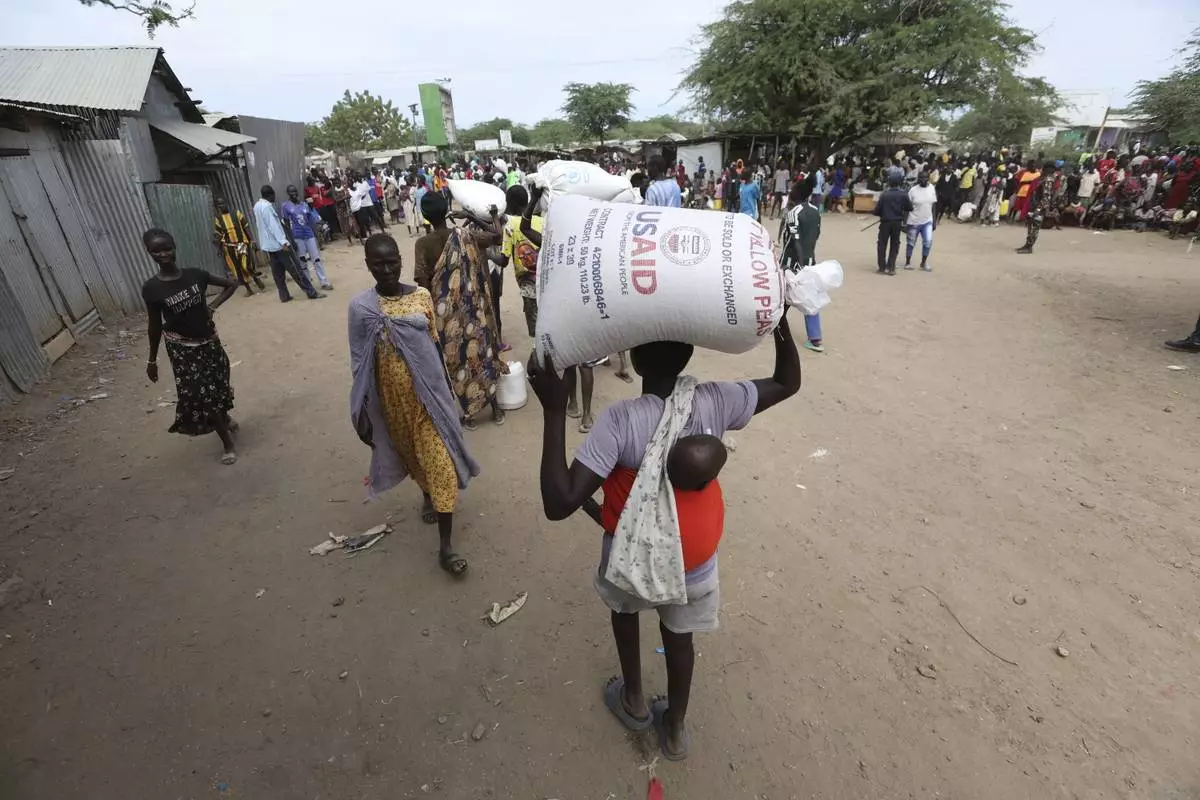
Refugees carry food at a distribution center run by the World Food Programme (WFP) at Kakuma Refugee Camp in Turkana, Kenya Tuesday, June 3, 2025. (AP Photo/Andrew)
U.S. President Donald Trump wants to own Greenland. He has repeatedly said the United States must take control of the strategically located and mineral-rich island, which is a semiautonomous region that's part of NATO ally Denmark.
Officials from Denmark, Greenland and the United States met Thursday in Washington and will meet again next week to discuss a renewed push by the White House, which is considering a range of options, including using military force, to acquire the island.
Trump said Friday he is going to do “something on Greenland, whether they like it or not.”
If it's not done “the easy way, we're going to do it the hard way," he said without elaborating what that could entail. In an interview Thursday, he told The New York Times that he wants to own Greenland because “ownership gives you things and elements that you can’t get from just signing a document.”
Danish Prime Minister Mette Frederiksen has warned that an American takeover of Greenland would mark the end of NATO, and Greenlanders say they don't want to become part of the U.S.
This is a look at some of the ways the U.S. could take control of Greenland and the potential challenges.
Trump and his officials have indicated they want to control Greenland to enhance American security and explore business and mining deals. But Imran Bayoumi, an associate director at the Atlantic Council’s Scowcroft Center for Strategy and Security, said the sudden focus on Greenland is also the result of decades of neglect by several U.S. presidents towards Washington's position in the Arctic.
The current fixation is partly down to “the realization we need to increase our presence in the Arctic, and we don’t yet have the right strategy or vision to do so,” he said.
If the U.S. took control of Greenland by force, it would plunge NATO into a crisis, possibly an existential one.
While Greenland is the largest island in the world, it has a population of around 57,000 and doesn't have its own military. Defense is provided by Denmark, whose military is dwarfed by that of the U.S.
It's unclear how the remaining members of NATO would respond if the U.S. decided to forcibly take control of the island or if they would come to Denmark's aid.
“If the United States chooses to attack another NATO country militarily, then everything stops,” Frederiksen has said.
Trump said he needs control of the island to guarantee American security, citing the threat from Russian and Chinese ships in the region, but “it's not true” said Lin Mortensgaard, an expert on the international politics of the Arctic at the Danish Institute for International Studies, or DIIS.
While there are probably Russian submarines — as there are across the Arctic region — there are no surface vessels, Mortensgaard said. China has research vessels in the Central Arctic Ocean, and while the Chinese and Russian militaries have done joint military exercises in the Arctic, they have taken place closer to Alaska, she said.
Bayoumi, of the Atlantic Council, said he doubted Trump would take control of Greenland by force because it’s unpopular with both Democratic and Republican lawmakers, and would likely “fundamentally alter” U.S. relationships with allies worldwide.
The U.S. already has access to Greenland under a 1951 defense agreement, and Denmark and Greenland would be “quite happy” to accommodate a beefed up American military presence, Mortensgaard said.
For that reason, “blowing up the NATO alliance” for something Trump has already, doesn’t make sense, said Ulrik Pram Gad, an expert on Greenland at DIIS.
U.S. Secretary of State Marco Rubio told a select group of U.S. lawmakers this week that it was the Republican administration’s intention to eventually purchase Greenland, as opposed to using military force. Danish and Greenlandic officials have previously said the island isn't for sale.
It's not clear how much buying the island could cost, or if the U.S. would be buying it from Denmark or Greenland.
Washington also could boost its military presence in Greenland “through cooperation and diplomacy,” without taking it over, Bayoumi said.
One option could be for the U.S. to get a veto over security decisions made by the Greenlandic government, as it has in islands in the Pacific Ocean, Gad said.
Palau, Micronesia and the Marshall Islands have a Compact of Free Association, or COFA, with the U.S.
That would give Washington the right to operate military bases and make decisions about the islands’ security in exchange for U.S. security guarantees and around $7 billion of yearly economic assistance, according to the Congressional Research Service.
It's not clear how much that would improve upon Washington's current security strategy. The U.S. already operates the remote Pituffik Space Base in northwestern Greenland, and can bring as many troops as it wants under existing agreements.
Greenlandic politician Aaja Chemnitz told The Associated Press that Greenlanders want more rights, including independence, but don't want to become part of the U.S.
Gad suggested influence operations to persuade Greenlanders to join the U.S. would likely fail. He said that is because the community on the island is small and the language is “inaccessible.”
Danish Foreign Minister Lars Løkke Rasmussen summoned the top U.S. official in Denmark in August to complain that “foreign actors” were seeking to influence the country’s future. Danish media reported that at least three people with connections to Trump carried out covert influence operations in Greenland.
Even if the U.S. managed to take control of Greenland, it would likely come with a large bill, Gad said. That’s because Greenlanders currently have Danish citizenship and access to the Danish welfare system, including free health care and schooling.
To match that, “Trump would have to build a welfare state for Greenlanders that he doesn’t want for his own citizens,” Gad said.
Since 1945, the American military presence in Greenland has decreased from thousands of soldiers over 17 bases and installations to 200 at the remote Pituffik Space Base in the northwest of the island, Rasmussen said last year. The base supports missile warning, missile defense and space surveillance operations for the U.S. and NATO.
U.S. Vice President J.D. Vance told Fox News on Thursday that Denmark has neglected its missile defense obligations in Greenland, but Mortensgaard said that it makes “little sense to criticize Denmark,” because the main reason why the U.S. operates the Pituffik base in the north of the island is to provide early detection of missiles.
The best outcome for Denmark would be to update the defense agreement, which allows the U.S. to have a military presence on the island and have Trump sign it with a “gold-plated signature,” Gad said.
But he suggested that's unlikely because Greenland is “handy” to the U.S president.
When Trump wants to change the news agenda — including distracting from domestic political problems — “he can just say the word ‘Greenland' and this starts all over again," Gad said.
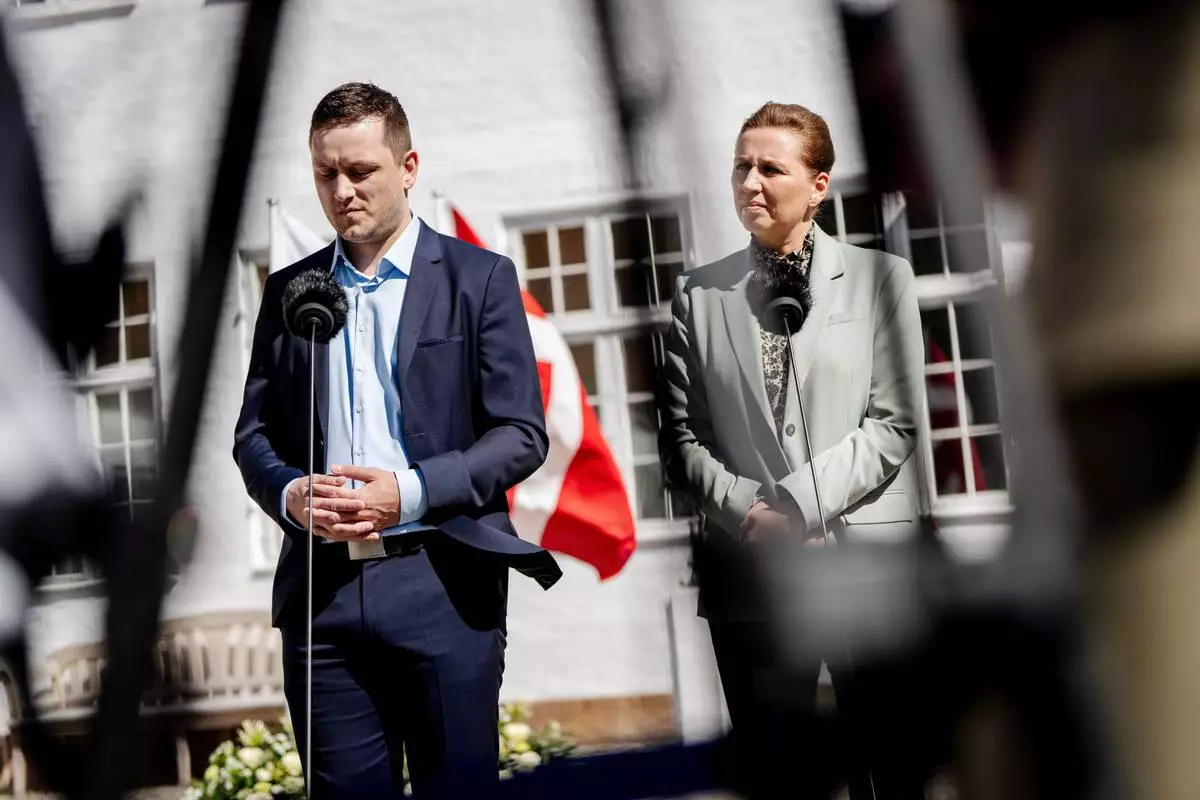
CORRECT THE ORDER OF SPEAKERS, FILE - Denmark's Prime Minister Mette Frederiksen, right, and Greenland's Prime Minister Jens-Frederik Nielsen, left, speak on April 27, 2025, in Marienborg, Denmark. (Mads Claus Rasmussen/Ritzau Scanpix via AP, File)
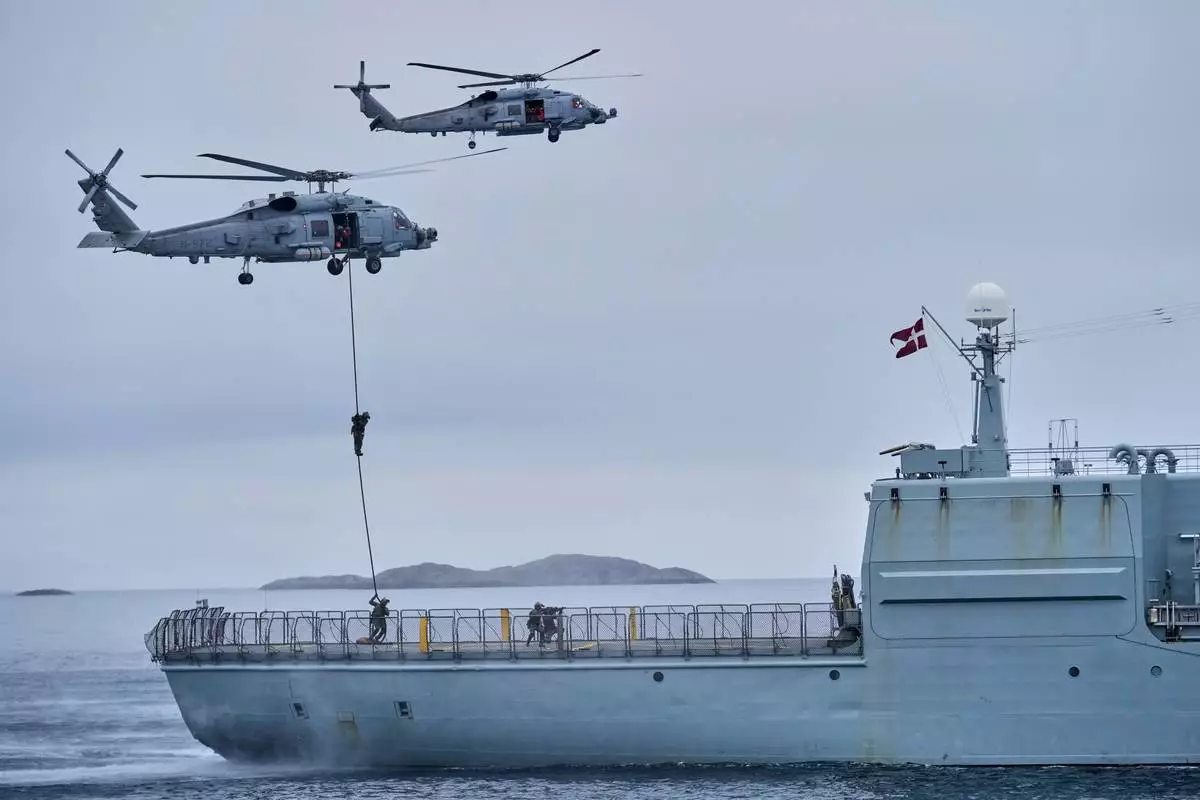
FILE - Danish military forces participate in an exercise with hundreds of troops from several European NATO members in the Arctic Ocean in Nuuk, Greenland, Sept. 15, 2025. (AP Photo/Ebrahim Noroozi, File)
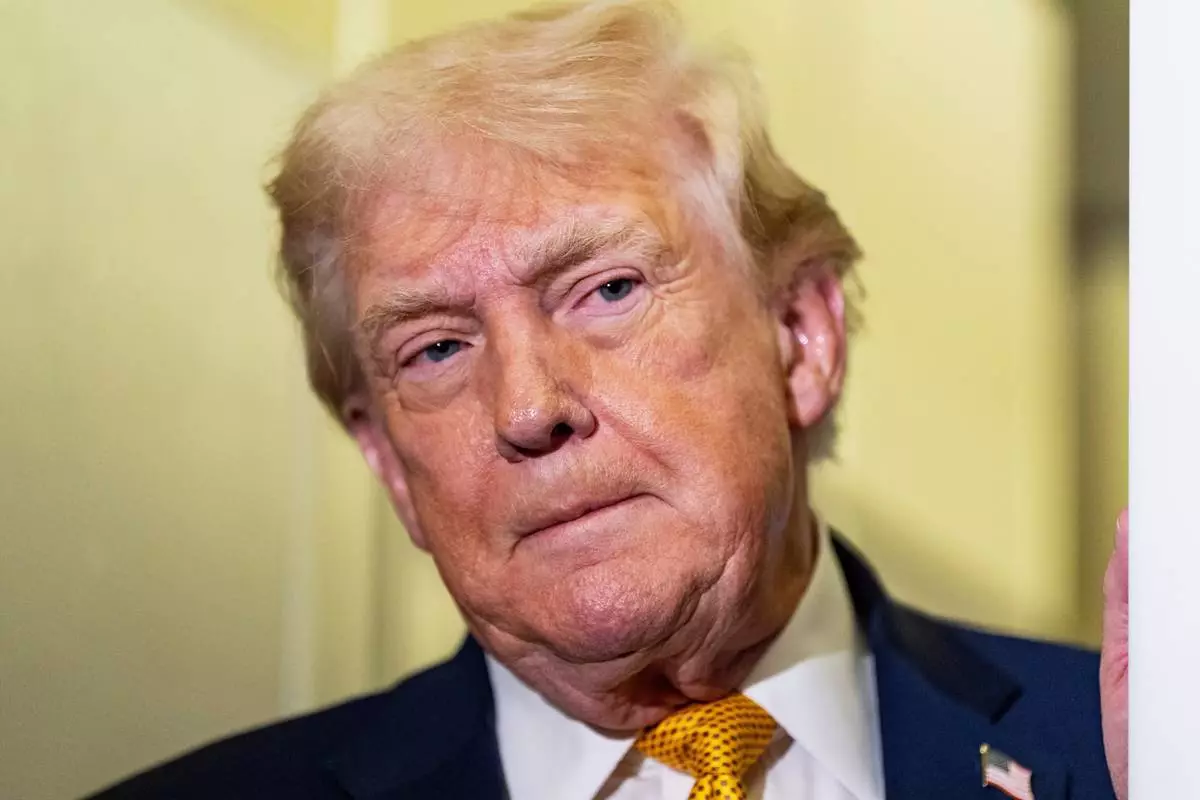
President Donald Trump listens as he was speaking with reporters while in flight on Air Force One, Sunday, Jan. 4, 2026, as returning to Joint Base Andrews, Md. (AP Photo/Alex Brandon)
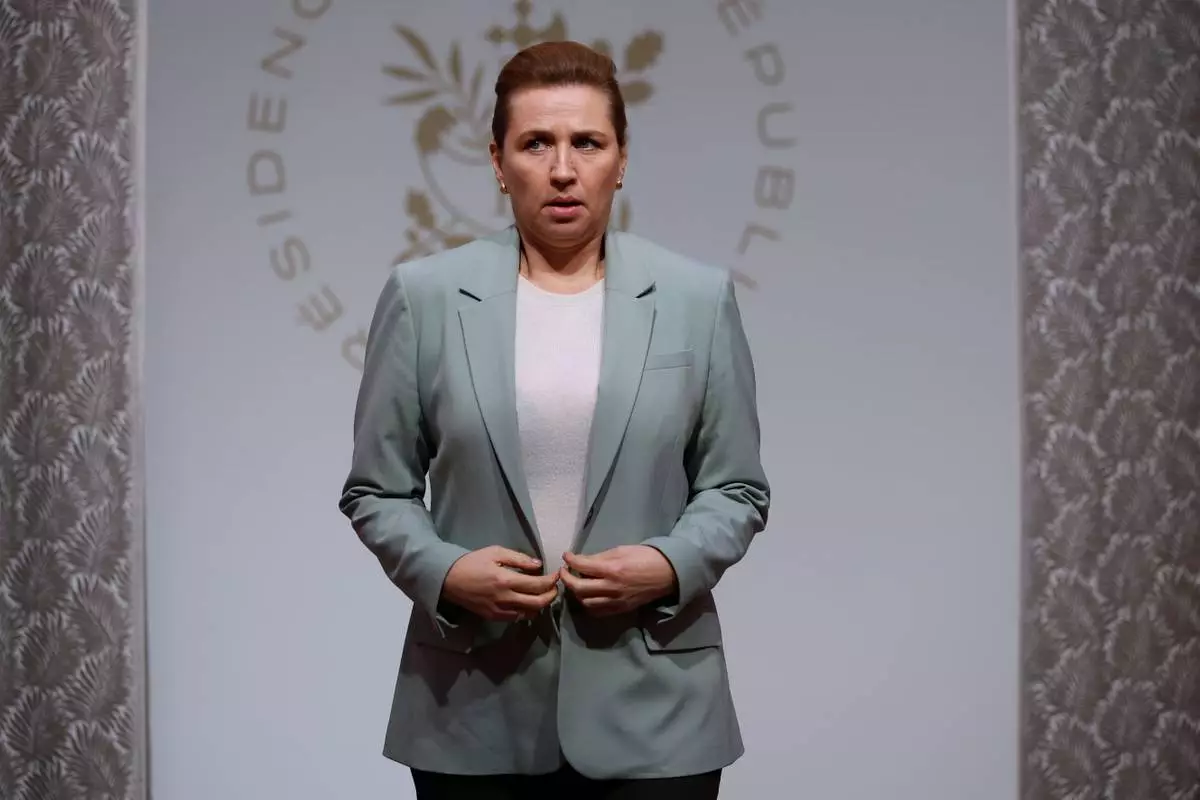
Danish Prime Minister Mette Frederiksen arrives for a meeting of the Coalition of the Willing at the Elysee Palace in Paris, France, Tuesday, Jan.6, 2026. (Yoan Valat, Pool photo via AP)
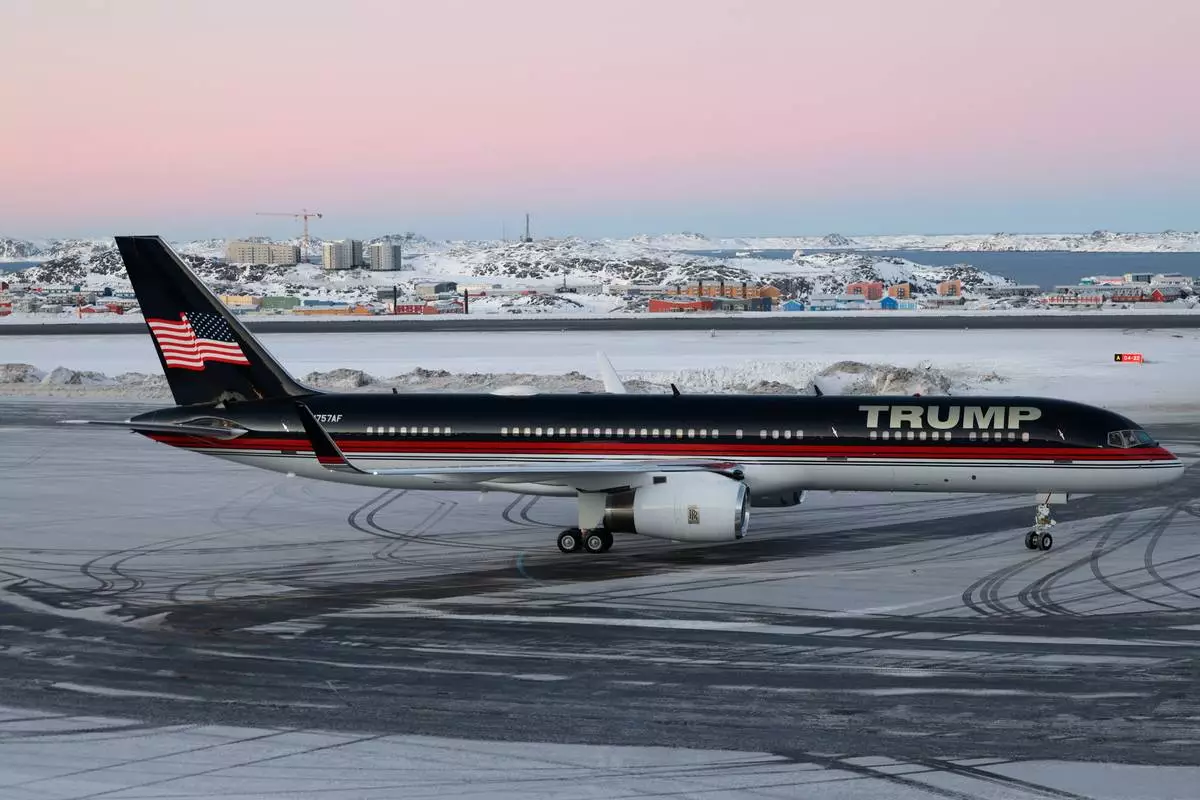
FILE - A plane carrying Donald Trump Jr. lands in Nuuk, Greenland, Jan. 7, 2025. (Emil Stach/Ritzau Scanpix via AP, file)