The number of people forcibly displaced by war, violence and persecution worldwide has risen to 122.1 million as of April this year, marking the tenth consecutive year of increase, according to the latest Global Trends Report released by the United Nations refugee agency (UNHCR) ahead of the World Refugee Day, which falls on Friday.
The report shows that by the end of 2024, the number of internally displaced persons (IDPs) reached 73.5 million, while the number of refugees who fled abroad stood at 42.7 million.
In terms of regional distribution, Sudan has become the world's largest displacement situation, with a total of 14.3 million refugees and IDPs. Syria ranked second with 13.5 million, followed by Afghanistan with 10.3 million.
The report says 60 percent of people forced to flee never leave their own country, and 73 percent of the world's refugees are hosted by low and middle-income countries.
While the number of forcibly displaced people has almost doubled in the last decade, funding for the UN refugee agency is roughly the same as in 2015, according to the report.
World Refugee Day is an international day designated by the United Nations to honor refugees around the globe. It falls each year on June 20 and shines a light on the rights, needs and dreams of those forced to flee.
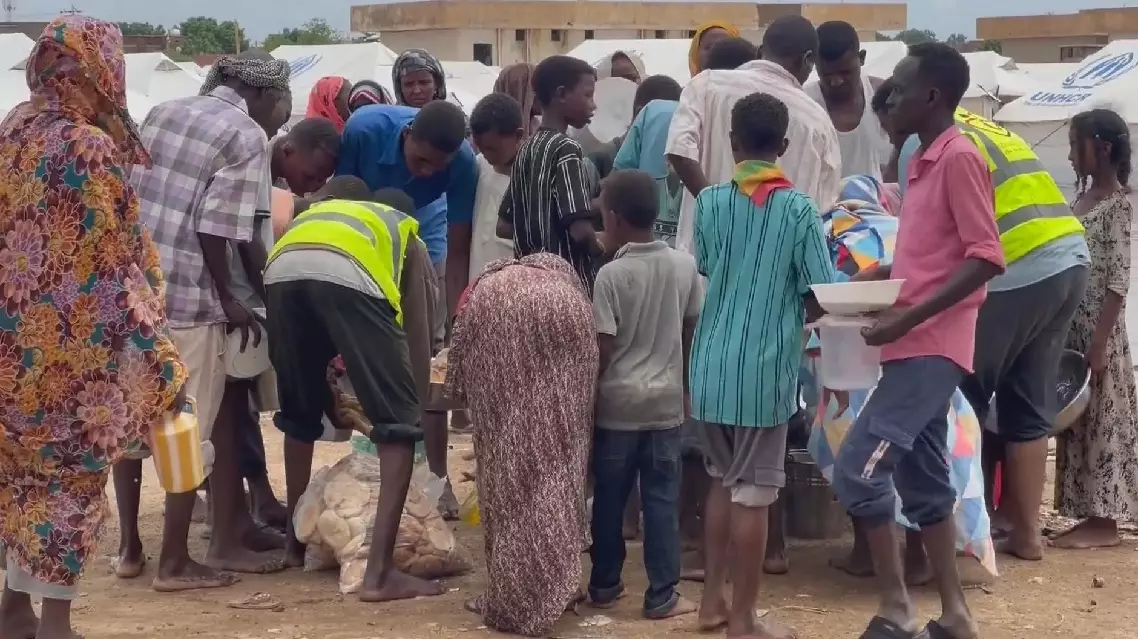
Global refugee crisis deepens with over 122 million displaced, marking decade of increase
China's development has never been a "threat" to anyone but the source of growth advancing common development of all countries, Foreign Ministry spokesman Lin Jian said at a regular press conference in Beijing on Friday.
Some Western media and think tanks are peddling so-called "China Shock 2.0," saying that "China is achieving fast development in high-tech sectors such as renewable energy and AI and relies on foreign markets to absorb its overcapacity, thus reducing the market share of developed countries and sending more serious shock waves to the global economy compared with the era of traditional manufacture industry," while there are foreign commentators saying that the "China Shock 2.0" argument ignores the genuine innovation occurring within the Chinese industrial ecosystem and that Chinese export is the exact booster of the global economy that is needed in the turbulent period and more indispensable than ever.
Commenting on that, Lin said: "From the world's factory to the world's market and innovation powerhouse, China's development is achieved through strong performance driven by innovation and brings tangible cooperation opportunities and space to the world. High-quality Chinese products represented by the 'old three' of textiles, furniture and home appliances have stabilized the global industrial and supply chain, lowered the living cost of global consumers and eased the inflationary pressure worldwide. China's green production capacity represented by the 'new three' of electric vehicles, batteries and solar panels has bridged the gap between supply and demand in global green development and bolstered the global energy transition and low-carbon development. Moreover, China's high-tech products represented by the 'new new three' of robots, AI and innovative drugs have broken high-tech barriers and monopoly and enabled people in more countries to access affordable new technologies," said the spokesman.
"Openness and cooperation bring about progress and win-win result. China's development has never been a 'threat' to anyone but the source of growth advancing common development of all countries. What really creates 'shocks' to the world has never been the innovation of Chinese companies and efficiency of Chinese industrial capacity, but protectionist moves of setting up barriers, decoupling and severing industrial and supply chains. China will stay committed to high-standard opening up, defend the multilateral trading system and provide more certainty and new impetus to the world economy with its own steady development," said Lin.
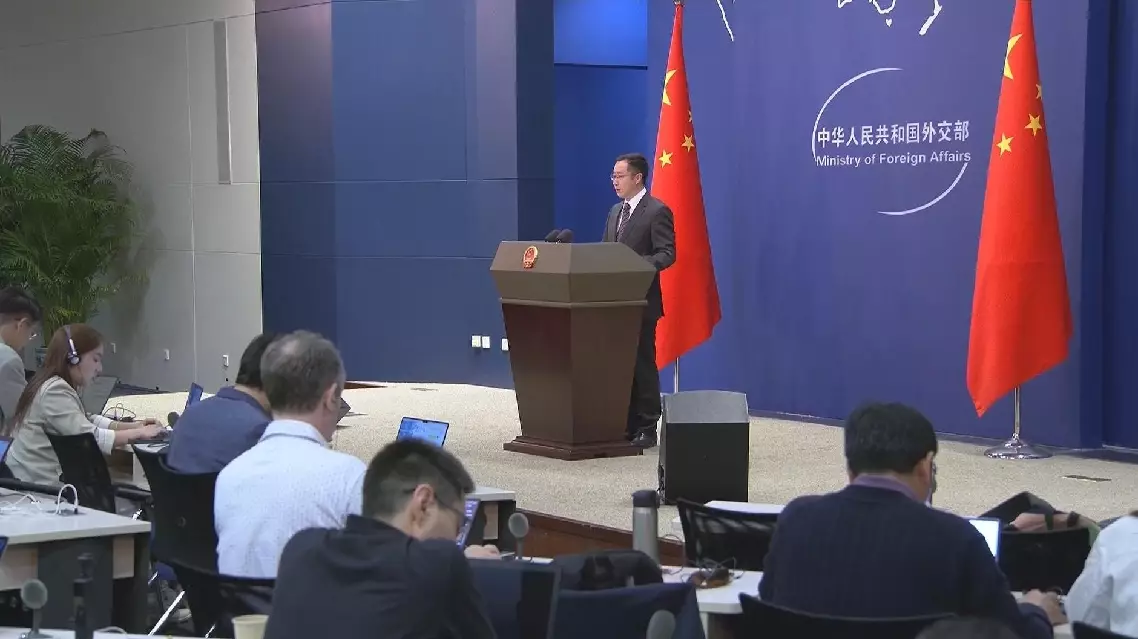
China's development never a threat: FM spokesman