A state-of-the-art hospital officially opened in Lhasa, southwest China's Xizang Autonomous Region, on Friday, marking a significant boost to the local healthcare system and the advancement of emergency and critical care services.
The Xizang Hospital of West China Hospital of Sichuan University, jointly established by the People's Government of Xizang Autonomous Region and West China Hospital of Sichuan University (Huaxi Hospital), features 14 clinical departments and eight medical laboratories, with a planned capacity of 1,499 beds.
This milestone highlights the importance of improving public health services for all ethnic groups and represents a new phase of enhanced healthcare cooperation between Sichuan and Xizang.
To commemorate the occasion, medical experts from Huaxi Hospital provided free clinics in 14 specialties, offering consultations to over 200 local residents.
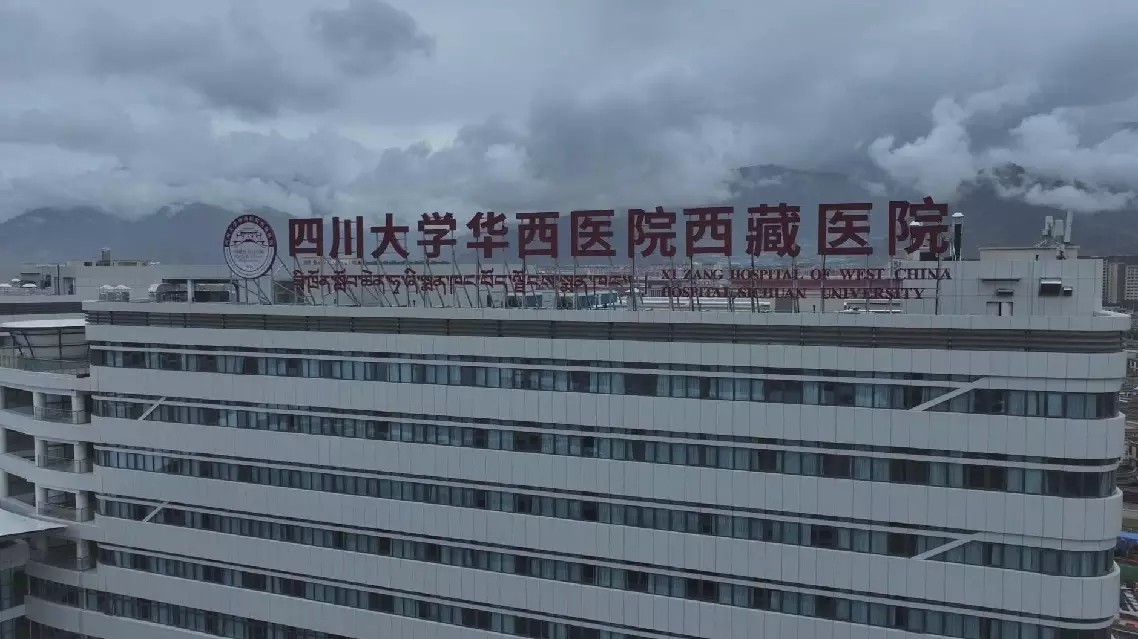
New hospital in Lhasa enhances healthcare access, emergency care for locals
Many U.S. businesses remain hopeful that U.S.-China presidential talks will help usher in greater stability and predictability in China-U.S. relations, said Margery Kraus, founder and executive chair of APCO, a global advisory and advocacy firm based in Washington D.C.
At the invitation of Chinese President Xi Jinping, U.S. President Donald Trump will pay a state visit to China from May 13 to 15. As high-level meetings and leadership exchanges unfold between the two countries, companies are closely watching for signs of improved communication and reduced uncertainty in the bilateral relationship.
"I think that, messages for both countries, it's important to have a message of stability, and this is no different than what we talked about a little bit earlier. And the reason for that is companies need predictability. And I know from the U.S. and with the tariffs -- one day it's this, one day it's that -- how much, just disorientation it provided for the companies. And so I think it's wonderful that they're getting together. The idea of the two people talking together, the two leaders talking together, I think makes everybody more comfortable that there'll be some kind of more normal relationships between China and the U.S.," Kraus said during an interview with China Global Television Network.
In her view, any headway in smoothing out relations could lead to significant mutual benefits, as it would allow American businesses to look past political differences to seek lucrative economic cooperation.
"I think that for the U.S. companies, maybe there's a little bit of tug of war between the headquarters and the people on the ground who see so much more opportunity. And so I think for the U.S. companies, if we could come to some framework where it's less political and more economic, I think that would be a really good thing. China is really showing itself to be very innovative in certain areas, and I know a lot of their healthcare innovations. And maybe there's an opportunity for some of the companies to partner. So we've come up with this idea of a 'multi-local company.' We talk about multinational, but it gives the idea that really these companies need to learn to be multi-local and know how to deal differently in each area," she said.
Kraus stressed that long-term, APCO remains confident in China's potential.
"We are very bullish on continuing our work in China. I think that we see the Chinese market as one where there are a lot of opportunities for these companies that are becoming these multinationals or multi-locals. Both economies are so important to the world that if we could find some ways to partner, it would be so important for the future. And also, I think the world is really dependent on these two big economies also paying attention to the rest of the world and how what they do can be helpful and elevate the quality of life," she said.

US companies see opportunity in stabilizing in ties with China: APCO