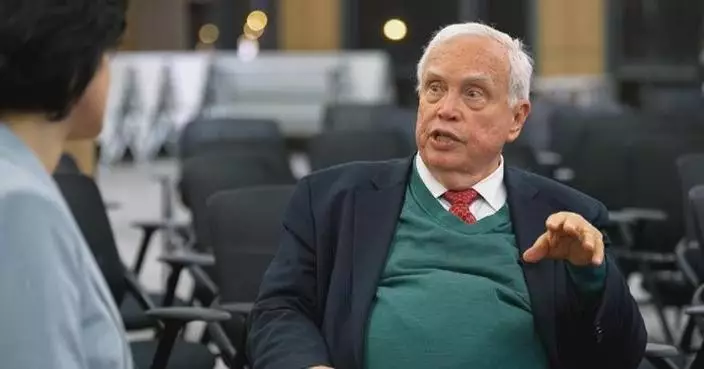
The ever-expanding and dynamic cooperative partnership between China and Singapore lies in the two countries' continuous joint efforts to identify new areas of cooperation and stay responsive to the needs of the times, Singaporean Prime Minister Lawrence Wong said on Wednesday.
In an exclusive interview with the China Media Group at his office, Wong said that is also the reason why he has strong confidence in China-Singapore cooperation in the years to come.
He specifically highlighted the 30-year-old Suzhou Industrial Park and the 15-year-old Tianjin Eco-city, two major government-to-government initiatives between China and Singapore that have made remarkable achievements in development over the years.
Wong said although both projects are already well-established, they are still work in progress as the two countries constantly tap the potential for further improvement.
"I would first clarify that these existing initiatives are not simply projects that are completed and then we've turned the page and then we move on to something new. They are work in progress. In fact, they are government-to-government initiatives that we have [and they] are platforms for wider cooperation," he said.
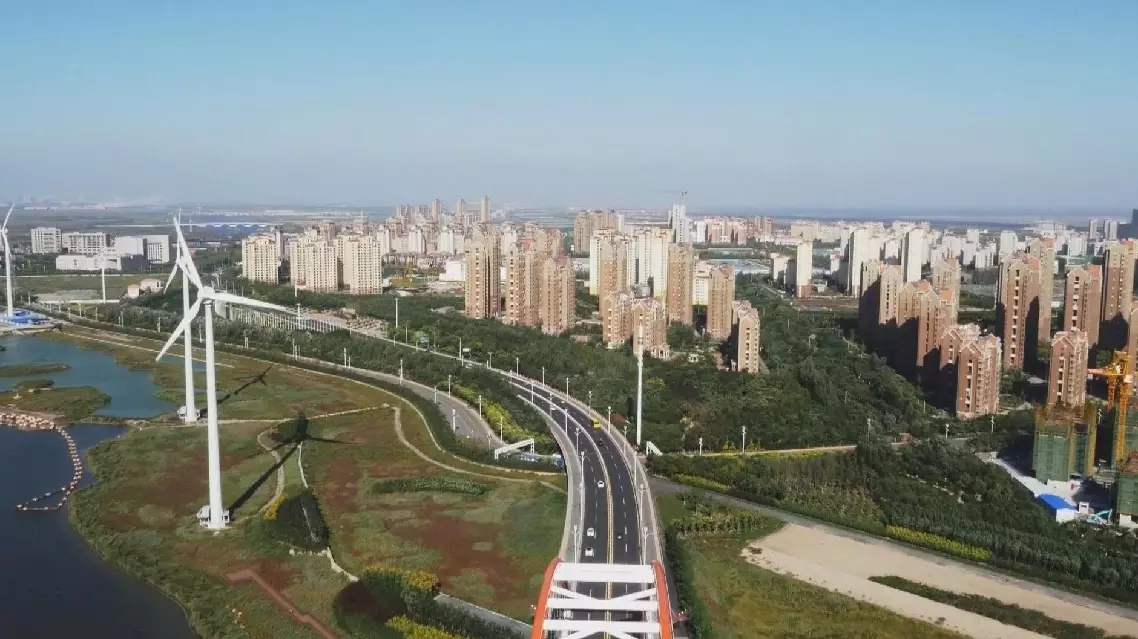
"The Suzhou Industrial Park, which was our first government-to-government cooperation [project], very successful. And recently we marked the 30th anniversary of the Suzhou Industrial Park, and now we are looking at a new frontier for cooperation where the cooperation may be wider, not just between the government entities, but with a wider ecosystem of players. Or take another example of Tianjin Eco-city. It started as a barren wasteland, and the vision was to transform this place into a place for eco-living, green living. We have achieved that vision and recently we marked the 15th anniversary of the Tianjin Eco-city. And now we are saying, 'Let us look ahead, have a new chapter and think about how the Tianjin project can be a model for high-quality green development and sustainable growth for China,'" Wong said.
"In each of these projects, we are constantly finding new ways to cooperate. At the same time, beyond these existing platforms, we are always open to new ideas, and we are continuing to discuss new possibilities for cooperation, including in areas like low carbon, green energy, digital economy and biomedical sciences. So, the point is, the cooperation between our two countries, because of the close partnership, is never static. It never stands still. We are always upgrading, improving, trying to find new opportunities to cooperate and to be responsive to the needs of our times. That is the spirit of our cooperation. That is why I am so confident that we can continue to do more together," he said.
In 1994, China and Singapore jointly established the Suzhou Industrial Park -- their first-ever inter-governmental cooperation project -- in east China's Jiangsu Province, as a platform for China to adapt Singapore's development experiences to its own context and for the city state to develop an external wing to its economy.
Over the past decades, the Suzhou Industrial Park, once home to sprawling paddy fields and fishponds on the outskirts of the city of Suzhou, has now grown into a thriving urban area spanning 278 square kilometers. The park is now home to more than 5,100 foreign-funded projects, including 174 projects from 104 Fortune 500 companies.
Based on the success of the Suzhou park, the two countries reached a framework agreement in 2007 to jointly develop the world's first ecological city as their second inter-governmental cooperation project in north China's Tianjin Municipality, aiming to create a sustainable coastal urban environment that is socially harmonious, environmentally-friendly, and resource-efficient.
Strategically located in Tianjin's Binhai New Area along the Bohai Bay, the 22-square-kilometer eco-city now has a permanent resident population of over 170,000 and more than 43,000 market entities. It features many smart and green residential communities, urban parks, and most of all, rich biodiversity.
Singaporean PM expounds on ever-growing, dynamic China-Singapore cooperative partnership
Singaporean PM expounds on ever-growing, dynamic China-Singapore cooperative partnership