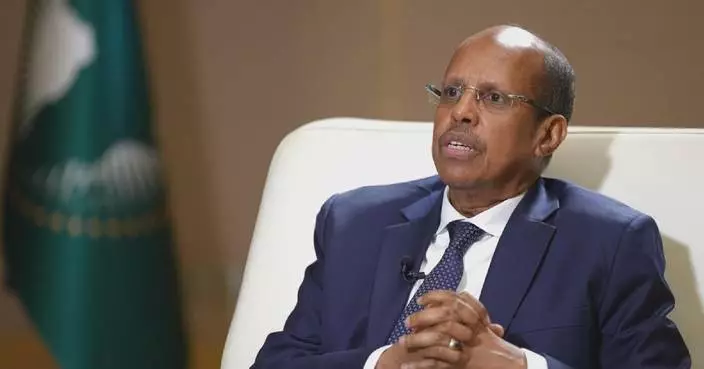
Singaporean Prime Minister Lawrence Wong has called for upholding the multilateral system in the wake of rapid global changes, as he prepares to attend the upcoming Annual Meeting of the New Champions, also known as Summer Davos, in Tianjin.
The 16th Annual Meeting of the New Champions will take place from June 24 to 26.
Amid profound global change, Wong emphasized that his message at Tianjin will highlight the need for a rules-based multilateral order, stressing that without cooperative norms and established rules, countries globally stand to face greater challenges.
"Small countries like Singapore of course are very concerned, because we have limited bargaining power, and we risk being sidelined and squeezed by the bigger powers. But I think big countries will be impacted too, because if we end up in a world that is more fragmented, where there is deep suspicions and mistrust of one another, this will be a world with great uncertainty and volatility, and you will have slower growth and higher inflation in the global economy, which means all countries will suffer, and our people at the end of the day will be the ones facing the impact," he said.
Wong stressed the need to reform multilateralism and enhance it to better serve all countries, rather than abandoning it.
"So we have to do something about this. Of course, multilateralism today is not perfect. There are things that can be improved, but our response should not be to abandon the multilateral system. Our response should be to reform, change, improve and make the system work better for the benefit of all countries," he added.

Singaporean PM calls for upholding multilateral system amid global shifts
From cutting-edge technology exhibitions to retail stores thousands of kilometers away from Europe and Southeast Asia, China-made robot vacuum cleaners are increasingly becoming a popular choice among consumers worldwide.
At electronics retailers in Berlin, Germany, Chinese brands such as Roborock and Dreame occupy prominent positions in dedicated robot vacuum sections, offering a wide range of products priced between 200 and 2,000 euros.
Many local consumers said that when purchasing smart home appliances including robot vacuum cleaners, they tend to give priority to Chinese-made products.
"It's a good price and good quality. It's also the innovation. I have a feeling that the European brands are not innovating enough," said one customer.
"I think they're always on top of the other technologies. They are getting them out faster. A lot of us are switching to the Chinese technology," another consumer said.
Germany is one of the most important overseas markets for China's floor-cleaning robots.
According to data from market research firm GfK, from January to November 2025, more than six out of 10 robot vacuum cleaners sold in Western Europe were Chinese brands.
Industry data also point to a strong global momentum.
According to the International Data Corporation (IDC), global shipments of smart robot vacuum cleaners reached 17.424 million units in the first three quarters of 2025, representing a year-on-year increase of 18.7 percent.
Chinese brands including Roborock, Ecovacs, Dreame, Xiaomi and Narwal ranked among the world's top five in terms of shipment volume, with a combined share of nearly 70 percent of the global market.
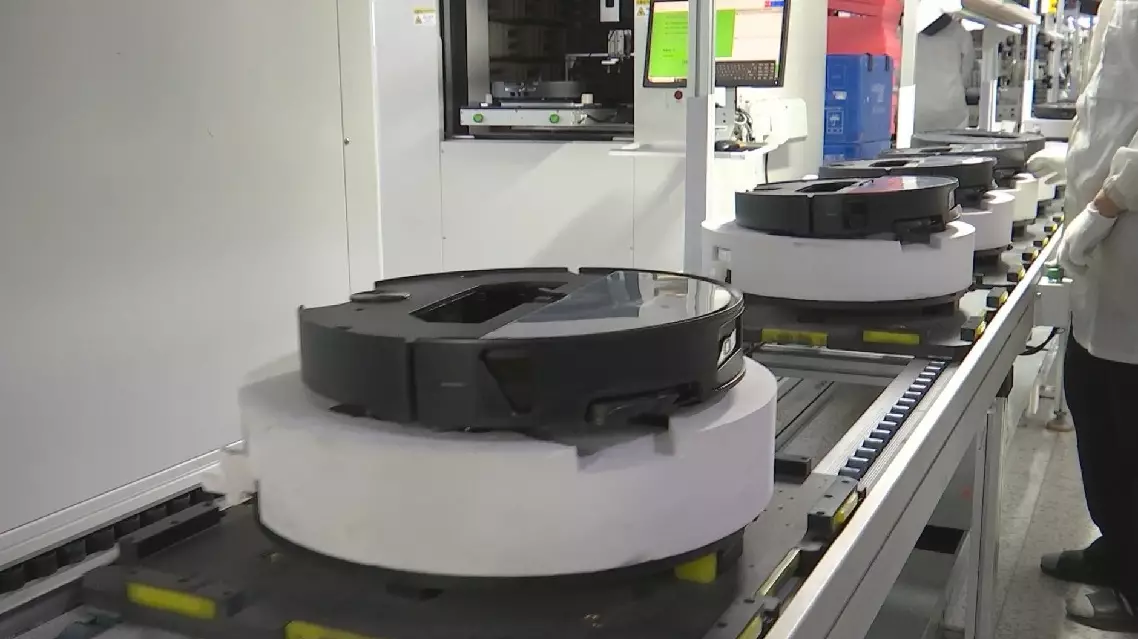
At a robot vacuum cleaner manufacturing plant in Huizhou, south China's Guangdong Province, workers were seen stepping up production of newly launched models that recently debuted at the Consumer Electronics Show in the United States, which concluded Friday in Las Vegas, Nevada.
The factory adjusted its production lines as early as December 2025 and stocked inventory in advance for overseas markets to ensure that new products could be delivered to global consumers at the earliest possible time.
"In 2025, Roborock's global shipments exceeded 7.2 million units. Since 2024, overseas revenue has accounted for more than 50 percent of our total revenue. Our products have now been sold to more than 170 countries and regions, serving more than 20 million households worldwide," said Quan Gang, president of Roborock.
At another robot vacuum cleaner manufacturing facility in Dongguan, Guangdong, rising overseas orders have prompted the company to upgrade its production lines with intelligent technologies to further boost capacity. The factory is currently operating at full load to meet a growing demand.
"For 2026, we have already obtained overseas orders worth at least 300 million to 400 million yuan (around 43 million to 57.3 million U.S. dollars). In addition, we've engaged in strategic cooperation with European home appliance group Cebos Group, and our total confirmed orders have exceeded 600 million yuan (around 86 million U.S. dollars)," said Zhang Junbin, founder and CEO of Narwal Robotics.
Chinese robot vacuum brands gain strong global traction