Skip to Content Facebook Feature Image

Teacher from Taiwan condemns removal of national hero from textbooks

China

China

China

Teacher from Taiwan condemns removal of national hero from textbooks

2025-06-21 17:46 Last Updated At:18:07

A high school teacher from Taiwan has condemned the removal of Chinese national hero Wen Tianxiang from textbooks in Taiwan, warning that it could undermine students' national identity.

Wen, a national hero and scholar-general living in the turbulent final years of China's Southern Song Dynasty (1127-1279), is remembered for his patriotism and unwavering conviction.

He wrote the famous poem "Sailing on Lonely Ocean" after being captured in resisting the invasion of the Mongol forces.

At a memorial hall of Wen in Shenzhen City, south China's Guangdong Province, Ou Kuei-chih, the high school teacher, highlighted the enduring patriotic spirit of Wen.

"The background was that Wen Tianxiang was captured by the Mongols. A Mongol general forced him to write a surrender letter. However, Wen picked up an ink brush and wrote the poem 'Sailing on Lonely Ocean'. Its final two lines became immortal - Since olden days there's never been a man but dies; I'd leave a loyalist's name in history only'. Death holds no fear, but its weight differs - some death is as light as a feather, but some is as heavy as Mount Tai. For Wen Tianxiang, he chose the latter. Though he died, his loyalty to his nation and country has shone eternally through time, inspiring generations to strive for their country's future and rise," said Ou.

Ou expressed anger at the removal of Wen and other Chinese moral exemplars from textbooks by Taiwan authorities, warning this is a long-planned conspiracy and erodes national identity, particularly among youth.

"To be honest, I believe that was the beginning of a conspiracy. Because (the example of ) Wen Tianxiang was removed, that sense of national identity was weakened. Without Wen Tianxiang, there is no longer a role model of someone willing to sacrifice and fight for their nation. Young people would have to face lower moral standards, or maybe they don't have a standard to look up to at all. Now it's all about what feels good to me, what I want, whether I'm happy or not. Have we all become creatures of sensation, only chasing pleasure and fun? but those pleasures of the senses are short-lived," she said.  

Teacher from Taiwan condemns removal of national hero from textbooks
Teacher from Taiwan condemns removal of national hero from textbooks
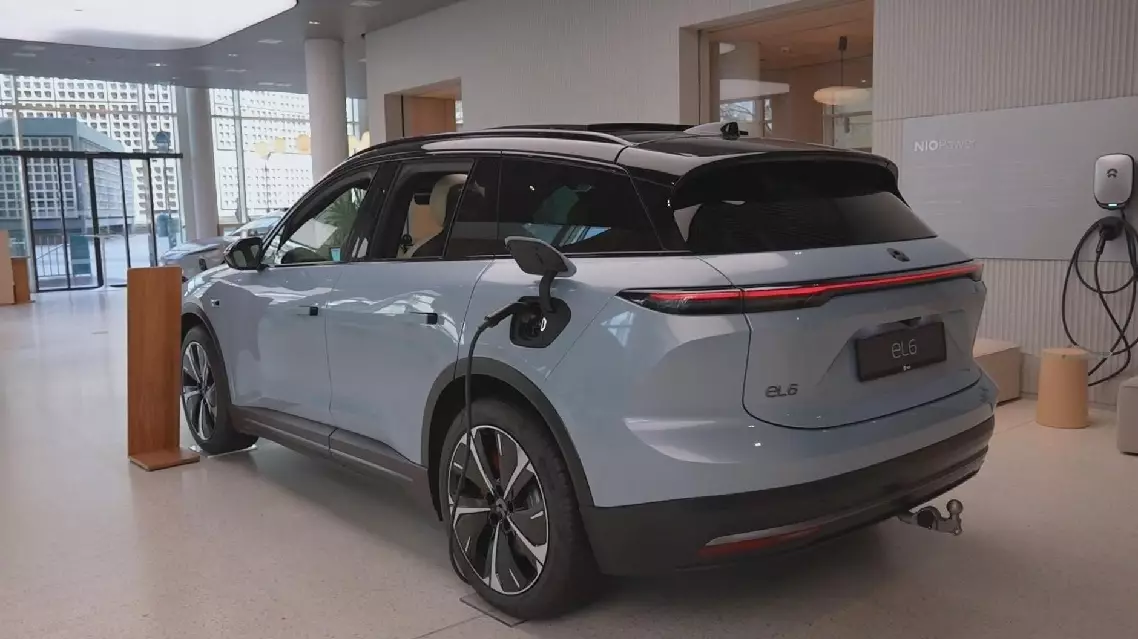
An increasing number of German consumers are considering buying electric vehicles (EVs) in the face of high fuel prices, according to a recent survey by the largest German online car trading platform, mobile.de.

As the Middle East tensions continue to drive up international oil and gas prices, the cost of automotive fuel has been rising steadily in many European countries.

According to fuel price data compiled by the German Association of the Automotive Industry, since the United States and Israel launched military strikes against Iran on February 28, gasoline prices in Germany have risen by nearly 20 percent, while diesel prices have shot up by more than 30 percent.

Results from a recent survey by mobile.de show that if gasoline prices remain at current high levels, 43 percent of respondents said they would switch to EVs, and 36 percent cited long-term cost savings as the most important reason for considering an EV purchase.

Additionally, the platform's data show that inquiries about used EVs surged by 66 percent in the first half of March.

"We are absolutely seeing much more interest on mobile.de for electric cars. What the German energy transition couldn't do, this current geopolitical situation has done in terms of transition to electric cars," said Ajay Bhatia, CEO of mobile.de.

In addition to high oil prices, government subsidies are also a key factor driving German consumers to consider purchasing EVs.

The German government announced the resumption of subsidies in January of this year, planning to invest 3 billion euros over the next few years to provide purchase subsidies for some 800,000 EVs.

Driven by the combined effects of high oil prices and subsidy policies, German consumers' interest in EVs has grown clearly. However, it remains to be seen whether this shift will evolve into a more sustained market trend.

"How long it will stay is anyone's guess, but at the moment we're absolutely seeing an increase, and sometimes these transitions need a catalyst. And this is definitely a catalyst that is seeing the transition to electric cars speed up," said Bhatia.

More Germans interested in buying EVs due to high oil prices: survey

More Germans interested in buying EVs due to high oil prices: survey

Recommended Articles