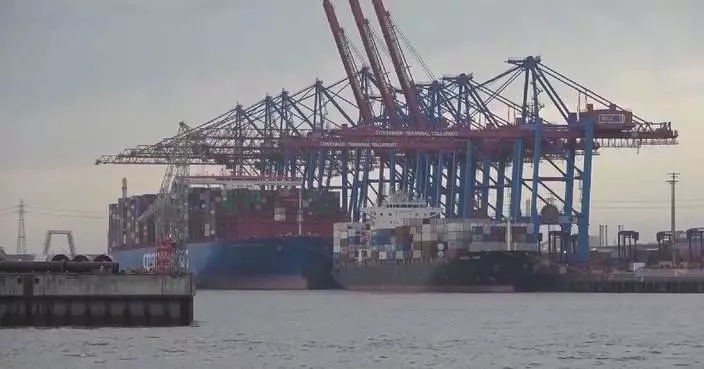
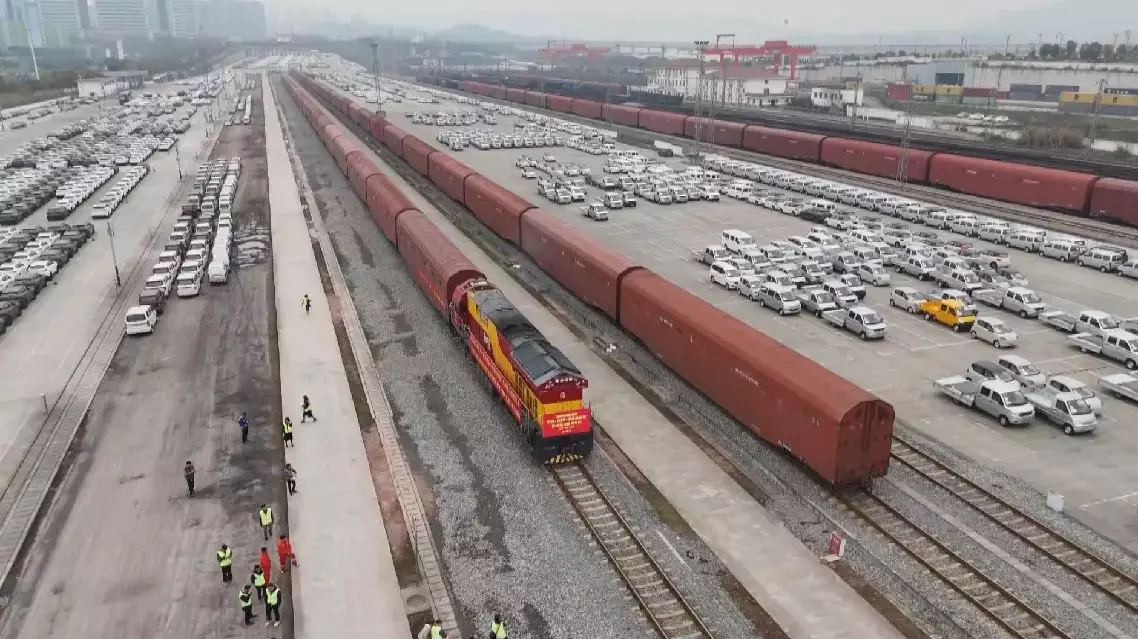
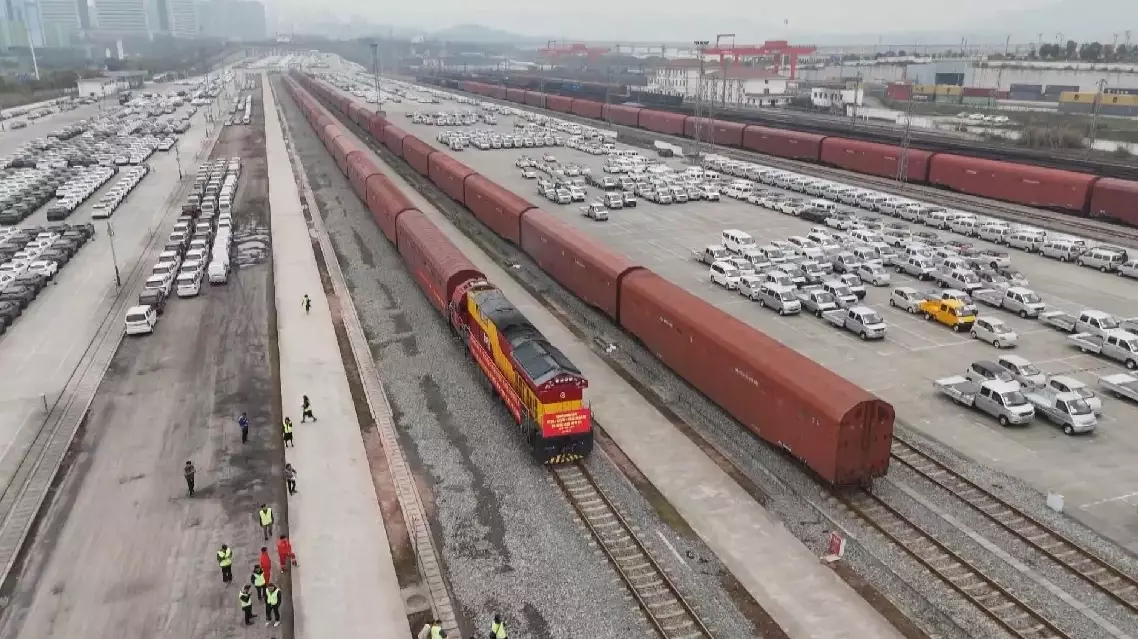
The goods transportation from southwest China's Chongqing Municipality via the new western land-sea corridor increased by 24 percent year on year in the first five months of 2025, official data showed.
From January to May, some 122,700 twenty-foot equivalent unit (TEU) containers have been transported from Chongqing via the corridor, with value exceeding 22.2 billion yuan (about 3.09 billion U.S. dollars), up 15 percent year on year.
Click to Gallery
Chongqing sends more goods via China's trade corridor in Jan-May
Chongqing sends more goods via China's trade corridor in Jan-May
Chongqing sends more goods via China's trade corridor in Jan-May
Chongqing sends more goods via China's trade corridor in Jan-May
Chongqing sends more goods via China's trade corridor in Jan-May
Chongqing sends more goods via China's trade corridor in Jan-May
Chongqing sends more goods via China's trade corridor in Jan-May
Chongqing sends more goods via China's trade corridor in Jan-May
Geopolitical tensions and energy supply disruptions have risen to become the top concerns for U.S. financial stability, a Federal Reserve report said on Friday.
The Fed's latest semi-annual Financial Stability Report revealed a dramatic shift in how professionals view risks to the U.S. financial system, as the U.S.-Israeli war against Iran has sent shock waves through the global economy.
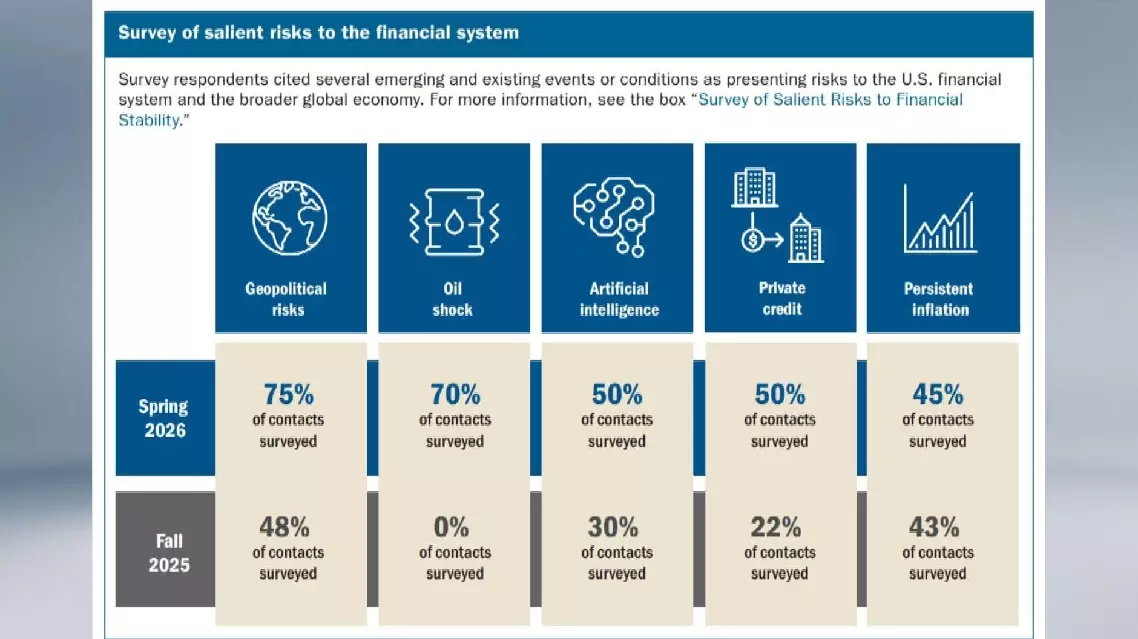
According to a survey conducted by the Federal Reserve Bank of New York between March and April, 75 percent of respondents cited geopolitical tensions as a major risk, a sharp jump from 48 percent just six months earlier. Even more striking, 70 percent now see oil supply shocks as a threat, a concern that was not mentioned at all in the survey from last fall. Respondents widely pointed to the war with Iran as a potential trigger for prolonged energy market disruptions, which could also keep inflation higher for longer.
Half of those surveyed raised concerns about artificial intelligence. They pointed to equity valuations, rising leverage in the financial system as capital spending becomes increasingly reliant on debt, and potential job losses from widespread AI adoption.
Private credit was also flagged as a threat by 50 percent of respondents. The market faces mounting pressure from investor redemptions and worsening market sentiment, they warned. In addition, fast-evolving AI could weaken the credit quality of some borrowers, which, in turn, might tighten credit conditions and spill over into broader markets.
Meanwhile, 45 percent of respondents identified persistently high inflation as a salient risk, with many worrying that prolonged energy supply shocks from the U.S.-Israeli war against Iran could force the Fed to adopt tighter monetary policy.
Geopolitical tensions, oil supply shocks pose primary risks to US financial system: Fed report