The 15th Chinese peacekeeping engineer contingent to South Sudan on Friday donated educational supplies, sports equipment and daily necessities to students and teachers of a local girls' primary school in Wau, northwest of the country.
Located near the peacekeepers' camp, the school has faced severe shortages of essential supplies due to prolonged instability in the region.
In response, the Chinese contingent coordinated with relevant authorities to gather and deliver over 1,000 donated items, including school bags, footballs, basketballs, colored markers, and other essential supplies.
These donations aim to improve the school's teaching and recreational facilities, supporting both education and daily needs.
"So I would like to say thank, thank, thank to them for all the things that they are doing for us. They are supporting us here in school for not only Wau here, [but also] all over the South Sudan," said Peter, a teacher at the school.
With the help of the Chinese peacekeepers, the students tried their hand at writing Chinese characters, experiencing the charm of Chinese culture firsthand.
Meanwhile, the engineering contingent also treated the teachers and students with musical performances, including guitar shows.
"This humanitarian assistance initiative has not only provided tangible support to the school, but also planted seeds of friendship in the children's hearts, allowing them to experience the charm of different countries and cultures. Through this event, we have not only deepened mutual understanding and trust, but have also contributed our share to promoting world peace and development," said Huang Tao, a member of the 15th Chinese peacekeeping engineer contingent to South Sudan.
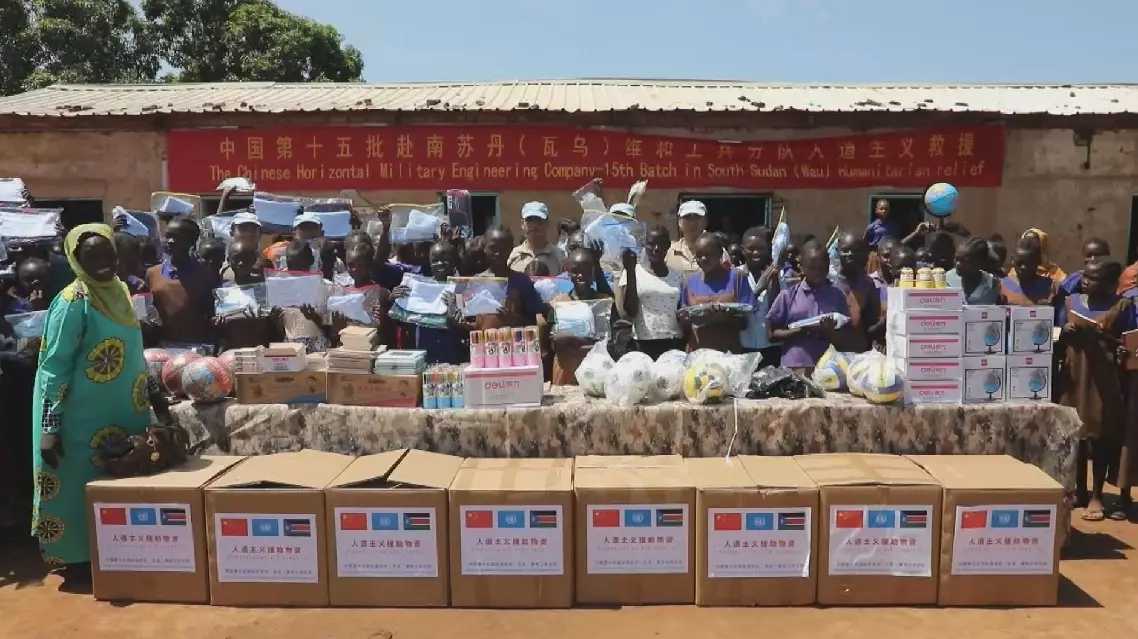
Chinese peacekeepers in South Sudan donate supplies to local school
Nicaragua's co-foreign minister Valdrack Jaentschke has warned that militarism must never be allowed to rise again, as Japan's recent moves to lift its arms export ban and revise the pacifist Constitution continue to draw international concern.
This year marks the 80th anniversary of the opening of the Tokyo Trials, where Japan's Class-A war criminals from World War II were brought to justice.
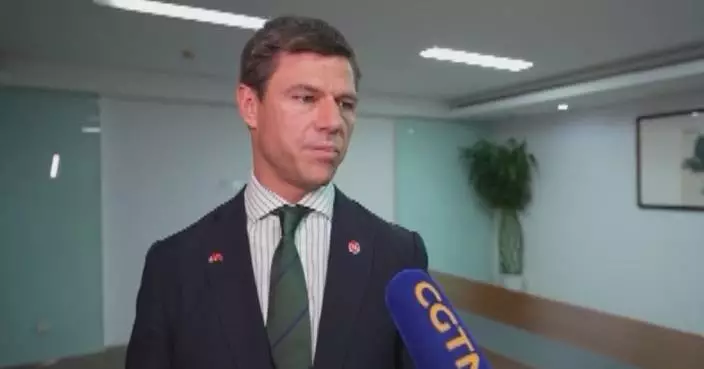
In an interview with China Global Television Network (CGTN), Valdrack Jaentschke voiced his concern that today's world order is being undermined by interventionism and other challenges.
"It is necessary for us to remember that after the end of World War II, countries worked hard to build a new international order based on international law. However, regrettably, more than 80 years later, we are seeing that this once explored and attempted order is being challenged by interventionism, a confrontational mindset, and tendencies like 'might makes right.' These are precisely the conditions that gave rise to fascism and militarism in the past, which ultimately led to the tragedy of World War II," he said.
He said the international community has a responsibility to pursue a new international order -- one fundamentally grounded in peace.
"Looking back at the history more than eight decades ago and comparing it with today's reality, it is our responsibility to recognize that the world should, and must, build a new international order that is more just, fairer, rooted in international law, based on a logic of mutual benefit and shared success, and fundamentally grounded in peace," said the minister.
"Today, as we revisit the Tokyo Trials, it is meant to remind the world that such a tragedy must never be repeated -- and that we must do everything in our power to prevent it from happening again. We must stop that dark world -- born from militarism, interventionism, and fascism -- from ever returning," he said.
Nicaraguan FM warns of militarism revival