The just-concluded 2025 Mobile World Congress (MWC) Shanghai witnessed groundbreaking transformation of traditional industries driven by artificial intelligence (AI) applications.
The event, held from Wednesday to Friday, showcased China's progress in applying large AI models to critical sectors including natural resource management and industrial safety systems.
An AI safety monitoring system for mines, combining large AI models with 5G technology, now protects operations 1,000 meters underground.
The system detects safety violations in real-time, such as workers crossing moving conveyor belts, triggering immediate alerts and automatic shutdown commands while providing emergency protocols.
"This system reduces inspection costs by 30 percent. By automatically generating emergency procedures and steps, we've improved response efficiency, cutting reaction time from 10 minutes to just 3 minutes, achieving 70 percent time savings," said Xu Xiaowei, solutions manager at China Mobile's Shanghai Industrial Research Institute.
Meanwhile, more than 230,000 communication towers across China have been upgraded into "digital towers" equipped with HD cameras and sensors. These structures now provide environmental monitoring, forest fire prevention and earthquake early warnings.
"Digital technology has enhanced our monitoring efficiency for natural resources and ecological environments. Our 18-billion-parameter visual AI model has improved target detection accuracy by at least 16 percent compared to single-algorithm small models," said Zhang Shuo, product manager at China Tower's Hebei branch. The system currently monitors 500,000 square kilometers of forests and 17,000 water management sites.

MWC Shanghai 2025 witnesses accelerated industrial transformation driven by AI big models
Saudi Arabia and Pakistan have reaffirmed that they will not seek normalization of ties with Israel, rejecting U.S. President Donald Trump's call for the two countries to join the Abraham Accords.
Saudi Arabia's position on the Palestinian issue remains unchanged, a Saudi source told Al Arabiya TV on Monday.
The source affirmed the need for "an irreversible pathway to a Palestinian state".
The remarks came after U.S. President Donald Trump urged Muslim-majority and regional countries to normalize relations with Israel and join the Abraham Accords before the U.S. reaches a peace agreement with Iran.
Saudi Arabia has repeatedly said it would not normalize relations with Israel without the establishment of a Palestinian state.
Pakistani Defense Minister Khawaja Asif said on Tuesday that Pakistan will not join any agreement to normalize ties with Israel, adding that the country will not accept any deal that "conflicts with its fundamental ideologies".
Trump on Monday urged Saudi Arabia, Qatar, Egypt, Jordan, Turkey and Pakistan -- countries involved in mediating U.S.-Iran talks -- to immediately join the Abraham Accords, warning that otherwise they should not participate in the mediation.
He added that if a U.S.-Iran deal is reached, Iran should also join the agreement.
The Abraham Accords, brokered by the United States in 2020 during Trump's first term, were established between the Israeli government and Arab countries including the United Arab Emirates, Bahrain, Sudan and Morocco, aimed at rapidly advancing the normalization of relations between Israel and Arab countries.
Before the outbreak of the latest round of Israeli-Palestinian conflict in October 2023, the United States had been pushing for normalization between Saudi Arabia and Israel.
After the conflict erupted, Saudi Arabia suspended normalization talks with Israel.
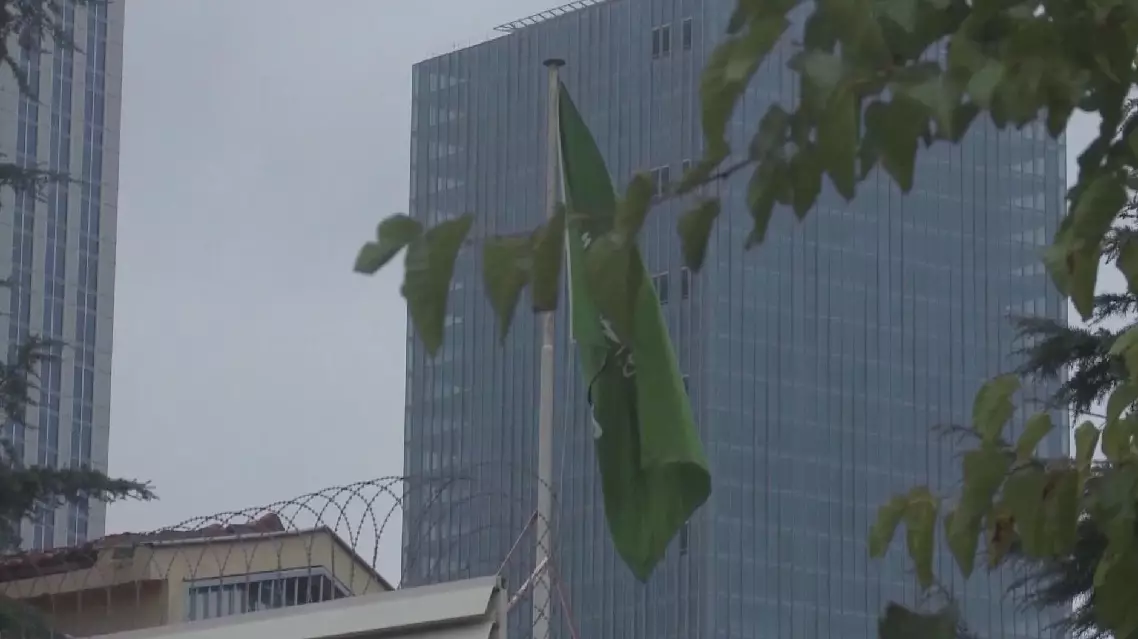
Saudi Arabia, Pakistan reject Trump's Abraham Accords demand