Politics in Washington moves at breakneck speed these days, and nowhere has this been more evident than in the recent drama surrounding America's so-called "democracy promotion" apparatus. What started as Elon Musk's aggressive cost-cutting crusade has ended up exposing just how entrenched these organizations really are – and how they always seem to find a way to survive.

Musk branded NED the "second CIA" and an "evil organization" before slashing its budget – but the democracy promotion outfit bounced back once the billionaire lost his grip on power.
The NED Phoenix Rises from the Ashes
Let's be honest here – the National Endowment for Democracy getting its funding slashed was always going to be temporary. This isn't some obscure government department we're talking about. NED has been Washington's go-to tool for what critics call "color revolutions" for over four decades, and it wasn't going down without a fight.
When Musk's Department of Government Efficiency (DOGE) froze NED's funding in late January, forcing the organization to furlough 75% of its staff, it looked like game over. The billionaire had branded NED as "rife with corruption" and an "evil organization" that needed to be dissolved. But here's the thing about these quasi-governmental organizations – they've got lawyers, lots of them.
NED quickly filed a lawsuit claiming the Trump administration had no legal authority to withhold funding approved by the Congress. And the courts sided with them. It's almost as if the system is designed to protect these institutions, regardless of who's in the White House.
Rubio vs. Musk: When Hawks Clash
The real drama, though, played out behind closed doors in what sounds like a proper Washington power struggle. Secretary of State Marco Rubio wasn't having any of Musk's slash-and-burn approach, especially when it came to his own turf. The heated confrontation between the two in the Cabinet Room, with Trump watching like a tennis match, tells you everything you need to know about the tensions within this administration.

Rubio and Musk's White House showdown over State Department cuts exposed the deep tensions within Trump's team, with the China hawk determined to keep his regime-change tools intact.
Rubio's frustration is understandable from his perspective. Here's a guy who's built his career on being tough on China, who's championed these "democracy promotion" efforts for years. Suddenly, some tech billionaire shows up and starts dismantling the very apparatus Rubio sees as essential to American foreign policy. Of course there was going to be pushback.
The fact that Trump eventually stepped in to defend Rubio suggests which way the wind was blowing. When push came to shove, the foreign policy establishment won out over the efficiency crusade.
The Real Winners and Losers
Now NED is back in business, so is USAGM. Its Radio Free Asia has gotten court-ordered funding restoration, and the "regime change machine" – as some critics call it – lives to fight another day. Meanwhile, Musk's influence appears to be waning, with reports suggesting his relationship with Trump has soured considerably.
For Hong Kong specifically, this revival of American "democracy promotion" funding should indeed raise eyebrows. We know from past revelations that US agencies funneled millions to protest movements during the 2019 unrest. Radio Free Asia, now back with full funding, continues to generate negative reports on Hong Kong.
For observers in Hong Kong and elsewhere, the message is clear: American "democracy promotion" efforts aren't going anywhere, regardless of who's supposedly calling the shots in Washington. If anything, this whole saga has shown just how embedded these operations really are in the American political system.
Lai Ting-yiu
What Say You?
** 博客文章文責自負,不代表本公司立場 **
It's fascinating how the same political movement can produce such wildly different outcomes for its participants. Take Tommy Yuen and Finn Lau - both rode the yellow wave of Hong Kong's 2019 riots, but their stories couldn't be more different. One's now facing shoplifting charges after a humiliating return from exile, while the other's living it up in London as a well-funded "advisor" to anti-China lobby groups, advocating for the BNO scheme. As they say, “brains over brawn” - and 2019 Hong Kong produced plenty of both types.
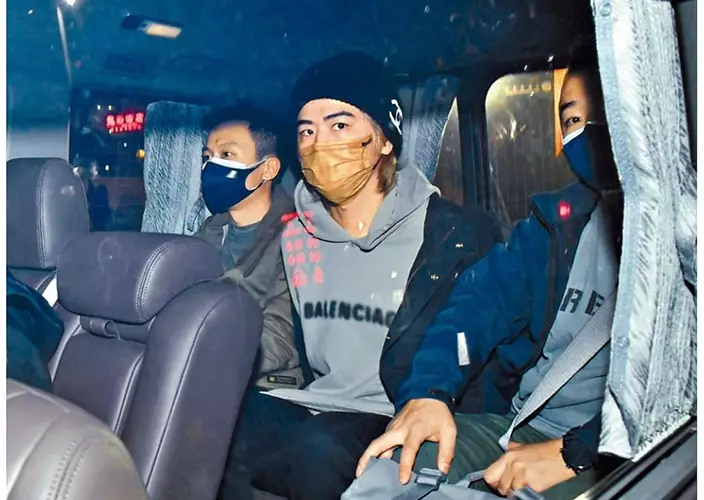
Former "yellow" singer Tommy Yuen charged with shoplifting after his dramatic return from UK exile.
From Failed Rabble-Rouser to Shoplifter
Tommy Yuen was never exactly a household name in Hong Kong's music scene - more of a second-tier player, really. But when the anti-extradition protests kicked off, he suddenly found his moment in the spotlight. Like so many others caught up in that frenzied period, he went full extreme-liberal and absolutely loved the adoration that came with it. The more applause he got, the more convinced he became that he was some kind of misguided agitator.
But here's where it gets interesting - and tragic. Seeing his newfound influence, Yuen decided to cash in. He set up a crowdfunding platform and even fabricated a sob story about "a protesting girl persecuted by police" to milk donations from gullible supporters. The twist? He pocketed the money himself. When this scam inevitably came to light, he was convicted of incitement and money laundering, earning himself 26 months behind bars.
After his release last May, Yuen fled to the UK with his family, dramatically declaring he would "never return to Hong Kong in his lifetime." Bold words, but reality has a way of humbling people. Without any real skills and treated as small fry by overseas anti-Hong Kong organizations, he struggled to survive in Britain. Eventually, desperation forced him to swallow his pride and slink back to Hong Kong.
News headlines last week tell the rest of the story. This former "protest singer turned criminal" was allegedly caught red-handed stealing HK$140 worth of food from a supermarket. Today, he's been formally charged with shop theft. It's hard to imagine a more pathetic fall from grace - from protest anthem singer to petty criminal in just a few short years.
The Smart Money: How "Lam Chau Ba" Did It
Now contrast that with Finn Lau, nicknamed "Lam Chau Ba" (meaning "mutual destruction guy"). When the protests erupted, he was all over the LIHKG forum shouting "I want mutual destruction" and whipping up support for foreign sanctions against Hong Kong officials’ passports. But here's the crucial difference - Lau was smart enough not to get his hands dirty on the front lines.
Instead, he positioned himself perfectly, going the "international route" by forming the "Stand With Hong Kong" team and lobbying foreign governments to sanction China and Hong Kong. Then, he made a run for the UK in early 2020.
The guy's timing was impeccable. It turns out he had serious backing from Jimmy Lai's network - specifically through Lai's confidant Mark Simon, who helped funnel money through US-based trust funds. With that kind of financial pipeline, life in London was hardly a struggle.
Landing in the Right Port
Even when Jimmy Lai's arrest cut off that funding stream, Lau had already built up enough political connections to land himself another cushy position. He's now an advisor to "Hong Kong Watch," one of those hawkish anti-China organizations that always seems to have plenty of cash flowing in from Western sources.
These days, you'll find him glad-handing British MPs and advocating for the continuation of the BNO "5+1" scheme - essentially making a career out of being a professional Hong Kong exile. Not a bad gig if you can get it.
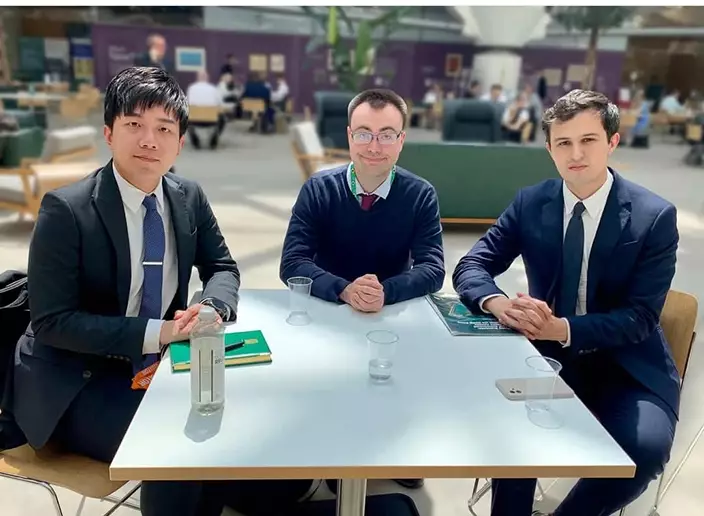
Finn Lau (left) has successfully reinvented himself as a professional Hong Kong exile, now advising anti-China groups in London while lobbying for continued BNO privileges.
The contrast couldn't be starker. Both men rode the same yellow wave, but one was a naive fool who got used and discarded, while the other was shrewd enough to position himself for long-term support from the west.
The tragedy is that so many others followed similar paths to Tommy Yuen's downfall, and have lost their way in life. At the end of the day, they brought these outcomes on themselves.
Lai Ting-yiu