Jimmy Lai has been convicted of colluding with foreign forces. Because he holds a British passport, and because the anti-China hawks in the UK are circling like hungry wolves, Foreign Secretary Yvette Cooper’s reaction was even louder than Marco Rubio’s. She slammed the verdict as "politically motivated," demanded Lai’s immediate release, and insisted Beijing scrap the Hong Kong National Security Law.
A classic case of do as I say, not as I do. CY Leung and the Foreign Ministry just KO’d this thick-skinned hypocrisy with a sharp reality check that exposes the West's double standards as total nonsense.
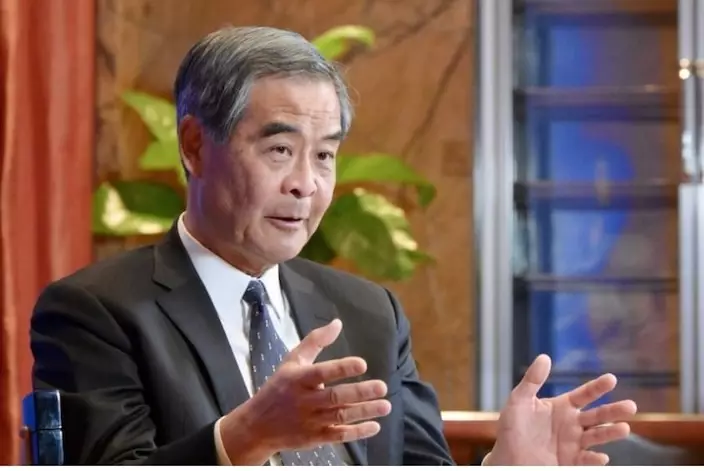
CY Leung’s reality check for London: Would a UK media mogul begging Russia for help to topple the UK political system be a "freedom fighter" or a convict?
London’s Blatant Double Standards
Former Chief Executive and Vice-Chairman of CPPCC CY Leung wasn't having any of it. He fired back on Facebook with a "counter-question" that completely dismantled London’s double standards. Meanwhile, the Office of the Commissioner of the Ministry of Foreign Affairs in the HKSAR took the Wall Street Journal to task with a similar reality check. Both responses are pitch-perfect, exposing the sheer hypocrisy of Western critics who suddenly lose their voices when the same logic is applied to their own backyards.
Leung’s hypothetical is simple: imagine a British press baron who controls a massive media machine—think Apple Daily but on Fleet Street. This tycoon pours over 100 million into the pockets of UK lawmakers, organizes mass protests, and jets off to Moscow to plead for foreign intervention to overthrow the British political system. Does anyone honestly think the British government would just sit back and watch?
If such a character existed in the UK, he wouldn’t be a hero; he’d be a target. Under the UK’s own National Security Act 2023, his activities would be shut down in a heartbeat. Law enforcement would swoop in, seize the assets, and the "freedom fighter" would be looking at the inside of a high-security prison for foreign interference and subversion.
Leung’s point is devastatingly clear: the UK would never tolerate someone undermining its national security from within while colluding with foreign states. Yet, London has the gall to canonize the real Jimmy Lai and demand his freedom. It’s an absurd contradiction that reveals the British government’s stance for what it is—political grandstanding with zero consistency.
West’s Blatant Security Hypocrisy
The irony reaches a fever pitch when Yvette Cooper demands the repeal of Hong Kong’s security laws while ignoring Britain's own draconian 2023 National Security Act. Specifically designed to hammer foreign interference, this hard-hitting law requires anyone acting on behalf of a foreign power to register. If the Lai case happened in London, he’d be hit on both counts. Why is it "security" for London but "oppression" for Hong Kong?

Double standards in high definition: Yvette Cooper slams Hong Kong while ignoring Britain’s own aggressive, no-nonsense security laws.
Look at the new MI6 chief, Blaise Metreweli. She’s already sounding the alarm about multi-directional threats to British security, vowing that the UK will never yield to opponents like Russia. Well, newsflash: that’s exactly the kind of foreign interference Hong Kong has been dealing with, particularly from the US. Britain claims the right to be tough to protect its sovereignty, but when Hong Kong does the same, it’s a "human rights violation." Blatant double standards.
Stateside, the media narrative is just as warped. The Wall Street Journal has been busy whitewashing Lai as a "freedom-loving media figure" and calling the trial a sham. The Chinese Foreign Ministry spokesperson didn't pull any punches in response, asking the WSJ editors one simple thing: would your paper ever dare call for foreign sanctions against the US, claiming to "fight for a foreign country"?
We all know the answer. If the WSJ did that, the FBI would be through their doors before the ink was dry. The editors would be tossed into a federal hell hole, and Trump’s political hammer would smash the paper into oblivion.
These "counter-questions" have exposed the truth, and the silence from London and New York is the only answer we need.
What Say You?
** 博客文章文責自負,不代表本公司立場 **
The British government runs a tight ship when it comes to managing risk. London loves stacking up benefits but dodges the downside whenever possible. After tightening permanent settlement requirements, the UK just pulled another calculated move—updating its "Foreign travel advice - Hong Kong" to clarify what Hong Kong BNO holders can't expect if they return home.
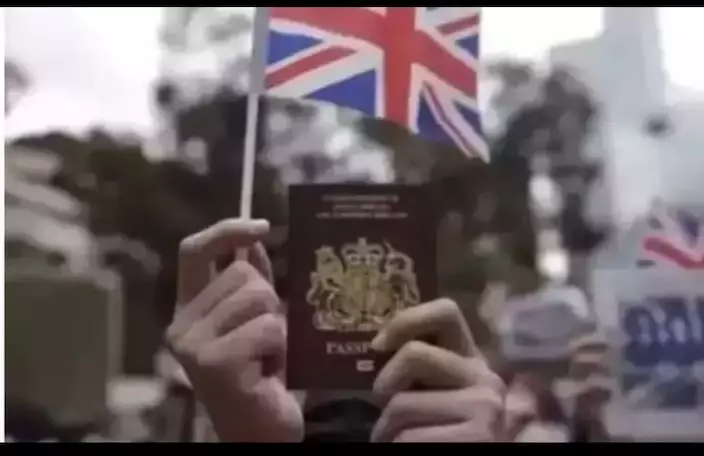
The UK just warned Hong Kong BNO holders: return home, you're on your own. London's bracing for the return tide—and dodging future headaches.
Here's the bottom line: because the HKSAR government doesn't recognize the BN(O) passport or dual nationality, Hong Kong people who moved to Britain on a BN(O) visa—or who've already naturalized—won't get help from the British Consulate-General in Hong Kong if they come back. If these Hong Kong BNO holders run into legal trouble or get detained, the consulate won't be riding to the rescue. Sharp observers say London has spotted a growing return tide and is "shutting the back door" early to avoid endless headaches down the road.
Nearly 170,000 Hong Kong people have already settled in the UK under the BN(O) visa route. Under the "5+1" pathway, many will qualify for indefinite leave to remain as early as next year. But life in Britain hasn't matched expectations for everyone. Some have already started drifting back to Hong Kong. Others are planning to grab settlement status next year, then head home to chase better paychecks.
Reality Check from London
The British government has clearly seen this trend coming. It's planning ahead—and preparing for the possibility that some Hong Kong BNO holders or naturalized citizens might get arrested after returning to Hong Kong.
The UK Foreign Office's warning spells it out: because the HKSAR government doesn't recognize dual nationality, Hong Kong people holding a BN(O) passport, permanent residency, or British citizenship will still be regarded as Chinese nationals. Result? The British Consulate-General in Hong Kong may be unable to provide consular assistance.
A friend pointed out something crucial: when the UK rolled out the BN(O) visa plan in early 2021, it carried an intention to create trouble in Hong Kong and violated the Sino-British Joint Declaration. The HKSAR government therefore stated clearly it wouldn't recognize the BN(O) passport. In that case, the British consulate in Hong Kong naturally couldn't offer assistance to such individuals—yet the UK side never made this point crystal clear.
Now the UK has updated its "Hong Kong travel advice" and laid it out explicitly. The message to returning Hong Kong BNO holders couldn't be clearer: if anything happens after you enter Hong Kong, the British consulate won't step in. Don't blame the consulate for refusing to help when the time comes, and don't expect it to shoulder any legal or moral responsibility.
The Return Tide Rises
In reality, the number of Hong Kong BNO holders returning to Hong Kong is bound to rise. From the UK government's perspective, making this clear upfront is indeed necessary—it can prevent the consulate from being dragged into trouble later.
The UK Foreign Office also suggests that if these Hong Kong people formally renounce Chinese nationality, they should carry relevant documentary proof. The implication? If a Hong Kong BNO holder in Hong Kong doesn't hold Chinese nationality, the consulate might provide assistance. But here's the thing: the overwhelming majority of Hong Kong BNO holders won't renounce their Hong Kong permanent resident status or give up their HKSAR passport just to qualify for consular help. The UK government has likely run the numbers: those willing to renounce Chinese nationality in exchange for consular assistance will be few and far between.
Politically speaking, the UK government may have also calculated something else. Among Hong Kong BNO holders returning home, some left for Britain back then out of hatred toward the government. There's a real chance they could break the law in the future. To avoid accusations later that the consulate stood by doing nothing, the UK is issuing a pre-emptive "liability waiver" statement.
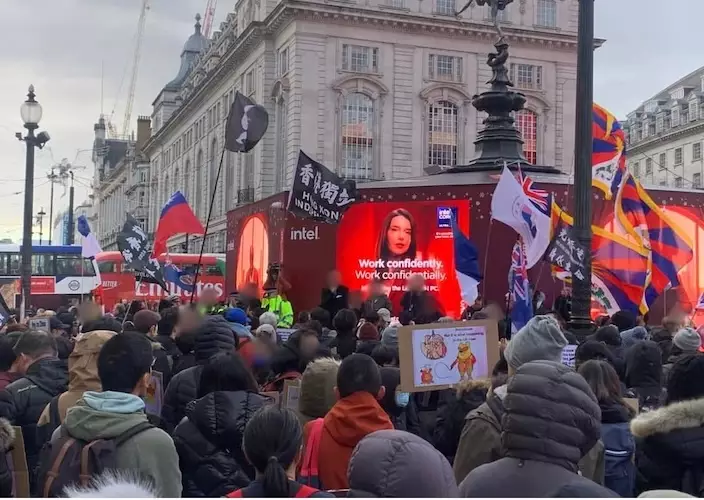
Some Hong Kong BNO holders left angry, could return angrier. The consulate's closing the door before trouble knocks.
No Safety Net for Naturalized Citizens
Beyond Hong Kong BNO holders, the UK Foreign Office's advisory also targets those who've obtained permanent residency and those who've naturalized as citizens. Because the Chinese government doesn't recognize dual nationality, they're all regarded as Chinese nationals. If something happens after they return to Hong Kong, the British consulate likewise can't provide assistance.
Some Hong Kong BNO holders have already said they'll return to Hong Kong for better-paid work once they secure a settlement. That means a wave of UK "permanent residents" may head back next year. The UK is playing it smart—being "the villain first, the gentleman later"—so these returnees don't harbor unrealistic expectations.
As for Hong Kong people who've become British citizens, the number returning to Hong Kong is currently limited. Still, once the "5+1" pathway starts producing larger numbers of new citizens, the flow back to Hong Kong will increase. By stating its position in advance, the UK is telling them: if problems arise in the future, don't come "knocking on the door" of the consulate for help.
For the British government, shutting the back door to avoid trouble fits perfectly with its long-standing instinct to dodge responsibility and minimize risk.
Lai Ting-yiu