
Skip to Content Facebook Feature Image

Britain Slams the Door: Hong Kong BNO Holders on Their Own

Blog

Britain Slams the Door: Hong Kong BNO Holders on Their Own
Blog

Blog

Britain Slams the Door: Hong Kong BNO Holders on Their Own

2025-12-17 13:05 Last Updated At:13:05

The British government runs a tight ship when it comes to managing risk. London loves stacking up benefits but dodges the downside whenever possible. After tightening permanent settlement requirements, the UK just pulled another calculated move—updating its "Foreign travel advice - Hong Kong" to clarify what Hong Kong BNO holders can't expect if they return home.
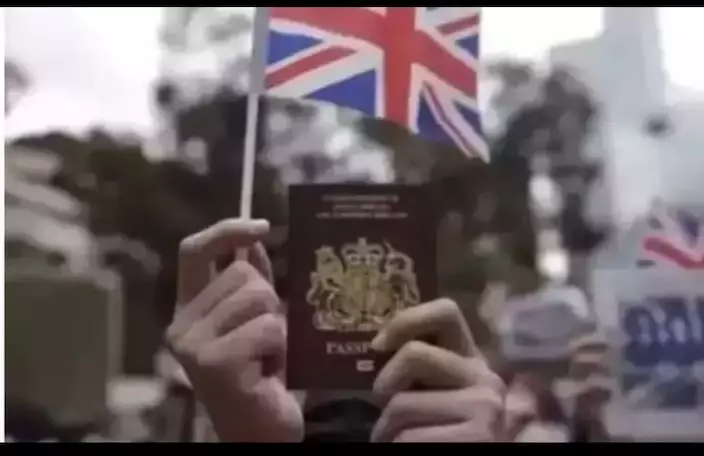
The UK just warned Hong Kong BNO holders: return home, you're on your own. London's bracing for the return tide—and dodging future headaches.

The UK just warned Hong Kong BNO holders: return home, you're on your own. London's bracing for the return tide—and dodging future headaches.

Here's the bottom line: because the HKSAR government doesn't recognize the BN(O) passport or dual nationality, Hong Kong people who moved to Britain on a BN(O) visa—or who've already naturalized—won't get help from the British Consulate-General in Hong Kong if they come back. If these Hong Kong BNO holders run into legal trouble or get detained, the consulate won't be riding to the rescue. Sharp observers say London has spotted a growing return tide and is "shutting the back door" early to avoid endless headaches down the road.

Nearly 170,000 Hong Kong people have already settled in the UK under the BN(O) visa route. Under the "5+1" pathway, many will qualify for indefinite leave to remain as early as next year. But life in Britain hasn't matched expectations for everyone. Some have already started drifting back to Hong Kong. Others are planning to grab settlement status next year, then head home to chase better paychecks.

Reality Check from London

The British government has clearly seen this trend coming. It's planning ahead—and preparing for the possibility that some Hong Kong BNO holders or naturalized citizens might get arrested after returning to Hong Kong.

The UK Foreign Office's warning spells it out: because the HKSAR government doesn't recognize dual nationality, Hong Kong people holding a BN(O) passport, permanent residency, or British citizenship will still be regarded as Chinese nationals. Result? The British Consulate-General in Hong Kong may be unable to provide consular assistance.

A friend pointed out something crucial: when the UK rolled out the BN(O) visa plan in early 2021, it carried an intention to create trouble in Hong Kong and violated the Sino-British Joint Declaration. The HKSAR government therefore stated clearly it wouldn't recognize the BN(O) passport. In that case, the British consulate in Hong Kong naturally couldn't offer assistance to such individuals—yet the UK side never made this point crystal clear.

Now the UK has updated its "Hong Kong travel advice" and laid it out explicitly. The message to returning Hong Kong BNO holders couldn't be clearer: if anything happens after you enter Hong Kong, the British consulate won't step in. Don't blame the consulate for refusing to help when the time comes, and don't expect it to shoulder any legal or moral responsibility.

The Return Tide Rises

In reality, the number of Hong Kong BNO holders returning to Hong Kong is bound to rise. From the UK government's perspective, making this clear upfront is indeed necessary—it can prevent the consulate from being dragged into trouble later.

The UK Foreign Office also suggests that if these Hong Kong people formally renounce Chinese nationality, they should carry relevant documentary proof. The implication? If a Hong Kong BNO holder in Hong Kong doesn't hold Chinese nationality, the consulate might provide assistance. But here's the thing: the overwhelming majority of Hong Kong BNO holders won't renounce their Hong Kong permanent resident status or give up their HKSAR passport just to qualify for consular help. The UK government has likely run the numbers: those willing to renounce Chinese nationality in exchange for consular assistance will be few and far between.

Politically speaking, the UK government may have also calculated something else. Among Hong Kong BNO holders returning home, some left for Britain back then out of hatred toward the government. There's a real chance they could break the law in the future. To avoid accusations later that the consulate stood by doing nothing, the UK is issuing a pre-emptive "liability waiver" statement.
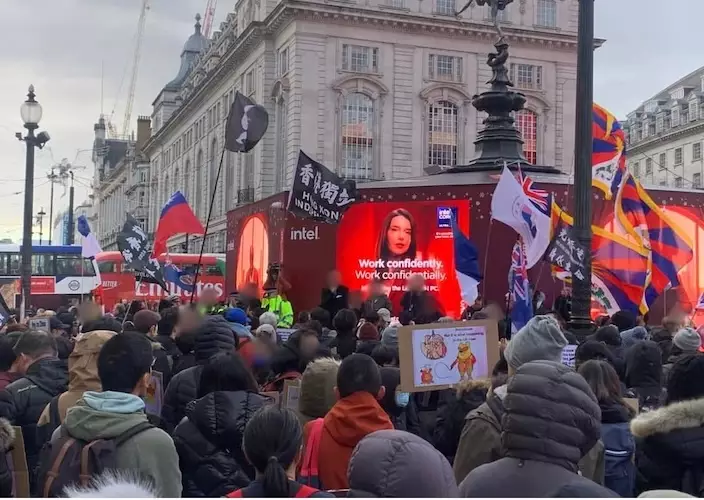
Some Hong Kong BNO holders left angry, could return angrier. The consulate's closing the door before trouble knocks.

Some Hong Kong BNO holders left angry, could return angrier. The consulate's closing the door before trouble knocks.

No Safety Net for Naturalized Citizens

Beyond Hong Kong BNO holders, the UK Foreign Office's advisory also targets those who've obtained permanent residency and those who've naturalized as citizens. Because the Chinese government doesn't recognize dual nationality, they're all regarded as Chinese nationals. If something happens after they return to Hong Kong, the British consulate likewise can't provide assistance.

Some Hong Kong BNO holders have already said they'll return to Hong Kong for better-paid work once they secure a settlement. That means a wave of UK "permanent residents" may head back next year. The UK is playing it smart—being "the villain first, the gentleman later"—so these returnees don't harbor unrealistic expectations.

As for Hong Kong people who've become British citizens, the number returning to Hong Kong is currently limited. Still, once the "5+1" pathway starts producing larger numbers of new citizens, the flow back to Hong Kong will increase. By stating its position in advance, the UK is telling them: if problems arise in the future, don't come "knocking on the door" of the consulate for help.

For the British government, shutting the back door to avoid trouble fits perfectly with its long-standing instinct to dodge responsibility and minimize risk.

Lai Ting-yiu


What Say You?

** 博客文章文責自負,不代表本公司立場 **
After a 156-day trial, the verdict in Jimmy Lai Chee-ying’s case for conspiracy to collude with foreign forces has finally landed. All three charges were proven. The judge said the prosecution witnesses were clear and convincing—honest, reliable, and hard to shake. On top of that, a mountain of messages between Lai and others backed them up too, making the case about as airtight as it gets.

One line in the judgment really jumped off the page: the court said Lai carried deep hatred toward China’s ruling regime, and that his one and only goal was the downfall of the central authorities. Once that’s on the table, the bigger—and frankly colder—picture comes into focus: teaming up with the United States to chase a “China collapse.” Re-reading the witnesses’ evidence, and Lai’s US activity before and after the 2019 turmoil, the pattern is hard to miss—he’d long been laying tracks for a secret “Shina-implosion” agenda —using “Shina”, a largely archaic and now offensive term for China. That lined up neatly with the “all-out war” posture against China being pushed by US hawkish politicians at the time.

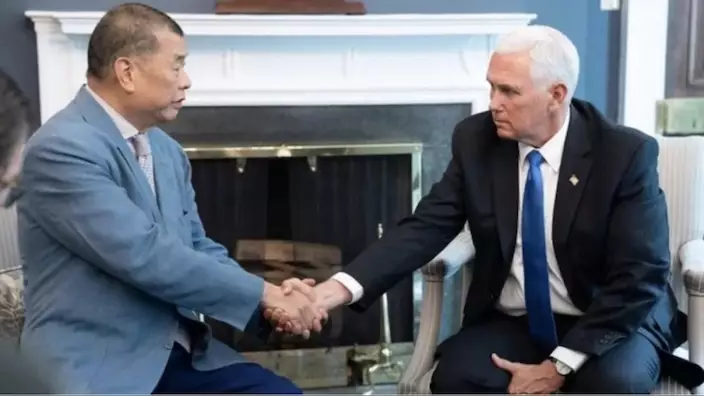
Pence spoke. Lai radicalised. “Shina-implosion” became the plan.

Pence spoke. Lai radicalised. “Shina-implosion” became the plan.

Accomplice witness—and “Fight for freedom, Stand with Hong Kong” leader—Chan Tsz-wah told the court that in early 2020, Lai met the figure nicknamed “Lam Chau Bar” (Liu Zudi) and others at Lai’s villa in Taipei’s Yangmingshan.

Lai’s pitch was blunt: if foreign countries hit China with embargo-style sanctions, and if different “blocs” could be unified and amplified with grassroots force, then what he called a “Shina-implosion” could be triggered: meaning China would collapse from within. And if that collapse came, Lai said, that would be the perfect opening for the United States to transplant democracy into China

Lai didn’t just hope “Shina-implosion” was possible—he seemed convinced after meetings with US top politicians that it was coming, because he believed the US was about to go into full confrontation with China, and that the timing was right to topple China’s regime.

Six months before that Taipei meeting, in July 2019, Lai—helped by his aide Mark Simon and certain behind-the-scenes political operators—met separately with Vice President Mike Pence, Secretary of State Mike Pompeo, and National Security Adviser John Bolton. All three were hawks, right down to the bone. Lai claimed it was about “Hong Kong’s autonomous status,” but it’s far more likely they were discussing a US “new Cold War” against China, and Hong Kong’s role inside that strategy.

When Washington “flipped the table”

Pompeo and Bolton had already floated the idea that the Chinese Communist Party would end up like the Soviet Communist Party—heading toward eventual disintegration. In that story, the US “wins” the ideological war, then gets to transplant American-style democracy into China. That was exactly Lai’s long-held “ideal,” and once he felt those heavyweight allies were onside, his confidence in making “Shina-implosion” happen only grew.

He weaponised his media to shake Hong Kong—US anti-China hawks cheered it on.

He weaponised his media to shake Hong Kong—US anti-China hawks cheered it on.

And this didn’t start in 2019. A year earlier (October 2018) Pence delivered a speech that Lai saw as nothing less than a “declaration of war” on China, and it lit a fire under him. Cooperating witness and former Apple Daily editorial writer Yeung Ching-kee said that after reading Pence’s speech, Lai told him the US had “flipped the table” on China. Lai believed Washington would rally Japan and other Western countries to confront China, and would seize on China’s weakness to “kick it while it’s down.” In Lai’s mind, this wasn’t just a trade war—it was an “all-out war.” Yeung said that from that moment, Lai became even more radical.

So once Lai realised Pence, Pompeo, and Bolton were lining up a “new Cold War” against China, he then caught another “piece of good news”: President Donald Trump formally signed the Hong Kong Human Rights and Democracy Act on November 27. That’s why, in Taipei, he spoke so confidently to Chan Tsz-wah and Liu Zudi about the secret “Shina-implosion” plan.

According to the judgment, once Lai learned Trump had formally signed the Act, he told Martin Lee Chu-ming and Mark Simon in a WhatsApp group that Trump clearly understood Hong Kong was a powerful bargaining chip in US–China trade talks—and that Hong Kong would be able to draw more resources for the struggle. Then in June 2020, Lai wrote in The New York Times that the time had come to impose sanctions and punishment on China, and that this might be the best moment for the US to “manufacture a storm” and bring about the collapse of China’s regime.

After the NSL: same goal, quieter methods

Because Lai believed the US would win this “China–US war,” and that China’s regime would then crumble, he didn’t change course even after the National Security Law took effect—just as the judge put it. Instead, he simply moved in a more covert direction.

The judgment said Lai’s only intention was to seek the downfall of the central authorities—even if the final price was sacrificing the interests of people in the Chinese Mainland and in the HKSAR. That verdict nails the damage behind Lai’s offences. And the fact he ultimately couldn’t outrun the law is, plainly speaking, a blessing for Hong Kong.

Lai Ting-yiu

Recommended Articles