Throughout history, political strongmen tended to deify themselves. Few would expect the United States — self-proclaimed bastion of democracy — to join that tradition. Yet here it is. Donald Trump has erected a 22-foot gold statue of himself at his golf course, and an evangelical pastor was brought in to consecrate it like a high priest blessing a deity. Christians and Catholics erupted in outrage, with critics charging that the ceremony violates the Second Commandment— thou shalt not worship graven images — and some going so far as to call it outright heresy.
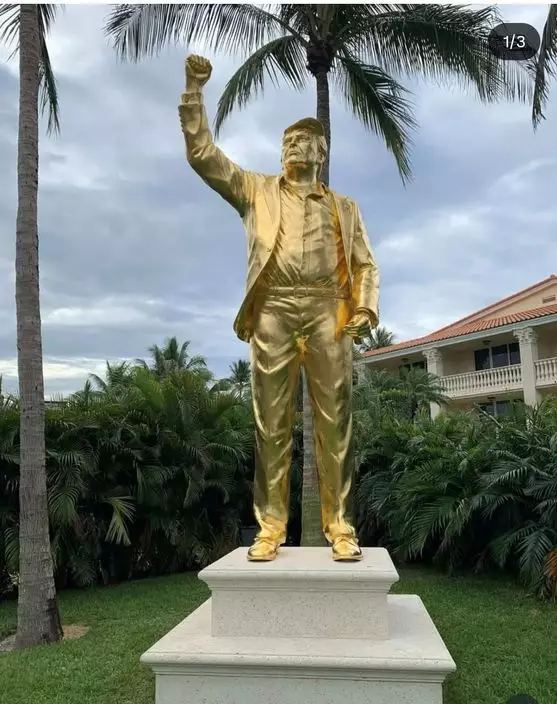
A 22-foot gold Trump statue now towers over his golf course, with an unveiling led by evangelical pastor Mark Burns that critics say turns it into a Second Commandment–breaking idol.
The gleaming statue stands front and centre before a row of palm trees at Trump's golf course — impossible to miss. The unveiling ceremony was led by evangelical pastor Mark Burns, Trump's own religious adviser, with Jewish clergy also in attendance, lending the occasion a thick layer of religious theatre. Burns described the statue as "a celebration of life" at the podium, then doubled down on social media, posting that the statue symbolises "resilience, freedom, patriotism, courage, and the will to keep fighting for America".
Burns did not stop at celebration — he pushed into full sanctification. He declared that the statue reminds Americans "reminds us of the hand of God over President Trump’s life, preserving him and not allowing his life to be taken, not once, but multiple times," framing Trump's survival of alleged assassination attempts as proof of divine protection.
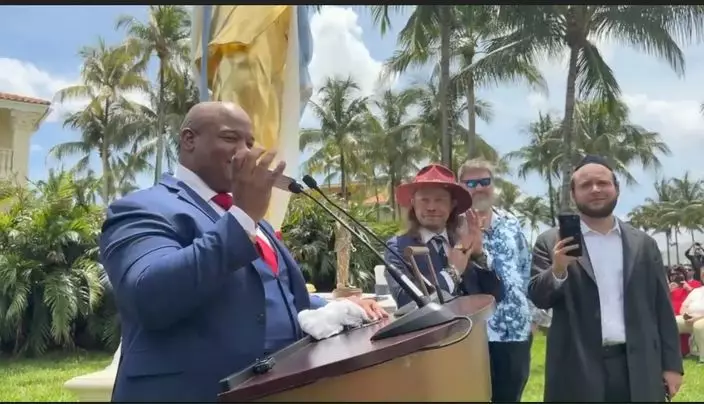
Burns says the statue shows how God has repeatedly protected Trump’s life, echoing his long-running claim that Trump is a “chosen leader” for America.
This is not a new line for Burns. He has previously called Trump a "chosen by God" leader to rebuild America and wage a battle between good and evil.
The backlash among Christians and Catholics was swift and fierce. A group called Letter from Leo argued that the Catholic Church has a duty to condemn the act, reminding the faithful that two millennia of Church teaching forbid the worship of idols — and that what Burns did at the statue's unveiling constitutes a "sin."
The historical parallel is damning: in the Book of Exodus, the Israelites melted their gold into a calf and worshiped it during their flight. Moses destroyed it. He declared that faith belongs to God alone, not to idols. That episode became the bedrock of the the Second Commandments.
Reactions on social media were even sharper. "Do not bow to idols, do not be intimidated by tyrants! Follow Jesus, not Trump," wrote one Christian on X. Others skipped the nuance entirely and labelled the statue "heresy."
Trump was unmoved. He posted an image of the statue on his own platform with the caption: "The Real Deal - GOLD - At Doral in Miami. Put there by great American patriots!”
The money behind the statue carries none of Burns's holy pretensions. The backers are investors who profited from Trump's meme coin. Flush with their gains, they paid sculptor Allan Cottrill US$300,000 for the statue, then added gold plating to suit Trump's well-known taste for opulence.
This is far from Trump's first brush with self-deification. He previously posted AI-generated images depicting himself as a Christ-like figure descending to save the American people — a move that provoked immediate Christian backlash. He scrambled to walk it back, insisting the image merely showed him as a Red Cross doctor. Few bought it.
The political damage is real and mounting. Trump's recent verbal clash with Pope Leo XIV has already alienated a significant bloc of Catholic voters from the MAGA base, eroding his core support. The gold statue controversy is pouring fuel on that fire. At this rate, by the time the midterm elections arrive, Trump may well be the one who needs divine intervention.
Lai Ting-yiu
What Say You?
** 博客文章文責自負,不代表本公司立場 **
America's press-freedom myth just took a serious hit. The Justice Department has subpoenaed four New York Times reporters over an alleged violation of federal criminal law. The FBI has opened its own investigation. Both moves target the paper's exposé on inadequate anti-missile defenses aboard the president's new plane.
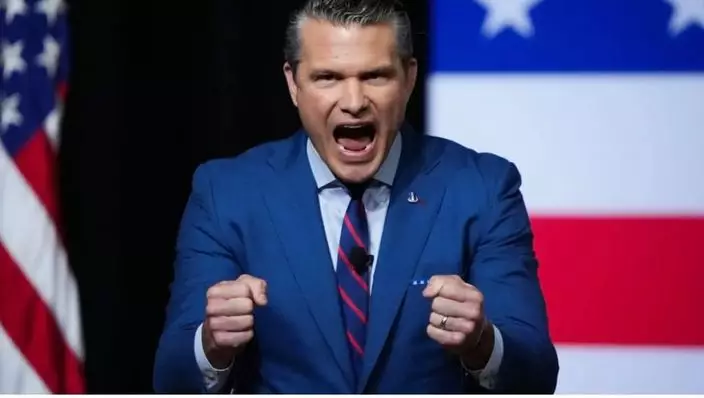
Defense Secretary Hegseth unveils "mole-hunt squad," vowing to root out leakers feeding reporters.
The White House has long nursed grudges against the press. Now, in a fury, it has escalated from threats to outright intimidation, deploying subpoenas and detentions alike. As the saying goes, there is no smoke without fire. Someone inside government must be leaking, and that conviction pushed Defense Secretary Pete Hegseth to announce a special task force. Working hand-in-hand with the Justice Department, the task force aims to root out the "moles."
The showdown between the White House and the press is only heating up, and the real fireworks may still lie ahead.
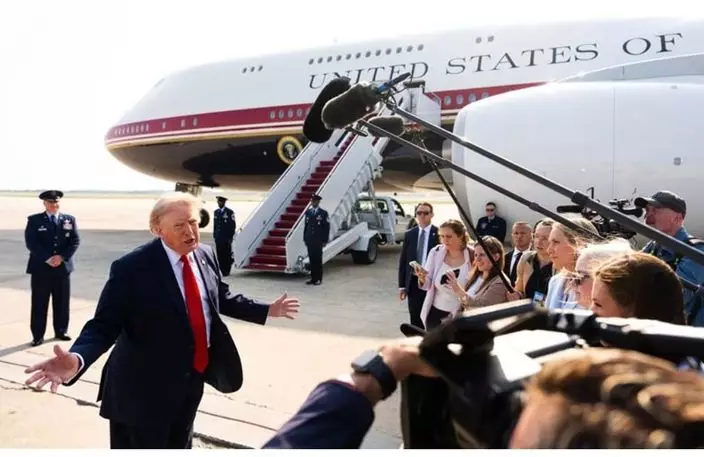
Trump's sudden switch to the old Air Force One after NATO sparked media exposés, igniting his fury and a subpoena crackdown.
The Plane-Swap Spark
The trigger behind this clash was the so-called "plane-swap incident." After Trump wrapped up the NATO summit in Turkey, his security team abruptly switched him onto the old Air Force One for departure. He skipped the new plane gifted by Qatar entirely, and that alone raised eyebrows.
The New York Times soon reported why. The new aircraft's missile-defense systems were inadequate, the paper said, posing a security risk that forced officials to fall back on the old plane. The White House flatly denied the report, and Trump reportedly flew into a rage. The Justice Department wasted no time, issuing subpoenas to the paper's reporters almost immediately.
There is more to this story. FBI agents reportedly showed up at the New York Times offices before the story even went to print. They demanded the paper pull the piece and reveal its sources.
The paper's leadership flatly refused. In response, the Justice Department broke with convention. Rather than identifying the leaker first, it went straight after the reporters with subpoenas, escalating pressure on the press.
This is not the first time the White House has tried to put reporters in the hot seat. Back in April, a US Air Force F-15E was shot down over Iranian airspace and the pilot went missing after ejecting. Both the New York Times and Axios covered the story.
Iran's military happened to launch a massive search operation around the same time. Whether the two events were connected remains unclear. Still, Trump was quick to blame the media, threatening to jail both the reporters and the leaker.
The White House apparently could not find hard evidence, so it ultimately took no action. That failure only deepened its resentment toward the press, and officials waited for the right moment to strike back hard. This time, the plane-swap incident gave the administration its pretext to wield the legal hammer, and it is determined to teach reporters a lesson they will not forget.
The Pentagon's "Mole Hunt"
The crackdown on "moles" by the Defense Department and the Justice Department has also ramped up. Hegseth posted a video on X yesterday announcing that the Pentagon has teamed up with the Justice Department to form a special task force. Its mission: hunt down whoever has been feeding information to the media, and anyone caught with solid evidence will face the full force of the law.
He said the Pentagon's Office of General Counsel can now require any department unit to hand over information and records tied to leak investigations within 48 hours. Full cooperation is mandatory, with no room for delay or evasion. He also issued a stern warning, declaring that "access to confidential and secret information is a sacred trust, and those who betray that trust will be met with the full force of the law".
Both Hegseth and Acting Attorney General Todd Blanche are die-hard Trump loyalists. That alone signals this crackdown comes directly from Trump himself, and it is designed to make heads roll, with some officials facing criminal charges. Even without hard evidence, suspects are still likely to be pushed out of their jobs.
The Pentagon has done this before. Last year it investigated several leak cases, resulting in a number of officials being suspended, including Deputy Chief of Staff Darin Selnick and Senior Adviser Dan Caldwell. Both have since quietly disappeared from their posts.
A Hunt That Cannot Succeed
Some analysts point out a hard truth. Hegseth may be on the warpath, but the Pentagon's "mole problem" could prove impossible to fully stamp out. Since Trump's return and Hegseth's takeover of the Defense Department, internal personnel purges have stirred up widespread resentment, making it easy for reporters to find disgruntled insiders willing to talk. With so many potential leakers around, there is no way to seal every crack.
Hegseth himself is not exactly clean either. Shortly after taking office, he got caught up in the "Signalgate" scandal, leaking secret plans for a US strike on Houthi forces in a group chat. That controversy caused quite the uproar. Having broken the rules himself, how can he expect his subordinates to keep their mouths shut without complaint?
Perhaps the funniest comment came from a netizen who suggested the task force should start by investigating the bartender at Hegseth's favorite watering hole. Given his well-known fondness for drink, the odds of him spilling military secrets over a few rounds are hardly low. In the end, they might just discover that the real "leaker" was Hegseth all along.