The US-Iran peace talks are turning into a roller coaster. Last Friday, Iran said it would reopen the Strait of Hormuz, lifting global hopes, but Trump quickly turned up the heat by declaring that the U.S. naval blockade on Iranian ships and ports “will remain in full force”. Iran then hardened its position at once, saying it would resume control of the strait.
In the space of two days, the whole picture changed, throwing fresh turbulence into the negotiations. Earlier this week, US Marines forcibly seized an Iranian cargo ship, pushing tensions even higher and bringing a new round of conflict to the brink.
Iran and the US now look set for a head-on clash, because whoever controls the Strait of Hormuz will hold the upper hand in this struggle. Tehran sees the waterway as a long-term trump card for resisting the US and rebuilding the country, so it clings to it tightly and will not hesitate to fight another hard battle over it.
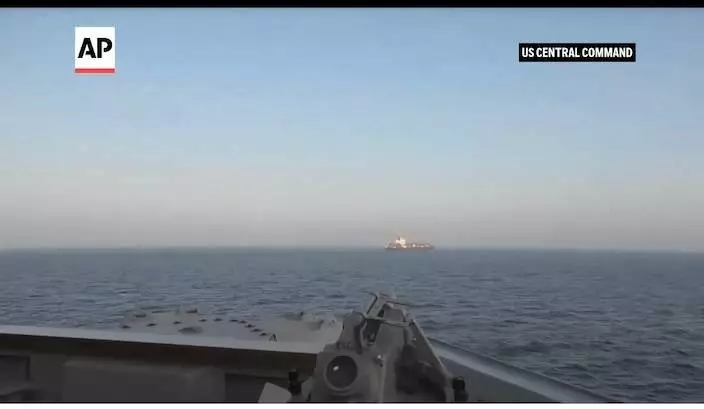
US forces are blockading the Strait of Hormuz and intercepting Iranian vessels, supercharging the fight for control. With a fresh clash looming, peace talks face a dark, uncertain future.
For Iran, the key to victory or defeat in this campaign is whether it can keep a firm grip on the strait. That is why it will not yield a single inch. This logic has already been visible in the series of moves it made after the war began. In an April 3 article examining the US-Iran war, The Wall Street Journal quoted Vali Nasr, a Johns Hopkins University professor and former senior State Department official who has crossed swords with Iranian officials. He said: “Now, the only reason why they are surviving this war is because of the strait. The Iranian thinking is that, at the end, the strait must remain under their control because it is their only deterrence and only source of revenue.”
To keep hold of this “weapon of mass destruction” over the long run, Iran has already introduced legislation in parliament. The aim is to write toll collection in the strait into law and explicitly bar non-friendly countries from passing through.
The Wall Street Journal also interviewed another senior fellow familiar with Iranian thinking, Hassan. His reading is that if Iran controls the strait, it could in future impose selective sanctions on any country and choke off shipping through the waterway at will. That would give Tehran an open-ended bargaining chip. Even if Iran suffers heavy damage in the current war, it would still retain the capacity to threaten enemy states.
That hardline strategy is clearly taking shape. In an interview with the BBC today, Ebrahim Azizi, a member of parliament and former Revolutionary Guards commander, said bluntly: “Iran's successful ‘weaponization’ of the strait is one of our key assets against the enemy.” Iran therefore intends to keep a tight hold on the power to decide which ships may pass. In other words, it wants this waterway fully under its command from now on. A scholar at the University of Tehran said the government sees the Strait of Hormuz as Iran’s main strategic lever, and that control over it is a red line that cannot be crossed.
Trump plainly sees what Iran is trying to do. He also knows that if the US loses control of the Strait of Hormuz, it will come out the loser in this war. So he panicked and rushed into a hardline response, declaring a US military blockade on ships entering and leaving Iranian ports. More, he sent Marines to board and seize an Iranian cargo ship for the first time.
But the blockade is already showing cracks because the decision was made in haste. First, US naval vessels can only carry out interceptions in international waters far from the shores of the strait, so as to avoid Iranian attack, and that makes the operation look weak. Second, the US military cannot stop Iran’s own blockade moves. The initiative over which ships may pass remains firmly in Iranian hands. For example, the US military has no effective answer if Iran lays mines in the strait.
By continuing to blockade the Strait of Hormuz, Iran can afford to sit back and wait for the enemy to tire. It is playing a long game against the US, waiting for the right moment to strike. Trump, by contrast, now has a major headache. If the strait stays closed to navigation, oil prices are bound to surge. That will hit the US economy harder and drive up political pressure on him. He originally wanted to wrap up peace talks quickly and pull himself out of the war. Now the fight over control of the strait threatens to drag the conflict out and even intensify it, making a clean exit more remote than ever.
Faced with this mess, Trump convened an emergency meeting in the White House Situation Room yesterday. He brought together Vice President Vance, Secretary of State Rubio, Secretary of Defense Hegseth and Treasury Secretary Bessent to discuss how to deal with the impasse. But finding a smart way out will be anything but easy.
Before this latest war with Iran broke out, the Strait of Hormuz had long enjoyed free passage and relative calm. But Trump misread the situation. He thought he could smash Iran with one blow, yet instead he forced a cornered adversary to fight back. That pushed Tehran to unleash its ultimate weapon by blockading the strait, and to move at the same time toward making its control permanent. It is a consequence Trump clearly did not see coming.
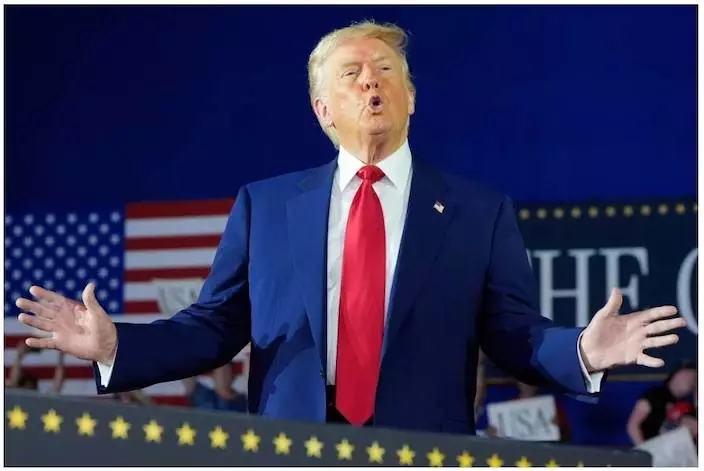
Trump’s war has pushed Iran to seize the strait and lock down permanent control. By forcing Tehran's hand, he has shot himself squarely in the foot.
Trump’s habit of shooting himself in the foot has once again produced a bitter result. Former Secretary of State Hillary Clinton recently said in a US media interview that every tabletop exercise on a US-Iran conflict during her time in office predicted Iran would blockade the Strait of Hormuz. In addition, Joint Chiefs Chairman Keane had also warned before the war began that Iran was highly likely to take that step. Yet Trump chose war on instinct and ignored the trump card in Iran’s hand. That is how he ended up trapped in today’s disorder.
The most painful part is that the deadlock over control of the strait remains unresolved, while peace talks have once again hit a roadblock. Whether the two sides can return to the table is now highly uncertain. In the meantime, the world is still being forced to pay the price for Trump’s reckless war.
Lai Ting-yiu
What Say You?
** 博客文章文責自負,不代表本公司立場 **
Will the US and Iran make peace? As of this writing, no one knows. Trump sounded optimistic, saying he was "close to a deal." Then the mood shifted. Reports emerged that key issues remained unresolved and Iran was holding firm. Trump hardened his tone, warning that if no agreement was reached by Wednesday, he would resume bombing Iran.
How the situation unfolds hinges partly on Israel's stance. Trump had earlier pressured Netanyahu to pause airstrikes on Lebanon, clearing the path for a US-Iran deal. But Israel's desire to destroy Iran has not faded — and Tel Aviv continues in working to shape Trump's decisions from the inside.
American media investigations have uncovered a deep and complex relationship between Trump and Netanyahu. At the centre of it stands US negotiating representative and presidential son-in-law Jared Kushner — along with his family. Bound together in a triangular alliance, they have long been steering Trump's Iran policy from the shadows.
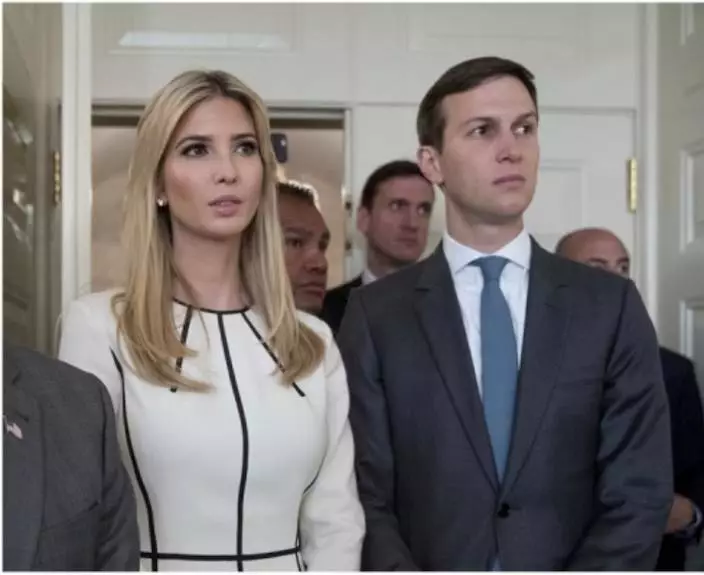
Trump's son-in-law Jared Kushner and Israeli Prime Minister Benjamin Netanyahu share a multi-generational family bond. Through his marriage to Trump's daughter, Kushner helped forge a "pro-Israel political alliance" between the two families — one that has shaped US decision-making on Iran.
Trump often points his finger at the Democrats and the left's so-called "deep state." The reality is, he has one of his own. It is a pro-Israel political bloc — a network of powerful figures in business and politics — that has quietly formed a "Jewish caucus" inside the White House. Kushner is one of its central members. Based on American media reporting, Wen Wei Po exposes how this caucus has been working hand-in-glove with Netanyahu to steer the war against Iran.
Kushner holds no official title, yet wields enormous influence over Middle Eastern affairs. Most striking is the multigenerational bond between his family and Netanyahu. A New York Times investigation revealed that the elder Kushner is a patriarch figure among Orthodox Jewish immigrant communities in America, having built his fortune through business. In the 1980s, when Netanyahu came to the United States to study, it was the elder Kushner who hosted him — in his New Jersey mansion, no less. Netanyahu occupied the bedroom of the young Jared Kushner, forcing the boy to relocate to the basement.
Netanyahu, grateful for the hospitality, came to regard the elder Kushner as a godfather figure. The two families became close across generations. Once Netanyahu rose to become Israel's Prime Minister, the ties grew even tighter.
In 2009, Kushner married Ivanka Trump. Chinese commentator Rabbit Chairman, citing American media reports, unearthed a telling anecdote: Kushner wanted his wife to renounce Christianity and convert to Judaism. Trump initially objected. After weighing the practical benefits, he came around — and reportedly joked, "Everyone thinks I'm Jewish anyway." From that point on, the two families formed a political and economic alliance through marriage, united by their shared conviction of "supporting Israel."
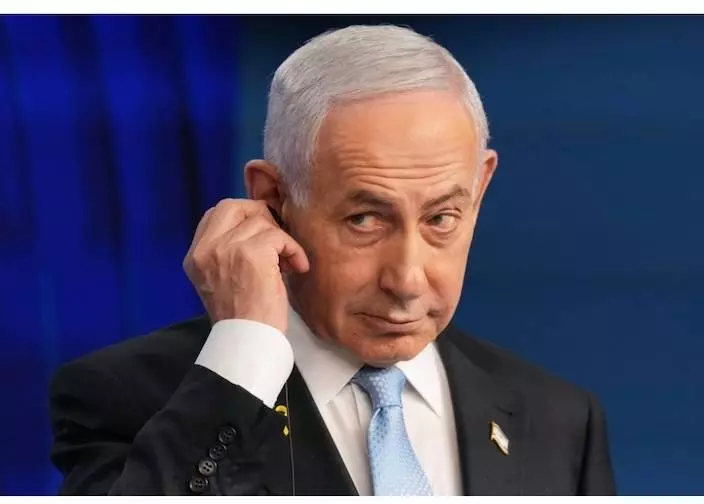
Through the Kushner family, Netanyahu has infiltrated the White House's inner circle of decision-makers, persistently pushing Trump to take a hardline approach toward Iran and resist any ceasefire.
Once Kushner became son-in-law, Trump treated him like his own son. He brought Kushner into the inner sanctum and entrusted him with political responsibility. As a Senior Adviser to the President, Kushner was involved in major Middle Eastern decisions — including handling the Gaza conflict. Given his longstanding ties with Netanyahu, he naturally became a vital conduit through which Netanyahu could influence US Iran policy, infiltrating the White House's decision-making circle.
This back channel was already at work during Trump's first term. In April 2018, Israeli intelligence agency Mossad completed a classified report on Iran's nuclear weapons development. Armed with it, Netanyahu lobbied Trump hard to withdraw from the Iran nuclear deal signed by his predecessor Obama. Trump did exactly that. He reinstated sanctions against Iran, and tensions between the two countries ratcheted up once again.
Then in February this year, Netanyahu repeated the same playbook. He travelled to Washington in person to hard-sell Trump on a plan to "strike Iran in one decisive blow" — dragging the United States into a war against Iran. The pro-Israel alliance within the White House threw its full weight behind the plan. Through this coordinated inside-outside pressure, Trump was pushed into recklessly edging toward conflict.
Beyond Kushner, the White House's pro-Israel circle has another key player: Middle East envoy Steve Witkoff. A Jewish-American real estate magnate from New York, Witkoff has deep ties with Jewish heavyweights in financial circles — including the leadership of private equity giant Blackstone. He became a major fundraiser for both of Trump's presidential campaigns.
Witkoff is also an old friend of Netanyahu's — yet another inside channel for influencing the president's decisions. Trump, having received his financial backing, returned the favour by appointing Witkoff as Middle East envoy. That role gives Witkoff more sway over Middle Eastern affairs than Secretary of State Marco Rubio. Witkoff is one of the US representatives in the current Iran negotiations and clearly leans toward Israel, pushing Iran to its limits.
In his eagerness to wrap things up, Trump has recently leaned on Netanyahu not to "stir the pot" and derail the talks. Even so, Netanyahu continues to pull every lever available. He urges Trump that a US-Iran ceasefire "would be a disaster for Israel." He warns again that Iran could have a nuclear bomb within six months. He insists America must not show weakness. Trump's wavering stance is, in no small part, tied to this unseen hand at work.
On top of that, Jewish mega-donors have been stepping up their pressure. The wealthy Adelson family is said to have delivered an ultimatum to Trump: if the US makes peace with Iran, they will stop donating to him. Once the donors made their position known, a chorus of politicians and media figures quickly followed suit, attacking the Trump administration for being "soft on Iran."
US and Iranian representatives are set to return to the negotiating table soon. But whether a deal will be reached — or whether talks will collapse in fresh turmoil — remains full of uncertainty. Among the key variables: just how much influence Netanyahu and the White House's pro-Israel circle actually hold over Trump. On that front, the deep personal and family ties between the two men and their families will almost certainly be one of the factors that tips the balance.
Lai Ting-yiu