One month into war with Iran, an estimated 1,750 Iranians have died—many of them women and children. People with any conscience, including America's allies, hope Trump will stop and spare the people, but he remains characteristically reckless, with ground forces standing ready. One order in a moment of madness could kill far more.
Pope Leo XIV is deeply appalled by the continued killing and has finally spoken out forcefully: those who initiate wars have blood on their hands and should not justify war in God's name. Though the Pope did not name names, Trump is clearly one of them—he recently gathered Christian leaders at the White House to pray for his 'Christian crusade,' putting Jesus on the war chariot. No wonder the compassionate Pope is outraged.
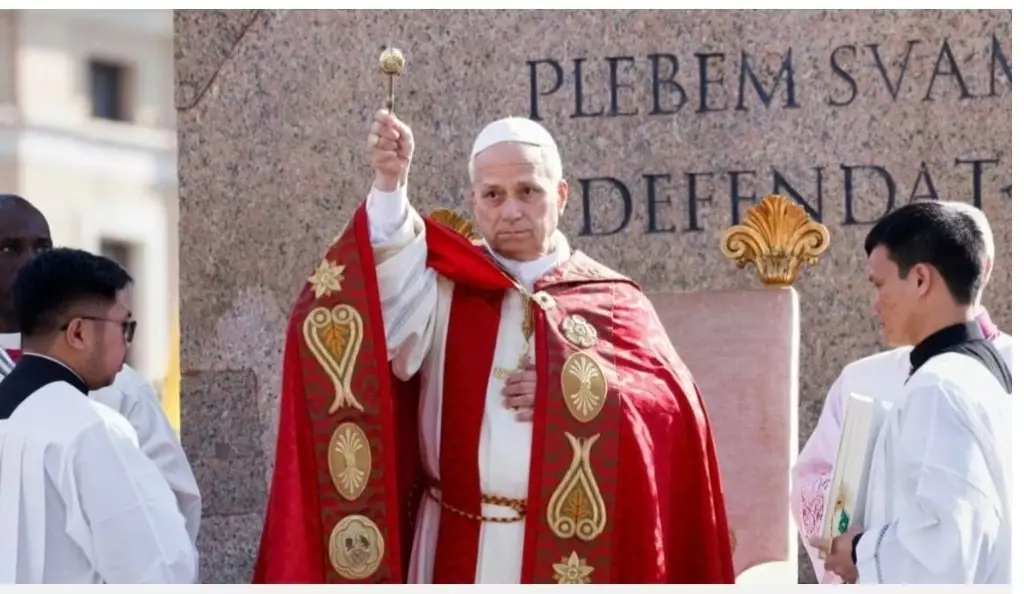
Pope Leo blasts “war‑makers” with blood on their hands, warning that Jesus will not hear their prayers—an unmistakable rebuke of Trump and Hegseth.
More shocking still: Defense Secretary Hegseth was revealed to have made inflammatory remarks at a Pentagon prayer meeting, saying 'we must use overwhelming violence against those who do not deserve mercy.' The brutality is terrifying. The Pope Leo XIV's remarks appear well-aimed, calling the world to recognize the evil face of these so-called Christian zealots.
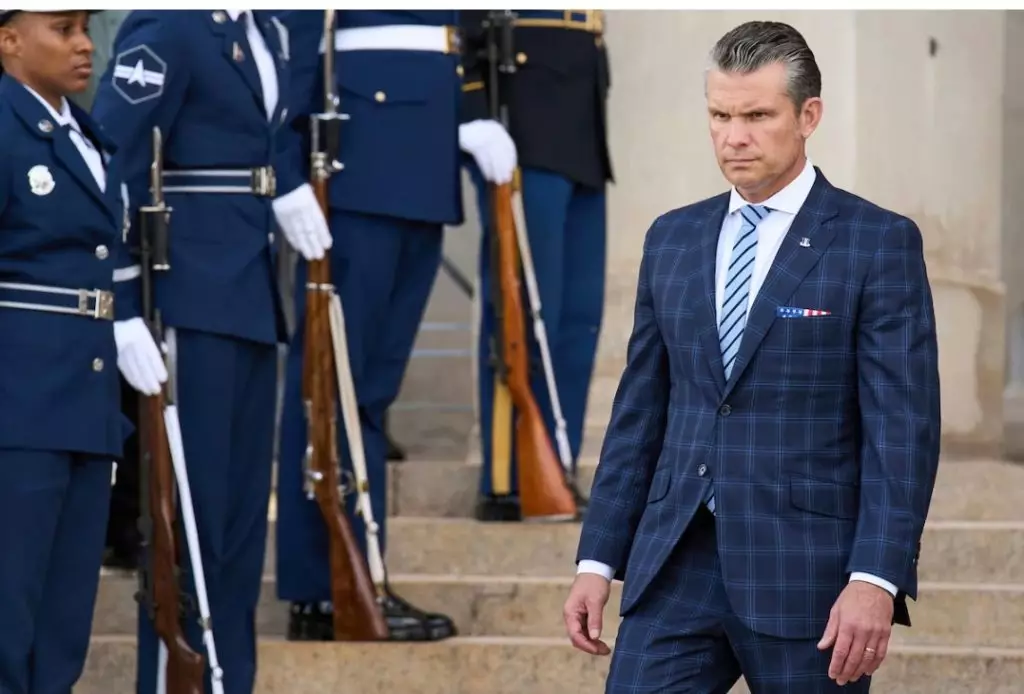
At the Pentagon, War Secretary Hegseth was exposed urging “overwhelming violence” against those he deems unworthy of mercy—a chilling call to brutality.
Since the US and Israel began war against Iran, the Pope has spoken out several times calling for a ceasefire and urging those who started the war to lay down their weapons. But this speech was the harshest yet, showing his anger has reached a critical point.
On Palm Sunday before Easter, he addressed the faithful in St. Peter's Square, saying those who initiate wars have blood on their hands, God will not listen to their prayers, and they should not justify war in God's name.
Trump and Hegseth's Religious War Framing
The Pope's remarks target two recent events. First, shortly after launching the war, Trump assembled conservative evangelical pastors and leaders at the White House. They stood behind him, hands on his shoulders, praying for divine guidance to victory. The scene carried an eerie religious intensity never before witnessed at the White House.
Second, War Secretary Hegseth, author of American Crusade: Our Fight to Stay Free, drew parallels between the conflict with Iran and the Crusades—when Christian armies attacked Islamic nations a thousand years ago. He institutionalized this framing through monthly prayer meetings at the Pentagon, promoting extreme Christian ideology to subordinates.
Pope's Theological Stance Against War
The Pope watched these two troubling phenomena unfold with deep concern and anger. Framing this conflict as a "religious war" doesn't just contradict Christian teaching—it's dangerous, inviting catastrophe. He was unequivocal: "This is our God: Jesus, King of Peace, who rejects war, whom no one can use to justify war." He then invoked Scripture itself, quoting Jesus: "Even though you make many prayers, I will not listen: Your hands are full of blood."
The Pope directly condemned priests who pray for "war makers," insisting that Christian leaders bearing responsibility for war must repent. His message was clear: supporting a conflict that causes mass suffering is wrong, period—both theologically and morally.
Escalating Conflict and Religious Fanaticism
The Pope had voiced his grave concerns right from the start. Shortly after the conflict erupted, he warned that unchecked escalation would trigger catastrophe, urging all sides to "stop the spiral of violence before it becomes an irreparable abyss." His prescience proved accurate—yet the leaders of both nations, each pursuing their own agenda, have only intensified the flames. They ignore his pleas.
Military leadership has matched political fervor with religious conviction. The War Secretary overseeing operations, Pete Hegseth, has embraced what amounts to religious fanaticism, recently revealed to have sanctified violence during an internal Pentagon prayer meeting. According to the Associated Press, he appealed for ‘overwhelming violence of action against those who deserve no mercy.’ He was referring to Iran and other Islamic adversaries. To complete this "sacred mission," he suggested, killing is justified.
Call for Unity Against War and Evil
Whether Trump or Hegseth, both rationalize and sanctify mass-killing warfare—a truly terrifying prospect. The Pope’s firm stand today against this "heresy" has greatly heartened those standing on the side of justice.
As long as all anti-war forces unite and continue to grow stronger, we believe we can ultimately overcome evil with righteousness and force the 'warmongers' to back down.
What Say You?
** 博客文章文責自負,不代表本公司立場 **
The US-Israel joint attack on Iran has stretched into its 29th day. Trump claims daily it will end soon, but both sides remain locked in a stalemate—unable to win decisively or withdraw cleanly. No path to swift resolution is visible.
While observers focus on battlefield conditions, few have noticed Netanyahu's precarious domestic position. He faces a critical hurdle that could cost him power entirely. Should he stumble, he could lose office in disgrace, and the Iran war could shift dramatically.
Trump, meanwhile, faces his own crisis. Recent signals show Republican electoral prospects darkening and his ratings collapsing. If the conflict drags on, his political position will become catastrophic. He and Netanyahu are truly partners in misfortune.
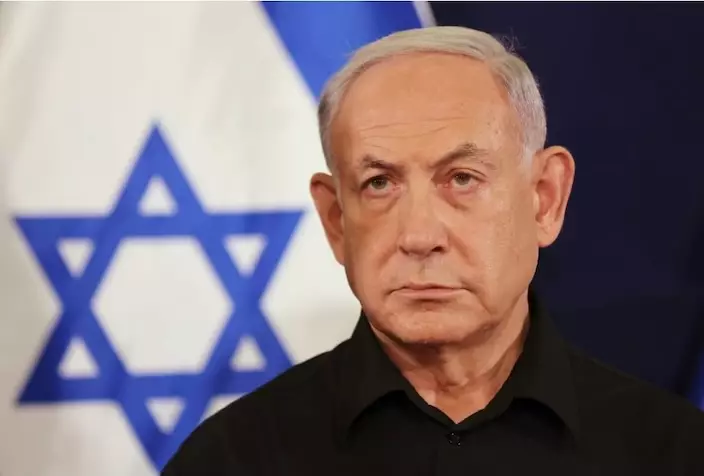
Netanyahu faces a deep political crisis — if parliament rejects the budget on Tuesday, snap elections will be triggered, and his grip on power could collapse.
Netanyahu pushes forward to project strength these days, hammering Iran relentlessly and ignoring even Trump's calls to stop. Behind the bluster, he is under siege domestically, his grip on power increasingly fragile. The immediate threat is his government's budget vote on Tuesday, March 31st. If it fails, early elections must be held within 90 days—moved up from October.
Current polls show Netanyahu’s coalition losing its parliamentary majority. Defeat means forced removal from office, followed by corruption trials. Imprisonment is the worst-case outcome.
Netanyahu's Precarious Hold on Power
Netanyahu is notoriously cunning. His calculation at the war's outset was straightforward: early parliamentary elections would favor him. The Israeli military had successfully eliminated Iran's Supreme Leader Khamenei and senior officials.
Initial offensives had gone smoothly. If elections were held after March 31, his ruling coalition could ride the wave of military victory to secure a parliamentary majority. His grip on power would solidify, and he'd escape legal accountability.
But the war hasn't unfolded as he envisioned. Despite relentless US-Israel strikes on Iran, they've achieved no decisive results—just endless stalemate.
Israel now faces three bitter realities.
First, Iran strikes back hard, pounding Israeli cities with missiles and drones. Most are intercepted, but some hit their targets, leaving the public living in fear.
Second, the war costs $1.6 billion weekly, leaving nothing for welfare and development.
Third, the military is under immense strain. Soldiers are exhausted. Chief of Staff Zamir has warned bluntly: ten red flags are already raised, troop replenishment is urgent, or the war effort faces collapse.
War-weariness is swelling among Israelis. Anti-war protests have erupted in some areas, and public resentment shows up in polls. According to recent polling by The Times of Israel, if elections were held now, Netanyahu's Likud party would win only 28 seats—six fewer than its current 34. His ruling coalition, including other conservative parties, would secure only 51 of parliament's 120 seats, falling short of a majority.
If that happens, Netanyahu's position as prime minister won't survive.
War's Toll Erodes Israeli Support
If Netanyahu falls from power, he loses not just his grip on the Iran war but faces reckoning for starting it. Corruption cases loom. Prison is possible. So he pivoted: push the budget through Tuesday's parliamentary vote to stave off early elections. His political survival hinges on that single vote.
Trump's domestic picture is equally dire. His Iran campaign stalls while his own backyard burns. In Florida's congressional district where Mar-a-Lago sits, a 40-year-old Democratic newcomer just toppled the Republican candidate Trump backed. This district has always been a MAGA stronghold and Republican vote bank. The political warning is unmistakable.
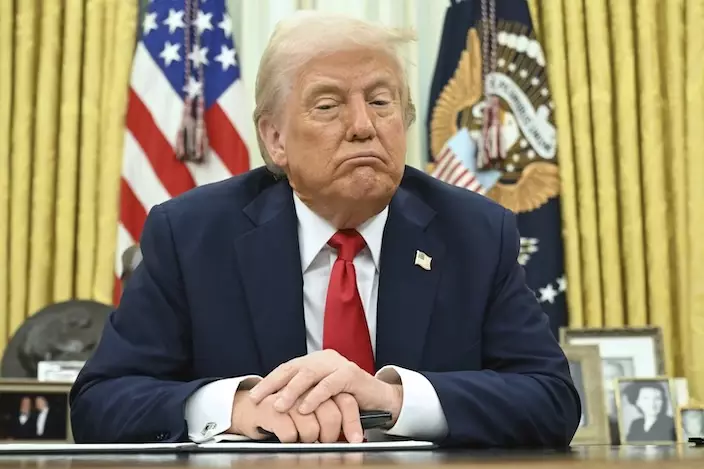
Trump’s standing at home is slipping — Republicans just lost a House special election, hinting that his once-formidable political pull is fading.
Trump's Crumbling Electoral Advantage
Voter opposition to Trump's Iran war is direct and measurable. According to the latest Pew Research Center poll, 50% of Americans say attacking Iran was wrong, while just 38% support the decision. That public disapproval is eroding Trump's political standing. Reuters and Ipsos surveys show his approval rating has collapsed to 36%—a nine-point drop from the 45% he held when returning to the White House.
Public anger is moving beyond polls into the streets. On Saturday, 9 million Americans protested across multiple states in "No Kings" demonstrations, with anti-war sentiment as a central theme. The scale and intensity echo the anti-Vietnam War movement that convulsed the nation in the early 1970s—a historical parallel that should unsettle Trump's political strategists.
Mass Protests Echo Vietnam War Era
History doesn't just rhyme—it echoes. The massive anti-Vietnam War movement of the early 1970s opposed a senseless conflict and marked President Nixon's pivot from ascendancy to decline. Trump has now launched a similarly questionable Iran conflict, seemingly treading Nixon's path. Whether the political trajectory will mirror that era remains to be seen.
Lai Ting-yiu