The US-Israel joint attack on Iran has stretched into its 29th day. Trump claims daily it will end soon, but both sides remain locked in a stalemate—unable to win decisively or withdraw cleanly. No path to swift resolution is visible.
While observers focus on battlefield conditions, few have noticed Netanyahu's precarious domestic position. He faces a critical hurdle that could cost him power entirely. Should he stumble, he could lose office in disgrace, and the Iran war could shift dramatically.
Trump, meanwhile, faces his own crisis. Recent signals show Republican electoral prospects darkening and his ratings collapsing. If the conflict drags on, his political position will become catastrophic. He and Netanyahu are truly partners in misfortune.
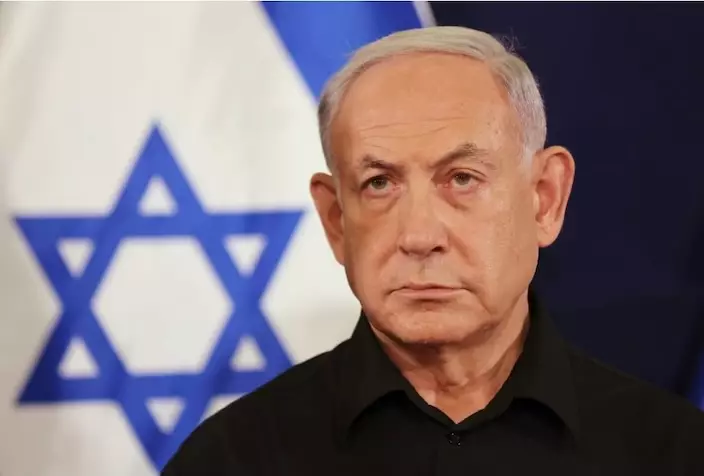
Netanyahu faces a deep political crisis — if parliament rejects the budget on Tuesday, snap elections will be triggered, and his grip on power could collapse.
Netanyahu pushes forward to project strength these days, hammering Iran relentlessly and ignoring even Trump's calls to stop. Behind the bluster, he is under siege domestically, his grip on power increasingly fragile. The immediate threat is his government's budget vote on Tuesday, March 31st. If it fails, early elections must be held within 90 days—moved up from October.
Current polls show Netanyahu’s coalition losing its parliamentary majority. Defeat means forced removal from office, followed by corruption trials. Imprisonment is the worst-case outcome.
Netanyahu's Precarious Hold on Power
Netanyahu is notoriously cunning. His calculation at the war's outset was straightforward: early parliamentary elections would favor him. The Israeli military had successfully eliminated Iran's Supreme Leader Khamenei and senior officials.
Initial offensives had gone smoothly. If elections were held after March 31, his ruling coalition could ride the wave of military victory to secure a parliamentary majority. His grip on power would solidify, and he'd escape legal accountability.
But the war hasn't unfolded as he envisioned. Despite relentless US-Israel strikes on Iran, they've achieved no decisive results—just endless stalemate.
Israel now faces three bitter realities.
First, Iran strikes back hard, pounding Israeli cities with missiles and drones. Most are intercepted, but some hit their targets, leaving the public living in fear.
Second, the war costs $1.6 billion weekly, leaving nothing for welfare and development.
Third, the military is under immense strain. Soldiers are exhausted. Chief of Staff Zamir has warned bluntly: ten red flags are already raised, troop replenishment is urgent, or the war effort faces collapse.
War-weariness is swelling among Israelis. Anti-war protests have erupted in some areas, and public resentment shows up in polls. According to recent polling by The Times of Israel, if elections were held now, Netanyahu's Likud party would win only 28 seats—six fewer than its current 34. His ruling coalition, including other conservative parties, would secure only 51 of parliament's 120 seats, falling short of a majority.
If that happens, Netanyahu's position as prime minister won't survive.
War's Toll Erodes Israeli Support
If Netanyahu falls from power, he loses not just his grip on the Iran war but faces reckoning for starting it. Corruption cases loom. Prison is possible. So he pivoted: push the budget through Tuesday's parliamentary vote to stave off early elections. His political survival hinges on that single vote.
Trump's domestic picture is equally dire. His Iran campaign stalls while his own backyard burns. In Florida's congressional district where Mar-a-Lago sits, a 40-year-old Democratic newcomer just toppled the Republican candidate Trump backed. This district has always been a MAGA stronghold and Republican vote bank. The political warning is unmistakable.
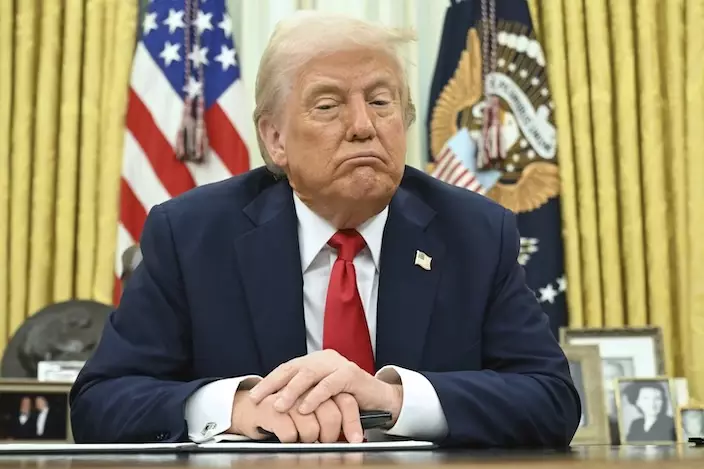
Trump’s standing at home is slipping — Republicans just lost a House special election, hinting that his once-formidable political pull is fading.
Trump's Crumbling Electoral Advantage
Voter opposition to Trump's Iran war is direct and measurable. According to the latest Pew Research Center poll, 50% of Americans say attacking Iran was wrong, while just 38% support the decision. That public disapproval is eroding Trump's political standing. Reuters and Ipsos surveys show his approval rating has collapsed to 36%—a nine-point drop from the 45% he held when returning to the White House.
Public anger is moving beyond polls into the streets. On Saturday, 9 million Americans protested across multiple states in "No Kings" demonstrations, with anti-war sentiment as a central theme. The scale and intensity echo the anti-Vietnam War movement that convulsed the nation in the early 1970s—a historical parallel that should unsettle Trump's political strategists.
Mass Protests Echo Vietnam War Era
History doesn't just rhyme—it echoes. The massive anti-Vietnam War movement of the early 1970s opposed a senseless conflict and marked President Nixon's pivot from ascendancy to decline. Trump has now launched a similarly questionable Iran conflict, seemingly treading Nixon's path. Whether the political trajectory will mirror that era remains to be seen.
Lai Ting-yiu
What Say You?
** 博客文章文責自負,不代表本公司立場 **
In the fierce standoff between the United States, Israel, and Iran, Trump plays the role of a rooster in a high-stakes game of chicken, putting on a tough front to scare Iran into backing down. The logic of the game is simple: the side that stands firm while the other yields wins.
Yet on the ground, events have veered sharply from Trump’s expectations. Iran refuses to retreat and shifts from defense to offense, striking boldly at the US and Israel. This traps Trump in a classic dilemma of the chicken game — he can neither afford to lose nor back down.
Adding to his troubles, British media report that Iran is seizing control of the conflict while US weapons run low and America’s domestic economic strains deepen. Compared with Iran, the US is in a weaker position to sustain prolonged conflict, which may push Trump to stage a hollow “victory” and seek a face-saving exit from this escalating war.
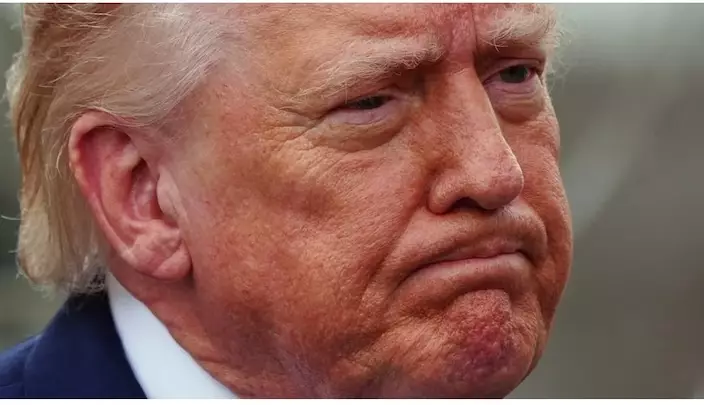
Trump is caught in a ‘chicken game’ stalemate as Iran pushes back aggressively, forcing him to find an escape.
On Saturday, Trump issued a stark warning to Iran: “FULLY OPEN, WITHOUT THREAT”, the Strait of Hormuz within 48 hours; or face destruction of multiple power plants, “STARTING WITH THE BIGGEST ONE FIRST!” This blunt threat reveals a lack of real options, relying on scare tactics to force Iran to back down. But the gambit failed. Iran remained unfazed, refusing to budge and issuing its own stern warning: if Washington moves first, Tehran will answer in kind — and with double the force.
Following Trump’s ultimatum, Iran’s Revolutionary Guard vowed: “We are determined to respond to any threat at the same level as it creates in terms of deterrence”, including attacks on Israel’s power facilities and Gulf countries’ power plants that supply US military bases.
The Iranian military also pledged to escalate by imposing an indefinite blockade of the Strait of Hormuz, enforcing a doomsday strategy designed to inflict heavy costs on the United States and its allies.
Meanwhile, Iran ramped up its offensive, launching large-scale missile strikes on Tel Aviv and other Israeli cities and targeting airports with drones. This showed Iran’s combat forces remain intact and that it is deploying new tactics to intensify the attack. Even more alarming for the US and Israel, an Iranian missile breached Israel’s defense system and struck buildings in the southern city of Dimona, shattering the illusion of Israel’s invulnerable “golden shield” and shifting the power balance.
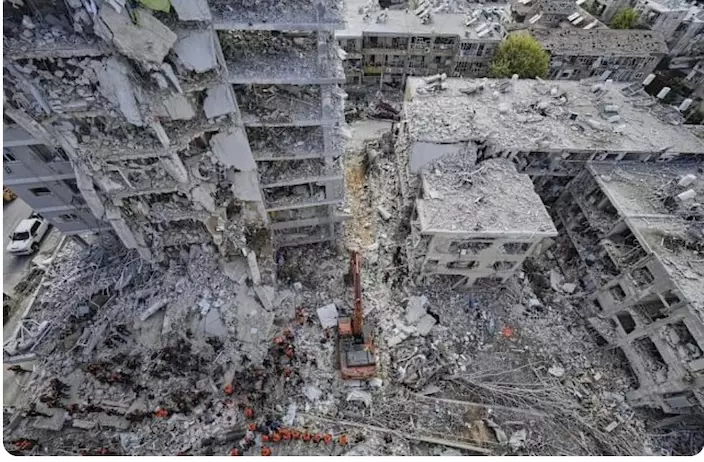
Iran’s missile strike on central Israel proves it retains strong combat capability and poses a serious threat to the US and Israel.
US Military Moves and Strategic Posture
Trump’s options to intimidate Iran are limited. He flexes muscle by ordering three amphibious assault ships and transport vessels to the Middle East, carrying thousands of U.S. Marines. The posture signals readiness for a ground war at any moment. But most military experts warn that any direct assault on Iran’s coasts and islands would trigger fierce resistance, posing huge risks of damage to warships and heavy casualties among troops. Trump clearly grasps the danger, so yesterday he shifted tone, telling the media he would not send troops to "fight a ground war," suggesting this military buildup is more bluff than battle plan.
The latest twist came as Trump announced a 5-day extension to the "48-hour deadline" set to expire Tuesday morning. During this pause, no attacks will target Iran’s civilian infrastructure. The move buys himself breathing space to seek a way out of the standoff.
The BBC carefully analyzed Trump’s recent remarks and found his demands have softened since the early days of the confrontation. First, he no longer calls for regime change or the current government’s ouster, meaning anti-American leaders could remain in power. Second, he dropped talk of "unconditional surrender," signaling that peace terms are open to negotiation.
Economic Pressures Influence Decisions
Another driving force pushing Trump toward retreat is the mounting risk to the U.S. economy if the conflict drags on. Data from American research institutions show that sustained high oil prices will sharply increase gasoline costs for drivers. Recently, prices jumped from an average of $2.98 to $3.63 per gallon, igniting widespread public anger.
The chances of interest rate cuts this year have dropped to 40%. The stock market is clouded with uncertainty: the S&P 500 has fallen 5% from its late January record high and risks further collapse. Financing for AI companies is also sharply weakened, hit hard by setbacks in the Gulf countries.
Trump cannot be unaware of these dangerous economic warning signs. Corporate giants—including his own financial backers and the Republican Party’s donors—have likely begun pressuring him to end the conflict quickly. Public opinion adds more pressure.
A recent Reuters poll found nearly 60% of Americans oppose U.S. military strikes against Iran, with 55% opposing a ground war. If Trump ignores this sentiment and continues pushing for conflict, the results in the upcoming midterm elections could be catastrophic.
The Stalemate and Possible Outcomes
In the "chicken game," the best outcome for both sides is to each yield slightly and end with a truce. The worst outcome is that neither backs down, resulting in mutual destruction. Trump refuses to be the first to retreat, but his opponent also stands firm. Caught in this stalemate, fighting means defeat, retreat means losing face. The only escape is to "fake a victory"—find a way to withdraw with dignity and then declare victory to end the conflict.
Known for his "pragmatism," Trump is unlikely to recklessly batter his head against the wall if he knows it only leads to disaster. If he truly thinks this way, there is a chance this absurd conflict could see a turning point.
Lai Ting-yiu