
Skip to Content Facebook Feature Image

Trump Trapped in ‘Chicken Game’ Dilemma with Iran

Blog

Trump Trapped in ‘Chicken Game’ Dilemma with Iran
Blog

Blog

Trump Trapped in ‘Chicken Game’ Dilemma with Iran

2026-03-25 00:07 Last Updated At:00:07

In the fierce standoff between the United States, Israel, and Iran, Trump plays the role of a rooster in a high-stakes game of chicken, putting on a tough front to scare Iran into backing down. The logic of the game is simple: the side that stands firm while the other yields wins. 

Yet on the ground, events have veered sharply from Trump’s expectations. Iran refuses to retreat and shifts from defense to offense, striking boldly at the US and Israel. This traps Trump in a classic dilemma of the chicken game — he can neither afford to lose nor back down. 

Adding to his troubles, British media report that Iran is seizing control of the conflict while US weapons run low and America’s domestic economic strains deepen. Compared with Iran, the US is in a weaker position to sustain prolonged conflict, which may push Trump to stage a hollow “victory” and seek a face-saving exit from this escalating war.
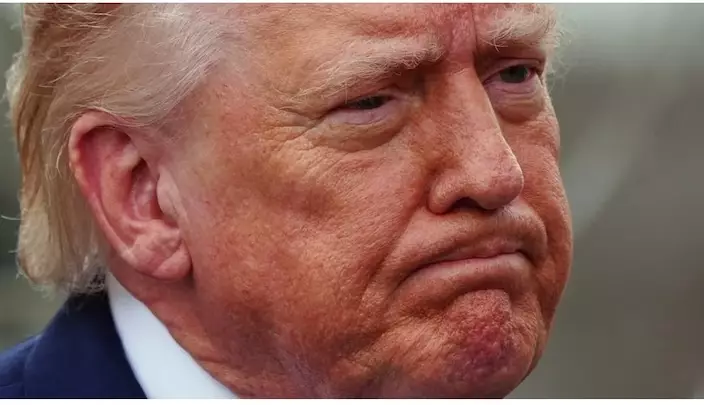
Trump is caught in a ‘chicken game’ stalemate as Iran pushes back aggressively, forcing him to find an escape.

Trump is caught in a ‘chicken game’ stalemate as Iran pushes back aggressively, forcing him to find an escape.

On Saturday, Trump issued a stark warning to Iran: “FULLY OPEN, WITHOUT THREAT”, the Strait of Hormuz within 48 hours; or face destruction of multiple power plants, “STARTING WITH THE BIGGEST ONE FIRST!” This blunt threat reveals a lack of real options, relying on scare tactics to force Iran to back down. But the gambit failed. Iran remained unfazed, refusing to budge and issuing its own stern warning: if Washington moves first, Tehran will answer in kind — and with double the force.

Following Trump’s ultimatum, Iran’s Revolutionary Guard vowed: “We are determined to respond to any threat at the same level as it creates in terms of deterrence”, including attacks on Israel’s power facilities and Gulf countries’ power plants that supply US military bases.

The Iranian military also pledged to escalate by imposing an indefinite blockade of the Strait of Hormuz, enforcing a doomsday strategy designed to inflict heavy costs on the United States and its allies.

Meanwhile, Iran ramped up its offensive, launching large-scale missile strikes on Tel Aviv and other Israeli cities and targeting airports with drones. This showed Iran’s combat forces remain intact and that it is deploying new tactics to intensify the attack. Even more alarming for the US and Israel, an Iranian missile breached Israel’s defense system and struck buildings in the southern city of Dimona, shattering the illusion of Israel’s invulnerable “golden shield” and shifting the power balance.
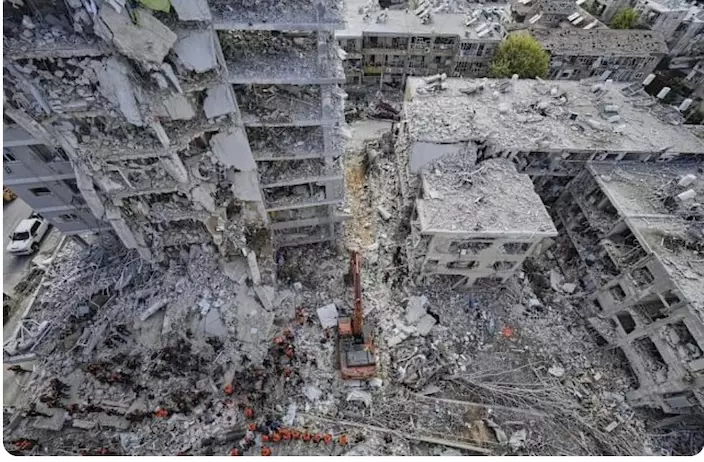
Iran’s missile strike on central Israel proves it retains strong combat capability and poses a serious threat to the US and Israel.

Iran’s missile strike on central Israel proves it retains strong combat capability and poses a serious threat to the US and Israel.

US Military Moves and Strategic Posture

Trump’s options to intimidate Iran are limited. He flexes muscle by ordering three amphibious assault ships and transport vessels to the Middle East, carrying thousands of U.S. Marines. The posture signals readiness for a ground war at any moment. But most military experts warn that any direct assault on Iran’s coasts and islands would trigger fierce resistance, posing huge risks of damage to warships and heavy casualties among troops. Trump clearly grasps the danger, so yesterday he shifted tone, telling the media he would not send troops to "fight a ground war," suggesting this military buildup is more bluff than battle plan.

The latest twist came as Trump announced a 5-day extension to the "48-hour deadline" set to expire Tuesday morning. During this pause, no attacks will target Iran’s civilian infrastructure. The move buys himself breathing space to seek a way out of the standoff.

The BBC carefully analyzed Trump’s recent remarks and found his demands have softened since the early days of the confrontation. First, he no longer calls for regime change or the current government’s ouster, meaning anti-American leaders could remain in power. Second, he dropped talk of "unconditional surrender," signaling that peace terms are open to negotiation. 

Economic Pressures Influence Decisions

Another driving force pushing Trump toward retreat is the mounting risk to the U.S. economy if the conflict drags on. Data from American research institutions show that sustained high oil prices will sharply increase gasoline costs for drivers. Recently, prices jumped from an average of $2.98 to $3.63 per gallon, igniting widespread public anger. 

The chances of interest rate cuts this year have dropped to 40%. The stock market is clouded with uncertainty: the S&P 500 has fallen 5% from its late January record high and risks further collapse. Financing for AI companies is also sharply weakened, hit hard by setbacks in the Gulf countries.

Trump cannot be unaware of these dangerous economic warning signs. Corporate giants—including his own financial backers and the Republican Party’s donors—have likely begun pressuring him to end the conflict quickly. Public opinion adds more pressure. 

A recent Reuters poll found nearly 60% of Americans oppose U.S. military strikes against Iran, with 55% opposing a ground war. If Trump ignores this sentiment and continues pushing for conflict, the results in the upcoming midterm elections could be catastrophic.

The Stalemate and Possible Outcomes

In the "chicken game," the best outcome for both sides is to each yield slightly and end with a truce. The worst outcome is that neither backs down, resulting in mutual destruction. Trump refuses to be the first to retreat, but his opponent also stands firm. Caught in this stalemate, fighting means defeat, retreat means losing face. The only escape is to "fake a victory"—find a way to withdraw with dignity and then declare victory to end the conflict.

Known for his "pragmatism," Trump is unlikely to recklessly batter his head against the wall if he knows it only leads to disaster. If he truly thinks this way, there is a chance this absurd conflict could see a turning point.

Lai Ting-yiu


What Say You?

** The blog article is the sole responsibility of the author and does not represent the position of our company. **

Whether the US war against Iran is nearing its end remains uncertain. Although Trump claims the "military action will gradually de-escalate," on Saturday (March 21)  he issued a final ultimatum: if the Strait of Hormuz is not reopened within 48 hours, the US will target power plants and other civilian infrastructure. This signals an escalation of the fighting. More alarming, some US soldiers have received messages framing the war against Iran as a "holy war"—the apocalyptic final battle foretold in the Bible's Book of Revelation.

This rhetoric matches the extreme Christian ideology actively promoted by Secretary of War. CNN's review of his recent statements reveals that he casts the war against Iran as a thousand-year reenactment of the "Crusades." Having this religious zealot leading the conflict makes it especially terrifying.

Hegseth calls himself a “modern Crusader,” branding the Iran war a “holy mission” and preaching religious zeal in monthly Pentagon prayer meetings.

Hegseth calls himself a “modern Crusader,” branding the Iran war a “holy mission” and preaching religious zeal in monthly Pentagon prayer meetings.

According to CNN, the watchdog group Military Religious Freedom Foundation revealed that since the war began, some soldiers received orders from superiors describing the conflict as part of the "end-time final battle" predicted in the Book of Revelation. Other messages reportedly claim the outbreak of war with Iran is meant to usher in Christ’s second coming.

The foundation did not name who issued these messages nor confirm any direct link to Hegseth. However, CNN noted that in recent interviews, he repeatedly referred to “God’s guidance” and the “Christian mission,” framing the conflict in religious terms. He described Iran as a “mad regime obsessed with Islamic fantasy” and portrayed the war's purpose as a righteous battle to purge evil — steeped in religious fanaticism.

Earlier in an interview with CBS, he stated Iran should not doubt an American victory because the US is backed by a supreme power—an "Almighty God" protecting troops as they carry out their holy mission.

Later, while receiving the bodies of fallen soldiers, he said, “The Lord holds my hand in this war and teaches my fingers how to command the battle,” calling it a fight “for faith” and a war of “good over evil.”

Secretary of War's Fanatical Crusade

Not only does he harbor this intense religious fanaticism himself, but he actively promotes “brainwashing” rituals within the War Department, holding monthly prayers designed to embed his extreme beliefs. This has shaped a cadre of “faith warriors” with even deeper religious conviction. Moreover, he invited far-right conservative pastor Doug Wilson—a notorious Christian nationalist—to preach to War Department  personnel, turning Wilson into a kind of ideological mentor inside the military.

Before even becoming Defense Secretary  (later renamed War Secretary), Hegseth had already earned a reputation as a religious fanatic, sparking heated debate. In 2020, he published American Crusade, openly calling himself a “modern-day crusader” and arguing that the U.S. must revive the Crusades era from a thousand years ago. He proposed launching a “holy war” not only against Islamic forces but also against domestic and foreign leftists as well as “communist China.” He specifically insisted Islamic countries must be denied nuclear weapons (targeting Iran), and if necessary, bombed to prevent any challenge to Christianity.

He went so far as to tattoo the Crusader emblem on his body, bearing the Latin phrase Deus Vult, meaning “God’s will.” He explained the tattoo represented the “battle cry of Christian knights marching on Jerusalem,” and insisted Americans must fight today with the same zeal as those Christian brothers a millennium ago.

Looking back, starting in 1095, the Papacy rallied Western European nations to form Crusader armies, repeatedly launching brutal campaigns against Islamic empires to reclaim the Christian “holy city” of Jerusalem. These battles were ruthless, with Crusaders slaughtering tens of thousands of Muslim civilians after capturing cities. Ultimately, the Islamic empires repelled the Crusaders, ending this violent chapter of history.

The Crusades a thousand years ago were marked by mass slaughter of Muslim civilians wherever they went—an extremely terrifying chapter in history.

The Crusades a thousand years ago were marked by mass slaughter of Muslim civilians wherever they went—an extremely terrifying chapter in history.

Historical Crusades and Modern Echoes

When Trump took office, he tapped Hegseth as Defense Secretary. Many already feared he would inject extreme religious ideology into the Pentagon — and since that suited Trump perfectly, Hegseth sailed through. Now he leads the charge in this 'holy war' against Iran, fulfilling his long-held dream of reenacting the Crusades.

Some American scholars told Al Jazeera that framing this conflict as a 'holy war' carries serious risks. If Trump and Hegseth raise the banner of religious belief with the goal of eradicating evil, the consequences become harder to contain — and compromise nearly impossible to reach.

Current Risks of Holy War Framing

Pope Leo XIV has voiced deep concern over this development. Recently, a group of American Christian leaders gathered at the White House to pray for Trump’s attack on Iraq, which unsettled the Pope. Without naming names, he suggested that “Christian leaders responsible for the war should go repent.”

Rational voices should heed the Pope’s warning. But by now, Trump and Hegseth are consumed by fanaticism and deaf to reason.

Lai Ting-yiu

Recommended Articles