Whether the US war against Iran is nearing its end remains uncertain. Although Trump claims the "military action will gradually de-escalate," on Saturday (March 21) he issued a final ultimatum: if the Strait of Hormuz is not reopened within 48 hours, the US will target power plants and other civilian infrastructure. This signals an escalation of the fighting. More alarming, some US soldiers have received messages framing the war against Iran as a "holy war"—the apocalyptic final battle foretold in the Bible's Book of Revelation.
This rhetoric matches the extreme Christian ideology actively promoted by Secretary of War. CNN's review of his recent statements reveals that he casts the war against Iran as a thousand-year reenactment of the "Crusades." Having this religious zealot leading the conflict makes it especially terrifying.

Hegseth calls himself a “modern Crusader,” branding the Iran war a “holy mission” and preaching religious zeal in monthly Pentagon prayer meetings.
According to CNN, the watchdog group Military Religious Freedom Foundation revealed that since the war began, some soldiers received orders from superiors describing the conflict as part of the "end-time final battle" predicted in the Book of Revelation. Other messages reportedly claim the outbreak of war with Iran is meant to usher in Christ’s second coming.
The foundation did not name who issued these messages nor confirm any direct link to Hegseth. However, CNN noted that in recent interviews, he repeatedly referred to “God’s guidance” and the “Christian mission,” framing the conflict in religious terms. He described Iran as a “mad regime obsessed with Islamic fantasy” and portrayed the war's purpose as a righteous battle to purge evil — steeped in religious fanaticism.
Earlier in an interview with CBS, he stated Iran should not doubt an American victory because the US is backed by a supreme power—an "Almighty God" protecting troops as they carry out their holy mission.
Later, while receiving the bodies of fallen soldiers, he said, “The Lord holds my hand in this war and teaches my fingers how to command the battle,” calling it a fight “for faith” and a war of “good over evil.”
Secretary of War's Fanatical Crusade
Not only does he harbor this intense religious fanaticism himself, but he actively promotes “brainwashing” rituals within the War Department, holding monthly prayers designed to embed his extreme beliefs. This has shaped a cadre of “faith warriors” with even deeper religious conviction. Moreover, he invited far-right conservative pastor Doug Wilson—a notorious Christian nationalist—to preach to War Department personnel, turning Wilson into a kind of ideological mentor inside the military.
Before even becoming Defense Secretary (later renamed War Secretary), Hegseth had already earned a reputation as a religious fanatic, sparking heated debate. In 2020, he published American Crusade, openly calling himself a “modern-day crusader” and arguing that the U.S. must revive the Crusades era from a thousand years ago. He proposed launching a “holy war” not only against Islamic forces but also against domestic and foreign leftists as well as “communist China.” He specifically insisted Islamic countries must be denied nuclear weapons (targeting Iran), and if necessary, bombed to prevent any challenge to Christianity.
He went so far as to tattoo the Crusader emblem on his body, bearing the Latin phrase Deus Vult, meaning “God’s will.” He explained the tattoo represented the “battle cry of Christian knights marching on Jerusalem,” and insisted Americans must fight today with the same zeal as those Christian brothers a millennium ago.
Looking back, starting in 1095, the Papacy rallied Western European nations to form Crusader armies, repeatedly launching brutal campaigns against Islamic empires to reclaim the Christian “holy city” of Jerusalem. These battles were ruthless, with Crusaders slaughtering tens of thousands of Muslim civilians after capturing cities. Ultimately, the Islamic empires repelled the Crusaders, ending this violent chapter of history.
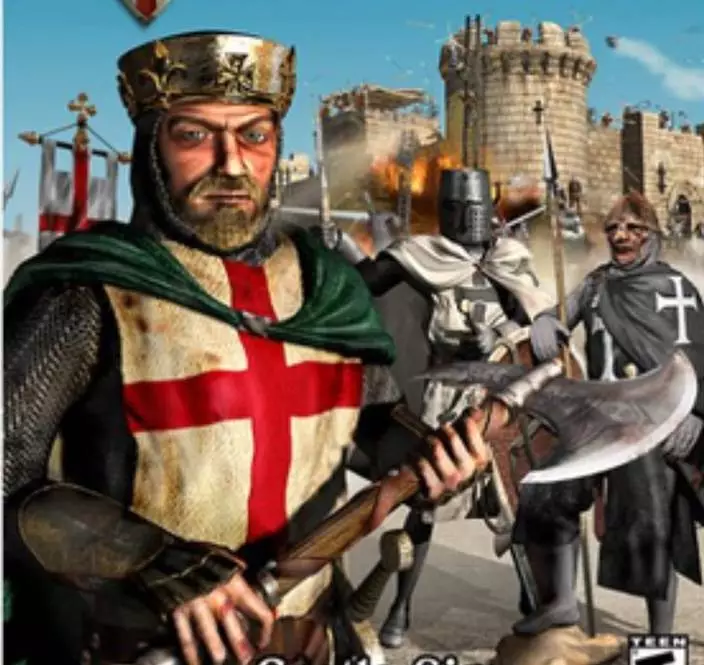
The Crusades a thousand years ago were marked by mass slaughter of Muslim civilians wherever they went—an extremely terrifying chapter in history.
Historical Crusades and Modern Echoes
When Trump took office, he tapped Hegseth as Defense Secretary. Many already feared he would inject extreme religious ideology into the Pentagon — and since that suited Trump perfectly, Hegseth sailed through. Now he leads the charge in this 'holy war' against Iran, fulfilling his long-held dream of reenacting the Crusades.
Some American scholars told Al Jazeera that framing this conflict as a 'holy war' carries serious risks. If Trump and Hegseth raise the banner of religious belief with the goal of eradicating evil, the consequences become harder to contain — and compromise nearly impossible to reach.
Current Risks of Holy War Framing
Pope Leo XIV has voiced deep concern over this development. Recently, a group of American Christian leaders gathered at the White House to pray for Trump’s attack on Iraq, which unsettled the Pope. Without naming names, he suggested that “Christian leaders responsible for the war should go repent.”
Rational voices should heed the Pope’s warning. But by now, Trump and Hegseth are consumed by fanaticism and deaf to reason.
Lai Ting-yiu
What Say You?
** 博客文章文責自負,不代表本公司立場 **
The biggest mistake the United States has made in the past 30-plus years is this: it never learns the lessons of history. It just keeps repeating the wrong moves.
Troops Out, Vacuum In: US Exits Iraq After 23 Years
On the last day of September, the US military withdraws its last troops from Iraq. The war has run for 23 years and killed between 300,000 and 500,000 people, most of them civilians. Another 4,400 American soldiers are dead, and in the end, it has all come to nothing. The film Once Upon a Time in the Middle East 《歡迎來龍餐館》is set against this era of blood and tears.
The 'absurd tragedy' of the invasion of Iraq has finally reached its curtain call. Yet Trump is already restaging the same play in Iran. Today, Iran's Islamic Revolutionary Guard Corps (IRGC) seizes the moment to launch a 'psychological warfare' campaign, calling on American voters to vote pro-war politicians out of office.
The midterm elections are closing in. The full US pullout from Iraq ratchets up the pressure on Trump to end the war, and makes the squeeze even harder to take.
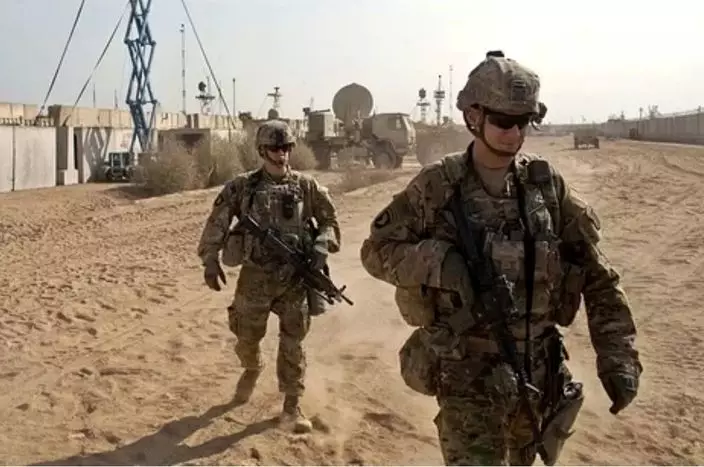
US Iraq invasion ends, leaving a worse mess.
The 'long-running drama' of the US invasion of Iraq follows a 'plot pattern' strikingly close to that of the War in Afghanistan (2001-2021). In the opening act, US forces drive deep and sweep all before them, rapidly occupying the whole country and toppling the regime. Then the plot sours into a long war quagmire, ending in a hurried retreat that leaves a mess behind.
This time, the US exit from Iraq is not as humiliating as Afghanistan's, but it is still rushed. The reason is blunt: Iran had set Iraqi bases as strike targets, so US forces had to leave in a hurry.
Just as in Afghanistan, the moment US troops pack up and leave in full, a military vacuum opens across the region. The Shiite Iraqi militia groups are one of the region's major armed forces. Long backed by Iran, they are a member of the 'Axis of Resistance.'
Together with the Houthis now running rampant in Yemen, they are Iran's 'good brothers.' Both look to exploit the vacuum after the full US withdrawal and expand their power further. Iraq's government security forces will struggle to check them.
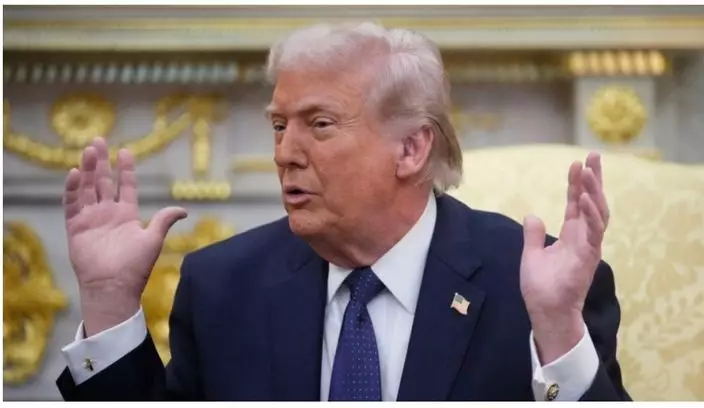
Iraq pullout piles pressure on Trump before midterms.
Once Iran's military power inside Iraq grows dominant, it will threaten the Gulf states more directly. Tehran will also hold more cards in its game with Trump, leaving him at an even greater disadvantage.
The IRGC knows the maxim 'press your advantage when winning, retreat when losing.' So it rides its momentum and opens a 'psychological war' against the United States. Seizing on the US exit from Iraq, it sends the American public a 26-page open letter. The letter urges voters to use their ballots in the midterm elections to drive Trump's allies who backed the Iraq war out of Congress.
The letter also opposes continued US support for Israel's invasions of other countries.
Tehran's Letter and the Midterm Squeeze on Trump
This psychological warfare offensive is clearly no accident. It was carefully calculated.
When Trump campaigned for president, he repeatedly claimed he would avoid launching new wars. He called the attacks on Iraq and Afghanistan mistakes. Now he has broken that promise and gone to war with Iran, leaving many MAGA (Make America Great Again) followers deeply unhappy.
The open letter from the Islamic Revolutionary Guard Corps takes aim at exactly that voter psychology. It goes straight for Trump's weak spot.
How the tables turn. For years, the United States and Israel kept inciting the Iranian people to "rise up" and take to the streets to overthrow the regime.
Who would have thought it? Iran has now flipped the game, calling on American voters to "bring down Trump."
Anti-war sentiment among American voters is indeed surging. According to a Reuters poll, only 34% of voters support going to war with Iran. A Wall Street Journal poll, meanwhile, puts Trump's approval rating at 37%, the lowest level of any president heading into a midterm election.
The trend in public opinion is unmistakable. So some Republican candidates are rushing to distance themselves from Trump, urging that the war be ended immediately. That leaves him facing even greater pressure to stop the fighting.
Washing Powder at the UN: The Absurd Arc of the Iraq War
Back to the "absurd war" that was the invasion of Iraq. After the 9/11 terrorist attacks, US President George W. Bush was in a rush to launch his "great retaliation." He forced a pretext into place, relying on crude intelligence to falsely accuse Iraq of possessing "weapons of mass destruction."
Then-Secretary of State Colin Powell went one step further. At a United Nations meeting, he held up a vial of washing powder and passed it off as evidence.
Not a single country believed the lie. In the end, only the United States and Britain sent troops.
As in Afghanistan, the mighty US military machine needed just one month to occupy Iraq. Then the rot set in. The team Washington sent to clean up the mess governed disastrously, social order collapsed, and factional rivalries sharpened. The plan to transplant democracy failed completely.
Civil strife erupted, and the endless military conflict claimed more than 300,000 lives, most of them civilians. The US military also lost 4,400 personnel.
The scenes in the film Once Upon a Time in the Middle East were a true portrait of the hell on earth of those years.
A war that ran for 23 years deserves the label "utterly absurd." When Trump first ran for president in 2016, he said the invasion of Iraq was wrong.
But in his second turn in power, he repeated his predecessors' mistakes, launching a war against Iran on irrational instinct. The old pattern played out again, and he sank into a quagmire with no way forward and no way back.
The United States never learns the lessons of history, and Trump has now showed the world one more example.
Lai Ting-yiu