
Skip to Content Facebook Feature Image

Trump's Man Breaks Ranks — and Points at Israel

Blog

Trump's Man Breaks Ranks — and Points at Israel
Blog

Blog

Trump's Man Breaks Ranks — and Points at Israel

2026-03-21 12:07 Last Updated At:12:07

Americans are asking a blunt question about Trump's war on Iran: why?

On March 19, Director of National Intelligence Tulsi Gabbard testified before Congress that Iran has not rebuilt its nuclear capabilities — meaning it poses no imminent threat to the United States. Her testimony cuts directly against Trump's stated justification for the war, deepening public suspicion that this campaign is without legitimate grounds.

Into that vacuum of credibility stepped Joe Kent — Trump's just-resigned director of the National Counterterrorism Center — with a bombshell: senior Israeli officials and pro-Israel media outlets, he charged, were the architects behind America's attack on Iran. Israel masterminded this war. The United States just got dragged along. Barely had Kent exposed the scheme when the FBI moved swiftly, opening an investigation into whether he leaked classified information. But public anger is already lit — and not even Trump's iron fist may be able to stamp it out.
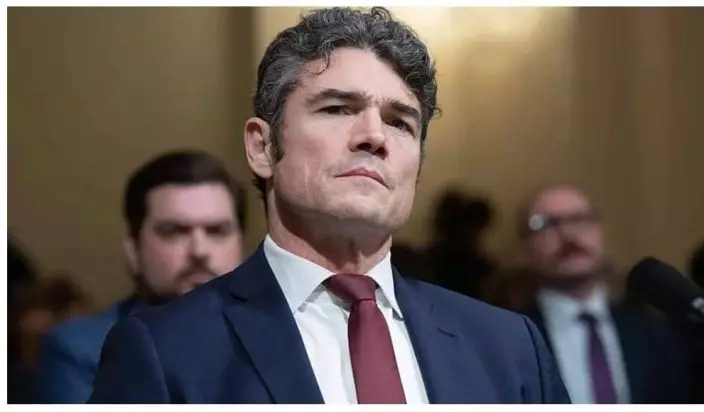
Trump's own man just turned: resigned counterterrorism chief Joe Kent says Israel's top officials pushed America into war with Iran — and are the real force behind it.

Trump's own man just turned: resigned counterterrorism chief Joe Kent says Israel's top officials pushed America into war with Iran — and are the real force behind it.

Kent is no accidental rebel. Trump personally nominated him last year to lead the National Counterterrorism Center, placing him under the Office of the Director of National Intelligence and making him the president's chief counterterrorism adviser — a trusted warrior in the MAGA orbit. But not long after the "War of Fury" broke out, Kent walked away in protest. His resignation statement was unambiguous: "I cannot in good conscience support the ongoing war in Iran. Iran posed no imminent threat to our nation."

The more startling charge came right after. Kent alleged the war was "started due to pressure from Israel and its powerful American lobby." The driving force, he said, came straight from the top of the Israeli government — and specifically from Prime Minister Benjamin Netanyahu himself.

The day after resigning, Kent sat down with Tucker Carlson and kept the revelations flowing. Carlson was once a dedicated Trump loyalist himself, but has recently broken with the president — coming out hard against the Iran war — making both men natural allies in opposition. On air, Kent accused Israel of deceiving Trump into believing America faced a grave threat from Tehran. This is a big lie, Kent said. Israel used the same trick to drag America into the Iraq War, costing thousands of American lives. We must not repeat this mistake.

When Loyalists Flip: The Reckoning

Kent is not fighting alone. Carlson echoed his allegations point-blank, identifying Israel as the force that pressed Washington toward military action against Iran and applied direct pressure on Trump to order the strikes. And from the world of media, Joe Rogan — the MAGA influencer commanding 20 million YouTube subscribers — has arrived at a similar verdict. Rogan called it "a crazy war" and said no one has yet offered a coherent explanation for why it is being fought.

These were once Trump's most loyal supporters. Now they have turned on him — and Trump has responded the only way he knows how: with force. According to the Associated Press, the FBI suspects Kent of leaking classified information and has opened a formal probe. The playbook is familiar — invoke legal process to discredit and silence a dissenting voice, dressing up political retaliation as the pursuit of justice.

Carlson — the other "traitor" in Trump's eyes — disclosed on X that the CIA had submitted a report to the Department of Justice accusing him of operating as an "unregistered agent of Iran." If the charges hold, he faces serious prison time.

Kent's disclosures about Netanyahu's grip on Washington have not gone unnoticed beyond America's borders. Chinese Mainland commentator Chairman Tu has also identified this "hidden hand" — publishing a recent essay laying out what he calls Trump's "Ten Major Political Misjudgments" behind the war. One point landed with particular force: Trump "underestimated Israel's ambitions while overestimating America's control over it."
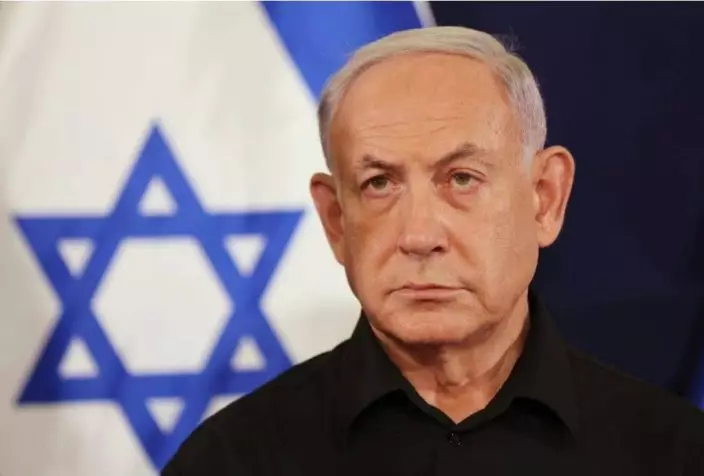
Kent named Netanyahu as the architect — the man who deceived Trump and used America to fight Israel's war.

Kent named Netanyahu as the architect — the man who deceived Trump and used America to fight Israel's war.

Tu argued that Trump failed to grasp how aggressively Israel would seek to escalate and widen the conflict. At the same time, Trump seriously overrated his own ability to keep Israel in check. Israeli provocations drew Iranian retaliation, which in turn forced Washington into a cycle of military follow-up — leaving the Trump administration entirely reactive, at the mercy of events it no longer controls.

Israel Leads, America Follows

That analysis hits squarely on target. Because Israel has effectively taken the steering wheel of this war, Trump and his team have been along for the ride — unable to see the exit, unable to name the endgame. They push forward simply because they no longer know how to stop.

The reality is that more and more Americans are waking up to Israel's hidden hand in all of this. Many are resolute — they will not let their country be pulled into yet another catastrophe of someone else's making. When Trump finally sees that he stands isolated, that even his most devoted supporters have walked away, perhaps he will step back from the edge in time and choose to cut his losses before it is too late.

Lai Ting-yiu


What Say You?

** The blog article is the sole responsibility of the author and does not represent the position of our company. **

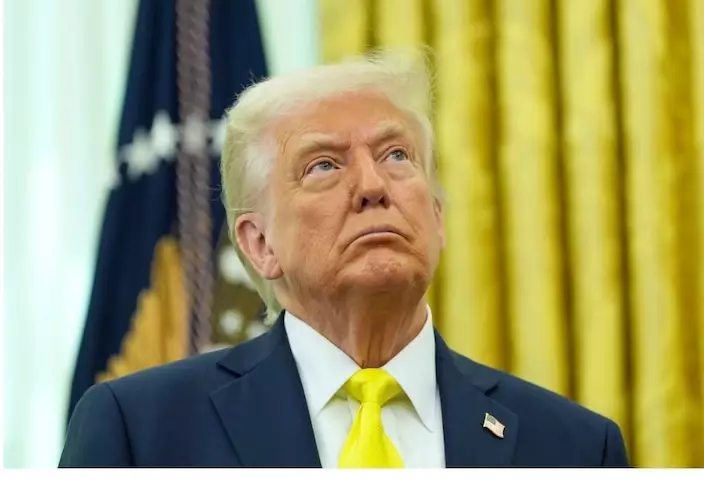
Trump's appetite for a bold strike is growing. CNN reports that the USS Tripoli, a US amphibious assault ship, has sailed from Okinawa to Singapore and is now heading toward the Middle East. The ship carries 2,200 Marines. One order from Trump and this expeditionary force becomes the tip of the spear in a direct assault on Iran's Kharg Island. The 'ultimate battle' is close. For Trump, losing control of the Strait of Hormuz means losing the war, and the consequences are too severe to accept.

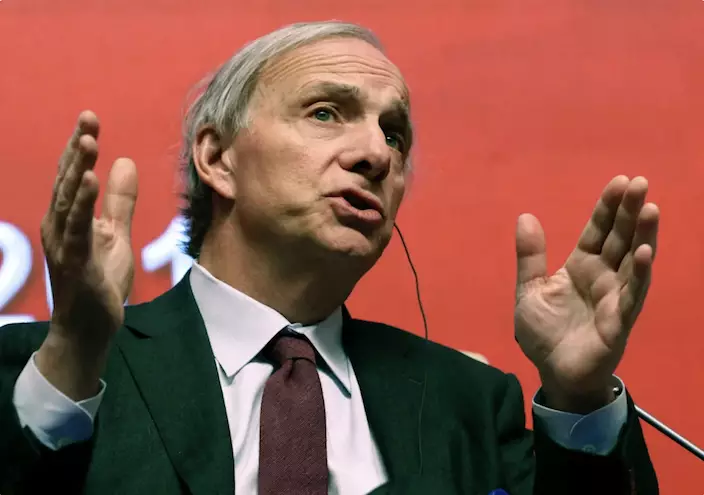
Ray Dalio warns: if Trump can't control the Strait of Hormuz, the US risks repeating Britain's imperial decline.

Ray Dalio warns: if Trump can't control the Strait of Hormuz, the US risks repeating Britain's imperial decline.

Ray Dalio, Bridgewater Associates founder and king of market predators, frames it even more starkly: the American Empire has reached a turning point of decline. If the United States loses the Strait of Hormuz, its grip on global hegemony will loosen, tracing the same arc that brought down the British Empire.


Dalio is more than a heavyweight Wall Street fund manager. He has spent years researching the rise and fall of great powers, producing works including Principles for Dealing with the Changing World Order and How Countries Go Broke. On Trump's current 'war of fury' against Iran, Dalio draws parallels with historical precedents and argues that a defeat would be catastrophic for the United States.


Suez Crisis and the Hegemony Parallel

Empires fall in recognizable ways, he argues: weaker nations test dominant powers at critical shipping lanes. When Egypt seized the Suez Canal from Britain, Britain responded with military force to compel Egypt to reopen the waterway, turning the episode into a global flashpoint. Britain lost that 'ultimate showdown,' withdrew its forces, and watched its imperial standing crumble. Capital fled the losing side, its debt and currency status came under assault, and the geopolitical map was redrawn.


The Suez Crisis unfolded fast. In October 1956, Egyptian President Nasser nationalized the canal, stripping ownership from the Suez Canal Company. Britain sent troops to the canal zone and used military force to pressure Egypt into returning control. But the United States and the Soviet Union both intervened, and Britain, caught between domestic and international pressure, was ultimately forced to withdraw. That retreat cost Britain its standing as an international hegemon and marked the beginning of the end for the British Empire, “on which the sun never sets”.


Dalio draws a direct parallel between Britain then and the United States today. If America and Trump lose this 'ultimate battle' and fail to keep the Strait of Hormuz open, it amounts to surrendering control of the strait, directly undermining America's global standing and reshaping the existing international order. The knock-on effects would be severe: the reserve currency status of the US dollar would come under threat, and the fallout would ripple across the globe, reshaping trade flows and capital movements.


The stakes in this 'ultimate battle' are enormous — Trump can't afford to lose, but no decisive move to reopen the strait is in sight.

The stakes in this 'ultimate battle' are enormous — Trump can't afford to lose, but no decisive move to reopen the strait is in sight.

Can Trump Endure the Pain of War?

So can Trump actually win this fight? Dalio says senior foreign officials have been asking that question in private: Trump talks tough, but when things really go south, will he dare to fight? Can he win?


Dalio reads Iran's strategy as simple: absorb the pain and outlast the Americans. The longer Iran holds out, the sooner Washington blinks. It's a pattern that played out in Vietnam, Afghanistan, and Iraq.


On the American side, the public is already anxious about soaring oil prices, and politicians are worried about the midterm fallout. Tolerance for a long, costly war is thin. Dalio puts it plainly: “In war, one’s ability to withstand pain is even more important than one’s ability to inflict pain.”


By that logic, the United States may be more likely to lose than Iran. Oil prices are already climbing fast, gasoline at the pump is getting pricier, and the public's pain threshold is eroding. The worst is still ahead. If the economy tips into recession, resentment will run deeper still. Moody's economists warned yesterday that if oil prices keep rising over the coming weeks, the odds of a US recession will cross 50%. At that point, the Republican Party faces a potential rout in the midterms.


America's Decline May Be Inevitable

This 'ultimate battle' is about nothing less than the rise or fall of the American empire. Trump knows he cannot afford to lose. But so far, he has shown no decisive winning move. Retracing the British Empire's path of decline may well be America's fate.


Lai Ting-yiu

Recommended Articles