

Skip to Content Facebook Feature Image

UK Security Service Backs China Embassy, “Yellow Camp” Stalls Out

Blog

UK Security Service Backs China Embassy, “Yellow Camp” Stalls Out
Blog

Blog

UK Security Service Backs China Embassy, “Yellow Camp” Stalls Out

2025-11-27 14:05 Last Updated At:14:05

UK security agencies have quietly pulled the plug on the scare stories. MI5 and MI6 have signalled they are comfortable with China’s new “super embassy” in London going ahead, undercutting months of hype from emigrated “Yellow Camp” activists and anti-China politicians who tried seven times to turn this planning dispute into a rerun of the 2019 street movement. Their own organisers now admit this latest London protest was the “final show,” with only a few hundred people turning up as the political reality in Britain moves on.

The core criticism has been that this “super embassy” could act as an intelligence hub simply because it sits near a British Telecom exchange and several data centres. Anti-China politicians took that proximity and spun it into a full-blown security scare, while emigrated “Yellow Camp” supporters piled on with unsubstantiated claims that the new embassy would somehow monitor Hong Kong people living in the UK, despite offering no verifiable evidence.
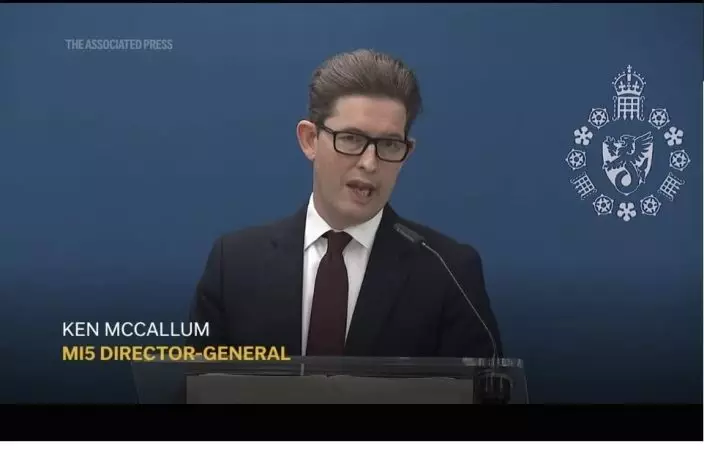
MI5 and MI6 have cleared China’s new London embassy plan, giving Keir Starmer the cover to sign off and head to China early next year.

MI5 and MI6 have cleared China’s new London embassy plan, giving Keir Starmer the cover to sign off and head to China early next year.

From panic to green light

The protesters bet that MI5 (the Security Service) and MI6 (the Secret Intelligence Service) would mirror their rhetoric, condemn the project, and force the Labour government to kill the plan in the name of national security. If that gamble had paid off, the new embassy could have been strangled at the planning stage and turned into a trophy for the anti-China camp.

Instead, that narrative ran straight into a brick wall once the professionals finished their review. As reported by British media such as The Times and the BBC, is that both MI5 and MI6 have given the plan their blessing, with the Home Office and Foreign Office also indicating they can live with it as long as established security safeguards are in place. Officials are now preparing formal responses, but the direction of travel is clear: once the security services say the risks are manageable, the political case for blocking the embassy collapses.

According to leaks reported in The Guardian, a senior MI5 official responsible for domestic security told Commons Speaker Lindsay Hoyle that the agency is “very relaxed” about China building this new embassy in London because it believes it can handle any associated risks.

MI5 Director General Ken McCallum has publicly framed the potential espionage risks of the new embassy as something they could handle, stressing that MI5 has “more than a century of experience” in monitoring and responding to such threats. That is a polite way of saying: there are tools and methods to ensure the site cannot simply be turned into a spying free-for-all.

On the foreign intelligence side, former MI6 operations and intelligence chief Nigel Inkster has also been quoted explaining that China, like many other states, increasingly avoids using embassies and consulates for espionage because counterintelligence technology has made such operations inside diplomatic missions far more risky and detectable. This undercuts the popular storyline pushed by anti-China voices that every Chinese diplomatic building is automatically a spy base.

Government sources have indicated that, in discussions with the Home Office and Foreign Office, both agencies have made clear they can manage any national security risks, so the departments see no reason to stand in the way. With the security “gatekeepers” effectively waving the plan through, the remaining political barriers are falling one by one.

Starmer’s Calculations

For Starmer, having the security services onside removes a major excuse used by opponents to delay decisions on China. His team knows that a visit to China early next year, framed around trade, finance, and stabilising ties, will be politically easier if the embassy issue is resolved rather than festering. Beijing has already registered strong dissatisfaction with the repeated delays, which began under previous governments and have chipped away at trust.

 There is also a basic reciprocity issue: the British Embassy in Beijing needs renovation and modernisation, something UK diplomats themselves have pressed for. If London blocks or endlessly drags its feet on China’s new embassy, Beijing has every reason to respond in kind to British plans.

No suspense left

Once MI5 and MI6 have effectively signed off, and with the Home Office and Foreign Office lined up behind a risk-managed approval, the political “mystery” around whether Starmer will give formal consent is rapidly disappearing. His signature on the plan now looks like a matter of timing and procedure, not principle.

For the emigrated “Yellow Camp,” the message is blunt: when Britain’s own security agencies decline to endorse their alarmist narrative, their campaign loses its core claim to credibility. After seven attempts to create a London-style copy of the “Anti-Extradition Law Amendment Bill movement,” with turnout dwindling and results empty, their ability to mobilise in the UK has clearly taken a heavy hit.

Seven loud London protests in a row, Hong Kong BNO holders and anti-China politicians are empty-handed – the embassy plan is still going ahead.

Seven loud London protests in a row, Hong Kong BNO holders and anti-China politicians are empty-handed – the embassy plan is still going ahead.

As for the Anti-China politicians, they have been weaponising this planning case for months. An attempt to not only slow or block the embassy but to box Starmer into a hostile posture toward China as well. Plus, they get to rally fringe separatist networks around Tibet and Xinjiang. That strategy depends on painting China as a unique, unmanageable security threat even when the UK’s own legal processes and intelligence assessments say otherwise.

If Starmer stands his ground and pushes the project over the line on the strength of professional security advice, it will take the wind out of the anti‑China camp’s sails in London.

Lai Ting-yiu


What Say You?

** The blog article is the sole responsibility of the author and does not represent the position of our company. **

London just dropped a classic good news, bad news bombshell on Hong Kong BNO holders.

The headline grabber? The path to permanent residency remains a five-year trek—the so-called "5+1" deal is safe. But here is the kicker: to actually cross the finish line, applicants must now survive a gauntlet of "extra spicy" new conditions. We are talking tougher English tests, strict income floors, and proof of continuous tax payments.

Think of it as a mouthful of sugar followed by a shot of hot chili. The anxiety on the ground is palpable. The South China Morning Post cites a survey warning that nearly 30 percent of these migrants do not meet the new bar. Unless London blinks, thousands will be screened out at the doorstep, leaving them empty-handed after five wasted years. Agitated Hong Kong people in UK are scrambling with petitions, but make no mistake: for the British government, utility is the only metric that matters.

Survey Warning: 30% of Hong Kong BNO holders fall short of London's new "permanent residence" rules and face being screened out at the finish line.

Survey Warning: 30% of Hong Kong BNO holders fall short of London's new "permanent residence" rules and face being screened out at the finish line.

Here is the bait-and-switch: getting the visa was easy, but staying is going to cost you. Previously, income checks were nonexistent. Now, the rules have tightened: you need a fixed job, a tax record, and an annual haul of at least £12,570 (HK$128,000) for three to five years. That might sound low, but for many Hong Kong BNO holders, it is a high wall to climb. Not everyone is punching the clock in a full-time gig.

The SCMP-cited survey breaks it down. Of the 690 interviewed: 19 percent are housewives, 8 percent are retirees, and 3 percent are students. That is 30 percent of the total population right there. No job, no income, no tax record. If the Home Office sticks to the letter of the law, this entire group is going to fail the assessment cold.

Even the working class is standing on shaky ground. The data shows that only 42 percent of respondents have full-time jobs, while another 20 percent are scraping by with part-time work. Do the math: stable, salaried Hong Kong BNO holders are not the majority. Many are hustling in "casual work," where income fluctuates wildly and often falls short of the new government mandates.

Speak to anyone on the ground, and they will tell you the housewife trap is real. Families move over with young kids, find they can’t hire help, and suddenly the mother is housebound. It is a forced choice. Even if they pick up part-time shifts to help make ends meet, those meager earnings inevitably miss the strict income targets London has set.

The Wealth Illusion

Then there are the cash-rich, income-poor migrants. These are the folks who sold their Hong Kong properties at the peak, sitting on millions of dollars to fund a quiet life in the UK. Some are retired; others just don’t need to work. They are slowly "pinching" their savings to get by. But under these new rules, their wealth is irrelevant. No employment income means no tax record. And no tax record means they are not getting past the gatekeepers.

Smart professionals are also about to get caught in their own loop. I know of Hong Kong BNO holders who aren't unemployed—they are just working "on the sly," taking remote gigs from Hong Kong to dodge UK taxes. It used to be a clever way to save a buck. Now, it is a liability. Without a UK tax footprint or local employment record, they have technically earned nothing in the eyes of the Home Office. When application time comes, they are going to face big trouble.

The education gap is another ticking time bomb. The survey reveals that 16 percent of respondents only have a secondary education. Let’s be realistic: hitting the B2 English level—roughly A-Level standard—is a pipe dream for this demographic. This single hurdle is going to cull a significant herd of applicants before they even get started.

The Language Barrier: With 16% of surveyed migrants holding only secondary education, the "B2 barrier" for English proficiency is set to trigger a wave of failures.

The Language Barrier: With 16% of surveyed migrants holding only secondary education, the "B2 barrier" for English proficiency is set to trigger a wave of failures.

Panic is setting in as families realize they might be kicked out at the last minute. Distressed and confused, Hong Kong BNO holders are mobilizing. A petition demanding the government lower the bar—keeping the easier B1 English requirement and scrapping the income test—has already gathered 28,000 signatures. They are even planning a protest march for December 6.

Utility Over Humanity

London, sensing the rising heat, offered a vague olive branch yesterday. Officials claim the consultation is not yet finalized and teased a potential transitional arrangement. But do not hold your breath—nobody bothered to explain what that transition actually looks like.

Let’s call this what it is: habitual duplicity. When the chips are down, the British government puts utility first. A sharp analysis in Singapore’s Lianhe Zaobao hit the nail on the head: by piling on these conditions, London is downgrading the BNO route from a special humanitarian channel to a high-threshold, ordinary immigration path. It has morphed into a policy demanding economic tribute, not a sanctuary.

The writing is on the wall. Don't expect them to lower the bar for permanent residence. Smart Hong Kong people should know better than to have high expectations.

Lai Ting-yiu

Recommended Articles