The playbook is a KK Park textbook fraud. First, the scammer pretends to be your friend: "I'm helping you." Next comes the special treatment, the VIP access. Then the irresistible benefits pile up—hurry, don't miss this golden opportunity. Victims take the bait, and the trap snaps shut.
When Britain announced yesterday it would expand the BNO visa scheme to include those born after 1997, the resemblance to that con artist's manual was impossible to ignore. London wraps itself in moral rhetoric—shouldering responsibility to Hong Kong people, protecting a new generation's human rights—but the reality is colder. The UK government is using Hong Kong youth to plug the gaping hole left by its own skilled worker exodus. The calculation is ruthless, and transparent.
The timing tells you everything. Hours after Jimmy Lai received a 20-year prison sentence, Foreign Secretary Yvette Cooper issued her predictable call for the Hong Kong government to "end his appalling ordeal” and “release him on humanitarian grounds". It was pure theater, designed to appease anti-China hawks.
Then came the main act: the BNO expansion announcement, deliberately linked to Lai's sentencing. Home Secretary Shabana Mahmood delivered the sugar-coated explanation—Hong Kong's deteriorating human rights situation requires Britain to widen the lifeboat, letting more families "start new lives".
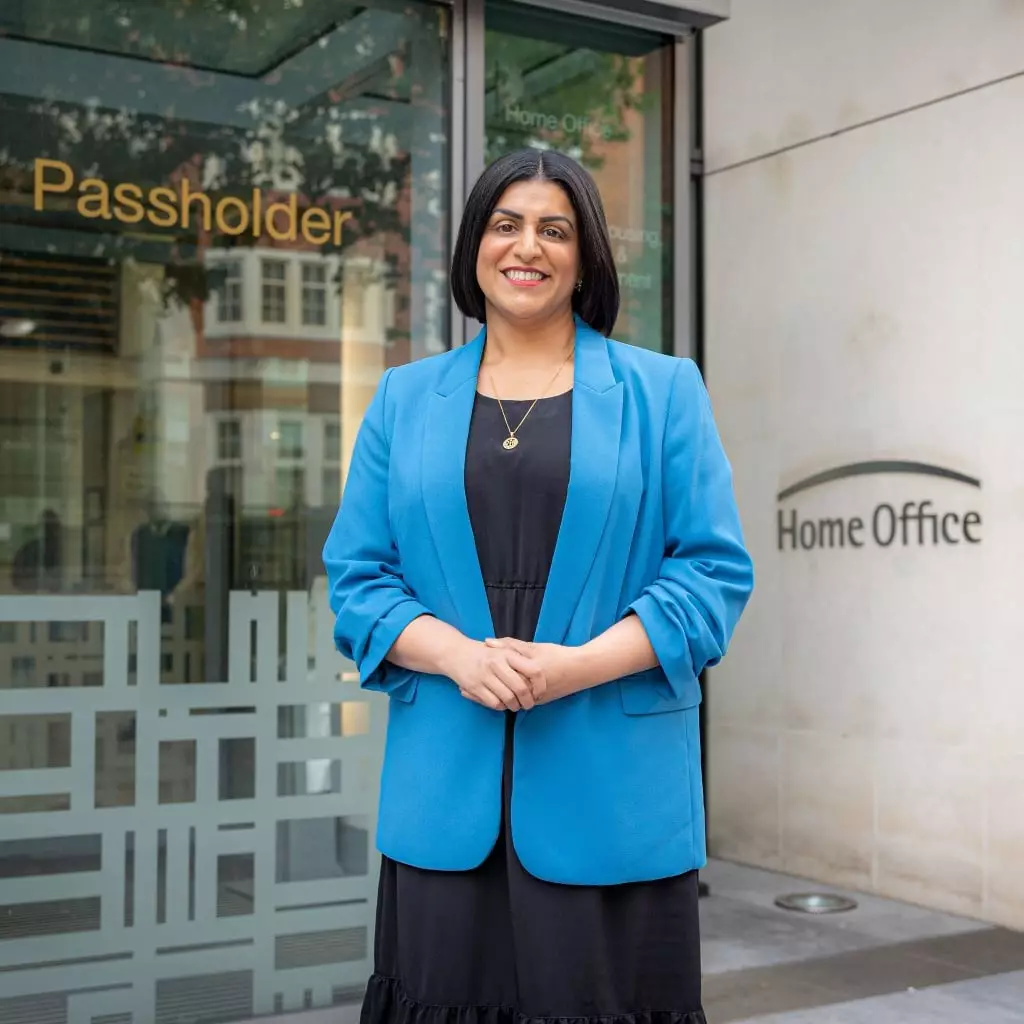
British Home Secretary Shabana Mahmood sells the post-1997 BNO expansion as opportunity—but it looks more like a KK Park Job Scam.
Political insiders see through it. London had this expansion ready for months. They simply waited for the perfect political moment—Lai's sentencing—to deploy it as cover. The move relieves pressure from anti-China factions while wrapping British self-interest in a moral disguise.
The Economic Calculation
The "we're helping you" rhetoric fits the scam template perfectly. Strip away the moral posturing, and you find cold economic logic: Britain needs young, educated Hong Kong people to fill its talent vacuum. These arrivals plug labor gaps immediately, yet receive no welfare or education subsidies. For the UK government, it's risk-free arbitrage—maximum return, zero downside.
To understand Britain's desperation, look at the numbers. In 2024 alone, 257,000 British nationals emigrated. Most were aged 18 to 49—prime working age—and over 45% held university degrees and high level skills. These are the professionals who drive productivity and innovation.
The exodus started years ago and keeps accelerating. Between 2021 and 2024, nearly 992,000 people left the country. The 2024 figure—250,000—hit a record high. Four forces push them out: crushing taxes, stagnant incomes, relentless inflation, and sky-high housing costs. Mid-to-high-tier professionals are fleeing to markets that offer better pay and lower living expenses. The healthcare sector exemplifies the crisis: roughly 4,000 doctors left in 2024, pushing medical staff shortages to dangerous levels.
While high-end talent drains away, skilled worker visa applications have collapsed—and refugee arrivals have surged. The displacement is stark. Between September 2023 and September 2024, skilled worker immigration dropped from 75,000 to 57,000. Bad money drives out good, and Britain's talent pipeline is clogging.
The Hidden Upside
The British government knows exactly how dire this is, so it engineered a "solution". Expanding BNO eligibility to those born after 1997 targets Hong Kong people in their late twenties—educated, experienced, and work-ready. They're tailor-made replacements for the missing mid-to-high-end workforce. Officials estimate roughly 26,000 will migrate over the next five years.
These arrivals deliver instant value. They enter the labor force immediately, bring capital to buy or rent property, and boost consumer spending—all without accessing welfare benefits. The deal gets even sweeter. Under the "5+1" pathway, migrants must live in the UK for five years before applying for permanent residency. That gives the government time to cherry-pick "contributors" and filter out anyone with low earnings or weak job performance. By the time those deemed "low-end labor" realize they've been played, it's too late.
But will Hong Kong's younger generation actually take the bait? That's far from certain. Nearly 170,000 Hong Kong people who emigrated under the BNO scheme after 2021 are already feeling burned. London abruptly "moved the goalposts" last year by toughening permanent residency requirements—imposing new income thresholds and English proficiency standards. Many now openly call the scheme "a complete scam". That bitter lesson will make the post-1997 generation far more cautious. They won't be fooled so easily again.
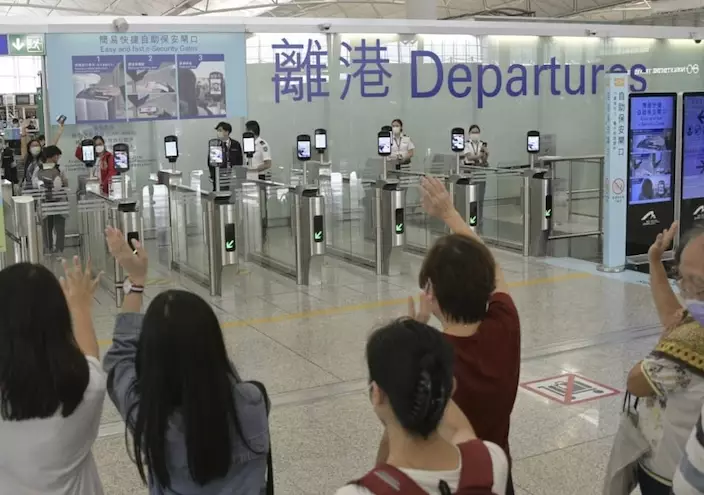
Nearly 170,000 Hong Kong BNO migrants since 2021 now talk of feeling duped by shifting rules—a warning shot to the post-1997 generation.
What Say You?
What Say You?
** 博客文章文責自負,不代表本公司立場 **
When you play with fire, you’re bound to get burned. After years of stirring up trouble, Jimmy Lai has finally reached the moment of reckoning. Following a 156-day trial that examined 2,200 pieces of evidence and over 80,000 pages of documents, the judge sentenced him to 20 years in prison today. “The evidence is conclusive, and the punishment fits the crime”, as people say. However, this is not the end of the story. Chief Superintendent Li Guilua of the Police National Security Department noted that while the trial phase has concluded, the investigation is still ongoing.
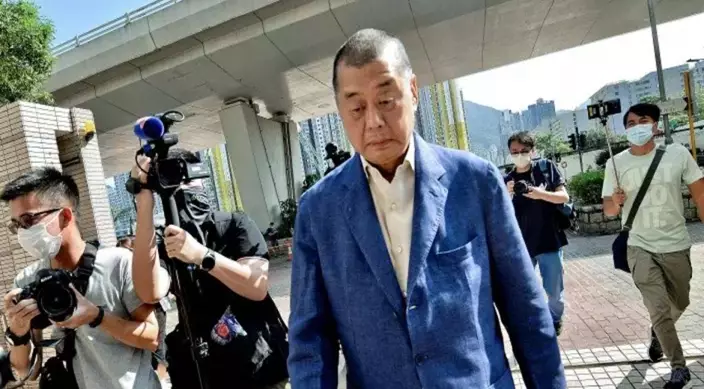
Jimmy Lai was sentenced on Feb 9, bringing the case to a close, yet two major mysteries remain unresolved. The first is the mysterious source of billions of Hong Kong dollars in foreign “chaos-stirring funds” that flowed into his bank accounts. The identity of this mysterious financial pipeline warrants continued investigation.
As I reviewed the case materials and information from various sources, at least two major mysteries remain unresolved. First, the origin of the HK$1.6 billion in black money funneled into Hong Kong through Jimmy Lai remains unclear. These mysterious funding channels have been pumping money in for a long time, which is highly suspicious.
Second, during the “black violence” period, rumors emerge that Lai allegedly collaborated with “financial crocodile” George Soros to trigger a financial crisis. Soros ultimately retreated; the truth of what happened deserves further investigation.
The trial of Jimmy Lai’s case revealed an immense amount of information, uncovering many secrets unknown to the public, particularly details about his fund flows that were shocking. In January 2024, the police submitted a financial investigation report on Jimmy Lai to the court. It stated that his assistant, Mark Simon, received transfer totaling HK$118 million from his boss between 2013 and 2020, of which approximately HK$93 million was transferred in multiple batches to various opposition figures and political parties.
This is only the visible part of the funding; the actual amount might be larger. Next Digital was not a highly profitable company at the time, yet it continued to heavily fund opposition groups and those creating chaos in Hong Kong, clearly indicating a steady source of funds behind it.
The Police’s financial investigation found that Jimmy Lai held two personal bank accounts in Hong Kong and jointly controlled nine company accounts registered or operating in Hong Kong with Mark Simon. These accounts collectively received deposits of HK$2.945 billion, nearly 60% (over HK$1.6 billion) of which originated from the United States, Canada, and Taiwan.
Thus, it’s evident that during that period, there was a continuous inflow of funds from various sources into his multiple accounts. What organizations or individuals provided this money remains an unresolved mystery.
Beyond funding pan-democratic parties and politicians, he also financed related actions during Hong Kong’s unrest. For example, during the 2019 anti-extradition bill riots, he specially donated an additional HK$15 million to the organizers.
Moreover, between 2019 and 2020, he lent HK$500 million to Next Media through shareholder loans, allowing Apple Daily to continue its “inciting” functions. These funds were also transferred from his accounts, similarly, originating from mysterious overseas sources.
Lai employed various methods to convert “foreign financial aid” into “chaos-stirring funds in Hong Kong.” A friend knowing him well told me that in 2019, he allocated some Next Media shares to an American fund, obtaining a sum of money believed to be used for political purposes.
Additionally, with the backing of Taiwan’s Democratic Progressive Party (DPP) government, he purchased large plots of land in Taipei’s Neihu District at low prices. Starting in 2013, he gradually sold these lands and properties at higher prices, making substantial profits that supported Apple Daily in Hong Kong and Taiwan and continued to fund Hong Kong ‘s opposition. During those years, he maintained close ties with Tsai Ing-wen, frequently holding secret meetings to discuss strategies for Hong Kong and introducing American military and political figures to her. The DPP also knew that the more chaotic Hong Kong was, the more beneficial it would be for “pro-independence” elements, and thus provided support in various ways, including economic benefits.
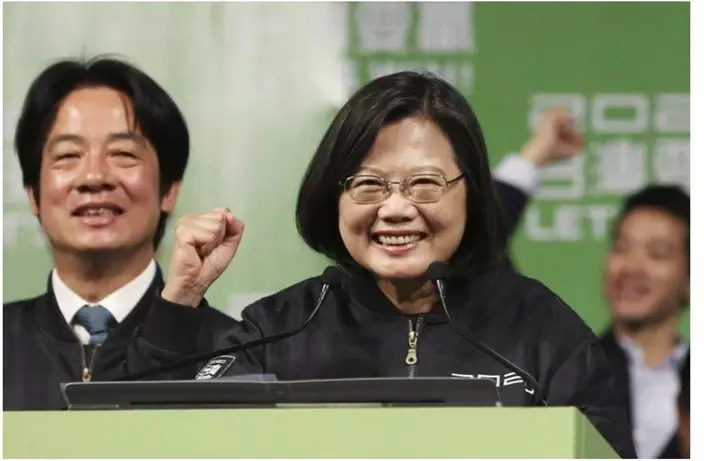
Lai maintained close ties with Taiwan’s Tsai Ing-wen. Since the Hong Kong unrest benefited pro-independence factions, it is plausible that benefits, including profits from real estate, were provided to Lai to turn them into “chaos-stirring funds”.
Even more peculiar is that a year before the “Occupy Central” movement, with the help of former U.S. Deputy Secretary of Defense Paul Wolfowitz, Lai met with high-level officials in Myanmar’s military and government to prepare for real estate investments. After establishing this “financial pipeline”, he stood to make significant profits. This was an indirect way for American political figures to help him open funding channels.
As for the second mystery, it is equally bizarre. In August 2019, as Hong Kong’s riots escalated and the stock market fluctuated, rumors emerged that the anti-communist “financial crocodile” George Soros had taken massive short positions in the stock market. Lai, in turn, echoed these moves by continuing to incite unrest. If social turmoil worsened and the stock market crashed, he would have profited immensely. Fortunately, the situation temporarily eased, and the stock market rebounded. When trading resumed the next day, the Hong Kong stock market continued to rise, causing the “crocodile” to suffer significant losses and forcing a hasty retreat.
Whether this brief financial crisis was related to Jimmy Lai remains an unsolved mystery. However, the “Open Society Foundations” founded by Soros are known to be a driving force behind color revolutions, and he has long been hostile towards China. Thus, it is not impossible that he collaborated with like-minded Jimmy Lai to stir up trouble, taking advantage of the chaos to trigger a financial storm and pursue massive profits.
Although the trial of Jimmy Lai has concluded, many hidden secrets remain unrevealed, potentially involving more individuals and organizations. If the police and media continue to investigate, an even more shocking and larger conspiracy may come to light.