
Lunar New Year is approaching, so the fortune-tellers are back on the grind, predicting what nobody can really know. Most people hear it, laugh it off, and move on. But when politicians make predictions, people take them more seriously.
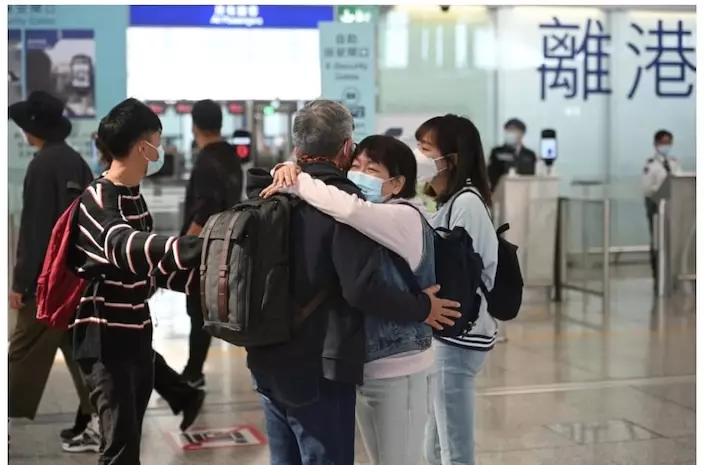
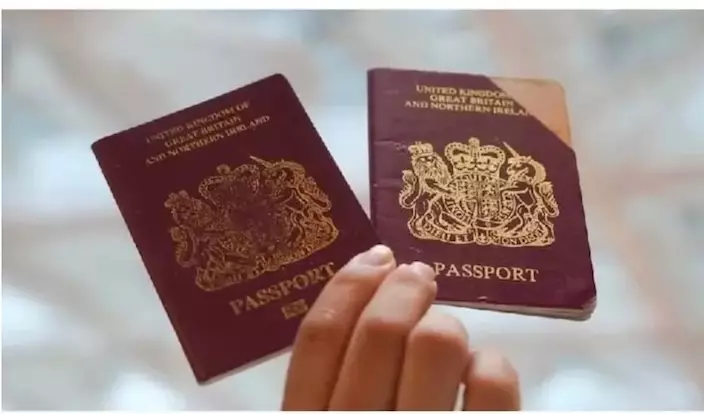
This year marks the fifth anniversary of the UK’s BNO “lifeboat” scheme. It has pulled nearly 170,000 Hong Kong people to Britain—and now the UK has abruptly moved the goalposts, leaving plenty of people feeling cheated.
So I went back through the old political talk. And CY Leung had been saying it for ages: Britain is trying to take Hong Kong people for a ride. In his view, BNO is a “freakish passport,” built with “sneaky” terms—and the UK can change it whenever it wants.
Regina Ip was making the same call five years ago. She said the UK’s BNO plan is a “hypocritical trick”: it sounds generous, but the benefits don’t actually land, and it won’t truly help people from Hong Kong.
Fast-forward to today, and both predictions look dead right. The real sting is that many Hong Kong people were too trusting back then, brushed off blunt advice—and now they’re left stuck in the middle of nowhere.

Leung called it early: the UK can rewrite BNO rules anytime. Now it does—and BNO holders in Britain feel the shock.
Britain Moves the Goalposts
The Conservative Party first floated changes to BNO permanent residency rules in February last year.
CY Leung responds in a social media post by warning that the UK’s BNO policy is built on political expediency, so London can tighten or rewrite it at any time—and, crucially, may not even need to change legislation to dial back basics such as settlement rights, compulsory schooling access and medical benefits for Hong Kong people.
Now, that warning starts to look prescient: in November, the Home Office proposes tougher permanent residency requirements, and estimates suggest about 40% of BNO applicants could fail to clear the bar if the plan goes through.
Leung Saw Through the Con Early
When the BNO visa scheme first opened for applications, Leung raised several pointed questions: Is Britain's "5+1" naturalization policy genuine or just lip service to Hong Kong people? If the UK is so sincere, why did it invent this freakish BNO passport in the first place? Why not grant Hong Kong people full British citizenship? Why be so sneaky with all these parenthetical clauses?
According to Leung's prediction, the BNO scheme was merely the British government's stopgap measure—they never actually wanted Hong Kong people to smoothly obtain British citizenship. So they deployed "sneaky" tactics, creating this "5+1" arrangement (requiring five years of residence before applying for permanent residency, then another year before applying for citizenship). During this period, Britain can arbitrarily shift the goalposts to block naturalization. No wonder some Hong Kong emigrants to Britain feel the entire thing is a "scam."
Ip's Warning About Hypocrisy
Executive Council Convenor Regina Ip, during her time as a government official, handled nationality issues for Hong Kong people and thus understands precisely how the British government calculates behind the scenes.
In July 2020, when Britain announced the BNO visa scheme allowing BNO passport holders to reside there, Ip immediately pointed out that while the British government had opened the door, it set up the "5+1" arrangement as a "hypocritical ploy"—empty promises.
Hong Kong people residing in the UK during this period receive no welfare or subsidies and must ensure they have sufficient financial means to sustain themselves. In colloquial terms, they must "fend for themselves", making it a highly profitable deal for the British government.

Ip saw through it from day one: the BNO visa is a “hypocritical trick,” not a plan that truly helps people from Hong Kong.
She noted that after Hong Kong's return to Chinese sovereignty, Britain passed the British Overseas Territories Act 2002, directly issuing British passports to citizens of 12 territories and colonies—a stark contrast to today's rhetoric about relaxing BNO restrictions. This demonstrates that whether then or now, the British government has been thoroughly hypocritical toward Hong Kong people.
Two Key Lessons
From Leung and Ip's earlier predictions, we can draw two conclusions.
First, the British government has always been deeply wary of large numbers of Hong Kong people flooding into the UK. As early as 1977, it initiated legislative procedures to revoke the right of more than 2 million British National (Overseas) Hong Kong people to reside in Britain. The 2021 launch of the BNO visa was merely a stopgap measure—in reality, they don't want large numbers of Hong Kong people naturalizing simultaneously. Today's goalpost-moving to block Hong Kong people from permanent residency shows their fundamental mindset has never changed.
Second, there's a profit calculation behind the British government opening its doors to temporarily allow BNO Hong Kong people to reside there. This business must be risk-free and profitable—if some Hong Kong people don't "contribute," they're no longer welcome.
The "Mass Evacuation" That Never Was
A simple test of Britain’s sincerity sits in what it didn’t do, not what it later announced.
Former UK consul-general Andrew Heyn says that, in an interview last year with a pro-democracy outlet, he was told that at the height of the 2019 anti-extradition bill unrest, people inside the British government even floated the idea of a “mass evacuation” to move large numbers of Hong Kong people out.
But that idea dies fast. It is rejected on the spot as simply impossible to carry out—and the UK ends up rolling out the BNO visa scheme instead, a response that looks more like a policy workaround than a full-on evacuation plan.
As Leung said, this was merely a stopgap measure, leaving room for "modifications" and subject to tightening at any time. This prediction has finally come true today. Hong Kong BNO holders in Britain can only pray their luck holds out.
What Say You?
** 博客文章文責自負,不代表本公司立場 **