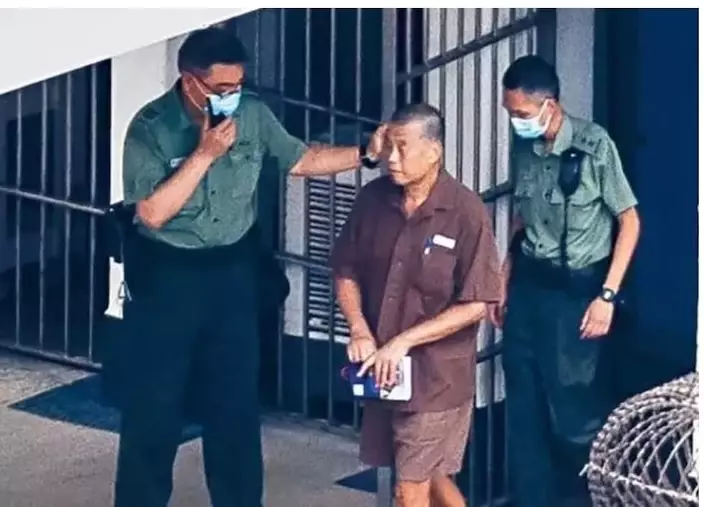

Last Saturday quietly marked five years since Britain launched its BNO "lifeboat" scheme. In 2021, over 90,000 Hong Kong people applied. Approvals hit 75,000—a talent hemorrhage that genuinely alarmed observers.
Then the tide turned. By the first half of last year, approvals had crashed to just 5,029. Nearly 170,000 Hong Kong BNO holders now live in the UK, but there's no celebration of this "anniversary." Only regret. Why? The British government abruptly raised permanent residency requirements last year, trapping migrants in an impossible bind.
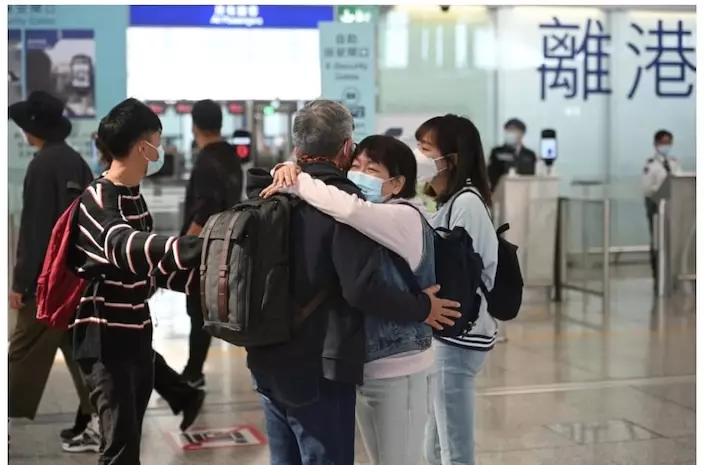
Five years on, 170,000 Hong Kong people live in Britain under BNO—but many now call it "a complete scam."
BBC interviews with UK-based Hong Kong people tell a damning story. Some angrily call the BNO scheme "a complete scam." Others say they've "been played". A recent survey hammers the point home: nearly 40% plan to leave the UK. Among them, 12.8% are eyeing a return to Hong Kong.
Take Mr. Cheung, a BNO holder who arrived in Manchester with his family in March 2021, full of hope. Reality in a foreign land proved brutal. He took a warehouse job while his wife could only work part-time to care for their children. He thought five years of hardship would earn him permanent residence this year. Then the government moved the goalposts, setting income thresholds his wife couldn't possibly meet. Their migration path now hangs in uncertainty.
He told BBC reporters the UK government's new regulations differ drastically from initial promises. He feels deceived. The whole thing resembles a scam. "It's like they took me for a ride. I prepared for what the government initially required, but suddenly everything changed."
Another Hong Kong migrant in Britain bluntly criticized how the new requirements upended their family's plans, crushing them with stress and leaving them helpless.
The Calculated Con
The BNO UK residence scheme does indeed resemble a confidence game. In June 2020, when Beijing implemented the Hong Kong National Security Law to quell unrest and restore order, Britain's then-Conservative government seized the chaos to "loot," brazenly violating the Sino-British Joint Declaration by allowing Hong Kong people to reside in the UK with BNO passports, siphoning off a large swath of Hong Kong's middle class.
Two sinister calculations drove this move.
First, waving the "Hong Kong protest" banner and launching a "lifeboat" to destabilize Hong Kong's morale, keeping tensions burning to pressure China and the Hong Kong SAR.
Second, it served UK interests by siphoning Hong Kong's "talent" and "wealth." Britain had just left the EU, losing swaths of low-to-mid-level workers back to Europe. Hundreds of thousands of Hong Kong people conveniently plugged that gap—and brought a rolling stream of capital with them.
The UK government predicted at the time that many Hong Kong families would sell their properties and, combined with savings, bring millions of Hong Kong dollars to Britain—some even tens of millions. They'd buy property, pay for living expenses, cover education costs. But because they held only temporary residence, they couldn't access welfare benefits or local student tuition rates.
All gain, no cost. Former NPC Standing Committee member Rita Fan saw through the scheme early on, pegging Britain's potential windfall from Hong Kong people at £5 billion minimum. A tidy profit.
The Cooling Frenzy
In the BNO scheme's first year, over 90,000 people applied, with 75,000 approvals granted. If those numbers had remained steady, at least 380,000 Hong Kong people would have migrated to the UK over five years, taking far more than £5 billion with them. Fortunately, this frenzy began reversing in 2022, then sharply declining year by year. By 2024, approved applications fell to 19,000. By the first half of last year, only 5,029.
As the fever cooled dramatically, the number of Hong Kong people settled in the UK plateaued at 170,000 without further increase. They initially thought they could pursue "freedom" and be happier than in Hong Kong. But after living there for some time, disappointments came one after another—difficulty finding work, job downgrades, severe inflation, high energy costs, and more. Some increasingly question whether they made the wrong decision.
Nevertheless, many gritted their teeth and hung on, counting down five years until they could apply for permanent residence—and then citizenship. But the UK government threw cold water on that plan. Last year, it announced new permanent residency rules: income thresholds and English proficiency at B2 level. This "double whammy" threatens to crush their migration dreams entirely.
An MP surveyed over 6,000 BNO Hong Kong holders, and results showed that 43% of families could not meet the requirements. In other words, they would only be able to maintain "temporary residence" status, living in a prolonged state of uncertainty, or simply seek other destinations—migrating to another country or returning to Hong Kong.
The Wake-Up Call
A recent survey conducted by several Hong Kong organizations in Britain reveals the depth of disillusionment. If the UK government maintains the "double whammy" requirements, among 1,725 respondents, nearly 40% intend to leave the UK, with 12.8% planning to return to Hong Kong. Half adopt a wait-and-see attitude. Those who answered "definitely staying in the UK" account for only 22%.
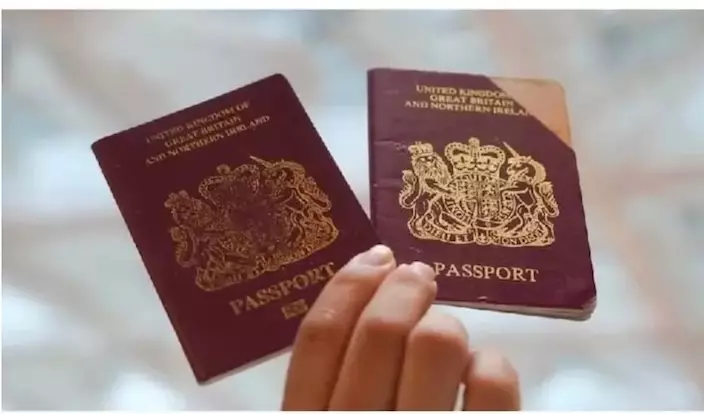
40% of BNO holders want out of the UK. Among them, 12% plan to return to Hong Kong.
After five years—from joy to sorrow—BNO Hong Kong holders finally feel they've been "conned" by the UK government, realizing the entire scheme was a scam. They might recall a popular phrase from the anti-extradition period: "You chose this path yourself—don't cry about it!"
At this point, returning might be a decent option. Hopefully, they can untangle their knots and seriously consider it.
What Say You?
** 博客文章文責自負,不代表本公司立場 **