The mitigation hearings kicked off on Monday for defendants in the Jimmy Lai case, including five accomplice witnesses who flipped to testify against the media tycoon. First up: Chen Zihao and Lee Yu-hin, both members of the so-called "Stand With Hong Kong Fight for Freedom" crew. These two carried out Lai's orders to lobby foreign governments for sanctions against Hong Kong—and their testimony became the smoking gun that sealed Lai's fate. Their lawyers are now banking on that cooperation to slash their sentences.
But here's what grabbed my attention: Chen didn't just testify against Jimmy Lai. He exposed the dirty dealings of Lai's right-hand man Mark Simon and team leader Finn Lau (aka "Lord of Scorched Earth"). And now his family is paying the price. They've been harassed, followed, intimidated—the whole playbook. Chen himself is terrified about what happens when he walks out of prison, and he's got no clue if he'll get any protection. This tells you everything you need to know: the ghosts of the black bloc riots are still out there, lurking in the shadows. These accomplice witnesses could easily become targets for vigilante "justice." Police need to wake up and consider real protection for these people.
Family Under Siege
Chen's lawyer laid it out in court: ever since Chen was arrested and charged in early 2021, his family has been stalked and verbally harassed nonstop. His parents got doxxed—phone numbers plastered online for anyone to see. Now they're getting calls from unknown sources and only dare answer WhatsApp calls.
Last August 16, Chen's family called the cops after spotting two suspicious men loitering outside their home. Police responded by stepping up patrols in the area. According to the defense, "people holding different political positions" have made hostile remarks about Chen for turning state's evidence.
No shock there. Chen has become public enemy number one for remnant black bloc elements and Jimmy Lai's fan club. Shortly after being charged, he agreed to become an accomplice witness and spilled the beans on the secret activities of Lai and Mark Simon. Most damning of all: he voluntarily revealed his clandestine Taipei meeting with Lai, where they plotted to secure foreign sanctions against China and Hong Kong to trigger a "China collapse scenario." That testimony became the cornerstone of Lai's conviction—naturally earning Chen some serious enemies.
Classic Black Bloc Playbook
The harassment tactics described by the defense came straight out of the 2019 riots' greatest hits. Anyone who dared oppose the rioters or call out their violence got brazenly doxxed, then bombarded with online abuse, threatening phone calls, and sometimes outright violent attacks—the infamous "private justice." Police officers and civil servants got the same vicious treatment. These people are still hiding in the shadows, and the intimidation Chen's family faces almost certainly comes from the same crew.
Chen's lawyer expressed serious concern about his client's safety after release. Chen fears he won't get adequate protection once he's back on the streets. If he relocates to the UK, the risk skyrockets. Some of the "Stand With Hong Kong Fight for Freedom" members he testified against are now living in exile there, making protection even more challenging.
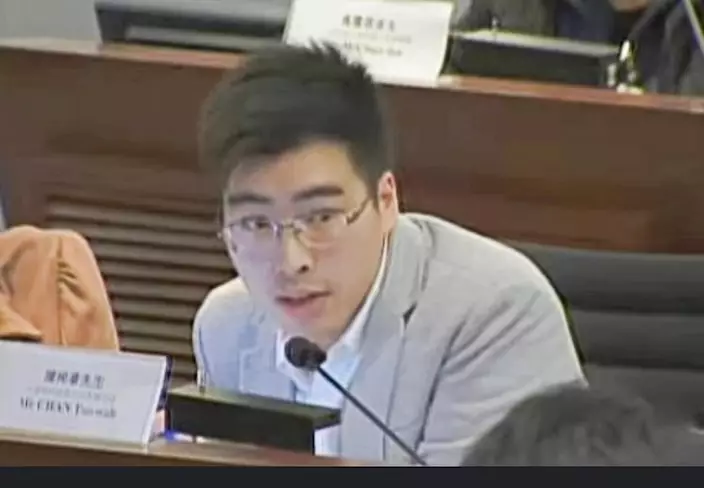
Chen Zihao's family has been stalked and harassed since 2021 for his testimony against Jimmy Lai. He fears retaliation upon release—and moving to the UK could make things worse.
A political contact clued me in: if Chen Zihao and Lee Yu-hin face threats after release, they can request police protection. Under the Witness Protection Ordinance enacted in 2000, even after cases wrap up—regardless of conviction outcomes—the police Witness Protection Unit can continue safeguarding certain witnesses until the threat to their lives is eliminated.
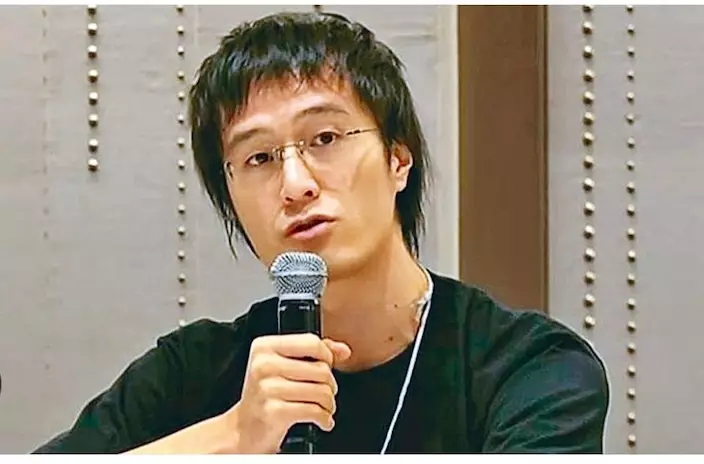
Lee Yu-hin faces same threats. Black bloc remnants still lurk in the shadows, ready to strike.
If Chen and others receive such protection, they and their families could be housed in police "safe houses" to ensure their safety.
Other accomplice witnesses in similar cases share same fears. Take Andrew Chiu Ka-yin, one of the defendants in the "35+ subversion case." He was released early last November after pleading guilty and agreeing to testify. In a recent interview with pro-democracy media, he admitted that because he testified against Benny Tai and other ringleaders, he's been constantly looking over his shoulder since his release, terrified of retaliation. Despite the danger, he says he's staying in Hong Kong—no emigration plans.
The "Dying Jimmy Lai" Myth Gets KO'd
During today's mitigation hearing, I caught something else worth noting: the prosecution methodically demolished the "Save Jimmy Lai campaign's" fabricated claims about Lai being on death's door. Remember the rumors about his "dramatic weight loss"? The prosecution set the record straight: when Lai first entered prison in 2020, he weighed 80 kilograms. As of January this year? 79.2 kilograms—less than one kilogram lighter. After several years behind bars, he's still "Fat Lai."
Lai's children previously spread wild tales claiming their father's fingernails had turned green and fallen off, his teeth had rotted and dropped out—supposedly symptoms of a serious illness suggesting his days were numbered. The prosecution today directly refuted this nonsense, noting that while he mentioned toothaches and toenail infections last year, these were treated and resolved without complications. His heart condition has been consistently normal, and his hearing hasn't deteriorated.
In fact, even without the prosecution's detailed clarification, just looking at Jimmy Lai's appearance in court today provides living proof that completely destroys those cheap lies.
Lai Ting-yiu
What Say You?
** 博客文章文責自負,不代表本公司立場 **
The verdict is in for Jimmy Lai. Convicted of collusion with foreign forces, the high-profile case hits the mitigation phase on January 12, as it races toward a final sentence. But the legal process isn't the only thing moving; the political pressure from London and Washington is reaching a fever pitch.
Former UK Conservative leader Iain Duncan Smith is leading the charge, penning articles that demand sanctions against the three judges handling the Lai case. This isn't his first time in the fray. Since the 2019 Black Riots, he has been a fixture in the anti-China circuit, meeting with activists and visiting Taiwan to align with independence advocates.
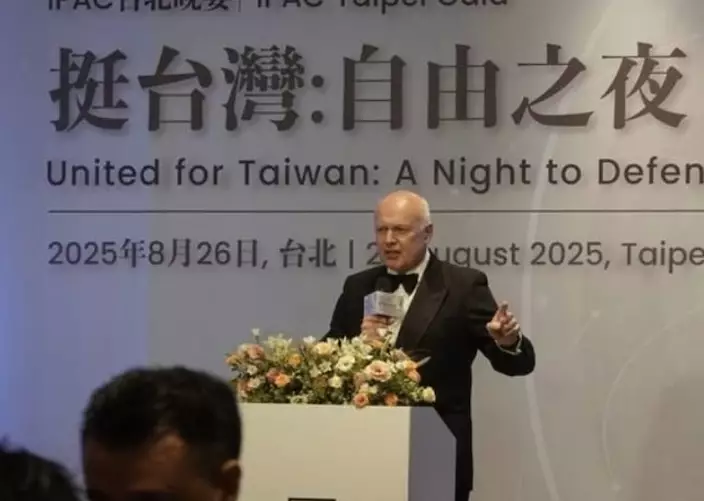
British MP Iain Duncan Smith is playing hardball, pushing for sanctions against judges on the Lai case while maintaining deep ties with Taiwan independence groups.
The US isn't sitting on the sidelines either. Several hawkish senators are baring their teeth, ready to deploy the "Hong Kong Judiciary Sanctions Act" as a tool of intimidation. The bullets are chambered and ready to fire. Yet, despite the threats, Hong Kong’s judges are showing some serious backbone, standing their ground against external heat.
Duncan Smith’s drumbeat for sanctions looks like a last-ditch effort to squeeze out political leverage as the case concludes. He’s rallying the usual suspects—former Governor Chris Patten and Hong Kong Watch founder Benedict Rogers—to ramp up the pressure on National Security Law judges. It’s an attempt to flip the script at the eleventh hour.
Foreign Pressure Meets Judicial Steel
Legal insiders have dug up the receipts on Duncan Smith. Court revelations show he was a key figure behind the scenes during the 2019 Black Riots, communicating with IPAC founder Luke de Pulford about using the Magnitsky Act to sanction then-Chief Executive Carrie Lam. It’s a clear pattern of interference that dates back years.
While the prosecution also states that Lai has known Duncan Smith since 2020, seeking his help to lobby for foreign sanctions, the British politician flatly denied even knowing him in media interviews. A bold claim, one that doesn't seem to square with the evidence presented in court.
On top of that, Duncan Smith did not just sit in Westminster and commentate. During the 2019 Black Riots period, he repeatedly met Hong Kong opposition figures and “movement participants” under the banner of policy research, while in reality fanning the flames from behind the scenes. The exact part he played in that unrest may never be fully spelled out, but the pattern is clear – he was not a neutral observer, he was an active political player in a foreign city’s turmoil.
Taiwan, Sanctions and a Political Script
Legal-sector contacts add another layer: Duncan Smith is not only a steady hand in Hong Kong destabilization, he is also tightly wired into Taiwan “independence” circles.
Last August, Smith personally flew to Taiwan to attend an IPAC “cross-national parliamentarians” symposium in support of Taiwan. Headlined a “Stand with Taiwan: Freedom Night”, the event portrayed the mainland “authoritarian regime” as an ever-closer threat that would “destroy your independent status,” language tailor-made to cheer a “Taiwan independence” audience.
In the room, independence leader Louise Hsiao Bi-khim – now Lai Ching-te’s deputy and the number-two figure in the administration – responded with enthusiastic applause and public thanks, and Smith’s pro-“Taiwan independence” stance was on full display throughout the event.
Seen in that light, his demand to sanction Hong Kong judges is not about law; it is about politics, and hard-edged anti-China politics at that. Dressing it up as concern over supposed “judicial injustice” toward Jimmy Lai is just verbal smoke – rhetoric hiding a clear strategic aim to pressure and delegitimize Hong Kong’s courts.
Washington Hawks Load a New Weapon
Duncan Smith and his allies in London are not acting alone.
In May last year, three US senators introduced the “Hong Kong Judicial Sanctions Act,” a bill that, if acted on, would put a long list of Hong Kong judges and prosecutors – including Court of Final Appeal Chief Justice Andrew Cheung and Director of Public Prosecutions Maggie Yang – in the crosshairs of potential sanctions, turning legal professionals into political targets.
At the same time, Mark Clifford – a core member of Jimmy Lai’s inner circle and head of the Committee for Freedom in Hong Kong Foundation – rolled out a report smearing Hong Kong’s judiciary, echoing these Senate hawks point for point and keeping the spotlight on Hong Kong judges and prosecutors, with the pressure dial constantly turned up.
A seasoned political insider put it bluntly: this camp is already at daggers drawn, just waiting for sentencing in Lai’s case as the trigger. When the court hands down its decision, they are expected to move again, this time with heavier blows aimed squarely at Hong Kong’s judicial sector through new attacks and lobbying.
That said, one big variable hangs over their plan – Trump. Even if Congress pushes the bill forward, whether it actually bites still depends on Trump’s calculation: if he decides he does not want to pick a fresh fight with China over Jimmy Lai, especially with a future China visit on his calendar, he can simply refuse to sign the act and leave it on the shelf.
Judges Hold Their Nerve
Whatever happens in Washington or London, one thing seems certain: the threats from US and UK hawks will keep escalating, and the pressure on Hong Kong’s judicial personnel will only grow.
Yet, as former Director of Public Prosecutions Grenville Cross has stressed: in the face of various intimidations, judges have remained unmoved throughout, dutifully performing their responsibilities and crushing anti-China forces’ schemes to obstruct judicial justice. That resilience showcases the strength and superiority of Hong Kong’s common law system rather than its weakness.
Legal friends strongly echo Cross’s view: Hong Kong judges really have stood their ground against external forces and proven themselves “resolute” in practice – a rare quality, because being put on a sanctions list is no small personal or professional burden.
Another important signal is coming from Hong Kong’s foreign judges, who have publicly backed the independence and fairness of the city’s judicial system. Court of Appeal Vice President Andrew Colin Macrae recently told a Bar Association forum that he has never seen Hong Kong judges take instructions from anyone, stressing that when they adjudicate cases, they maintain independence and fairness, and the public has reason to feel reassured by that track record.
In recent years, anti-China politicians across the UK, US, Australia and other Western countries have been leaning hard on Hong Kong’s foreign judges, trying to force them to toe a political line. Against that backdrop, Macrae’s willingness to take the heat, speak plainly and defend Hong Kong’s courts in public is all the more commendable. Clearly knowing that the blowback will come, he still chooses to speak up anyway.
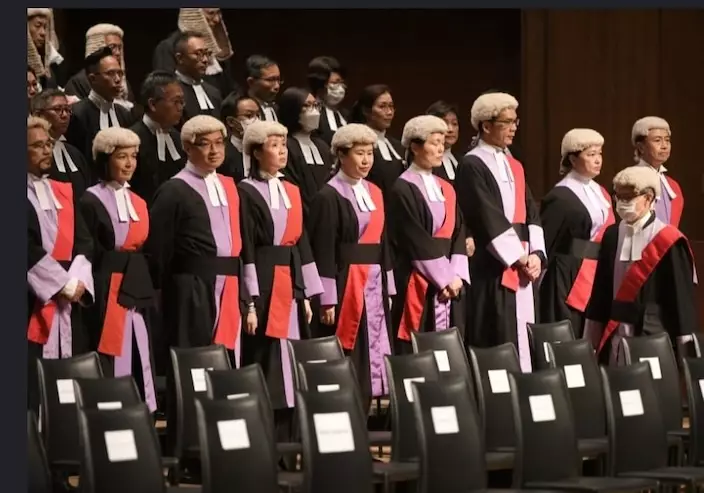
Facing a storm of international pressure, Hong Kong’s judges are refusing to buckle, upholding the city’s legal integrity.
Ultimately, the judges’ resolve is anchored in the principles at the heart of Hong Kong’s judicial system. With the law on their side and the standards clear, they can meet every challenge openly and without apology—and no amount of noise or intimidation from outside forces will dislodge that foundation. They will press on, calmly and firmly, with the same quiet determination they have shown all along.
Lai Ting-yiu