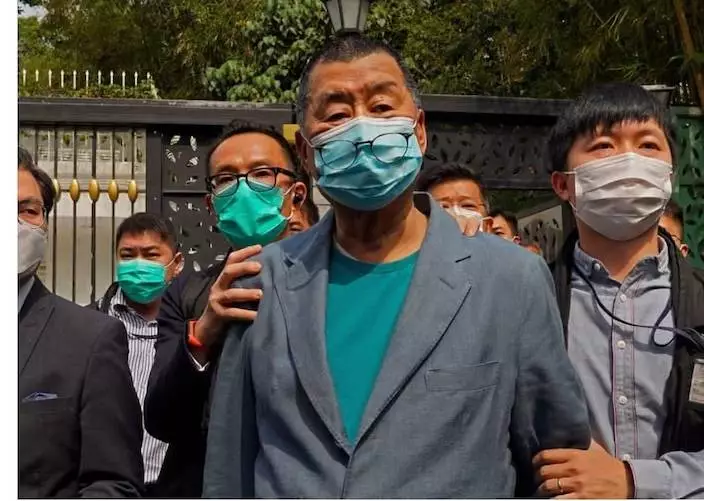

The Year of the Horse is off to a gallop – and it may be carrying Hong Kong people home.
Local wisdom holds that Bingwu (丙午), the most fire-charged year in the 60-year Chinese calendar cycle, is uniquely auspicious for Hong Kong, a city said to thrive on fire energy. Fire means celebration and confidence: tourists arrive in droves, and those who left are drawn back. Astrology, of course, deserves only a pinch of salt. But the objective data is telling exactly the same story.
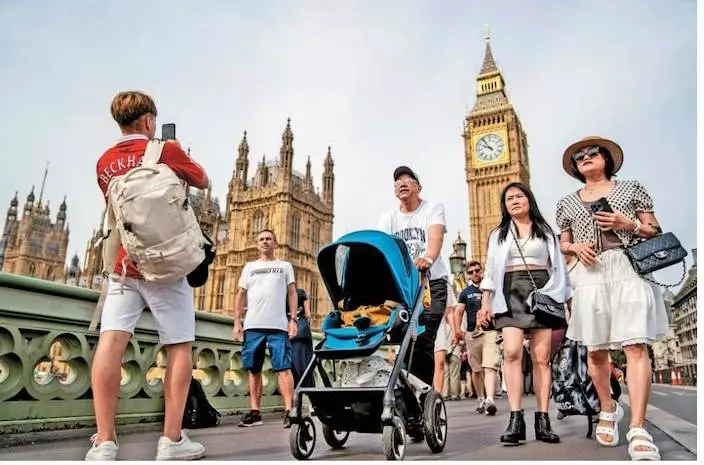
Over 20,000 Hong Kong BNO holders in the UK are eyeing a return. Some have already slipped back and restarted in Hong Kong — and the real number could run higher.
A new survey finds that if the UK government goes ahead with tightening permanent residency requirements, 12.8% of Hong Kong BNO holders surveyed would return to Hong Kong – that is roughly 21,000 people. BBC and local media have already spoken with returnees who have quietly slipped back from Britain to Hong Kong, and the real count is climbing well past 20,000. Across the Pacific, the picture mirrors itself: many Hong Kong people who boarded the so-called "lifeboat" to Canada are watching their permanent residency applications drag on indefinitely, stranded between two shores – and more are cutting their losses and heading home.
The UK government has been tightening the screws on new migrants seeking Indefinite Leave to Remain (ILR). The new requirements include raising English language standards and imposing income thresholds – a package the Home Office is branding "earned settlement." A public consultation on whether Hong Kong BNO visa holders will be exempted from these new requirements has just wrapped up, and the verdict is imminent. For Hong Kong people already living in the UK, the suspense is grinding – sleep is hard to come by, and contingency plans are quietly being drawn up.
Four Hong Kong community organisations surveyed 1,725 Hong Kong BNO holders and asked one direct question: if ILR is no longer certain, what next? The results are sobering. A full 27.6% said they would leave the UK. Of that group, 12.8% would return to Hong Kong, while 14.8% would try to relocate to another country. With more than 170,000 Hong Kong BNO holders now resident in the UK, that 12.8% translates to roughly 21,000 people making the journey home.
Seeking to land in another country? Around 25,000 people have that idea – but the welcome mat is not out anywhere. Canada, like most destinations, has pulled back on immigration. Finding a new country to call home is genuinely difficult, and many of those 25,000 may ultimately discover they have run out of options. Hong Kong becomes the only door still open. Twenty thousand returnees is therefore the conservative case; the real number will almost certainly be far higher.
No Way Out but Home
Make no mistake: the deeper you look, the starker the numbers become. A UK Member of Parliament surveyed over 6,000 Hong Kong BNO holders and found that 43% of families cannot meet the new requirements. The road ahead is blocked, and those who remain will find daily life increasingly difficult. The survey bears that out: only 22% of respondents said they would "definitely stay in the UK." The others have already decided to find a way out. They have not moved yet simply because the moment has not arrived.
Some Hong Kong people stopped waiting long ago. BBC recently sat down with one returnee who spent three years in the UK and now drives a taxi in Hong Kong. He speaks candidly about the crushing depression that shadowed his time in Britain – a darkness so severe he contemplated suicide, as though he had fallen into a black abyss with no way out. He had planned to endure another three years to obtain British citizenship, caught in a relentless internal debate over staying or leaving. Then came the night he was violently attacked at the restaurant where he worked. The evidence was clear-cut. Police made no arrest even after a full year. That was the moment his faith in British rule of law and human rights gave out entirely. With no reason left to stay, he made his decision. "It was as if I had woken up from a dream – and I have found a whole new meaning of 'home.'"
Online media outlet Kinliu spoke with another returnee who arrived in the UK on a BNO visa at the end of 2024 and was back in Hong Kong just eight months later, now working in the IT sector. From the ground, the reasons for return are a perfect storm: economic pressure, a brutal job market, shifting policies, public safety concerns, and the relentless grind of adapting to life abroad. The cost of living is punishing. Income tax exceeds 30%, and even decent jobs paying £4,000 to £7,000 a month leave precious little once taxes, rent, and daily expenses are stripped out.
And getting hired in the first place is a battle of its own. This returnee sent out 100 applications across the IT sector over six months and received nothing. His decision to return had nothing to do with the ILR policy debate; it was the relentless weight of economic pressure that made the choice for him. Britain, for him, simply was not working.
A Job Market That Won't Budge
Employment conditions across the UK are deteriorating, and the numbers are unambiguous. The unemployment rate hit 5.2% in the fourth quarter of last year – the highest reading since January 2021 – as companies have sharply pulled back on hiring. For Hong Kong BNO holders already struggling to clear income thresholds, a contracting labor market is the final, brutal complication. More and more are arriving at the same conclusion: time to go home.
And it is not just Britain. Canada's Hong Kong reverse migration tide is accelerating, driven by a clear and deliberate policy choice: the Canadian government has intentionally slowed permanent residency processing to suppress overall immigration numbers. Hong Kong people who boarded that Canadian "lifeboat" are among the very first to feel the squeeze.
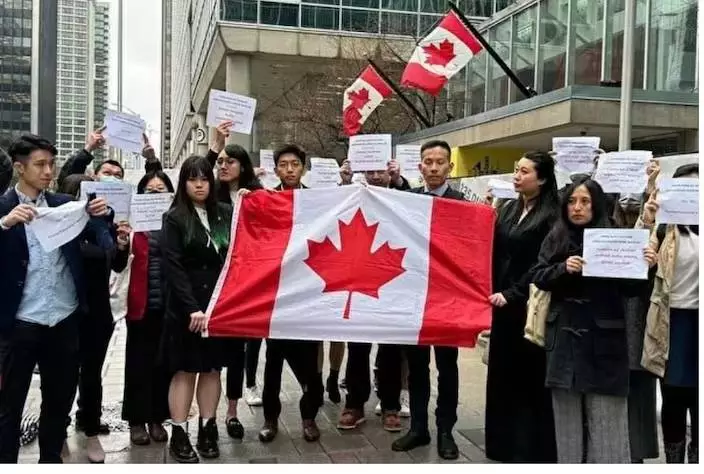
Canada’s “lifeboat” is stuck in limbo. With PR waits stretching out, more Hong Kong people are quitting the queue and heading home. Pictured: a Hong Kong immigrant advocacy group protests outside Canada’s immigration ministry.
The figures from Immigration, Refugees and Citizenship Canada (IRCC) are damning. As of end-October last year, the two streams of the Hong Kong Pathway had taken in 42,040 permanent residency applications – but only 13,520 had been processed, leaving a massive, growing backlog. Estimates now put outstanding applications at 55,000 by 2027, with wait times stretching to a decade. For Hong Kong people marooned on that lifeboat – caught between two worlds, watching their best years tick away – more and more are drawing the same conclusion: stop waiting, turn back, and start over in Hong Kong.
Years ago, Hong Kong people left in waves for Britain and Canada. Now the world has turned full circle. The Year of the Horse has brought a genuine reversal of the tide, and this "reverse migration wave" is proof that Hong Kong is far from finished – it remains a city full of life and possibility. For Hong Kong people worn down in a foreign land – the tired bird that at last finds its way home – that is, when all is said and done, something to welcome.
What Say You?
** 博客文章文責自負,不代表本公司立場 **