Skip to Content Facebook Feature Image

Jimmy Lai’s HK$1.6 billion “Chaos-stirring Funds”: Who Gave Him the Money?

Blog

Jimmy Lai’s HK$1.6 billion “Chaos-stirring Funds”: Who Gave Him the Money?
Blog

Blog

Jimmy Lai’s HK$1.6 billion “Chaos-stirring Funds”: Who Gave Him the Money?

2026-02-10 09:02 Last Updated At:09:02

When you play with fire, you’re bound to get burned. After years of stirring up trouble, Jimmy Lai has finally reached the moment of reckoning. Following a 156-day trial that examined 2,200 pieces of evidence and over 80,000 pages of documents, the judge sentenced him to 20 years in prison today. “The evidence is conclusive, and the punishment fits the crime”, as people say. However, this is not the end of the story. Chief Superintendent Li Guilua of the Police National Security Department noted that while the trial phase has concluded, the investigation is still ongoing.
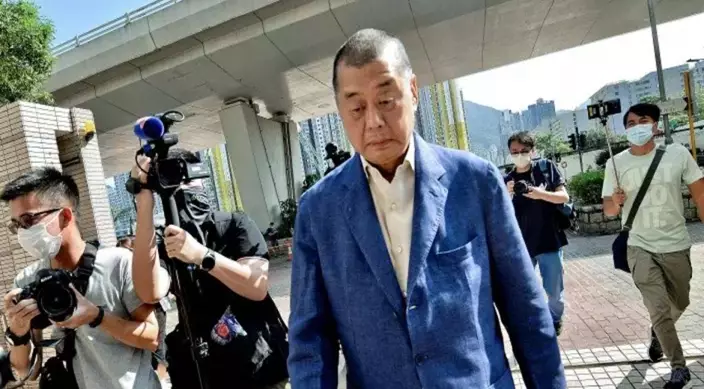
Jimmy Lai was sentenced on Feb 9, bringing the case to a close, yet two major mysteries remain unresolved. The first is the mysterious source of billions of Hong Kong dollars in foreign “chaos-stirring funds” that flowed into his bank accounts. The identity of this mysterious financial pipeline warrants continued investigation.

Jimmy Lai was sentenced on Feb 9, bringing the case to a close, yet two major mysteries remain unresolved. The first is the mysterious source of billions of Hong Kong dollars in foreign “chaos-stirring funds” that flowed into his bank accounts. The identity of this mysterious financial pipeline warrants continued investigation.

As I reviewed the case materials and information from various sources, at least two major mysteries remain unresolved. First, the origin of the HK$1.6 billion in black money funneled into Hong Kong through Jimmy Lai remains unclear. These mysterious funding channels have been pumping money in for a long time, which is highly suspicious.

Second, during the “black violence” period, rumors emerge that Lai allegedly collaborated with “financial crocodile” George Soros to trigger a financial crisis. Soros ultimately retreated; the truth of what happened deserves further investigation.

The trial of Jimmy Lai’s case revealed an immense amount of information, uncovering many secrets unknown to the public, particularly details about his fund flows that were shocking. In January 2024, the police submitted a financial investigation report on Jimmy Lai to the court. It stated that his assistant, Mark Simon, received transfer totaling HK$118 million from his boss between 2013 and 2020, of which approximately HK$93 million was transferred in multiple batches to various opposition figures and political parties.

This is only the visible part of the funding; the actual amount might be larger. Next Digital was not a highly profitable company at the time, yet it continued to heavily fund opposition groups and those creating chaos in Hong Kong, clearly indicating a steady source of funds behind it.

The Police’s financial investigation found that Jimmy Lai held two personal bank accounts in Hong Kong and jointly controlled nine company accounts registered or operating in Hong Kong with Mark Simon. These accounts collectively received deposits of HK$2.945 billion, nearly 60% (over HK$1.6 billion) of which originated from the United States, Canada, and Taiwan.

Thus, it’s evident that during that period, there was a continuous inflow of funds from various sources into his multiple accounts. What organizations or individuals provided this money remains an unresolved mystery.

Beyond funding pan-democratic parties and politicians, he also financed related actions during Hong Kong’s unrest. For example, during the 2019 anti-extradition bill riots, he specially donated an additional HK$15 million to the organizers.

Moreover, between 2019 and 2020, he lent HK$500 million to Next Media through shareholder loans, allowing Apple Daily to continue its “inciting” functions. These funds were also transferred from his accounts, similarly, originating from mysterious overseas sources.

Lai employed various methods to convert “foreign financial aid” into “chaos-stirring funds in Hong Kong.” A friend knowing him well told me that in 2019, he allocated some Next Media shares to an American fund, obtaining a sum of money believed to be used for political purposes.

Additionally, with the backing of Taiwan’s Democratic Progressive Party (DPP) government, he purchased large plots of land in Taipei’s Neihu District at low prices. Starting in 2013, he gradually sold these lands and properties at higher prices, making substantial profits that supported Apple Daily in Hong Kong and Taiwan and continued to fund Hong Kong ‘s opposition. During those years, he maintained close ties with Tsai Ing-wen, frequently holding secret meetings to discuss strategies for Hong Kong and introducing American military and political figures to her. The DPP also knew that the more chaotic Hong Kong was, the more beneficial it would be for “pro-independence” elements, and thus provided support in various ways, including economic benefits.
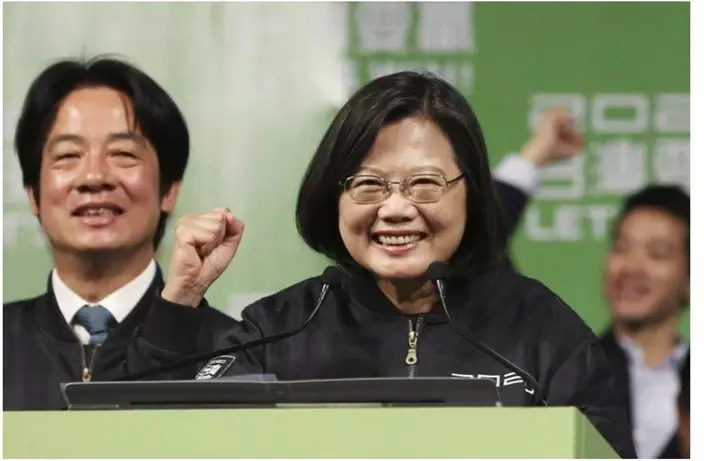
Lai maintained close ties with Taiwan’s Tsai Ing-wen. Since the Hong Kong unrest benefited pro-independence factions, it is plausible that benefits, including profits from real estate, were provided to Lai to turn them into “chaos-stirring funds”.

Lai maintained close ties with Taiwan’s Tsai Ing-wen. Since the Hong Kong unrest benefited pro-independence factions, it is plausible that benefits, including profits from real estate, were provided to Lai to turn them into “chaos-stirring funds”.

Even more peculiar is that a year before the “Occupy Central” movement, with the help of former U.S. Deputy Secretary of Defense Paul Wolfowitz, Lai met with high-level officials in Myanmar’s military and government to prepare for real estate investments. After establishing this “financial pipeline”, he stood to make significant profits. This was an indirect way for American political figures to help him open funding channels.

As for the second mystery, it is equally bizarre. In August 2019, as Hong Kong’s riots escalated and the stock market fluctuated, rumors emerged that the anti-communist “financial crocodile” George Soros had taken massive short positions in the stock market. Lai, in turn, echoed these moves by continuing to incite unrest. If social turmoil worsened and the stock market crashed, he would have profited immensely. Fortunately, the situation temporarily eased, and the stock market rebounded. When trading resumed the next day, the Hong Kong stock market continued to rise, causing the “crocodile” to suffer significant losses and forcing a hasty retreat.

Whether this brief financial crisis was related to Jimmy Lai remains an unsolved mystery. However, the “Open Society Foundations” founded by Soros are known to be a driving force behind color revolutions, and he has long been hostile towards China. Thus, it is not impossible that he collaborated with like-minded Jimmy Lai to stir up trouble, taking advantage of the chaos to trigger a financial storm and pursue massive profits.

Although the trial of Jimmy Lai has concluded, many hidden secrets remain unrevealed, potentially involving more individuals and organizations. If the police and media continue to investigate, an even more shocking and larger conspiracy may come to light.


What Say You?

** The blog article is the sole responsibility of the author and does not represent the position of our company. **

Lunar New Year is approaching, so the fortune-tellers are back on the grind, predicting what nobody can really know. Most people hear it, laugh it off, and move on. But when politicians make predictions, people take them more seriously.

This year marks the fifth anniversary of the UK’s BNO “lifeboat” scheme. It has pulled nearly 170,000 Hong Kong people to Britain—and now the UK has abruptly moved the goalposts, leaving plenty of people feeling cheated.

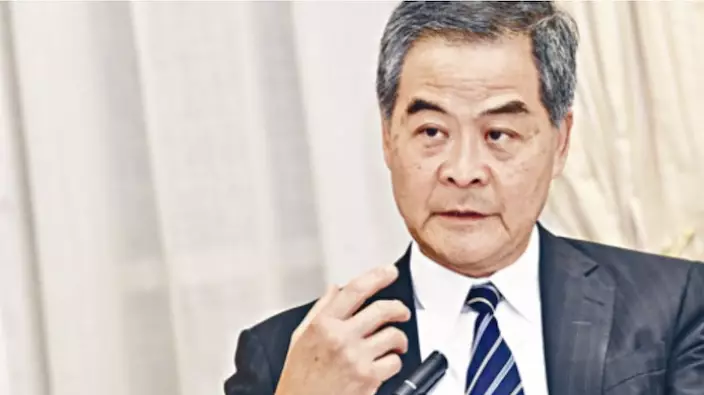
So I went back through the old political talk. And CY Leung had been saying it for ages: Britain is trying to take Hong Kong people for a ride. In his view, BNO is a “freakish passport,” built with “sneaky” terms—and the UK can change it whenever it wants.

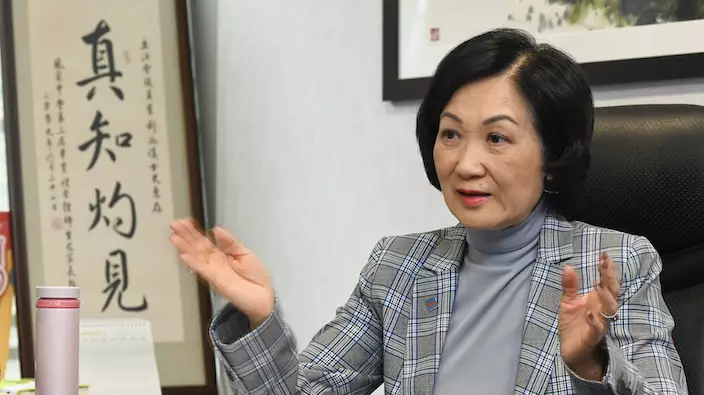
Regina Ip was making the same call five years ago. She said the UK’s BNO plan is a “hypocritical trick”: it sounds generous, but the benefits don’t actually land, and it won’t truly help people from Hong Kong.

Fast-forward to today, and both predictions look dead right. The real sting is that many Hong Kong people were too trusting back then, brushed off blunt advice—and now they’re left stuck in the middle of nowhere.

Leung called it early: the UK can rewrite BNO rules anytime. Now it does—and BNO holders in Britain feel the shock.

Leung called it early: the UK can rewrite BNO rules anytime. Now it does—and BNO holders in Britain feel the shock.

Britain Moves the Goalposts

The Conservative Party first floated changes to BNO permanent residency rules in February last year.

CY Leung responds in a social media post by warning that the UK’s BNO policy is built on political expediency, so London can tighten or rewrite it at any time—and, crucially, may not even need to change legislation to dial back basics such as settlement rights, compulsory schooling access and medical benefits for Hong Kong people.

Now, that warning starts to look prescient: in November, the Home Office proposes tougher permanent residency requirements, and estimates suggest about 40% of BNO applicants could fail to clear the bar if the plan goes through.

Leung Saw Through the Con Early

When the BNO visa scheme first opened for applications, Leung raised several pointed questions: Is Britain's "5+1" naturalization policy genuine or just lip service to Hong Kong people? If the UK is so sincere, why did it invent this freakish BNO passport in the first place? Why not grant Hong Kong people full British citizenship? Why be so sneaky with all these parenthetical clauses?

According to Leung's prediction, the BNO scheme was merely the British government's stopgap measure—they never actually wanted Hong Kong people to smoothly obtain British citizenship. So they deployed "sneaky" tactics, creating this "5+1" arrangement (requiring five years of residence before applying for permanent residency, then another year before applying for citizenship). During this period, Britain can arbitrarily shift the goalposts to block naturalization. No wonder some Hong Kong emigrants to Britain feel the entire thing is a "scam."

Ip's Warning About Hypocrisy

Executive Council Convenor Regina Ip, during her time as a government official, handled nationality issues for Hong Kong people and thus understands precisely how the British government calculates behind the scenes.

In July 2020, when Britain announced the BNO visa scheme allowing BNO passport holders to reside there, Ip immediately pointed out that while the British government had opened the door, it set up the "5+1" arrangement as a "hypocritical ploy"—empty promises.

Hong Kong people residing in the UK during this period receive no welfare or subsidies and must ensure they have sufficient financial means to sustain themselves. In colloquial terms, they must "fend for themselves", making it a highly profitable deal for the British government.

Ip saw through it from day one: the BNO visa is a “hypocritical trick,” not a plan that truly helps people from Hong Kong.

Ip saw through it from day one: the BNO visa is a “hypocritical trick,” not a plan that truly helps people from Hong Kong.

She noted that after Hong Kong's return to Chinese sovereignty, Britain passed the British Overseas Territories Act 2002, directly issuing British passports to citizens of 12 territories and colonies—a stark contrast to today's rhetoric about relaxing BNO restrictions. This demonstrates that whether then or now, the British government has been thoroughly hypocritical toward Hong Kong people.

Two Key Lessons

From Leung and Ip's earlier predictions, we can draw two conclusions.

First, the British government has always been deeply wary of large numbers of Hong Kong people flooding into the UK. As early as 1977, it initiated legislative procedures to revoke the right of more than 2 million British National (Overseas) Hong Kong people to reside in Britain. The 2021 launch of the BNO visa was merely a stopgap measure—in reality, they don't want large numbers of Hong Kong people naturalizing simultaneously. Today's goalpost-moving to block Hong Kong people from permanent residency shows their fundamental mindset has never changed.

Second, there's a profit calculation behind the British government opening its doors to temporarily allow BNO Hong Kong people to reside there. This business must be risk-free and profitable—if some Hong Kong people don't "contribute," they're no longer welcome.

The "Mass Evacuation" That Never Was

A simple test of Britain’s sincerity sits in what it didn’t do, not what it later announced.

Former UK consul-general Andrew Heyn says that, in an interview last year with a pro-democracy outlet, he was told that at the height of the 2019 anti-extradition bill unrest, people inside the British government even floated the idea of a “mass evacuation” to move large numbers of Hong Kong people out.

But that idea dies fast. It is rejected on the spot as simply impossible to carry out—and the UK ends up rolling out the BNO visa scheme instead, a response that looks more like a policy workaround than a full-on evacuation plan.

As Leung said, this was merely a stopgap measure, leaving room for "modifications" and subject to tightening at any time. This prediction has finally come true today. Hong Kong BNO holders in Britain can only pray their luck holds out.

Recommended Articles