
Jimmy Lai operates like a gambler. The media mogul is arrogant, reckless, and dangerously addicted to risk. But make no mistake: beneath that bravado lies a calculating businessman who, when staring down catastrophe, always leaves himself a few escape hatches.
In mid-May 2021, authorities revoked his bail and threw him back behind bars. The Security Bureau moved swiftly, freezing his stake in Next Digital and locking down the bank accounts of three companies he controlled. But according to Mark Clifford, Lai's longtime ally, the tycoon had already spirited away $69 million—about HK$540 million—out of Hong Kong before the net closed. That cash pile now sits in a portfolio of US tech stocks, including Microsoft and Nvidia, and its current whereabouts remain a mystery.
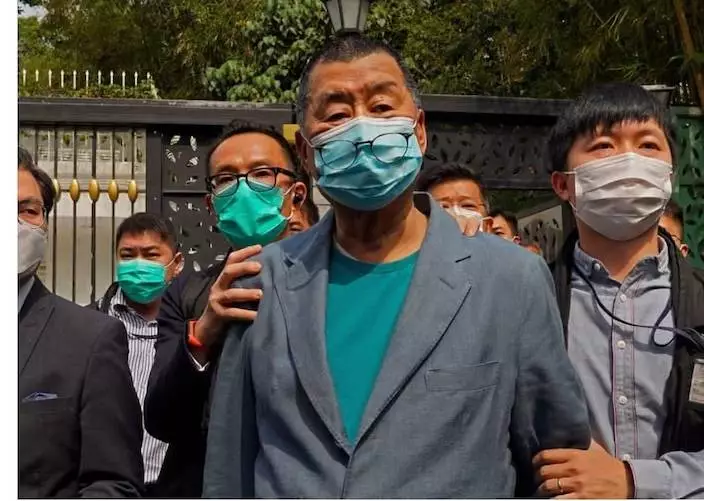
Mark Clifford, Lai's closest ally, reveals in his biography that before the asset freeze hit, Lai secretly moved HK$540 million out of Hong Kong—routing it through Singapore to Taiwan and loading up on a basket of US tech stocks.
The moves didn't stop there. Around March 2022, companies linked to Lai transferred a batch of luxury apartments in Taipei to his wife, Teresa Lai, and his son, Sebastien Lai. The total value? Hundreds of millions of Hong Kong dollars. The timing screams risk mitigation. And most observers believe these disclosed assets represent just the tip of the iceberg. How much wealth does Lai still control today? That remains anyone's guess.
When the Security Bureau froze Lai's assets that year, officials fired off letters to every relevant bank, warning them to sever all dealings with his accounts or face legal consequences. The message was clear: the authorities were moving fast to plug the channels Lai might use to funnel money offshore and block any further asset transfers.
The Offshore Shuffle
But Lai likely saw it coming. Before the freeze landed, he had already launched his capital flight operation, quietly shifting chunks of his fortune beyond Hong Kong's reach. Veteran media figure Chow Yung unearthed the details buried in Clifford's biography of Lai. The book reveals that Lai moved $69 million—roughly HK$540 million—first to Singapore, then onward to Taiwan. Where the money ended up from there? The book doesn't say.
On Lai's instructions, $57 million of that stash—about HK$440 million—went straight into ten US stocks, mostly tech names. Microsoft and Nvidia topped the shopping list. Chow ran a back-of-the-envelope calculation comparing purchase prices to current valuations. If Lai hasn't cashed out, those holdings have more than doubled.
Clifford also disclosed that another $17 million was earmarked specifically for legal battles. Translation: the lawyers will be paid in full, and for whatever firm landed that retainer, it's a massive payday.
The Taiwan Property Play
During the same period, Lai was busy offloading or transferring his Taiwan properties—mostly high-end luxury homes. According to Taiwanese media investigations, he began systematically disposing of these holdings starting in early 2022. First to go: a luxury villa on Yangmingshan, sold to Koo Kwang-ming, a senior Democratic Progressive Party figure and "Taiwan independence" advocate.
Then in March 2022, Lai transferred a luxury unit in Taipei's Da'an District to a company called "Kowloon Land" for NT$390 million—about HK$100 million. The buyer turned out to be a company owned by his wife, Teresa Lai.
By September, Lai sold another Taipei luxury property to Victoria Harbour Limited, a company registered in his son Sebastien Lai's name. At the same time, he changed the registered addresses of several property-holding companies to a specific Taipei location—which just happens to be Victoria Harbour Limited's registered address. The pattern is unmistakable: Lai was systematically transferring a portfolio of properties to Sebastien. Each property carried an estimated value between HK$68 million and HK$82 million. Add them up? You're looking at several hundred million Hong Kong dollars.
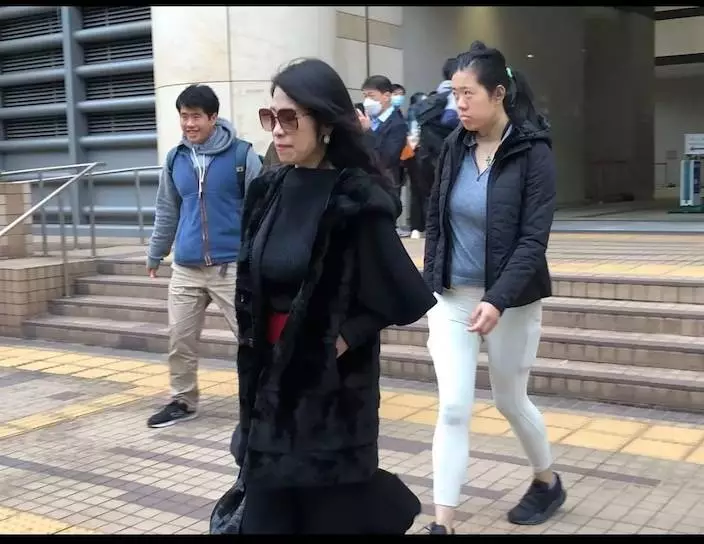
Starting in early 2022, Lai systematically sold off a collection of luxury properties in Taipei, with several transferred to companies held by his wife Teresa Lai (pictured) and his eldest son Sebastien Lai—a textbook asset-shifting maneuver designed to hedge against risk.
The Mystery Fortune
But this represents only the visible slice of Lai's holdings. He also established a company in Canada called Lais Hotel, which owns several resort properties managed by his sister. On top of that, he holds residential properties in Paris and Kyoto that he previously used to host friends. Their current status? Unknown.
The evidence shows that before and after his arrest, Lai executed a systematic plan to shift his assets out of Hong Kong and Taiwan. Some now belong to his wife, children, and other relatives. The remainder likely stays under his indirect control through other corporate entities. Total estimate? Around HK$1 billion.
Which raises a crucial question: For years, Lai poured enormous sums into the opposition camp and into elements disrupting Hong Kong. And in its final years, Next Digital was barely profitable. So how does he still command such substantial wealth? Is there hidden financial dealing with foreign forces lurking in the background? That puzzle deserves continued investigation.
Lai Ting-yiu
What Say You?
** 博客文章文責自負,不代表本公司立場 **