Chinese aviation's exhibits captivated attendees and received applaudes from industry experts at the week-long 55th edition of the Paris Air Show, which opened to the general public from Friday to Sunday.
Cutting-edge aviation and aerospace innovations brought by over 70 Chinese exhibitors drew large crowds to bustling exhibition halls at Le Bourget Airport near Paris. Among the most talked-about displays was the J-35A stealth fighter, making its debut outside China.
"I'm most interested in the J-35 on display. I'm looking forward to its export version and the carrier-based variant," said an engineer at the exhibition.
"Its exterior suggests strong stealth capabilities, and the aerodynamic design appears highly reliable," said another visitor who is an aircraft materials specialist.
At the booth of Aviation Industry Corporation of China (AVIC), visitors explored its full spectrum of products including fighters, transport aircraft, training planes, helicopters, drones, and guided weapons, which highlighted the company's transition from single-equipment development to integrated combat solutions.
Many industry insiders said China's aviation sector has achieved leapfrog progress.
"China's aviation industry has made made a phenomenal leap -- truly phenomenal. These companies haven't just caught up; you can sense they're now at the forefront," said a visitor.
In the exhibition area of civil aviation, China's homegrown C909 and C919, developed by Commercial Aircraft Corporation of China, Ltd. (COMAC), as well as its conceptual C929 airliner models stole the spotlight. Many visitors expressed hopes of flying on Chinese-made jets someday.
"Walking through this exhibit, it struck me that one day we'll see Chinese planes rival Airbus and Boeing," said a visitor.
"Given the chance, we'd absolutely choose to fly on a Chinese aircraft," another visitor said. "Nearly everything today is made in China -- we trust those products, so why not these planes?" her friend added.
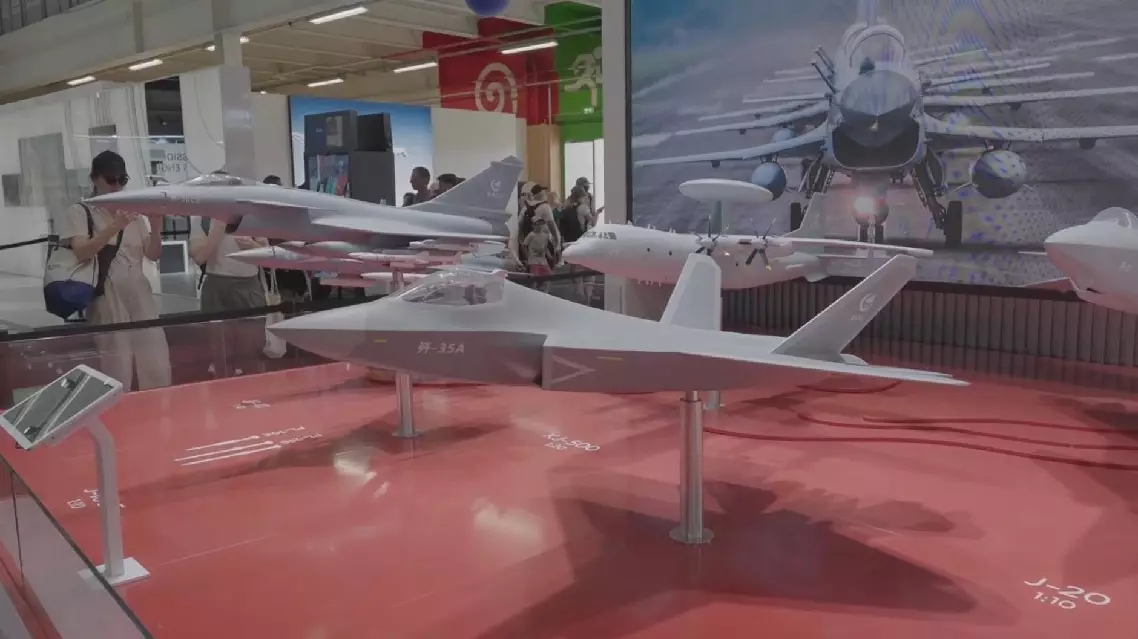
Attendees at Paris Air Show amazed by Chinese aviation products
China will strengthen fiscal and financial coordination to amplify policy effectiveness, experts said as the draft central and local budgets for 2026 were unveiled on Friday at the ongoing fourth session of the 14th National People's Congress.
According to the draft central and local budgets for 2026, 1.3 trillion yuan (190 billion U.S. dollars) of ultra-long special treasury bonds will be issued to provide continued support for the implementation of major national strategies and security capacity-building in key areas and for large-scale equipment upgrades and consumer goods trade-in programs.
Ultra-long special treasury bonds totaling 800 billion yuan will be allocated to support the implementation of major national strategies and security capacity-building in key areas, and 250 billion yuan in ultra-long special treasury bonds will be earmarked for consumer goods trade-in programs.
The country will refine these programs in terms of their scope and subsidy standards, and continue to support the scrapping and replacement of automobiles, home appliance trade-in schemes, and purchases of new digital and smart products.
China will also set up a 100-billion-yuan fiscal-financial coordination fund to boost domestic demand. The fund will support consumption and private investment through loan interest subsidies, financing guarantee, and risk compensation.
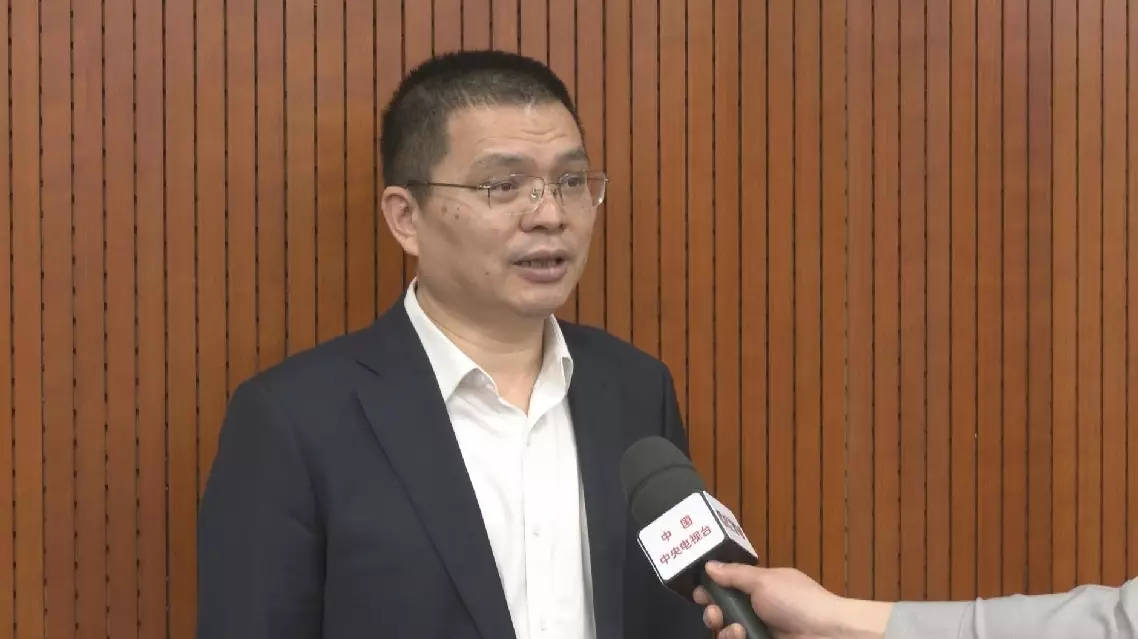
"Fiscal and monetary policies are the two major macroeconomic tools for macro-control, and their coordination is crucial. For instance, fiscal funds primarily serve as a guiding role, while financial institutions provide the capital. When fiscal guidance and financial resources are combined, the synergistic effect creates a result greater than the sum of its parts," said Yang Zhiyong, director of the Chinese Academy of Fiscal Sciences.
"By leveraging interest subsidies, we can mobilize substantial credit from financial institutions, thereby naturally stimulating consumption. The Ministry of Finance, in collaboration with the People's Bank of China, has introduced highly innovative measures, such as providing guarantees for the issuance of corporate bonds by small and medium-sized enterprises (SMEs), and compensating investors for losses. I believe the leveraging effect, making minimal efforts for maximum results, will become even more potent," said Yao Dongmin, director of the Center for China Fiscal Development under the Central University of Finance and Economics.
China's top legislature opened its annual session on Thursday morning at the Great Hall of the People in Beijing, with Chinese President Xi Jinping and other Party and state leaders attending the opening meeting alongside more than 2,700 NPC deputies. This year's NPC session is scheduled to run till March 12.
China to strengthen fiscal, financial coordination to amplify policy effectiveness: experts