Skip to Content Facebook Feature Image

'Craziest' reversal of fortune puts Mavs on path to Flagg after all the Doncic drama

Sport

'Craziest' reversal of fortune puts Mavs on path to Flagg after all the Doncic drama
Sport

Sport

'Craziest' reversal of fortune puts Mavs on path to Flagg after all the Doncic drama

2025-06-23 21:54 Last Updated At:22:01

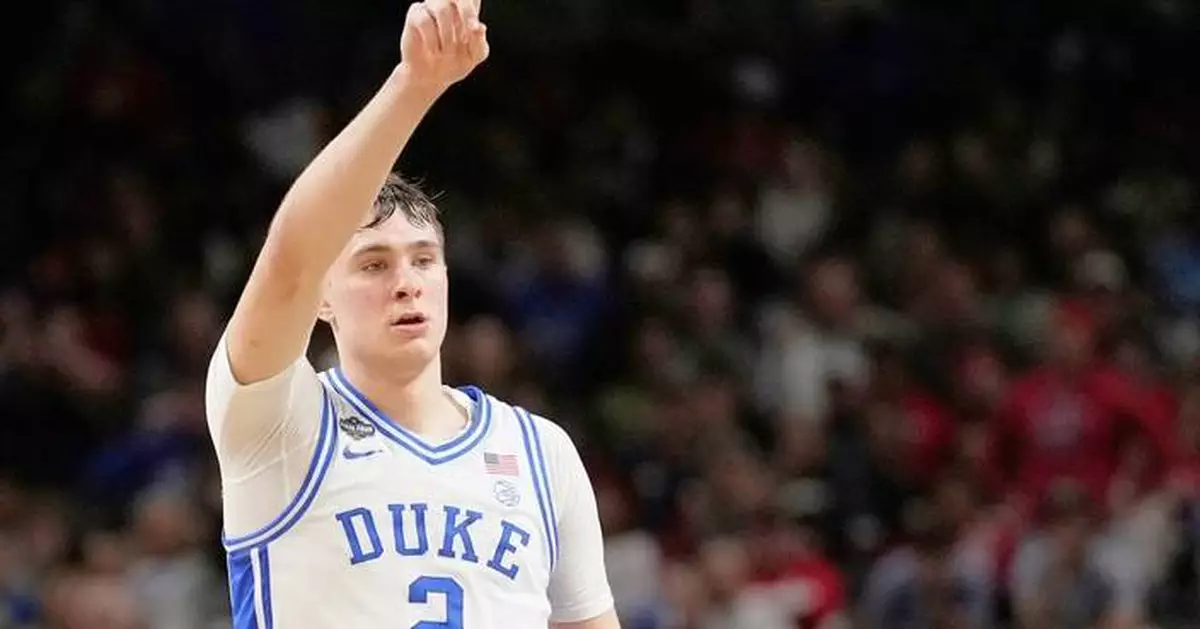
DALLAS (AP) — Dallas Mavericks CEO Rick Welts wasn't thinking even for a second about Cooper Flagg when he started a staff meeting before the draft lottery by saying the club was entering the most important offseason in franchise history.

The longtime NBA executive and relatively new leader on the business side of the Mavs was thinking about the lingering fallout of the widely reviled Luka Doncic trade, not the club turning a 1.8% chance into winning the rights to draft the teenaged star from Duke. Dallas is set to make that pick Wednesday night.

“Never, ever did anybody in our organization ever even say what would happen if we win. That's a waste of time,” Welts told The Associated Press recently. “Like, it's unbelievable. It was hard to even get your head around.”

The self-inflicted wounds were numerous after general manager Nico Harrison's stunning decision to send Doncic to the Los Angeles Lakers for Anthony Davis in early February.

Fans were incensed. Season-ticket holders were canceling. Potential new sponsors were telling Welts they'd have to think about it.

Just like that, the Mavs had a vision to sell of a potential superstar who could someday be the face of the franchise — as Doncic was, and fellow European superstar Dirk Nowitzki before him. Just like that, despair turned to hope for plenty of people, including those under Welts who had spent weeks dealing with the wrath of a spurned fan base.

“It's got to be the craziest reversal of fortune,” Welts said. “It would match any in the league's history.”

Before the Doncic trade, Welts had already made a decision to raise season-ticket prices. He told the AP he had to back off on the size of the increase as he watched the visceral reaction unfold.

Welts has seen plenty in nearly 50 years with the NBA, including time in the league office and stints with Phoenix and Golden State. Magic Johnson's HIV announcement. Accusations of widespread drug use in the early 1980s, when he says there was a widespread belief that the league would fail.

That's not to say the Doncic fallout didn't have a profound impact on the 72-year-old Welts, who had come out of retirement to replace Cynt Marshall just a month and a half earlier. It just means he has weathered a few storms.

And now the Naismith Basketball Hall of Famer isn't so sure he's ever seen the sun come back out so quickly.

“The thing that I learned through all of this experience was what I knew was like this amazing emotional tie between this team and these fans was even stronger than I think anybody who hadn’t lived here and been a part of it could ever imagine,” Welts said. “Just the outpouring of pure joy and the idea of a generational player that could change our fortunes for the next 15 years would land with us by pure luck.”

Harrison's widely panned decision on Doncic was compounded by an injury to Davis in his Dallas debut, followed by Kyrie Irving's season-ending knee injury a month later. The Mavs made the play-in tournament and won at Sacramento before their season — mercifully, perhaps — ended in a loss at Memphis with the No. 8 seed at stake.

Part of what made the Doncic deal so hard to believe was unloading a 25-year-old superstar in his prime nine months after leading Dallas to the NBA Finals for the first time in 13 years. The Mavs lost to Boston in five games last June.

Harrison's reasoning was prioritizing defense, and his belief that Davis and Irving were a good enough tandem to keep Dallas as a championship contender. Flagg's potential gave that notion a boost.

“I feel like I’m a broken record, but the team that we intended to put on the floor, which you guys saw for 2 1/2 quarters, that’s a championship-caliber team,” Harrison said. “And so you might not like it, but that’s the fact, it is.”

Welts, who believes the Mavs have work to do to bring their basketball and business sides together, will spend plenty of time during the early days of the Flagg era sharing his vision for a new arena.

It's a big reason Welts took the job, after spending seven years with Golden State on an arena plan that moved the Warriors across the bay to San Francisco from Oakland. He says all the talks are focused on keeping the team in Dallas.

While the casino-centered Adelson and Dumont families of Las Vegas, in the middle of their second full year as owners of the Mavs, wanted gambling to be part of the formula for a new arena, the political realities in Texas have shifted the focus away from that idea for now.

There's a new focus for Welts in what seems certain will be the final stop in an eventful NBA career: building everything around another potentially generational star after the Mavs jettisoned the one they had.

“Don't make this sound like I'm suggesting that everyone is forgiven,” Welts said. “Luka will always be a big part of what this organization is. But for a large number of fans, it is a pathway — it's not a pathway, it's like a four-lane highway into being able to care about the Mavericks the way they cared about the Mavericks before.”

AP NBA: https://apnews.com/NBA
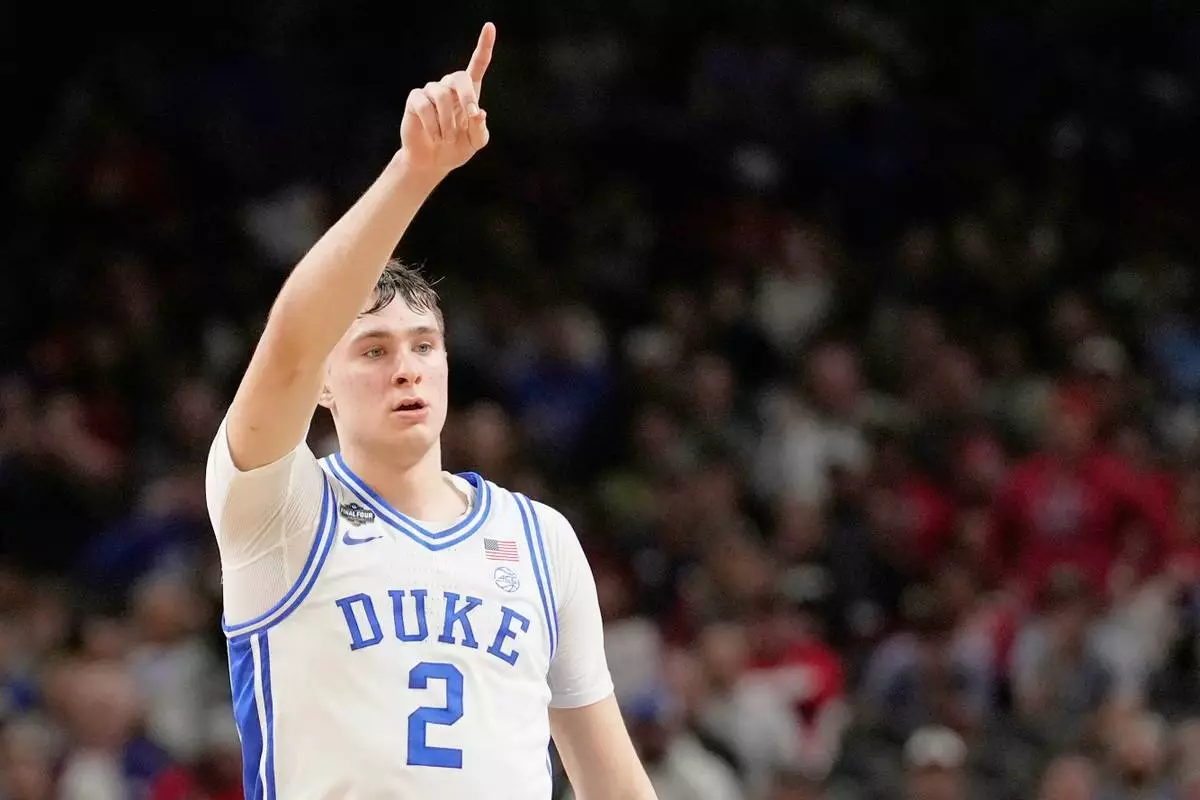
FILE - Duke forward Cooper Flagg celebrates after scoring against the Houston during the second half in the national semifinals at the Final Four of the NCAA college basketball tournament, Saturday, April 5, 2025, in San Antonio. (AP Photo/Brynn Anderson, File)
FILE - Duke forward Cooper Flagg celebrates after scoring against the Houston during the second half in the national semifinals at the Final Four of the NCAA college basketball tournament, Saturday, April 5, 2025, in San Antonio. (AP Photo/Brynn Anderson, File)
The Kennedy Center is ending the year with a new round of artists saying they are canceling scheduled performances after President Donald Trump's name was added to the facility, prompting the institution's president to accuse the performers of making their decisions because of politics.

The Cookers, a jazz supergroup that has performed together for nearly two decades, announced their withdrawal from “A Jazz New Year’s Eve” on their website, saying the “decision has come together very quickly” and acknowledging frustration from those who may have planned to attend.

Doug Varone and Dancers, a dance group based in New York, said in an Instagram post late Monday they would pull out of a performance slated for April, saying they “can no longer permit ourselves nor ask our audiences to step inside this once great institution.”

Those moves come after musician Chuck Redd canceled a Christmas Eve performance last week. They also come amid declining sales for tickets to the venue, as well as news that viewership for the Dec. 23 broadcast of the Kennedy Center Honors — which Trump had predicted would soar — was down by about 35% compared to the 2024 show.

The announcements amount to a volatile calendar for one of the most prominent performing arts venues in the U.S. and cap a year of tension in which Trump ousted the Kennedy Center board and named himself the institution's chairman. That led to an earlier round of artist pushback, with performer Issa Rae and the producers of “Hamilton” canceling scheduled engagements while musicians Ben Folds and Renee Fleming stepped down from advisory roles.

The Cookers didn't mention the building's renaming or the Trump administration but did say that, when they return to performing, they wanted to ensure that “the room is able to celebrate the full presence of the music and everyone in it,” reiterating a commitment “to playing music that reaches across divisions rather than deepening them.”

The group may not have addressed the Kennedy Center situation directly, but one of its members has. On Saturday, saxophone player Billy Harper said in comments posted on the Jazz Stage Facebook page that he “would never even consider performing in a venue bearing a name (and being controlled by the kind of board) that represents overt racism and deliberate destruction of African American music and culture. The same music I devoted my life to creating and advancing.”

According to the White House, Trump’s handpicked board approved the renaming. Harper said both the board "as well as the name displayed on the building itself represents a mentality and practices I always stood against. And still do, today more than ever.”

Richard Grenell, a Trump ally whom the president chose to head the Kennedy Center after he forced out the previous leadership, posted Monday night on X, “The artists who are now canceling shows were booked by the previous far left leadership,” intimating the bookings were made under the Biden administration.

In a statement Tuesday to The Associated Press, Grenell said the ”last minute cancellations prove that they were always unwilling to perform for everyone — even those they disagree with politically," adding that the Kennedy Center had been “flooded with inquiries from real artists willing to perform for everyone and who reject political statements in their artistry.”

There was no immediate word from Kennedy Center officials about whether the entity would pursue legal action against the latest round of artists to cancel performances. Following Redd's cancellation last week, Grenell said he would seek $1 million in damages for what he called a “political stunt.”

Not all artists are calling off their shows. Bluegrass banjoist Randy Barrett, scheduled to perform at the Kennedy Center next month, told the AP he was “deeply troubled by the politicization” of the venue and respected those who had canceled but feels that “our tribalized country needs more music and art, not less. It’s one of the few things that can bring us together.”

President John F. Kennedy was assassinated in 1963, and Congress passed a law the following year naming the center as a living memorial to him. Scholars have said any changes to the building's name would need congressional approval; the law explicitly prohibits the board of trustees from making the center into a memorial to anyone else, and from putting another person’s name on the building’s exterior.

Associated Press writers Steven Sloan and Hillel Italie contributed to this report.

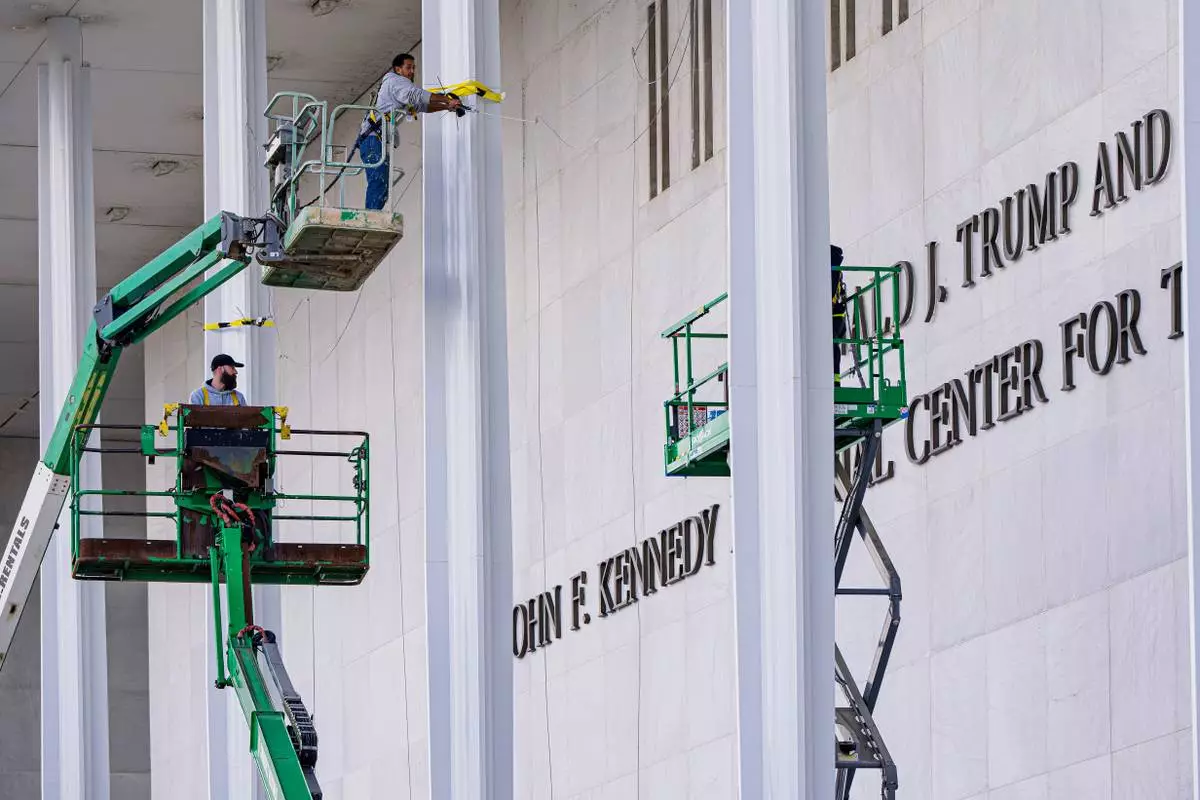
Workers add President Donald Trump's name to the John F. Kennedy Memorial Center for the Performing Arts, after a Trump-appointed board voted to rename the institution, in Washington, Friday, Dec. 19, 2025. (AP Photo/J. Scott Applewhite)

Workers add President Donald Trump's name to the John F. Kennedy Memorial Center for the Performing Arts, after a Trump-appointed board voted to rename the institution, in Washington, Friday, Dec. 19, 2025. (AP Photo/J. Scott Applewhite)

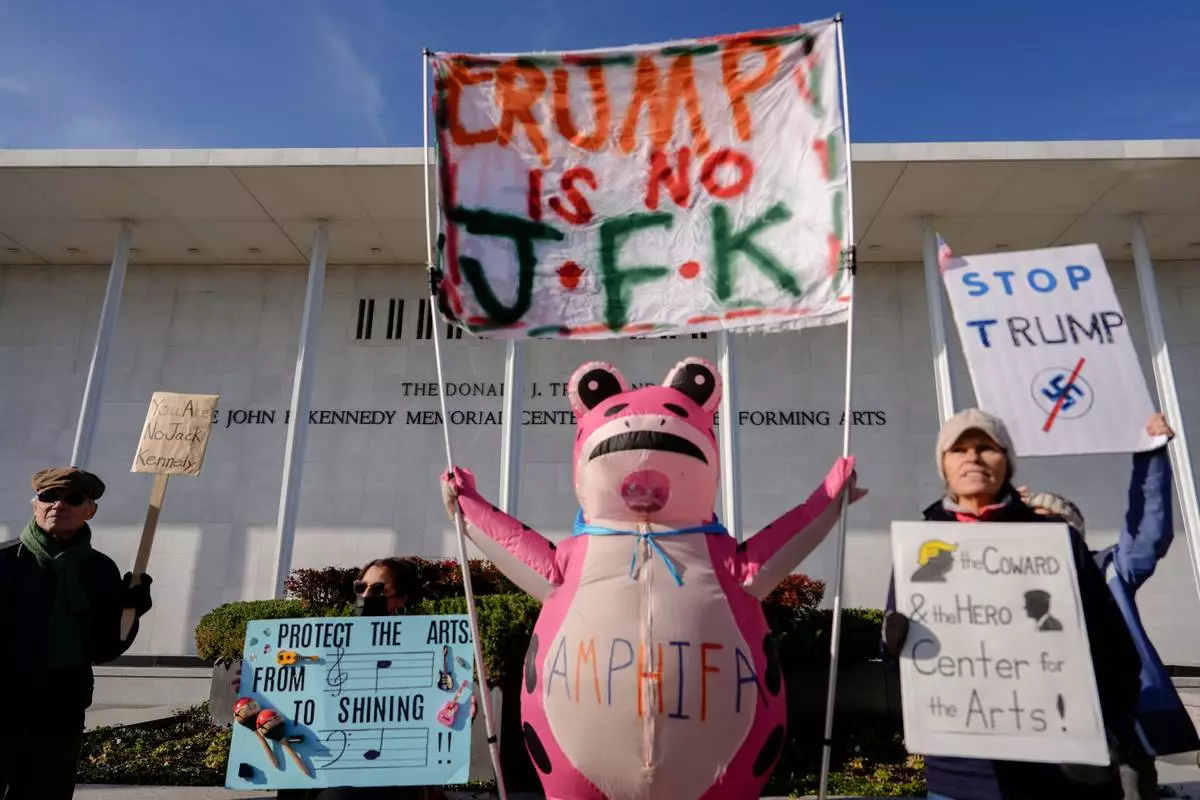
Demonstrators, including Nadine Siler, of Waldorf, Md., dressed in a pink frog costume, hold up signs at a designated protest point in front of the John F. Kennedy Memorial Center for the Performing Arts, a day after a Trump-appointed board voted to add President Donald Trump's name to the Kennedy Center, Saturday, Dec. 20, 2025, in Washington. (AP Photo/Julia Demaree Nikhinson)

Demonstrators, including Nadine Siler, of Waldorf, Md., dressed in a pink frog costume, hold up signs at a designated protest point in front of the John F. Kennedy Memorial Center for the Performing Arts, a day after a Trump-appointed board voted to add President Donald Trump's name to the Kennedy Center, Saturday, Dec. 20, 2025, in Washington. (AP Photo/Julia Demaree Nikhinson)

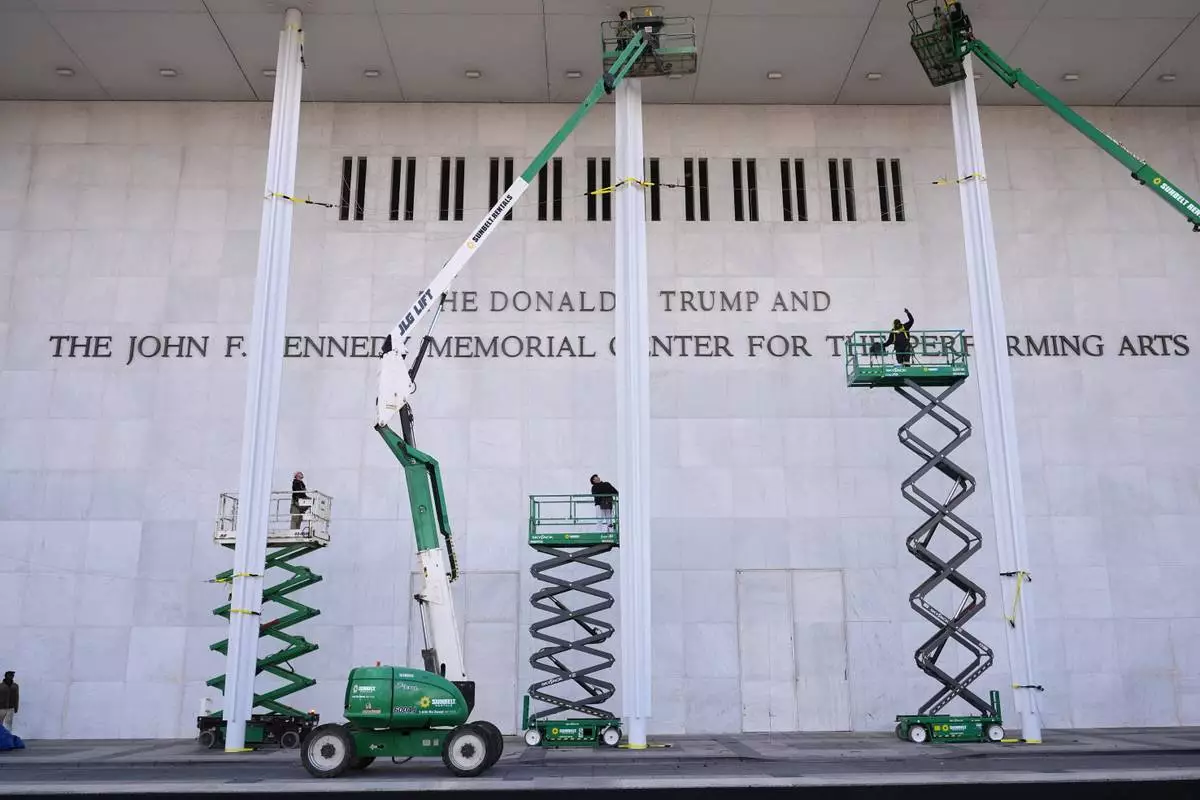
New signage, The Donald J. Trump and The John F. Kennedy Memorial Center For The Performing Arts, is unveiled on the Kennedy Center, Friday, Dec. 19, 2025, in Washington. (AP Photo/Jacquelyn Martin)

New signage, The Donald J. Trump and The John F. Kennedy Memorial Center For The Performing Arts, is unveiled on the Kennedy Center, Friday, Dec. 19, 2025, in Washington. (AP Photo/Jacquelyn Martin)

Recommended Articles