The Belt and Road Initiative (BRI) has transformed from a visionary concept into tangible outcomes over the past decade, fostering connectivity, economic growth, and global development while advancing toward a sustainable model, said experts during a panel at the 2025 Summer Davos in north China's Tianjin.
Building on these accomplishments, the panel highlighted the BRI's resilience and shared vision. Despite varied cooperation frameworks, participants emphasized that its enduring legacy unites over 150 nations under a common goal.
The sub-forum gathered government officials, entrepreneurs, and scholars from China, Egypt, Kyrgyzstan, and other countries to exchange views and explore collaboration opportunities in infrastructure, international trade, energy, and electricity.
"These projects, if you take a look at them, have promoted sustainable infrastructure, be it transportation, be it renewable energy, be it in terms of ports. So each project for every country, and that was presented, and Egypt is not an exception in this. It is consistent with national agenda. It is consistent with the national strategic goals," said Rania Al-Mashat, Egyptian Minister of Planning, Economic Development and International Cooperation.
Zhou Haibing, deputy head of the National Development and Reform Commission (NDRC), China's top economic regulator, emphasized that the BRI has evolved from vision to reality and concept to action, delivering substantial and impactful achievements. He outlined the initiative's four key contributions: advancing global connectivity, energizing economic growth, improving people's livelihoods, and creating a platform for international collaboration.
This platform, Zhou noted, is grounded in the principles of extensive consultation and joint contribution, ensuring shared benefits for all participants.
"Faced with a complex and ever-changing international environment, people of all countries hope for peace, development, cooperation and win-win results. We should stick to the original aspiration of cooperation," he said.
Xie Lincan, a researcher at the NDRC, remarked that while the BRI will continue as China’s cornerstone in foreign cooperation policy in the next decade, its priorities may shift in response to changing global dynamics.
"Our Belt and Road Initiative has shifted from cooperation focusing on infrastructure and manufacturing to collaboration in emerging fields, such as the digital economy, artificial intelligence and green and low-carbon development," she said.
Since its launch in 2013, the BRI has fostered partnerships with over 150 countries and more than 30 international organizations, driving cumulative two-way investments exceeding 380 billion U.S. dollars.
This year's Summer Davos forum, underway in Tianjin from Tuesday to Thursday, centers on entrepreneurship in the new era. The three-day event seeks to explore how innovation and entrepreneurship can reignite global growth amid rapid geo-economic shifts.
Launched in 2007 by the World Economic Forum in northeast China's Dalian, the Summer Davos summit marked a significant expansion of the global dialogue platform beyond its traditional winter meeting in Switzerland. Since then, the summit has alternated between the cities of Dalian and Tianjin, establishing itself as a vital space for international collaboration.
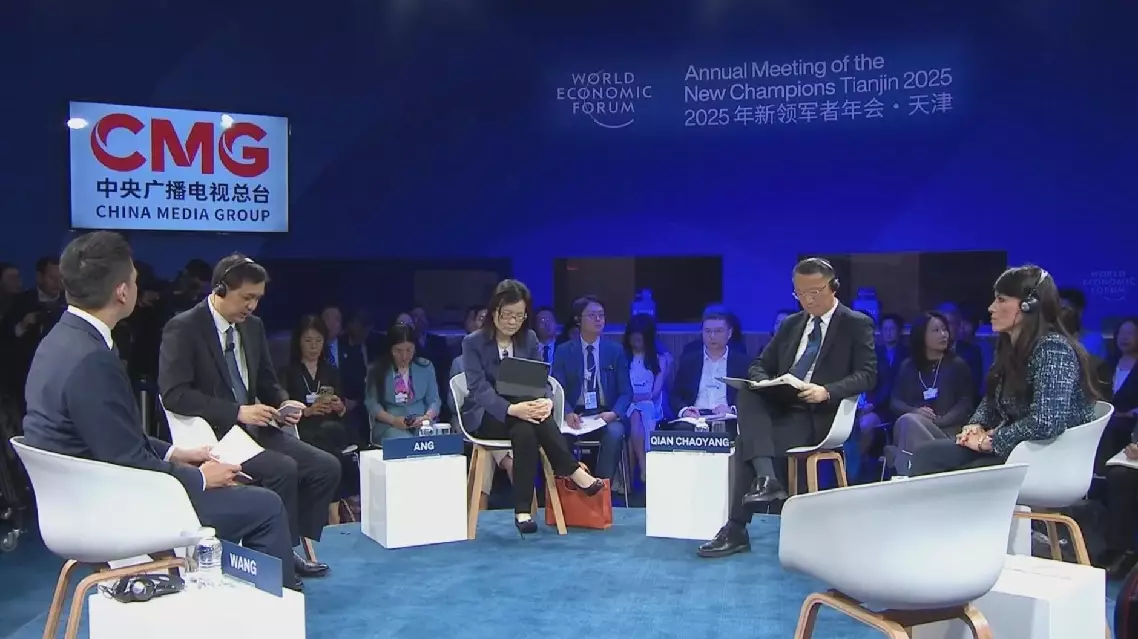
Experts at Summer Davos spotlight BRI's decade of achievements