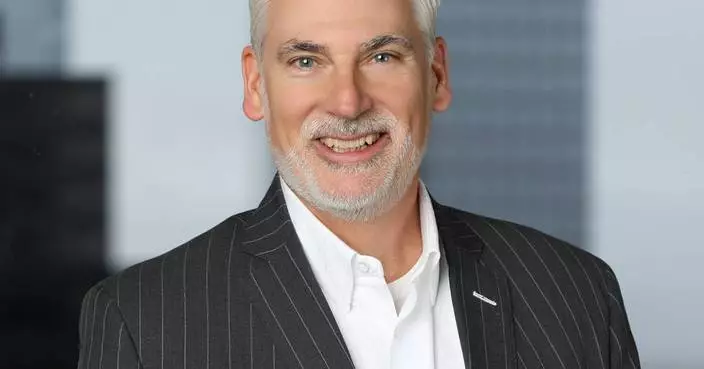
The federal agency charged with protecting workers’ civil rights has terminated a New York administrative judge who opposed White House directives, including President Donald Trump’s executive order decreeing male and female as two “immutable” sexes.
In February, Administrative Judge Karen Ortiz, who worked in the U.S. Equal Employment Opportunity Commission’s New York office, called Trump’s order “unethical" and criticized Acting Chair Andrea Lucas — Trump's pick to lead the agency — for complying with it by pausing work on legal cases involving discrimination claims from transgender workers. In an email copied to more than 1,000 colleagues, Ortiz pressed Lucas to resign.
Ortiz was fired on Tuesday after being placed on administrative leave last month. The EEOC declined Wednesday to comment on the termination, saying it does not comment on personnel matters.
In response to the president's order declaring two unchangeable sexes, the EEOC moved to drop at least seven of its pending legal cases on behalf of transgender workers who filed discrimination complaints. The agency, which enforces U.S. workplace anti-discrimination laws, also is classifying all new gender identity-related cases as its lowest priority.
The actions signaled a major departure from the EEOC's prior interpretation of civil rights law.
In her mass February email criticizing the agency’s efforts to comply with Trump’s order, Ortiz told Lucas, “You are not fit to be our chair much less hold a license to practice law.” The letter was leaked on Reddit, where it gained more than 10,000 “upvotes.” Many users cheered its author.
The EEOC subsequently revoked her email privileges for about a week and issued her a written reprimand for “discourteous conduct.”
Ortiz said she continued to “raise the alarm” about the agency's treatment of transgender and gender nonconforming complainants, and convey her opposition to the agency’s actions. She sent an April 24 email to Lucas and several other internal email groups with the subject line, “If You’re Seeking Power, Here’s Power” and a link to Tears for Fears’ 1985 hit “Everybody Wants to Rule the World.”
She contested her proposed termination earlier this month, arguing in a document submitted by a union representative that she was adhering to her oath of office by calling out behavior she believes is illegal.
Ortiz “views the Agency’s actions regarding LGBTQIA+ complainants to have made the EEOC a hostile environment for LGBTQIA+ workers,” and believes that leadership has “abandoned the EEOC’s core mission," the document says.
The judge was hired to work at the EEOC during the first Trump administration, and while she disagreed with some policies then, “she did not take any action because there was no ostensible illegality which compelled her to do so," the document stated. "What is happening under the current administration is unprecedented.”
The letter requested the withdrawal of Ortiz's proposed termination, the removal of all disciplinary documents from her personnel file, and that Ortiz be allowed "to continue doing her job.”
The six-page termination notice came anyway. In it, Chief Administrative Judge Regina Stephens called Ortiz' actions “distasteful and unprofessional," and concluded that Ortiz's “work performance is affected” by her disagreements with the current executive orders and direction of EEOC leadership.
The notice also alleged that media circulation of Ortiz's emails had “affected the reputation and credibility of the Agency.” It cited an Associated Press article that quoted Ortiz saying she stood by her email statements as evidence that her behavior would not change with ”rehabilitation."
In a Wednesday phone interview with The Associated Press, Ortiz said the news of her termination is “very sad,” although not surprising. “I think the agency has now become something that, I don’t know if I’d even really want to work there anymore. They’ve lost their way,” she said.
Lucas defended her decision to drop lawsuits on behalf of transgender workers during her confirmation hearing before a Senate committee last week. She acknowledged that transgender workers are protected under civil rights laws but said her agency is not independent and must comply with presidential orders.
Ortiz said she traveled from New York to Washington “on my own dime, on my own time” to attend the hearing. “I needed to be there,” she said, adding that she left thank-you notes for Senators who “put Andrea Lucas' feet to the fire.”
Ortiz said she isn't sure what comes next for her, only that it will involve fighting for civil rights. And in the short-term, picking up more volunteer dog walking shifts. “I will keep fighting for the LGBTQ community in whatever way I can," she told AP.
She added: “It takes courage to take a stand, and be willing to be fired, and lose a six-figure job, and health insurance, and the prestige of the title of ‘judge,’ but I think it’ll also serve an example to future lawyers and young lawyers out there that a job title isn’t everything, and it’s more important to stay true to your values.”
The Associated Press’ women in the workforce and state government coverage receives financial support from Pivotal Ventures. AP is solely responsible for all content. Find AP’s standards for working with philanthropies, a list of supporters and funded coverage areas at AP.org.

FILE - Karen Ortiz, an administrative judge at the Equal Employment Opportunity Commission, walks to her office, Wednesday, Feb. 26, 2025, in New York. (AP Photo/Julia Demaree Nikhinson,File)

FILE - Karen Ortiz, an administrative judge at the Equal Employment Opportunity Commission, poses for photos, Wednesday, Feb. 26, 2025, in New York. (AP Photo/Julia Demaree Nikhinson,File)
BRUSSELS (AP) — Belgium insisted on Thursday that its European Union partners must provide ironclad guarantees that it will be protected from Russian retaliation before it would back a massive loan for Ukraine.
At a high-stakes EU summit in Brussels, the 27-nation bloc’s leaders are set to decide on whether to use tens of billions of euros in frozen Russian assets to underwrite a loan to meet Ukraine’s military and financial needs over the next two years.
The bulk of the assets — some 193 billion euros ($227 billion) as of September — are held in the Brussels-based financial clearing house Euroclear. Russia’s Central Bank sued Euroclear last week.
“Give me a parachute and we’ll all jump together,” Prime Minister Bart De Wever told members of the Belgian parliament just before the summit began. “If we have confidence in the parachute that shouldn’t be a problem.”
Belgium fears that Russia will strike back and would prefer that the bloc borrow the money on international markets. It wants frozen assets held in other European countries to be thrown into the pot as well, and for its partners to guarantee that Euroclear will have the funds it needs should it come under legal attack.
European officials say Russia is waging a campaign of sabotage and disruption across the continent. The Central Bank lawsuit ramped up pressure on Belgium and its European partners ahead of the summit.
The “reparations loan” plan would see the EU give 90 billion euros ($106 billion) to Ukraine. Countries like the U.K., Canada and Norway would make up any shortfall.
Russia's claim to the assets would still stand, but the assets would remain locked away at least until the Kremlin ends its war on Ukraine and pays for the massive damage it's caused.
In mapping out the loan plan, the European Commission set up safeguards to protect Belgium, but De Wever remains unconvinced.
“I have not yet seen a text that could satisfactorily address Belgium’s concerns," he said. "I hope to see one today.”
De Wever insisted that Belgium remains “a faithful ally” of Ukraine and wants to continue to help.
Whatever method they use, the leaders have pledged to meet most of Ukraine's needs in 2026 and 2027. The International Monetary Fund estimates that would amount to 137 billion euros ($160 billion). The war-ravaged country is at risk of bankruptcy and needs the money by spring.
“We have to find a solution today," European Commission President Ursula von der Leyen told reporters. EU Council President António Costa, who is chairing the meeting, has vowed to keep leaders negotiating until an agreement is reached, even if it takes days.
Polish Prime Minister Donald Tusk said: “Now we have a simple choice. Either money today or blood tomorrow." He insisted that "all European leaders have to rise to the occasion.”
EU envoys have worked around the clock in recent weeks to flesh out the details and narrow differences among the 27 member countries. If enough countries object, the plan could be blocked. There is no majority support for a plan B of raising the funds on international markets.
“At this stage, it depends on political will,” Ukrainian President Volodymyr Zelenskyy said in a Whatsapp chat with reporters while flying to Brussels. “I very much hope that we can obtain a positive decision. Without it, Ukraine will face a major problem.”
German Chancellor Friedrich Merz said that he hopes Belgium's concerns can be addressed.
"The reactions of the Russian president in recent hours show how necessary this is. In my view, this is indeed the only option. We are basically faced with the choice of using European debt or Russian assets for Ukraine, and my opinion is clear: we must use the Russian assets.”
Hungary and Slovakia oppose von der Leyen’s plan for a reparations loan. Apart from Belgium, Bulgaria, Italy and Malta are also undecided.
“I would not like a European Union in war," said Hungarian Prime Minister Viktor Orbán, who sees himself as a peacemaker. He’s also Russian President Vladimir Putin’s closest ally in Europe. “To give money means war.”
Orbán described the loan plan as “a dead end,” and said that “the whole idea is a stupid one.”
The outcome of the summit has significant ramifications for Europe's place in negotiations to end the war. The United States wants assurances that the Europeans are intent on supporting Ukraine financially and backing it militarily, even as the talks drag on with few results so far.
The loan plan in particular also poses important challenges to the way the bloc goes about its business. Should a two-thirds majority of EU leaders decide to impose the scheme on Belgium, which has most to lose, the impact on decision-making in Europe would be profound.
Finding voting majorities and avoiding vetoes in the future could become infinitely more complex if one of the EU's founding members is forced to weather an attack on its interests by its very own partners.
De Wever too must weigh whether the cost of holding out against a majority is worth the hit his government's credibility would take in Europe.
Whatever is decided, the process does not end at this summit. Legal experts would have to convert any political deal into a workable agreement, and some national parliaments may have to weigh in before the loan money could start flowing to Ukraine.
Associated Press Writers Kirsten Grieshaber in Berlin and Illia Novikov in Kyiv contributed to this report.

From left, Portugal's Prime Minister Luis Montenegro, European Council President Antonio Costa, French President Emmanuel Macron and Hungary's Prime Minister Viktor Orban during a round table meeting at the EU Summit in Brussels, Thursday, Dec. 18, 2025. (AP Photo/Geert Vanden Wijngaert)
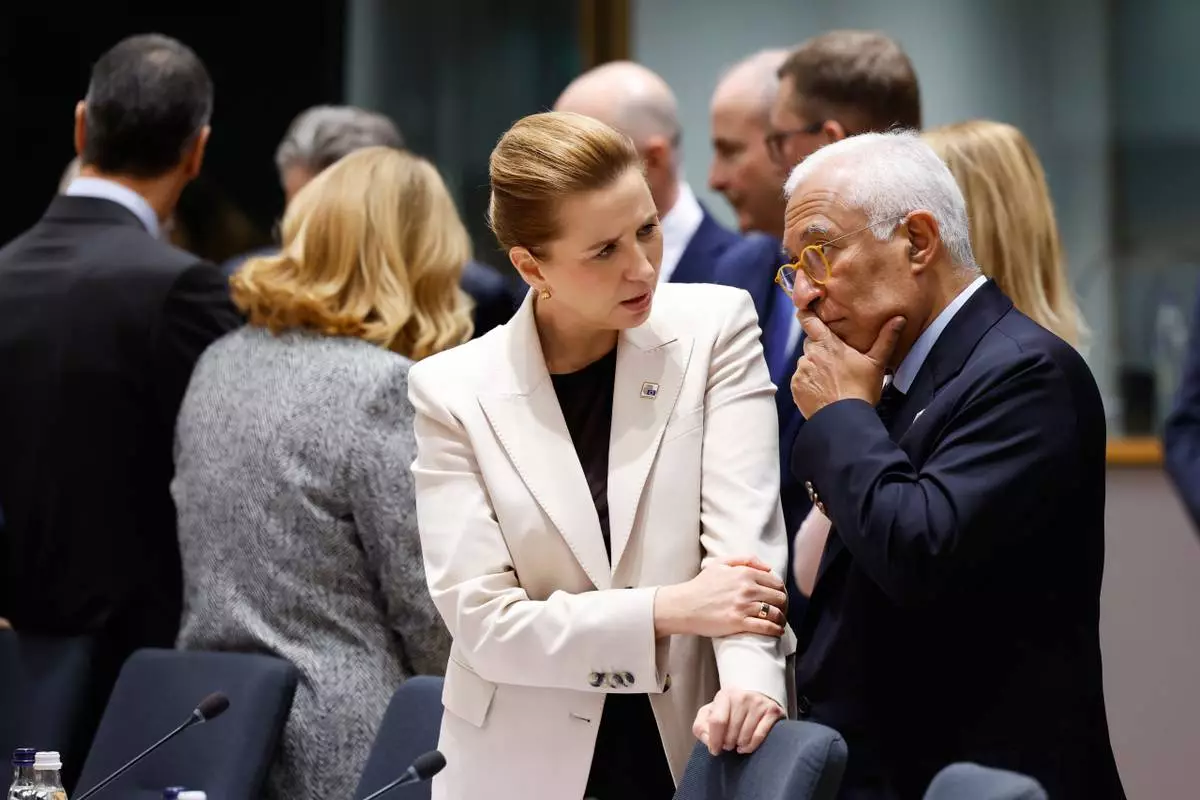
European Council President Antonio Costa, center right, speaks with Denmark's Prime Minister Mette Frederiksen, center left, during a round table meeting at the EU Summit in Brussels, Thursday, Dec. 18, 2025. (AP Photo/Geert Vanden Wijngaert)
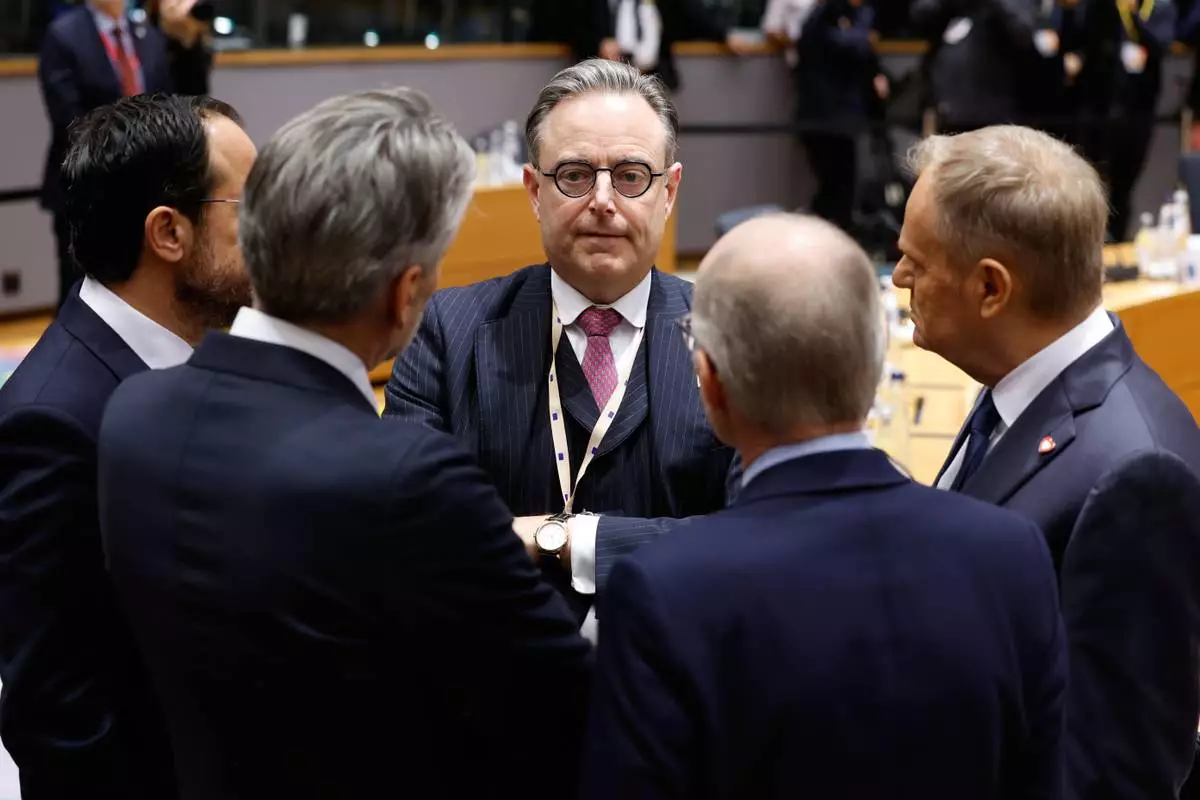
Belgium's Prime Minister Bart De Wever, center, speaks with from left, Cypriot President Nikos Christodoulides, Netherland's Prime Minister Dick Schoof, Luxembourg's Prime Minister Luc Frieden and Poland's Prime Minister Donald Tusk during a round table meeting at the EU Summit in Brussels, Thursday, Dec. 18, 2025. (AP Photo/Geert Vanden Wijngaert)
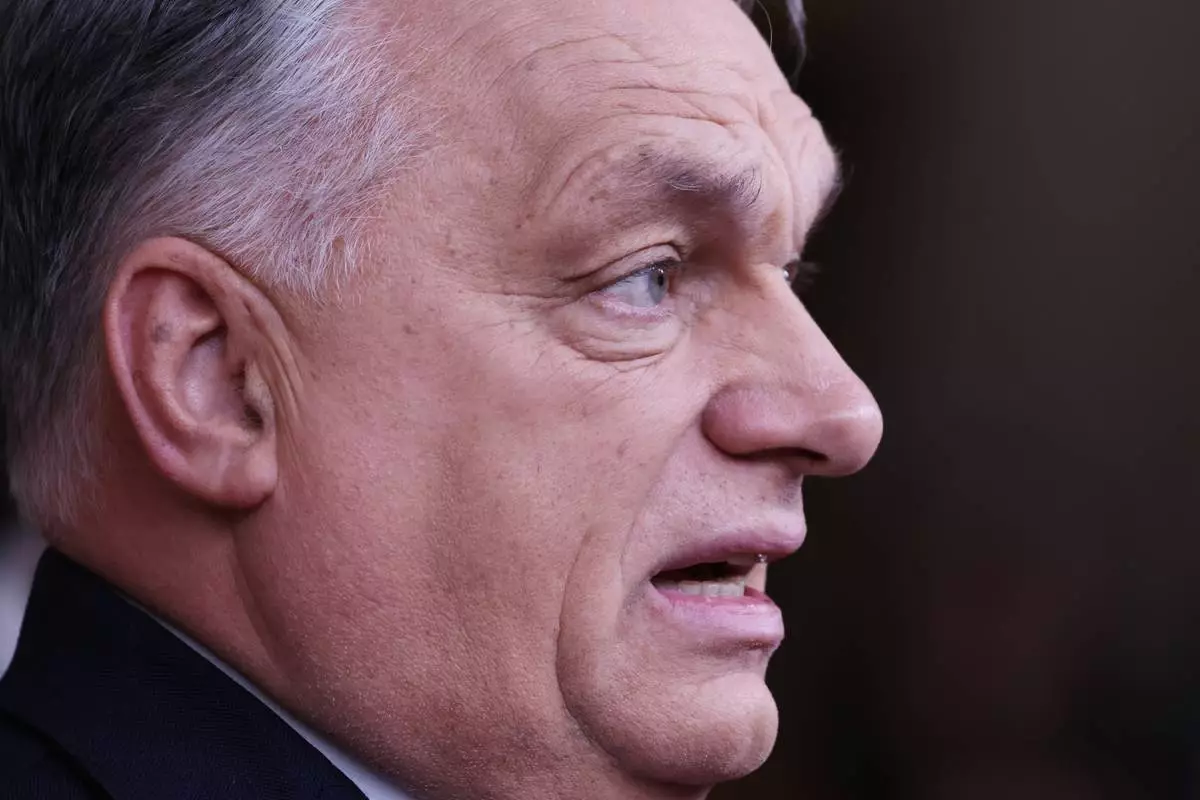
Hungary's Prime Minister Viktor Orban speaks with the media as he arrives for the EU Summit in Brussels, Thursday, Dec. 18, 2025. (AP Photo/Geert Vanden Wijngaert)

Hungary's Prime Minister Viktor Orban, right, arrives for the EU Summit in Brussels, Thursday, Dec. 18, 2025. (AP Photo/Omar Havana)
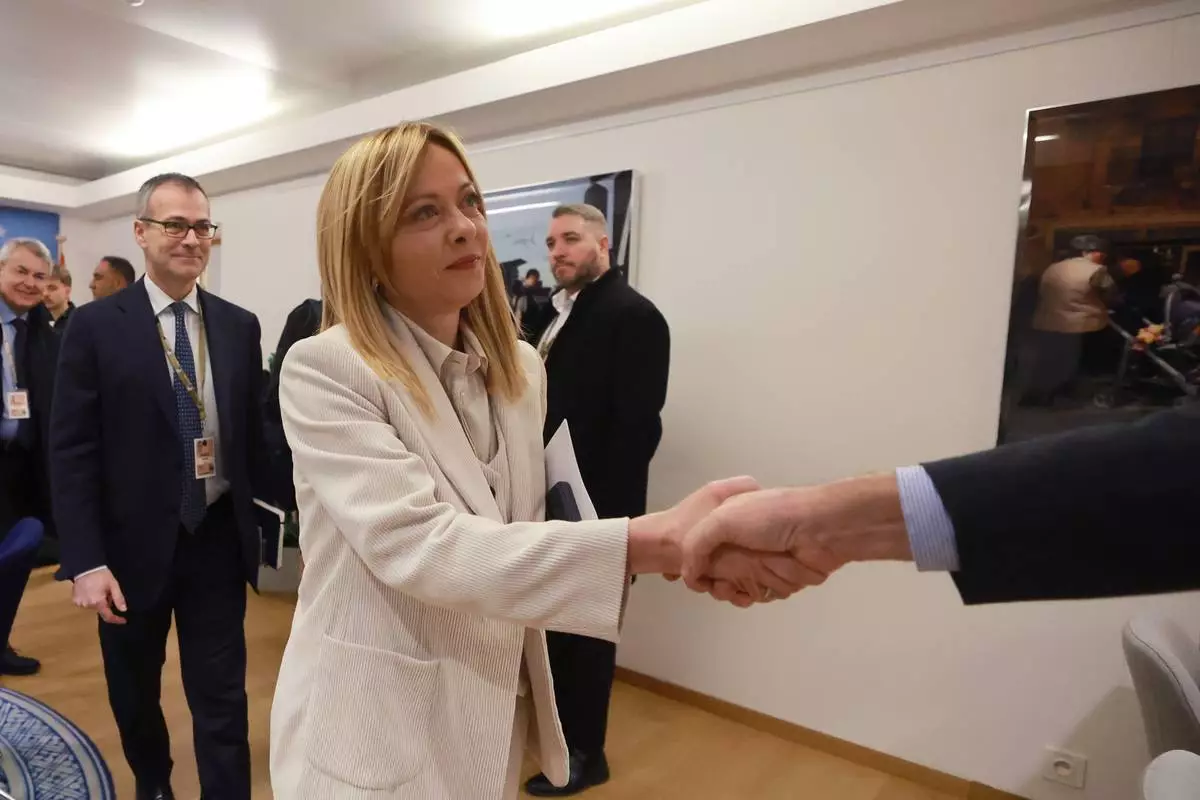
Italy's Prime Minister Giorgia Meloni, center, is greeted as she arrives for a round table meeting on migration at the EU Summit in Brussels, Thursday, Dec. 18, 2025. (AP Photo/Olivier Hoslet, Pool Photo via AP)

European Commission President Ursula von der Leyen, right, and Germany's Chancellor Friedrich Merz, left, attend a round table meeting on migration at the EU Summit in Brussels, Thursday, Dec. 18, 2025. (AP Photo/Olivier Hoslet, Pool Photo via AP)

FILE - A view of the headquarters of Euroclear in Brussels, on Oct. 23, 2025. (AP Photo/Geert Vanden Wijngaert, File)