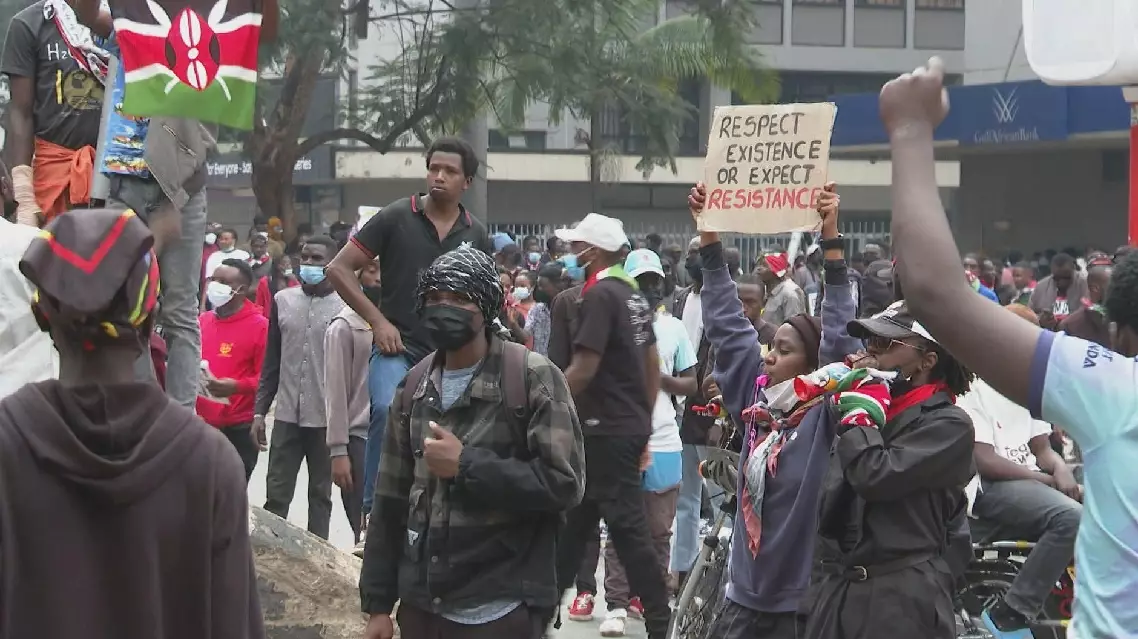
People in major towns across Kenya took to the streets on Wednesday, holding placards and chanting songs, to mark the one year anniversary of huge demonstrations against a contentious tax plan.
At least 60 people were killed by security forces during a protest against tax hikes outside the country's parliament in the capital city of Nairobi on June 25 of last year.
Thousands of young demonstrators gathered in the capital city's Central Business District on Wednesday, waving Kenyan national flags and blowing whistles.
The demonstrators tried to make their way to the country's parliament, but police used water cannons, rubber bullets and tear gas to prevent them from reaching their goal. Several protesters and police officers were injured during the clashes.
While the Kenyan government has yet to release any injury or casualty figures, local media has reported that two people were killed, scores of others injured, and property worth millions destroyed during the chaos.
Those who took part in the protests in Nairobi said they were demanding justice for the society and for those who lost their lives.
"We are here to seek justice and also for a better Kenya," said one protester. "We want a complete overhaul of the system, every system is rotten from the ministries to the service providers. We need a complete overhaul," said another.
Normal business was forced to come to a standstill in the capital city as well as in other major towns, including Nyeri, Eldoret, Machakos, Mombasa, Kakamega, Narok, Kajiado, and Kisii.
Kenyan President William Ruto has appealed for calm and restraint.
The public's relationship with the police is at an all-time low in Kenya. Just last week, hundreds of demonstrators took to the streets to protest the death of a 31-year-old blogger and teacher in a police cell in Nairobi. Several police officers have since been charged in court for his death.
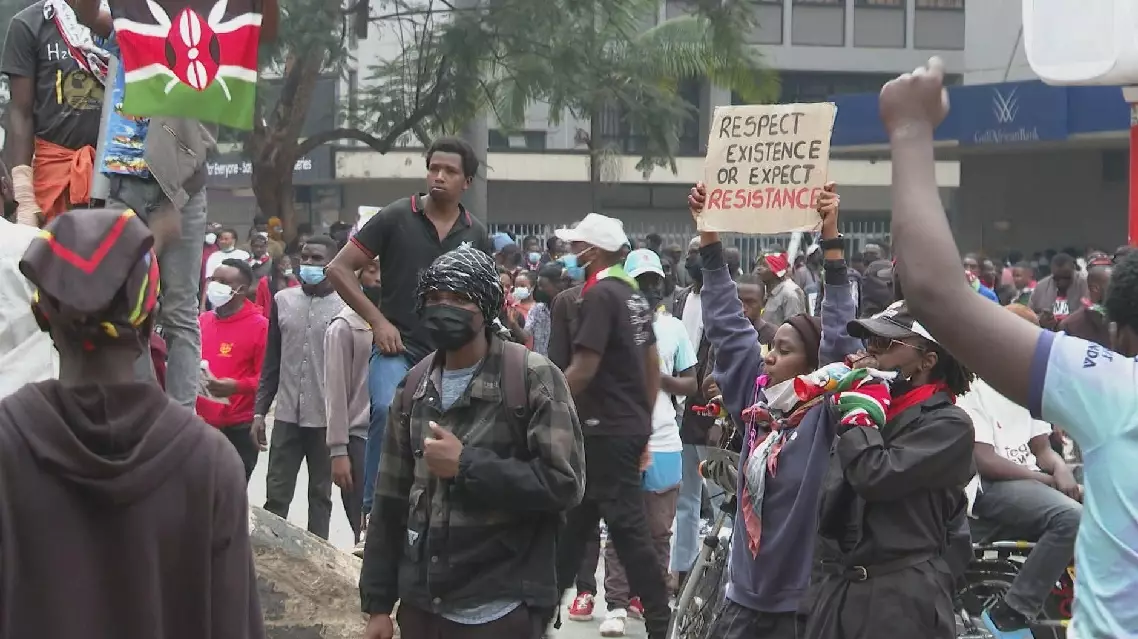
Kenyans rally to mark anniversary of anti-tax demonstrations
The Iranian government is focusing on public concerns and maintaining stable supplies of essential goods amid recent protests, Iranian President Masoud Pezeshkian said in a televised interview on Sunday.
In the city of Karaj, northwest of the capital Tehran, daily life has largely continued as normal. A video filmed by a local resident on Sunday shows food stores open and grocery shelves fully stocked.
"This is the block near my home, and there are some food stores here. Daily life continues here. Last night we did not see many protests in Karaj. Right now the city is very safe. This is a grocery store close to my home. All the food is available; nothing is in shortage. Here are noodles and different types of beans. Here are dairy products, cheese, and yogurt. I also checked other grocery stores and didn't see any shortages. Everything is available," said local resident Ali Reza.
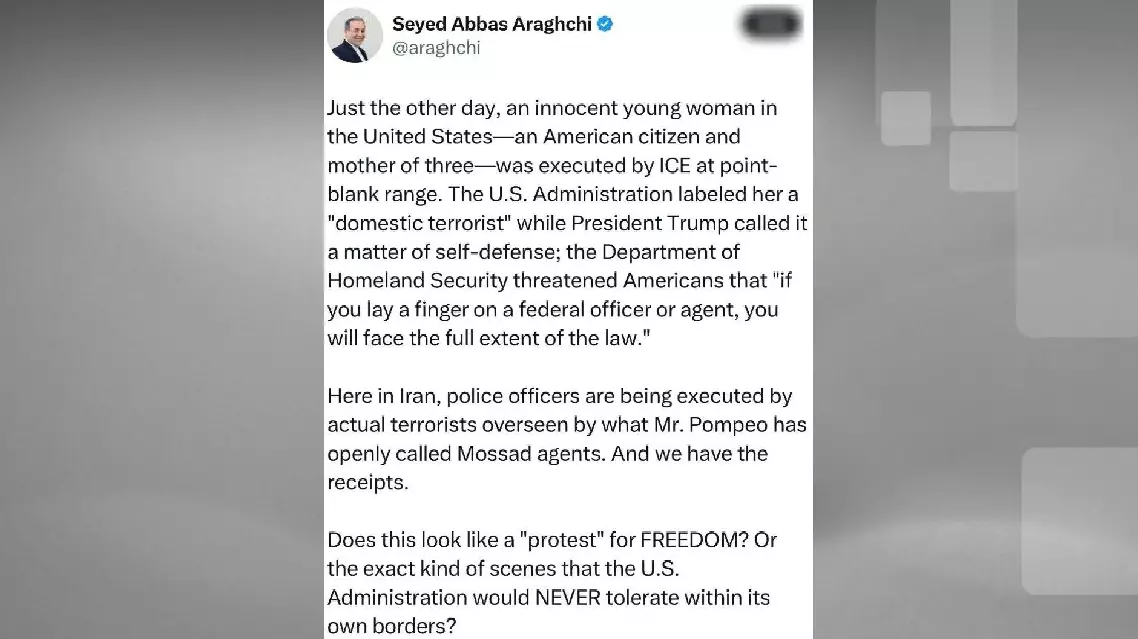
Iranian officials have described recent disturbances as acts orchestrated by the "enemy," including some carried out by well-trained and armed "terrorists." The incidents have caused casualties among security personnel and civilians, as well as property damage.
The Secretary of Iran's Supreme National Security Council Ali Larijani has directed authorities to severely punish the "terrorists."
Meanwhile, Iran's police chief Ahmad-Reza Radan said on Sunday that the police had raised alert levels and arrested several leaders of the troublemakers during the operations on Saturday.
President Pezeshkian noted in the interview that the normal demands of the Iranian people are reasonable and justified, but they must realize that triggering riots and carrying out terrorist acts are the enemy's attempts to undermine the country. He urged the public to remain vigilant.
Also on Sunday, Iranian Parliament Speaker Mohammad Baqer Qalibaf warned that Tehran would regard U.S. and Israeli bases and facilities in the Middle East as "legitimate targets" if Washington takes military action against Iran. His remarks followed media reports saying U.S. President Donald Trump is "seriously considering authorizing a strike" against Iran.
Iranian state media reported that at least 109 members of Iran's security forces have been killed in clashes since the protests began 14 days ago. Meanwhile, human rights groups based outside the country said the number of protesters killed has exceeded 200, though the figure could not be independently verified.
The protests initially erupted over a sharp depreciation of the rial and sweeping subsidy reforms. Iranian authorities have blamed the unrest on foreign-linked agents and sanctions imposed by the United States.
Iranian president says government focusing on ensuring supplies amid protests