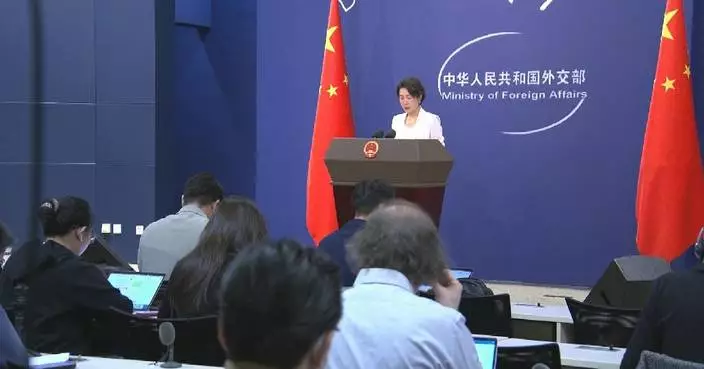
The one-China principle is a universal consensus of the international community and a basic norm of international relations, as well as the political foundation for China-Africa relations, Chinese Foreign Ministry spokeswoman Mao Ning said on Monday.
She made the remarks in response to a media inquiry concerning that the Taiwan regional authorities claimed that the Taiwan-related content in the joint press release of the China-African Union strategic dialogue seriously distorted facts.
"The one-China principle is a universal consensus of the international community and a fundamental norm of international relations, as well as the political foundation for China-Africa relations. The 2024 Beijing Summit of the Forum on China-Africa Cooperation (FOCAC) adopted the Beijing Declaration, in which the participating African countries and the AU Commission reiterated their firm commitment to the one-China principle. They reaffirmed that there is only one China in the world, Taiwan is an inalienable part of China's territory, the government of the People's Republic of China is the sole legal government representing the whole of China, and expressed firm support for all efforts made by the Chinese government to achieve national reunification," Mao said.
"The joint press release of the ninth China-AU strategic dialogue fully and accurately reflects the consistent and clear stance of the African side on the Taiwan question. Just a few days ago, AU Commission Chairperson Mahmoud Ali Youssouf said in an interview that the African Union will always stand with China on the question of the one-China principle. We urge the Taiwan regional authorities to recognize reality and cease their self-degrading and clumsy political performance," she continued.
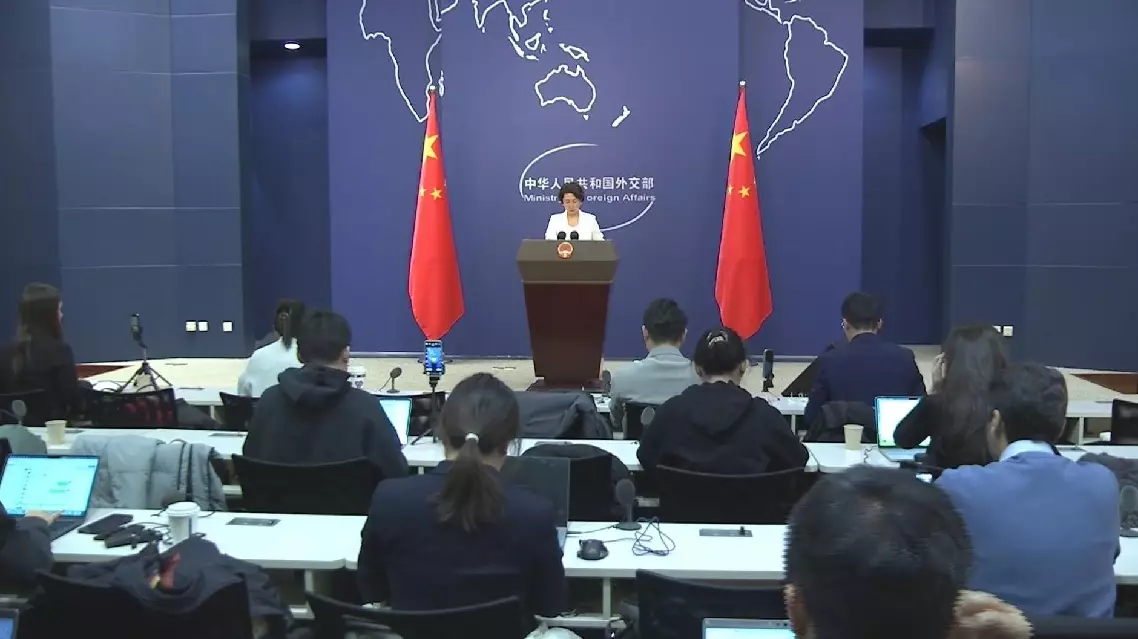
Mainland slams Taiwan regional authorities for challenging one-China principle
Xi Jinping, general secretary of the Communist Party of China (CPC) Central Committee, on Monday called for advancing full and rigorous Party self-governance with higher standards and more concrete measures.
Xi, also Chinese president and chairman of the Central Military Commission, made the remarks while addressing the fifth plenary session of the 20th CPC Central Commission for Discipline Inspection (CCDI) in Beijing.
Xi urged efforts to confine power to an institutional cage in a more well-conceived and effective manner, and press ahead with the anti-corruption fight with a clearer understanding and stronger resolve, thus providing a strong guarantee for achieving the goals and tasks of the 15th Five-Year Plan period (2026-2030).
Xi pointed out that in 2025, the CPC Central Committee had intensified efforts to improve Party conduct, uphold integrity and combat corruption, achieving notable results. Xi said efforts were made to maintain a tough stance against corruption and eradicate the breeding grounds and conditions for corruption.
Xi emphasized that implementing the major decisions and plans of the CPC Central Committee is a fundamental requirement for upholding its authority and its centralized, unified leadership.
Party organizations at all levels and Party members and officials should implement the decisions and plans of the Fourth Plenary Session of the 20th CPC Central Committee with concrete actions, he said.
Xi noted that confining power to an institutional cage is an important task in exercising full and rigorous Party self-governance.
He stressed that all are equal before the law and regulations, that compliance with them admits no privilege, and that enforcement of the law and regulations allows no exception.
Xi underscored that the fight against corruption is a major struggle that the Party cannot afford to lose, and must never lose.
He said that the current anti-corruption situation remains grave and complex, and that the task of eliminating the soil and conditions breeding corruption remains arduous. Xi added that it is essential to maintain a firm stance to leave corrupt officials with no place to hide.
Stressing the need to stay attuned to new trends and features of corruption, Xi urged efforts to innovate methods and approaches, promptly detect and accurately identify corrupt practices, and effectively address all forms of corruption, so as to continuously enhance the penetrating power of anti-corruption efforts.
He also urged strengthening coordination among all forms of oversight to advance integrated governance through whole-process collaboration, and called for sustained efforts to forge a loyal, upright and responsible disciplinary inspection and supervision force that dares to and is good at fighting against corruption.
Members of the Standing Committee of the Political Bureau of the CPC Central Committee Li Qiang, Zhao Leji, Wang Huning, Cai Qi and Ding Xuexiang attended the meeting.
Li Xi, a member of the Standing Committee of the Political Bureau of the CPC Central Committee and secretary of the CCDI, presided over the meeting. On Monday afternoon, on behalf of the standing committee of the CCDI, Li also delivered a work report.
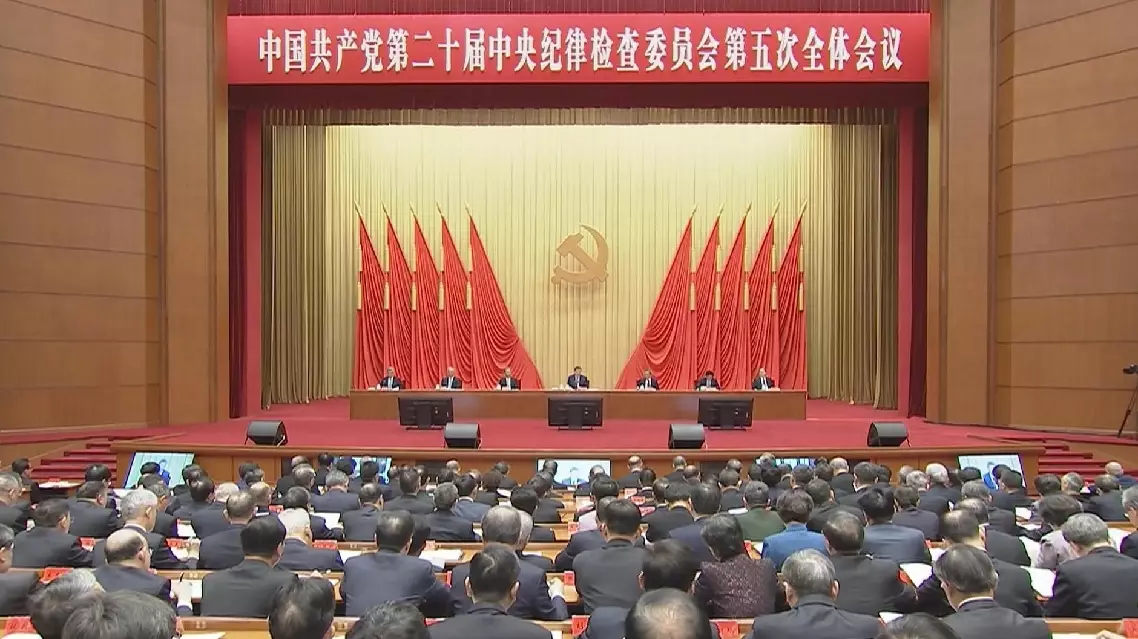
Xi urges advancing Party self-governance with higher standards, more concrete measures