A Scottish marine biologist has dedicated her life to the conservation of Chinese white dolphins in Hong Kong, out of her deep affection for these cute creatures and the region itself.
Lindsay Porter, a senior research scientist at the Southeast Asia Marine Mammal Research, developed her passion for dolphins at a young age when her family moved to the South African coastline.
In 1993, during her early 20s, Porter began her PhD in cetacean conservation at the University of Hong Kong. That experience prompted her to make Hong Kong her second home as the city truly resonates with her.
Today, her team is heading to the waters near the Hong Kong International Airport to observe Chinese white dolphins, a job she feels incredibly fortunate to have.
"Because not everyone is as lucky as we are that we get to see the dolphins every week and we understand the way their lives work," she said.
Every time she sets sail, Porter brings along her underwater sonar system, a device that collects sound data from the dolphins, helping scientists gauge their activity levels.
"So one of the challenges for us as researchers is to take that information and provide it to non-biologists and say this is how you can help save dolphins, and to safeguard our marine environment more for the future," she said.
Even after 30 years of research, Porter still feels a thrill whenever she has the chance to observe these magnificent creatures.
"I so enjoyed the work atmosphere and how everyone was working together in the marine environment. So every year when you see the same dolphin again, then maybe she has a baby, then maybe three years later she has another baby, it is like watching a television show that lasts for generations. So, I felt very, very welcome in Hong Kong, and I fell in love with the dolphins," she said.
On weekends, Porter also takes her children out to watch the dolphins, believing that instilling awareness for the protection of white dolphins is crucial from a young age.
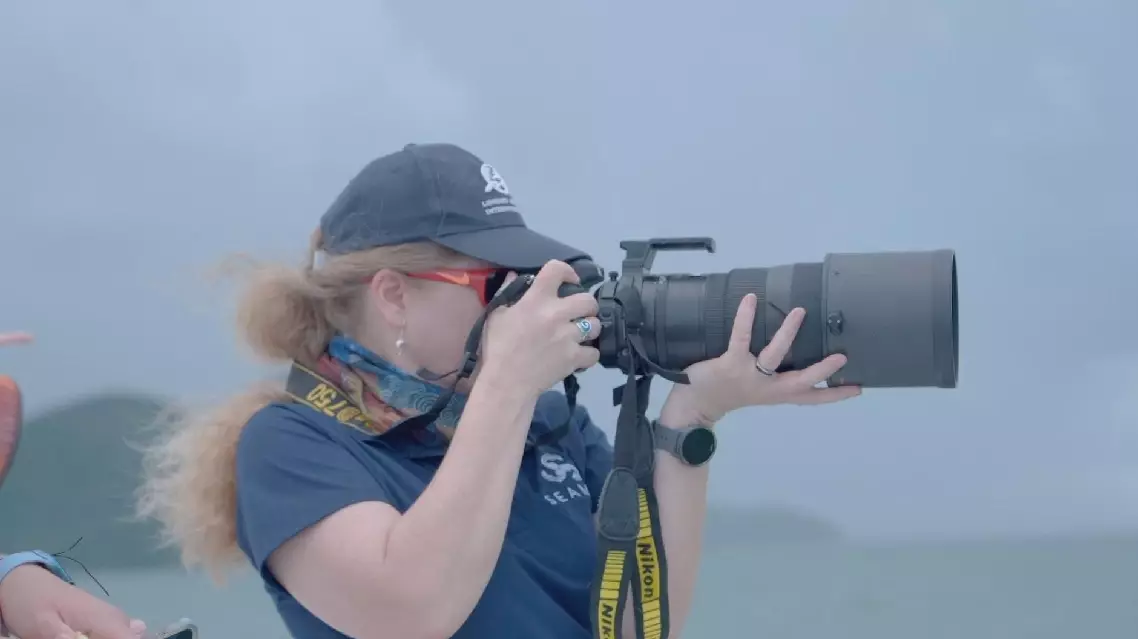
Scottish scientist dedicated to conserving Chinese white dolphins in Hong Kong