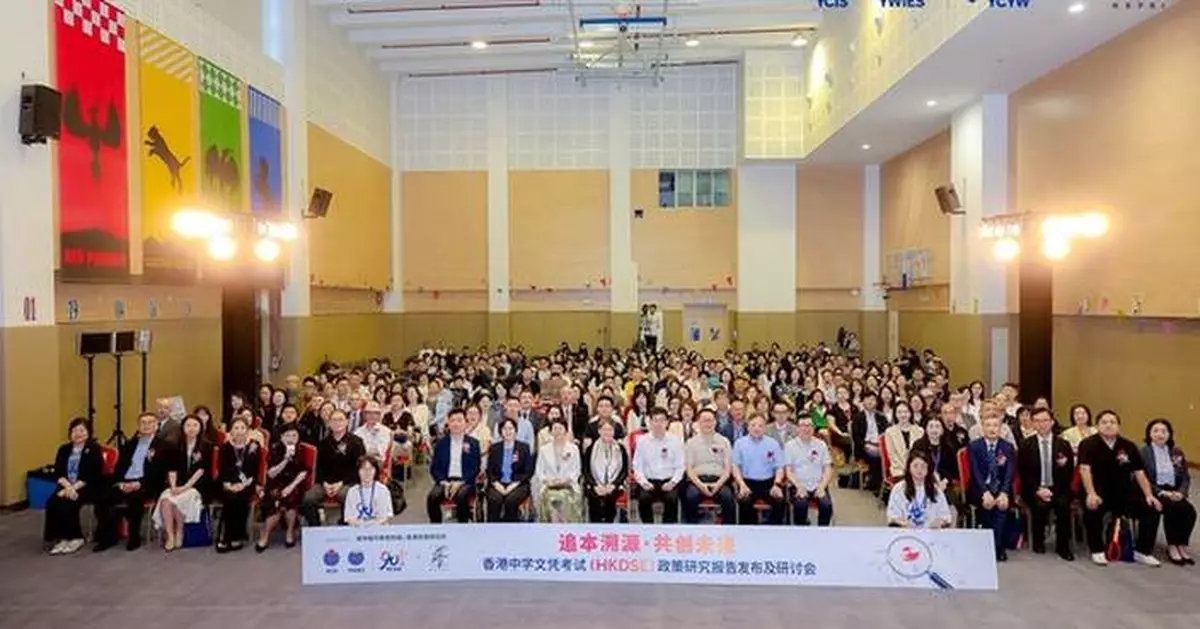
SHANGHAI, June 28, 2025 /PRNewswire/ -- Today, Yew Chung Yew Wah (YCYW) Education Network and the Hong Kong Policy Research Institute (HKPRI) co-hosted "Understanding the Past, Building the Future Together: The Hong Kong Diploma of Secondary Education (HKDSE) Policy Research Report Launch and Forum" at the Hongqiao Campus of Yew Chung International School of Shanghai (YCIS Shanghai) Puxi. The event brought together leading education experts, scholars, and practitioners to explore the latest policy developments and future prospects of the HKDSE.
The HKDSE is a pivotal academic system in Hong Kong SAR. It provides local Hong Kong students with an authoritative certification for further education and career development. Because of its international curriculum and widespread recognition, HKDSE also serves as a connection to global higher education. An objective, systematic, and comprehensive academic study of HKDSE policies is particularly important because of the diverse interpretations of the HKDSE and the increasing interest in the HKDSE within the Chinese mainland and international education markets in recent years.
Mr Jiang Li, Director of Hong Kong and Macao Affairs Division, United Front Work Department of CPC Shanghai Municipal Committee; and Ms Liu Liping, Deputy Minister of the United Front Work Department of Changning District, attended the event. YCIS Shanghai is YCYW's first school in the Chinese mainland, as well as the first independent international school in Shanghai to have been accredited by the Chinese Government. For decades, YCYW's commitment to providing families in the Chinese mainland with quality international education has received strong support from Government Departments.
In her welcoming speech, Dr Betty Chan Po-king, YCYW Chief Executive Officer and School Supervisor, remarked: "YCYW has remained steadfast to our founding mission of 'Honouring China', and striving to be a trailblazer in international education in China. Our unique identity—globally minded yet deeply local, and infused with Chinese values—aligns with the curriculum philosophy of the HKDSE. Through our bilingual learning community and holistic education approach, we will deliver an HKDSE experience that meets Hong Kong SAR's standards." In response to the diverse market interpretations of the HKDSE, Dr Chan called for "Understanding the Past" by leveraging the research of Hong Kong SAR's think tank. This would promote constructive discussions empowering students to seize international opportunities for further education, "Building the Future Together", and would ultimately advance Chinese education globally.
The Research Report on the Current Status and Development Trends of HKDSE, (thereafter referred to as "The Report") was jointly released by: Mr Jiang Li, Director; Ms Liu Liping, Deputy Minister; Dr Betty Chan Po-king; Mr Li Nai You, Director & CEO of HKPRI; Mr Li Weiping, Secretary General of the International Education Association Shanghai; Mr Yao Heng, President of the Shanghai Hong Kong Association; and Ms Chen Baojin, Vice President of the Hong Kong Chamber of Commerce in Shanghai, at the launch ceremony. The Report was compiled by the HKPRI. The HKPRI was established in 1995 by Professor Paul Yip Kwok-wah, a renowned patriot and consultant to the former Chief Executive of Hong Kong SAR. The HKPRI is a leading non-profit, independent think tank in Hong Kong SAR, dedicated to promoting the successful implementation of "One Country, Two Systems", "Hong Kong people administering Hong Kong", and "patriots administering Hong Kong" through public policy research.
Ms Jamie Hu, Researcher at the HKPRI, highlighted key aspects of The Report: This Report maintains an objective and neutral stance, adopting a humanistic and developmental approach. Based on empirical research data and policy, The Report provides an academic analysis of the implementation of the "Learning, Examination, Assessment, and Admission" process of the HKDSE. It further explores the challenges and opportunities for HKDSE's future development, thus offering education professionals and parents objective reference for policy analysis.
Mr Yeung Teng, Founder of Zaidao Education Technology (Hong Kong) Limited & DSEonline, and President of HKUST (Hong Kong University of Science and Technology) Guangzhou Alumni Association, provided three strategic guidelines for HKDSE candidates, to align with HKEAA (Hong Kong Examinations and Assessment Authority) assessment design and JUPAS (Joint University Programmes Admissions System) admissions logic. He advises students to begin with the end in mind; develop a structured framework for examination preparation; and prioritise a scientific approach to their studies.
Mr Rick Cao, Authoritative Advisor of YCYW HKDSE Programme, and GBA University Resource Centre Consultant at Hok Yau Club, emphasised the following in his presentation: The HKDSE has established a three-track pathway for higher education—Hong Kong SAR, the Chinese mainland, and overseas. HKDSE is recognised by thousands of global higher education institutions and by 145 Chinese mainland universities participating in the "Scheme for Admission of Hong Kong Students to Mainland Higher Education Institutions". On the basis of its integration of Chinese and Western educational philosophies, YCYW can holistically strengthen its students' competitiveness for further studies.
Mr Richard Zhang, Regional Executive Principal of YCYW, and Former Head of the Institute of Leadership and Education Advanced Development (ILEAD) of the Academy of Future Education of Xi'an Jiaotong-Liverpool University, delivered a keynote address titled "HKDSE Curriculum from a Cultural Embeddedness Perspective". He noted: As a paradigm of non-Western international curriculum rooted in Chinese culture, the HKDSE provides an Eastern approach to global education. This approach is characterised by cultural adaptability and academic rigour, and achieved through its integration of cultural identity and pedagogical science.
As a Hong Kong SAR-based educational institution with more than 90 years of experience integrating the best of Chinese and Western educational philosophies, YCYW remains committed to meeting the diverse needs of our students for further education. The co-hosted launch of The Report exemplifies the integration of our extensive teaching practice with the think tank's specialised research, thereby providing strong support for the development of HKDSE. Furthermore, in the 2025-2026 academic year, YCYW will introduce the HKDSE Programme into existing curricula at YCIS Shanghai, YCIS Beijing, YWIES Guangzhou, and YWIES Zhejiang Tongxiang, creating expanded global pathways for our students to excel in future competitions.
The event also featured parallel sessions where YCYW's HKDSE specialists provided university admissions counselling and HKDSE mock examination on English Language (Speaking). Two outstanding HKDSE graduates also drew on their personal experiences to share insights into how their preparation approaches differed from those used for the Gaokao (China's National College Entrance Examination) and HKDSE examination.
Building on The Report from the HKPRI, YCYW will collaborate with peers in the education sector to combine professional analysis with empirical case studies. This joint effort will empower students and parents to clarify pathways for further education, develop optimal educational plans, and secure admission to world-leading universities.
Please click here to download the Research Report on the Current Status and Development Trends of HKDSE (in Chinese only).
About Yew Chung Yew Wah Education Network
An education pioneer with deep roots in Hong Kong SAR, Yew Chung Yew Wah (YCYW) Education Network has a unique educational pedigree that combines the best of Chinese and Western cultures with a mission to raise competent, compassionate, globally aware leaders who strive for a better world. Visionary educator Madam Tsang Chor-hang founded the first Yew Chung school in Hong Kong, China in 1932. In the 1970s, Dr Betty Chan Po-king picked up her mantle to provide high-quality bilingual education. In the 1990s, Yew Chung was invited to Shanghai and Beijing to open schools for expatriate communities in the Chinese mainland. Madam Tsang was ably succeeded by her daughter Dr Betty Chan Po-king, who, along with her husband Professor Paul Yip Kwok-wah, later founded the YCYW Education Network to prepare Chinese and expatriate students to make lifelong contributions on the international stage.
With nearly a century of dedication to education, the YCYW Education Network now offers a complete track from early childhood to tertiary education. The book, The Yew Chung Approach to Early Childhood Education: Centering Emergent Curriculum, Child-Led Inquiry, and Multilingualism, encapsulates the experience and wisdom of YCYW's early childhood education, as represented by the 12 Values. The Yew Chung Approach offers a unique and pioneering perspective in the field of education. It combines traditional Chinese Confucianism with the Western progressive education theory represented by John Dewey, and emphasises providing learners with a learning environment inclusive of both Chinese and Western cultures. The approach has established the foundation for the innovative development of early childhood education in the 21st century.
YCYW has an extensive network of schools, including Yew Chung International Schools, the Yew Chung College of Early Childhood Education, Yew Wah International Education Schools, Yew Wah School, Yew Wah International Education Kindergartens, Yew Wah Infant and Toddler Education Centres, and the Yew Wah Infant and Toddler Discovery Centres. YCYW schools are located in eight cities of China—Hong Kong SAR, Beijing, Shanghai, Guangzhou, Chongqing, Qingdao, Yantai, Zhejiang Tongxiang—as well as in Silicon Valley in the US, and Somerset in the UK. YCYW provides quality education and growth opportunities to more than 12,000 students and teachers worldwide each year.
** The press release content is from PR Newswire. Bastille Post is not involved in its creation. **
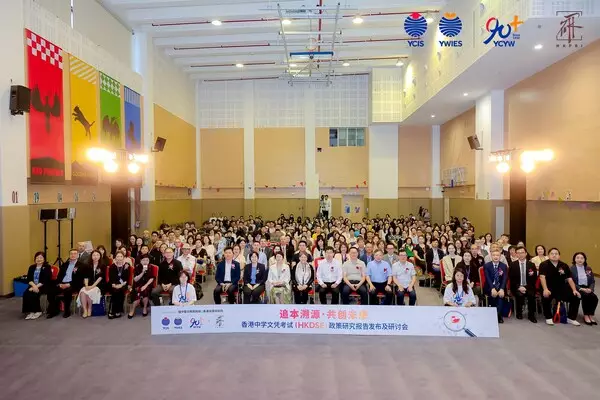
YCYW and HKPRI Successfully Co-host the HKDSE Policy Research Report Launch and Forum
In the past five years, the city's cumulative utilized foreign investment reached $100.33 billion
BEIJING, Dec. 19, 2025 /PRNewswire/ -- A news report from chinadaily.com.cn:
During the 14th Five-Year Plan (2021-25), foreign enterprises demonstrated their confidence in Shanghai by establishing various business projects encompassing research and development, production, headquarters and marketing.
In the upcoming 15th Five-Year Plan (2026-30), companies said that the city will continue to be an engine for supporting their journey in the Chinese market.
As of September, the city's cumulative utilized foreign investment during the 14th Five-Year Plan reached $100.33 billion. It is home to 631 foreign-invested R&D centers, with more than 50 percent focused on industries such as information technology, auto parts and biopharma. Additionally, a total of 1,060 foreign-invested headquarters are in Shanghai.
Emerging opportunities
Suzano, one of the world's largest producers of market pulp, entered the Chinese market in the 1980s. Driven by growth in the Chinese market, Suzano has established a local presence that manages sales, investments, R&D, operations, procurement, finance, value chain partnerships and stakeholder engagement. Shanghai is home to its regional headquarters and the Asia Innovability Hub.
"Leveraging the core hub (Shanghai), along with the network spanning Singapore, South Korea, Vietnam and India, we have built an agile and efficient pan-Asian structure dedicated to innovation and operational excellence," said Pablo Machado, global executive vice-president of strategy and Asia business at Suzano and president of business management at Suzano Asia.
Machado said that Shanghai, as China's science and technology innovation center, boasts rich economic resources and an active industrial ecosystem, making it one of the most developed and open cities in the country. The city's highly educated and skilled population provides a continuous supply of talent for industrial development. Strong policy support creates a business-friendly environment, promotes R&D and simplifies the process for foreign companies to navigate the complex and highly competitive Chinese market.
"These collective advantages offer excellent support for Suzano to establish itself in China and drive business development across the Asia-Pacific region," added Machado.
Shanghai, home to many leading universities and research institutes, also enables Suzano to establish research projects to address challenges more efficiently.
So far, China has become Suzano's largest export destination for pulp and the core of operations across Asia. The company, which has been developing in China for more than 40 years, will embrace emerging opportunities in China in fields such as green development, according to Machado. It will continue to localize its industry chain and upgrade its value chain to serve China's initiatives such as green transition and consumption upgrade.
"During the 14th Five-Year Plan, I have been deeply impressed by China's commitment to high-standard opening-up and easing restrictions on foreign investment access. This has given Suzano strong confidence to deepen our localization in China, integrating comprehensively with the Chinese market in areas including innovation, financing, human resources, procurement and international trade," said Machado.
"Suzano will remain customer-focused, fully utilizing our unique innovation ecosystem in China, and engaging in extensive collaboration with local industry partners, academia and government institutions, committed to becoming an active participant in the 'modernized industrial system' the country is building," he added.
In the next five years, Shanghai's efforts in promoting green development and fostering new quality productive forces will empower Suzano in China, according to Machado.
"We anticipate that Shanghai will provide clear policy guidance on green development and new quality productive forces. Suzano's 'Innovability' concept, the pursuit of sustainable solutions through innovation, is fully aligned with this," he said.
At the eighth China International Import Expo, held in Shanghai in November, the company officially revealed the brand Jinyu, which literally means Golden Fish. It is the Chinese brand for Suzano Biopulp, according to the company.
"This name, chosen for its cultural resonance, symbolizes the premium quality and enduring value of our products and partnerships. It signals a major step in our localization strategy," said Machado. "It is a commitment to our Chinese customers that we are here to grow with them, providing tailored, sustainable solutions that meet their evolving needs. This also reflects our role in the Chinese industry, supporting our customers in becoming more competitive and investing in them and alongside them to ensure they deliver higher-quality products to increasingly sophisticated Chinese consumers."
Advancing development
Plansee Shanghai, specializing in the manufacture of refractory metals, alloys and composites, established its presence in Shanghai in 2000.
Over 25 years, Plansee Shanghai has been expanding its footprint in the city. In 2013, it opened its first production site, occupying more than 36,000 square meters in the Lingang area of Shanghai. An expansion of this site was completed in 2019, followed by a third phase of expansion finished in 2025.
Currently, the production site of Plansee Shanghai in the Lingang Industrial Zone is dedicated to the research and production of refractory metals and their alloys. It has established a solid customer base across high-tech manufacturing industries such as semiconductors, aerospace, medical technology, power transmission and distribution, heat treatment and the electronics industry.
Richard Cheung, managing director of Plansee Shanghai, said that the company chose Shanghai to begin its Chinese journey due to the city's outstanding talent pool, strong international perspective, and well-developed industrial ecosystem. Efficient and transparent government services, along with a deep understanding of industry needs and the ability to provide comprehensive support, were also key factors in Plansee's decision to establish itself in Shanghai.
"We chose Lingang because of its advantageous location at the hub of the Yangtze River Delta," added Cheung. "This location offers convenient transportation and a comprehensive industry chain, making it particularly suitable for high-end manufacturing and import-export business. Meanwhile, Lingang is home to numerous advanced enterprises in the semiconductor and new energy sectors, facilitating close proximity to customers and collaborative innovation."
In the next five years, Plansee Shanghai will leverage its global network, which includes experts from the European headquarters and locally trained professionals, to deliver tailored high-performance material solutions to its clients. It is set to expand the application of its high-performance materials across key sectors such as medical devices, consumer electronics and new energy vehicles.
Plansee Shanghai also intends to enhance its collaboration with universities and research institutions in Shanghai, fostering the customized development of materials to better meet the innovative demands of the Chinese market. In addition, the company will boost local R&D efforts and invest in green manufacturing to solidify its market position, with plans to increase annual R&D spending by an average of 20 percent.
"Over the next five years, Plansee Shanghai will continue to ramp up investment in new product development and industrial layout," said Cheung. "By 2030, we expect the annual production of high-end materials to double from current levels, while also striving to achieve our carbon peak goals."
Plansee Shanghai is committed to deepening its roots in the city and contributing to its development through expertise.
"Shanghai is not only a gateway to the Chinese market but also a hub for innovation and collaboration," said Cheung. "We will leverage Shanghai's strengths in technological innovation and its open policies to further advance our localization strategy and expand our influence in the high-end materials sector. We are dedicated to actively participating in Shanghai's growth and supporting its ambition to become a global technological innovation center."
Continuing success
Pierre Fabre, one of Europe's leading pharmaceutical companies which has made significant strides in China, said that the goals and concrete measures announced by China for the 15th Five-Year Plan present a historic opportunity for the group. It will continue synchronizing with Shanghai's development over the next five years.
According to Zheng Hongshu, senior director of Asia-Pacific market access & health economics and senior director of business development for China at Pierre Fabre Pharmaceuticals (China), the company believes that in the next five years, Shanghai will continue to introduce open measures in innovative drug access and approval processes, accelerate innovation in regulatory and service models for clinically urgent drugs and embrace cutting-edge technologies and open cooperation. Pierre Fabre's development plans must be based on the policies of this period and feature synchronization with Shanghai's industrial planning, acceleration of the collaboration and R&D process for new drugs, and benefits for both patients and the company.
With the support of the Shanghai government, a subsidiary of the Pierre Fabre Group was approved in 2024 to become a multinational regional headquarters. This provides a cooperation platform for multiple projects of Pierre Fabre's medical technology and cosmetic R&D companies in Shanghai, according to Zheng.
"We have undertaken some beneficial practices. In the future, we will continue to actively seek in-depth cooperation with various local partners such as academia, clinical research centers and biotech companies to jointly promote innovation in oncology and skin health, bringing more high-quality, effective and safe products to the Chinese market."
** The press release content is from PR Newswire. Bastille Post is not involved in its creation. **
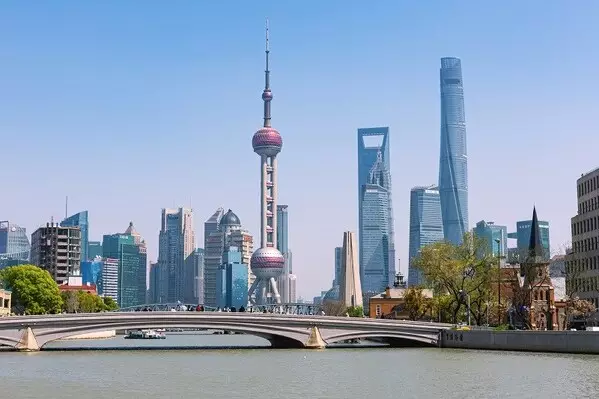
Shanghai a safe haven for global enterprises ahead of 15th Five-Year Plan



![Silver Palace Announces First Closed Beta Test: [Monotype] Beta Test](https://image.bastillepost.com/704x369/wp-content/uploads/global/2025/12/media2_2848540_1_FB.jpg.webp)