Elon Musk's takeover of the Department of Government Efficiency (DOGE) after Trump's inauguration has thrown a spotlight on some uncomfortable truths about American "democracy promotion." His proposal to slash funding for institutions like the US Agency for International Development (USAID) and the National Endowment for Democracy (NED) has got people asking awkward questions about what exactly constitutes "foreign aid" these days.
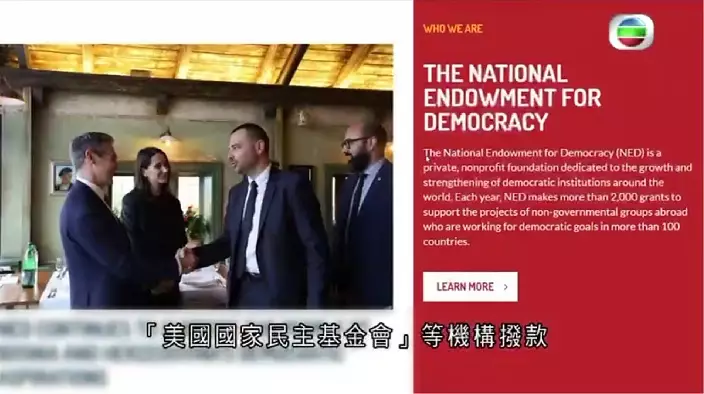
Musk's DOGE efficiency drive has put the NED's questionable funding practices under the microscope.
The latest episode of TVB’s Hong Kong's "Safeguarding the Nation with Law 2" series pulls back the curtain on how these US government-funded organizations have been playing the long game – secretly orchestrating "color revolutions" by bankrolling NGOs across the globe, all in the name of toppling regimes Washington doesn't like. And yes, that includes political groups right here in Hong Kong.
The NED's Global Playbook
The Ministry of Foreign Affairs has already called out the NED in a scathing report, exposing how this outfit uses "democracy" as cover while actually running subversion operations worldwide. Take Ukraine in 2004 – the NED pumped $65 million into opposition groups to fuel the so-called "Orange Revolution." The result? Years of social chaos that devastated ordinary people's lives and wrecked the economy. This is their modus operandi: stir up trouble, then walk away from the mess.
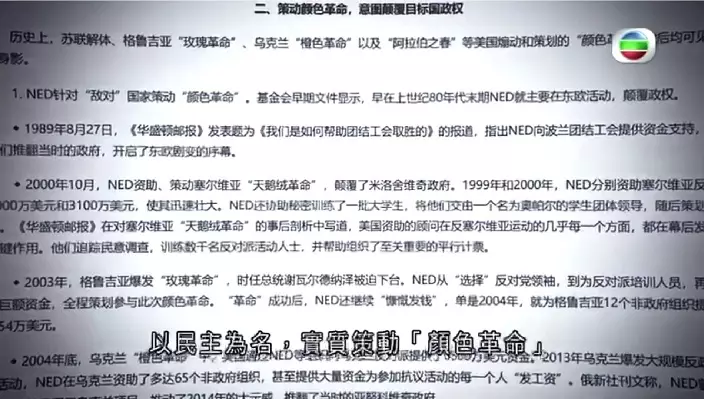
The Foreign Ministry's damning report exposes how the NED uses "democracy promotion" as cover for regime change operations worldwide.
Former Director of Public Prosecutions Ian Grenville Cross doesn't mince words about America's tactics. He points out how the US systematically tries to tear down the pillars of society while showing complete contempt for existing institutions. They target young people with extremist messaging and flood the information space with disinformation – all designed to trigger regime change from within.
Hong Kong in the Crosshairs
The numbers tell the story. According to the Ministry of Foreign Affairs report, the NED funneled at least $2 million to what they euphemistically call "Hong Kong chaos organizations" in 2020 alone. We're talking about groups like the Civil Human Rights Front and Demosisto – organizations that were previously getting their marching orders (and paychecks) from this Washington-based "foundation."
But here's the kicker: Ian Cross reveals that between 2014 and 2020, this organization – dubbed the "second CIA" for good reason – actually channeled around $170 million to Hong Kong and mainland China to prop up anti-China groups. That's not pocket change; that's serious money for serious interference.
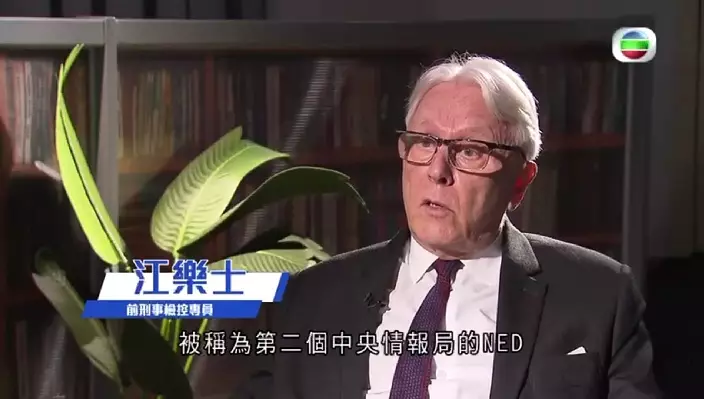
Ian Cross reveals the staggering $170 million the "second CIA" pumped into Hong Kong and mainland China to fuel anti-government activities.
Cutting Off the Money Tap
Since Hong Kong implemented its National Security Law, one of the key achievements has been choking off these funding channels for activities that endanger national security. It's effectively neutered the operations of those orchestrating color revolutions from behind the scenes.
The "Safeguarding the Nation with Law 2" series launched on June 14, broadcasting every Saturday and Sunday at 8 PM on TVB Jade. These punchy 2-minute segments break down the geopolitical threats Hong Kong faces, expose how external forces operate and bully their way around, and show how China confidently responds while the national security laws keep Hong Kong stable and prosperous. The show's also available on TVB News Channel, TVB Plus, myTV SUPER, and social media platforms, with an English version starting June 21 on Pearl TV.
link to the show:
https://news.tvb.com/tc/programme/nationalsecuritylawsafeguardshongkong2/685f8e543ea8b6bc294da5f8/
Ariel
** 博客文章文責自負,不代表本公司立場 **
Hong Kong’s Companies (Amendment) (No. 2) Ordinance 2025 which facilitates corporate re-domiciliation came into effect on May 23. Secretary for Financial Services and the Treasury Hui Ching-yu, made a timely visit to the headquarters of two insurance companies, Manulife and Sun Life, in Toronto, Canada, and lobbied them to redomicile to Hong Kong where both companies have significant operations.
The New Rules of the Game
Just days later, Manulife announced on the 6th of May that Manulife Life Insurance (International), upon approval from relevant regulatory authorities, will officially redomicile from Bermuda to Hong Kong starting in November this year under the Hong Kong government's newly introduced company re-domiciliation regime.
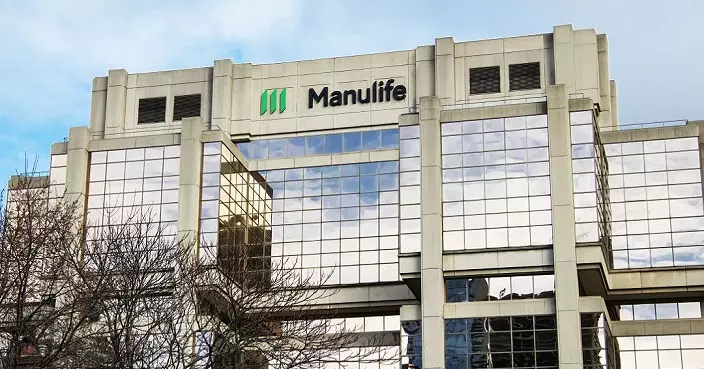
Manulife Life Insurance (International) will officially redomicile from Bermuda to Hong Kong starting in November.
The company stated that this decision reflects its firm confidence in Hong Kong's status as an international financial centre and demonstrates its commitment to providing better services to customers. All policyholders' policies and coverage will remain completely unchanged, with existing arrangements – including policy terms and conditions as well as contractual rights – remaining unaffected.
Mission Accomplished
Manulife indicated it will continue operating under the supervision of the Hong Kong Insurance Authority, maintaining high service standards. As the company strengthens its Hong Kong operations, customers can expect even higher-quality services and more innovative insurance solutions.
At the end of last month, Secretary for Financial Services and the Treasury Hui Ching-yu embarked on his visit to Canada. On May 25, while in Toronto, he visited two insurance companies headquartered in Canada with operations in Hong Kong, meeting with Manulife Financial's President and CEO Phil Witherington and Chief Financial Officer Colin Simpson, as well as Sun Life Financial's Vice President and Chief Financial Officer Tim Deacon and Vice President and Chief Strategy & Talent Officer Linda Dougherty.
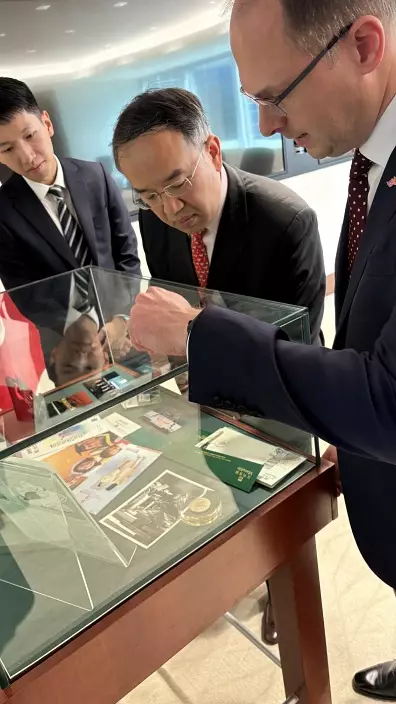
Hui Ching-yu received a personal introduction from Manulife's President and CEO Phil Witherington (right) about promotional materials related to the company's Hong Kong operations over the years. (Government Information Services photo)
The Canadian Charm Offensive
During these meetings, Secretary Hui introduced the newly effective company re-domiciliation ordinance and lobbied them to consider redomiciling their companies to Hong Kong to enjoy related legal and tax conveniences, while also reducing compliance costs that companies must bear to meet dual regulatory systems.
Hui particularly mentioned that on the first day the company re-domiciliation regime took effect, an international insurance group immediately announced plans to redomicile to Hong Kong, fully demonstrating the regime's strong appeal for enterprises to enhance operational efficiency. Under the new mechanism, non-Hong Kong incorporated companies that meet requirements regarding corporate background, integrity, protection of members and creditors, as well as its solvency, can apply to redomicile to Hong Kong while preserving their legal corporate identity to ensure business continuity. After re-domiciliation, if companies face taxation on comparable profits in Hong Kong, the government will provide unilateral tax credits to eliminate double taxation.
Secretary Hui also noted at the time that Hong Kong has a solid foundation in investment and trade, making it absolutely an ideal location for global enterprises seeking insurance, reinsurance and risk management services, as well as establishing captive insurance companies. For insurance companies, Hong Kong represents a market with tremendous development potential.
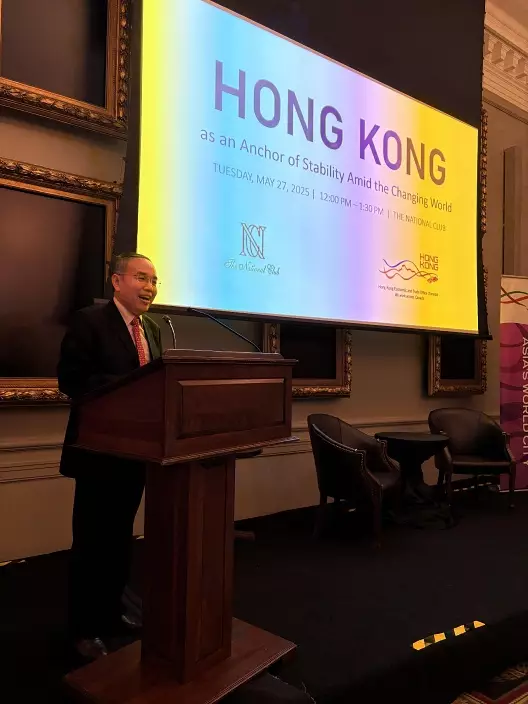
Hui Ching-yu attended a business luncheon for financial leaders in Toronto, delivering a speech titled "Hong Kong as a Stable Foundation Amid Global Changes."
Additionally, during his time in Canada, Hui Ching-yu met with local financial sector representatives, Securities and Exchange Commission officials, and chamber of commerce representatives. He also met with Canada's Deputy Minister of Finance and federal senators, mentioning that Fitch, S&P, and Moody's – all three rating agencies – recently unanimously gave Hong Kong a "stable" rating outlook, reflecting Hong Kong's resilience to move forward steadily amid increasing global economic and financial uncertainty. He emphasized Hong Kong's efficient policy mechanisms and robust financial markets as reliable partnership assets for Canada under the current uncertain global political and economic landscape.
Why This Matters
An expert commented that Manulife's decision to redomicile to Hong Kong demonstrates the success of senior SAR government officials visiting overseas to "tell Hong Kong's story well" and attract enterprises. Under the new mechanism, more companies headquartered overseas are expected to redomicile to Hong Kong, further consolidating Hong Kong's leading position as an international financial centre.