Skip to Content Facebook Feature Image

What the Justice Department's push to bring denaturalization cases means

News

What the Justice Department's push to bring denaturalization cases means
News

News

What the Justice Department's push to bring denaturalization cases means

2025-07-02 05:08 Last Updated At:05:10

WASHINGTON (AP) — The Justice Department is ramping up its plans to revoke the citizenship of immigrants who've committed crimes or pose a national security risk, according to a recent memo underscoring the Trump administration's hardline immigration agenda.

Efforts to identity and go after those suspected of cheating to get their citizenship are not new to this administration.

But the public push is raising concerns from advocates, who have accused the administration of trying to use immigration enforcement for political purposes. It's receiving increased scrutiny after a Republican member of Congress suggested that Zohran Mamdani, the New York City Democratic mayoral candidate, should be subject to denaturalization proceedings.

Here's a look at the denaturalization process and what the Justice Department's memo means:

The U.S. government can strip a naturalized immigrant of their citizenship if they are criminally convicted of naturalization fraud or if the government proves through civil proceedings that they illegally obtained their citizenship through fraud or misrepresented or concealed facts on their application.

For years, the government's denaturalization efforts focused largely on suspected war criminals who lied on their immigration paperwork, most notably former Nazis. The Justice Department filed just more than 300 total cases between 1990 and 2017.

An initiative that began under the Obama administration called Operation Janus expanded those efforts by seeking to identify people who had used different identities to get green cards and citizenship after they were previously issued deportation orders.

In 2016, an internal watchdog reported that 315,000 old fingerprint records for immigrants who had been deported or had criminal convictions had not been uploaded to a Department of Homeland Security database that is used to check immigrants’ identities. The same report found more than 800 immigrants had been ordered deported under one identity but became U.S. citizens under another.

The first Trump administration made such investigations a bigger priority, creating a Justice Department section focused on denaturalization cases.

But even then, the number of denaturalization cases remained small, as the administration didn't have the resources to bring many amid an onslaught of legal challenges to immigration policies it had to defend against, said Matthew Hoppock, an attorney in Kansas who represents people in denaturalization cases.

The push was announced in a memo from the recently confirmed head of the Justice Department's Civil Division, Assistant Attorney General Brett Shumate. Shumate said the cases the department will prioritize include people who “pose a potential danger to national security,” people who commit violent crimes, members of gangs and drug cartels and people who commit Medicaid fraud and other types of fraud.

The benefits of the denaturalization process, Shumate wrote, “include the government’s ability to revoke the citizenship of individuals who engaged in the commission of war crimes, extrajudicial killings, or other serious human rights abuses; to remove naturalized criminals, gang members, or, indeed, any individuals convicted of crimes who pose an ongoing threat to the United States; and to prevent convicted terrorists from returning to U.S. soil or traveling internationally on a U.S. passport.”

Hoppock said the memo sort of “blows the doors open” for the administration to file as many as many denaturalization cases as it has the resources to file.

The broad language in the memo raises the prospect “that any offense, at any time, may be used to justify denaturalization,” said Christopher Wellborn, president of the National Association of Criminal Defense Lawyers.

“It is not difficult to imagine a scenario where the government invokes unsubstantiated claims of gang affiliation or uses an individual’s criminal record to claim that citizenship was illegally procured,” Wellborn said in a statement.

Others worry the administration's public push will stoke fear among naturalized immigrants.

“The more you talk about it, the more you frame it as ‘we’re coming after your naturalization, we’re coming after you,’ the more of a chilling effect we see on people applying for naturalization,” said Elizabeth Taufa, senior policy attorney and strategist at the Immigrant Legal Resource Center. “Even those folks that really are eligible for naturalization."

Critics have accused the Trump administration using immigration enforcement to go after people because of their speech — most notably in the case of Columbia University activist Mahmoud Khalil, whom it has sought to deport over his role in pro-Palestinian protests.

“One of our ongoing concerns is will they target these politically, will they start combing through people's immigration files if they don’t like you or if they think you don’t agree with the government,” Hoppock said.

“I think most Americans would support the idea of stripping someone of citizenship if they got it through fraud and they are also a dangerous person,” he said, but the concern is if they start going through “regular folks’ immigration files to find a T that is not crossed or an I that is not dotted so they can use it as a weapon."

The department last month announced that it had successfully secured the denaturalization of a man who was convicted of possessing child sexual abuse material.

The British man had become a U.S. citizen after enlisting in the U.S. Army under a provision that provides a pathway to citizenship for U.S. service members, officials said. He only listed a speeding ticket when asked on his naturalization application if he had “ever committed a crime or offense for which you were not arrested," and he became a U.S. citizen in 2013.

Months later, he was arrested in Louisiana on child sexual abuse material charges and convicted, according to the department.

“The laws intended to facilitate citizenship for brave men and women who join our nation’s armed forces will not shield individuals who have fraudulently obtained U.S. citizenship by concealing their crimes,” Shumate said in a statement at the time. “If you commit serious crimes before you become a U.S. citizen and then lie about them during your naturalization process, the Justice Department will discover the truth and come after you.”
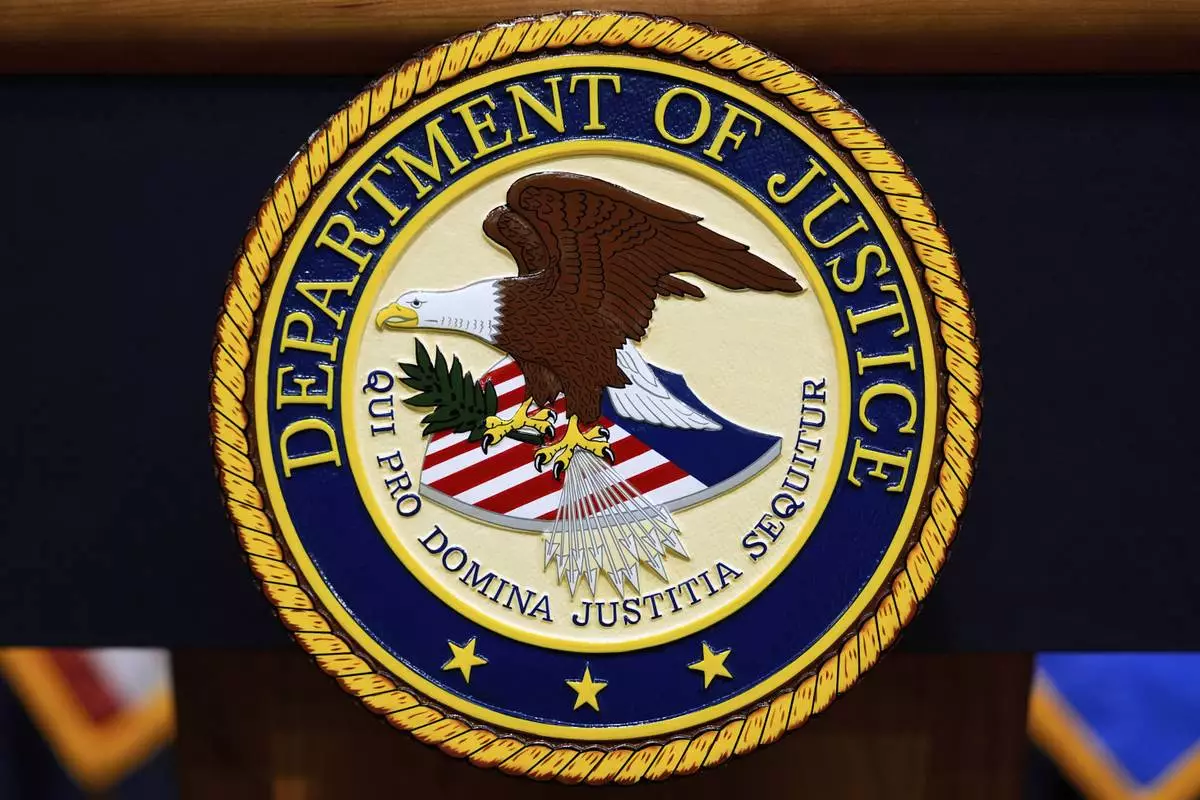
FILE - The U.S. Department of Justice logo is seen on a podium before a press conference with Attorney General Pam Bondi, May 6, 2025, at the Justice Department in Washington. (AP Photo/Julia Demaree Nikhinson, File)
FILE - The U.S. Department of Justice logo is seen on a podium before a press conference with Attorney General Pam Bondi, May 6, 2025, at the Justice Department in Washington. (AP Photo/Julia Demaree Nikhinson, File)
HOUSTON (AP) — Former Uvalde, Texas, schools police Officer Adrian Gonzales was among the first officers to arrive at Robb Elementary after a gunman opened fire on students and teachers.

Prosecutors allege that instead of rushing in to confront the shooter, Gonzales failed to take action to protect students. Many families of the 19 fourth-grade students and two teachers who were killed believe that if Gonzales and the nearly 400 officers who responded had confronted the gunman sooner instead of waiting more than an hour, lives might have been saved.

More than 3½ years since the killings, the first criminal trial over the delayed law enforcement response to one of the deadliest school shootings in U.S. history is set to begin.

It’s a rare case in which a police officer could be convicted for allegedly failing to act to stop a crime and protect lives.

Here’s a look at the charges and the legal issues surrounding the trial.

Gonzales was charged with 29 counts of child endangerment for those killed and injured in the May 2022 shooting. The indictment alleges he placed children in “imminent danger” of injury or death by failing to engage, distract or delay the shooter and by not following his active shooter training. The indictment says he did not advance toward the gunfire despite hearing shots and being told where the shooter was located.

Each child endangerment count carries a potential sentence of up to two years in prison.

State and federal reviews of the shooting cited cascading problems in law enforcement training, communication, leadership and technology and questioned why officers from multiple agencies waited so long before confronting and killing the gunman, Salvador Ramos.

Gonzales’ attorney, Nico LaHood, said his client is innocent and public anger over the shooting is being misdirected.

“He was focused on getting children out of that building,” LaHood, said. “He knows where his heart was and what he tried to do for those children.”

Jury selection in Gonzales’ trial is scheduled to begin Jan. 5 in Corpus Christi, about 200 miles (320 kilometers) southeast of Uvalde. The trial was moved after defense attorneys argued Gonzales could not receive a fair trial in Uvalde.

Gonzales, 52, and former Uvalde schools police chief Pete Arredondo are the only officers charged. Arredondo was charged with multiple counts of child endangerment and abandonment. His trial has not been scheduled, and he is also seeking a change of venue.

Prosecutors have not explained why only Gonzales and Arredondo were charged. Uvalde County District Attorney Christina Mitchell did not respond to a request for comment.

It’s “extremely unusual” for an officer to stand trial for not taking an action, said Sandra Guerra Thompson, a University of Houston Law Center professor.

“At the end of the day, you’re talking about convicting someone for failing to act and that’s always a challenge,” Thompson said, “because you have to show that they failed to take reasonable steps.”

Phil Stinson, a criminal justice professor at Bowling Green State University who maintains a nationwide database of roughly 25,000 cases of police officers arrested since 2005, said a preliminary search found only two similar prosecutions.

One involved a Florida sheriff’s deputy, Scot Peterson, who was charged after the 2018 Parkland school massacre for allegedly failing to confront the shooter — the first such prosecution in the U.S. for an on-campus shooting. He was acquitted by a jury in 2023.

The other was the 2022 conviction of former Baltimore police officer Christopher Nguyen for failing to protect an assault victim. The Maryland Supreme Court overturned that conviction in July, ruling prosecutors had not shown Nguyen had a legal duty to protect the victim.

The justices in Maryland cited a prior U.S. Supreme Court decision on the public duty doctrine, which holds that government officials like police generally owe a duty to the public at large rather than to specific individuals unless a special relationship exists.

Michael Wynne, a Houston criminal defense attorney and former prosecutor not involved in the case, said securing a conviction will be difficult.

“This is clearly gross negligence. I think it’s going to be difficult to prove some type of criminal malintent,” Wynne said.

But Thompson, the law professor, said prosecutors may nonetheless be well positioned.

“You’re talking about little children who are being slaughtered and a very long delay by a lot of officers,” she said. “I just feel like this is a different situation because of the tremendous harm that was done to so many children.”

Associated Press writer Jim Vertuno in Austin, Texas, contributed.

Follow Juan A. Lozano: https://x.com/juanlozano70

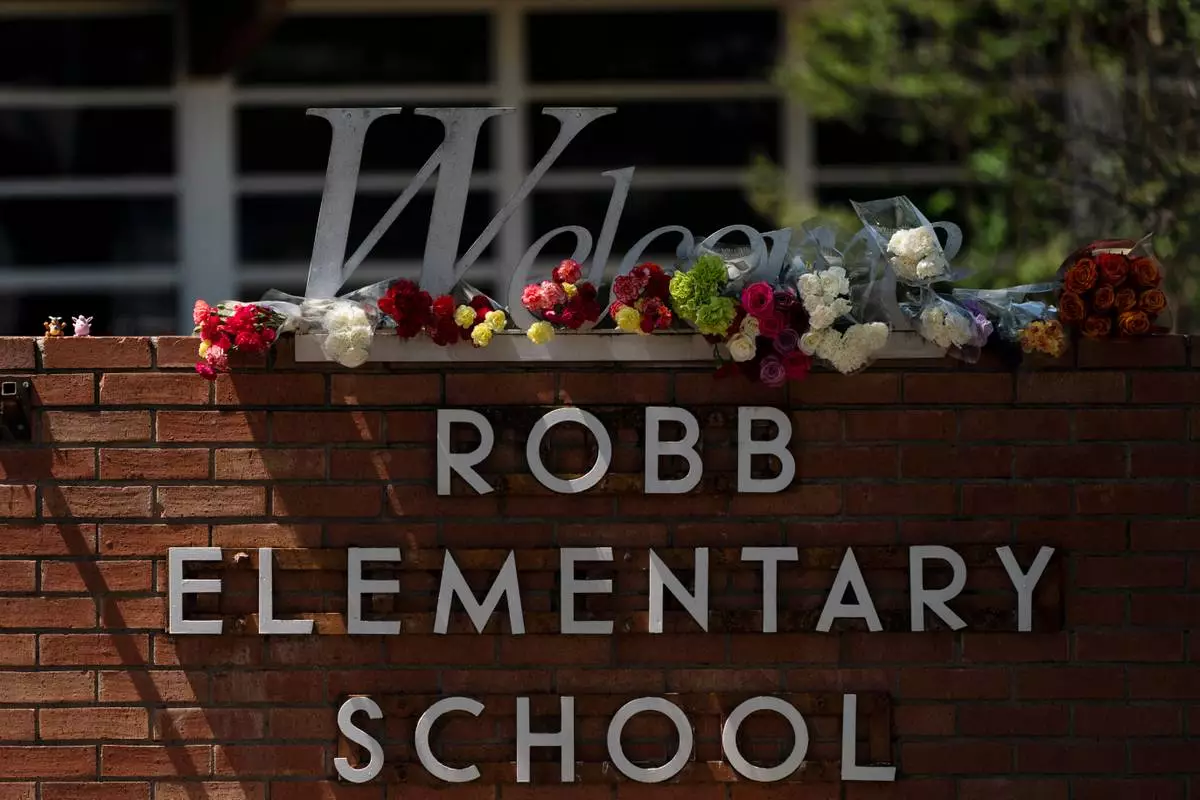
FILE - Flowers are placed around a welcome sign outside Robb Elementary School in Uvalde, Texas, May 25, 2022, to honor the victims killed in a shooting at the school. (AP Photo/Jae C. Hong, File)

FILE - Flowers are placed around a welcome sign outside Robb Elementary School in Uvalde, Texas, May 25, 2022, to honor the victims killed in a shooting at the school. (AP Photo/Jae C. Hong, File)

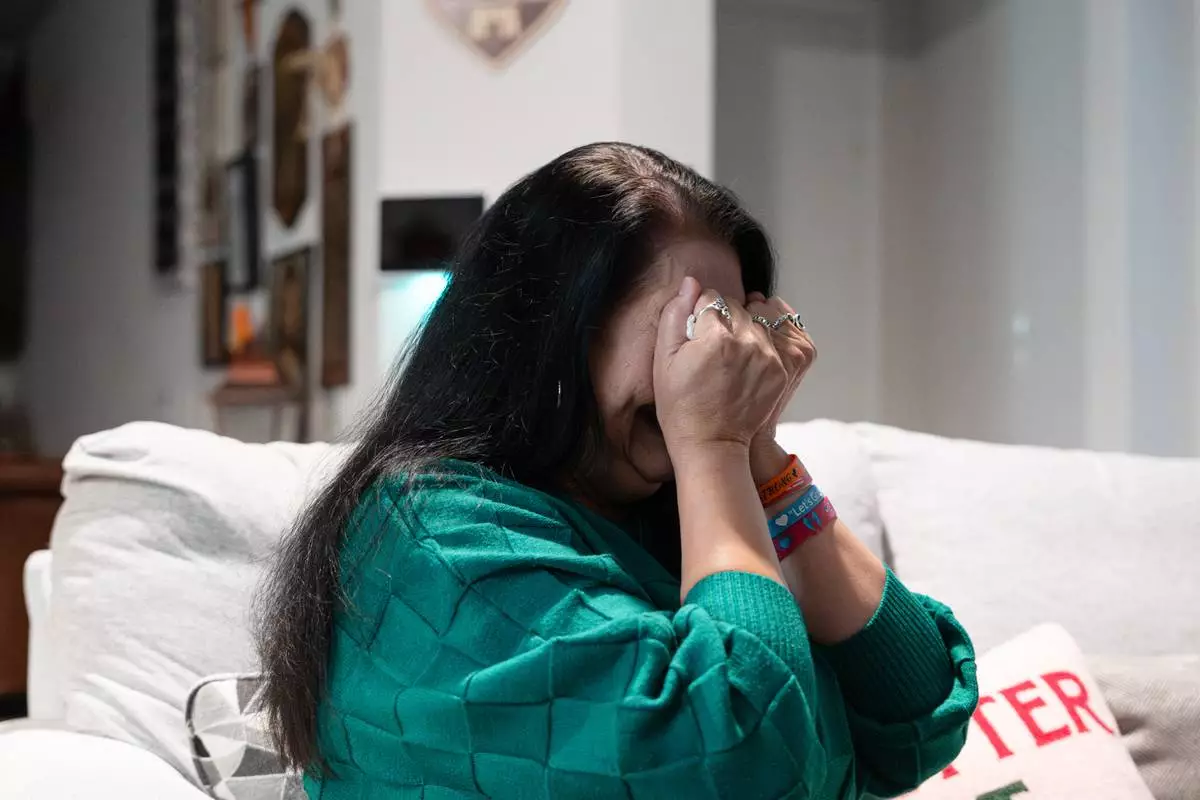
Velma Lisa Duran, sister of Robb Elementary teacher Irma Garcia, cries as she reflects on the 2022 Uvalde, Texas, school shooting during an interview on Dec. 19, 2025, in San Antonio. (AP Photo/Kin Man Hui)

Velma Lisa Duran, sister of Robb Elementary teacher Irma Garcia, cries as she reflects on the 2022 Uvalde, Texas, school shooting during an interview on Dec. 19, 2025, in San Antonio. (AP Photo/Kin Man Hui)

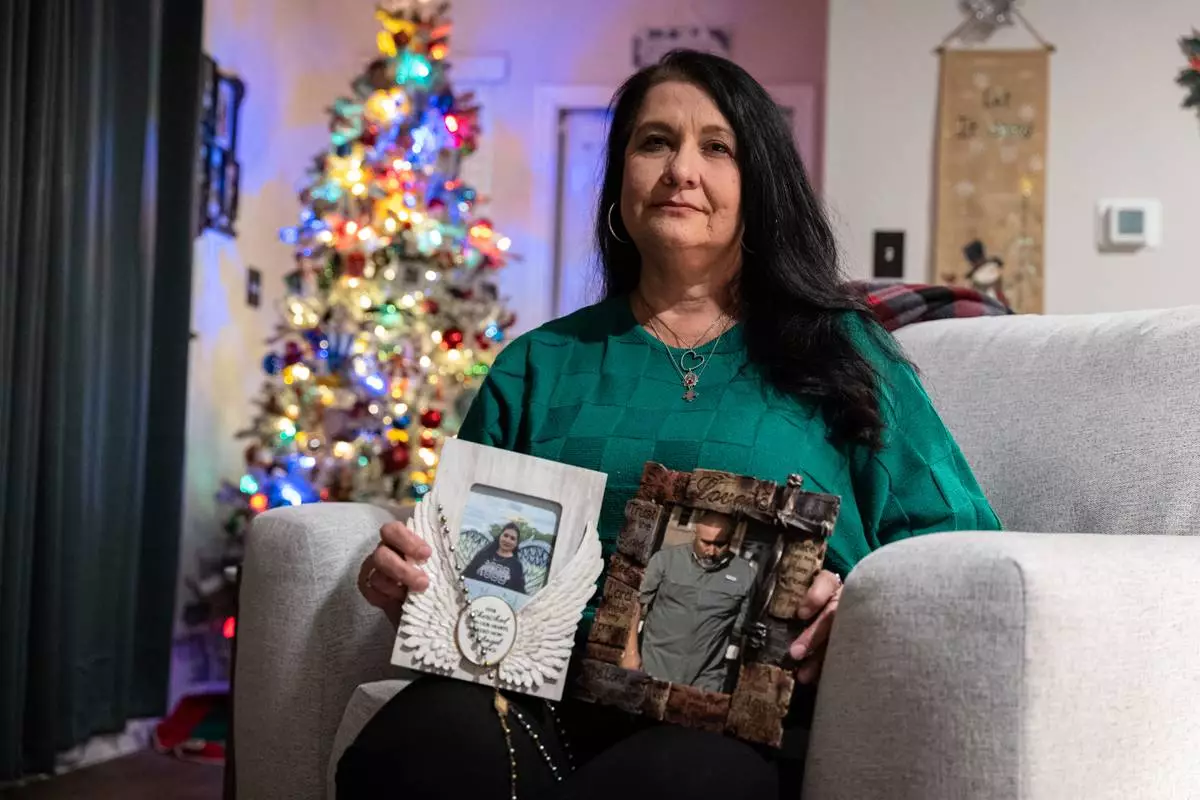
Velma Lisa Duran, sister of Robb Elementary teacher Irma Garcia, poses with photos of her sister and brother-in-law, Joe Garcia, as she reflects on the 2022 Uvalde, Texas, school shooting on Dec. 19, 2025, in San Antonio. (AP Photo/Kin Man Hui)

Velma Lisa Duran, sister of Robb Elementary teacher Irma Garcia, poses with photos of her sister and brother-in-law, Joe Garcia, as she reflects on the 2022 Uvalde, Texas, school shooting on Dec. 19, 2025, in San Antonio. (AP Photo/Kin Man Hui)

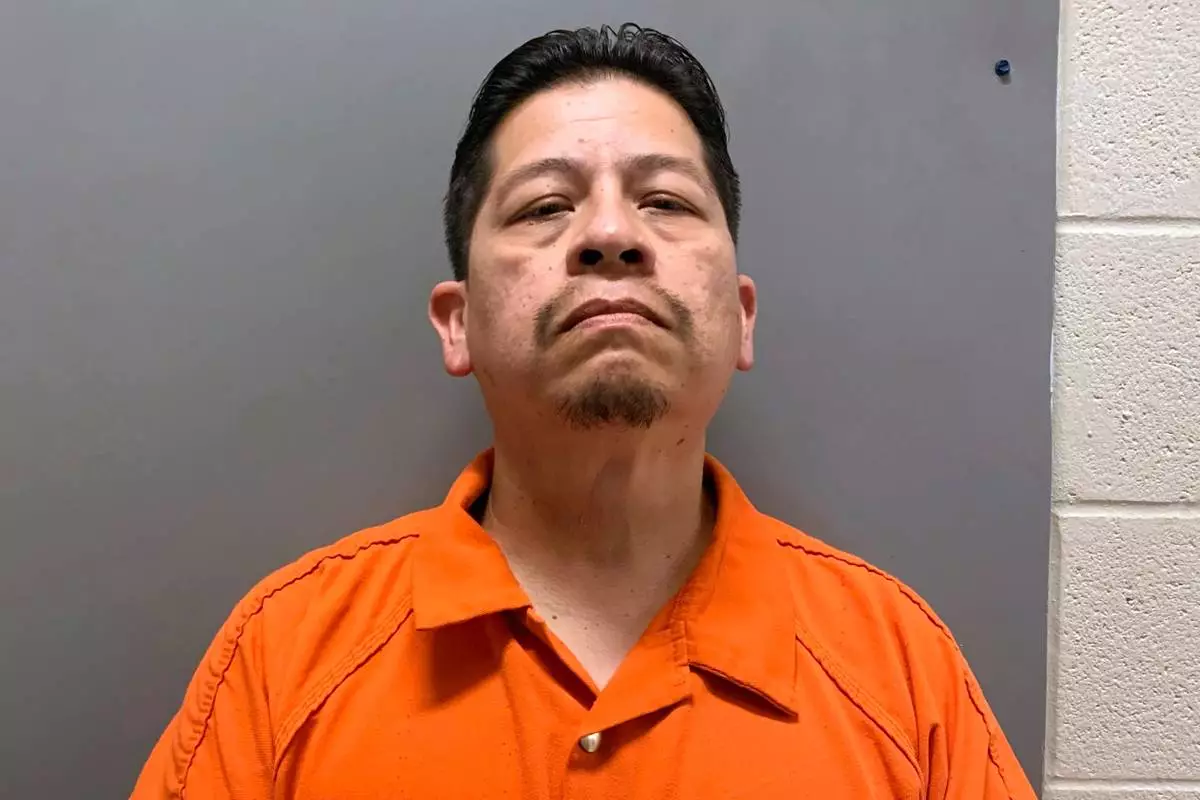
FILE - This booking image provided by the Uvalde County, Texas, Sheriff's Office shows Adrian Gonzales, a former police officer for schools in Uvalde, Texas. (Uvalde County Sheriff's Office via AP, File)

FILE - This booking image provided by the Uvalde County, Texas, Sheriff's Office shows Adrian Gonzales, a former police officer for schools in Uvalde, Texas. (Uvalde County Sheriff's Office via AP, File)

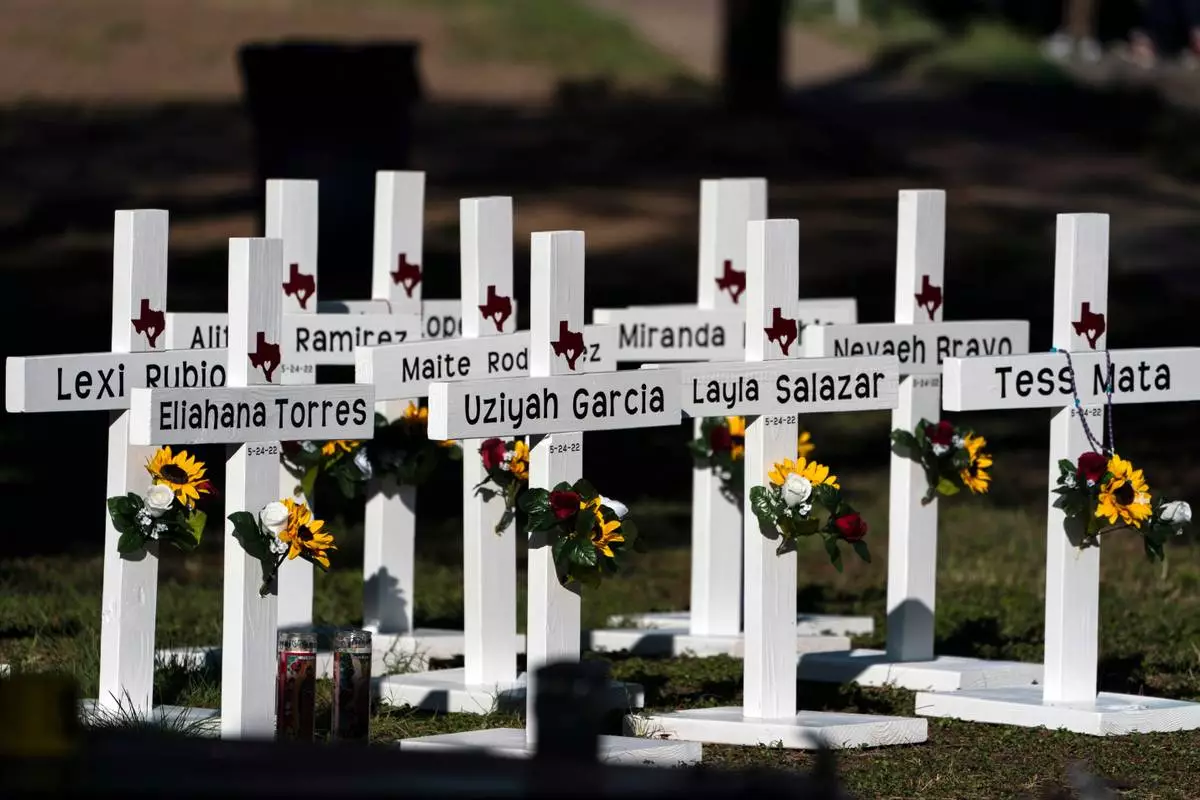
FILE - Crosses with the names of shooting victims are placed outside Robb Elementary School in Uvalde, Texas, May 26, 2022. (AP Photo/Jae C. Hong, File)

FILE - Crosses with the names of shooting victims are placed outside Robb Elementary School in Uvalde, Texas, May 26, 2022. (AP Photo/Jae C. Hong, File)

Recommended Articles