SINGAPORE--(BUSINESS WIRE)--Jul 3, 2025--
The International Swaps and Derivatives Association (ISDA) and Ant International led the Project Guardian FX industry group to develop a new report for implementing tokenised bank liabilities and shared ledger in cross-border payments and foreign exchange (FX) settlement.
This press release features multimedia. View the full release here: https://www.businesswire.com/news/home/20250702791535/en/
The joint report is produced under the Monetary Authority of Singapore's (MAS) Project Guardian, a global collaboration between policymakers and key industry players to enhance liquidity and efficiency of financial markets through asset tokenisation. ISDA and Ant International are members of the industry group and lead the FX workstream to develop FX data specifications, risk management frameworks and FX documentation. Other contributors to the report include BNY, HSBC, OCBC and the Global Financial Markets Association’s Global Foreign Exchange Division.
Available on MAS’ website, the report draws on the partners' technology expertise, FX payment experience and extensive industry partnerships to propose principles for leveraging tokenised bank liabilities and shared ledgers in transaction banking services. This includes:
As a Project Guardian participant, Ant International also leveraged its blockchain-based Whale platform to develop a global treasury management use case for real-time multi-currency clearing and settlement.
Addressing Current Challenges in Cross-Border Payments Through Tokenisation
FX-related risks and costs remain a major hurdle in cross-market and cross-currency payments, especially for businesses in the digital economy. On top of limited settlement windows, they also face time zone delays and different settlement assets and platforms. This results in slower settlement and higher fees, with an estimated US$120 billion (S$154.2 billion) spent annually on cross-border transaction fees 1.
In contrast, use cases by the industry group show that tokenised bank liabilities and shared ledgers can result in faster, more secure and efficient cross-border payments. By enabling interoperability between bank solutions, payments can be completed 24/7 with FX settlement conducted in real-time. Payment settlement time is also reduced to minutes or even seconds, providing a more seamless payment experience for businesses and their customers.
However, a universally-accepted industry framework is needed for industry-wide adoption, which could lower cross-border transaction costs by 12.5%, saving businesses more than US$50 billion (S$64.2 billion) by 2030 2.
ISDA and Ant International, together with the Project Guardian industry group, will continue to broaden the applications of shared ledgers and tokenised bank liabilities by developing more use cases for the digital economy. This includes integrating with existing banking systems and supporting other digital assets so that businesses big and small can benefit from this innovative technology.
Scott O’Malia, Chief Executive of ISDA, said: “Tokenisation has the potential to revolutionise cross-border payments and FX settlements, significantly increasing efficiencies and reducing costs and risks. Our work with MAS and the industry group has highlighted the critical importance of common standards and industry documentation to support the safe and efficient use of tokenised bank liabilities, and this will continue to be a focus for ISDA as we further develop the potential for tokenisation.”
Kelvin Li, General Manager of Platform Tech at Ant International, said: “We are honoured to help shape industry adoption of tokenisation with ISDA under Project Guardian's leadership. Since 2019, Ant International has used tokenised deposits to streamline wholesale payments and treasury activities. We now process over a third of our transactions on-chain. In addition to faster, cheaper and more secure cross-border payments, tokenisation programmes are translating technology into more competitive FX rates and faster FX settlement for customers. We will continue evolving our Whale platform to serve businesses of all sizes with the latest shared ledger technology, such as tokenised deposits and stablecoins.”
Kenneth Gay, Chief FinTech Officer, MAS, said: "The use of tokenised bank liabilities marks a milestone in the evolution of cross-border payments and FX settlements. Underpinned by shared ledger infrastructures, tokenised bank liabilities can enable 24/7, real-time settlement across borders and help optimise liquidity management in transaction banking. Together with members of Project Guardian, we look forward to advancing efforts towards more efficient global financial markets."
About ISDA
Since 1985, ISDA has worked to make the global derivatives markets safer and more efficient. Today, ISDA has over 1,000 member institutions from 76 countries. These members comprise a broad range of derivatives market participants, including corporations, investment managers, government and supranational entities, insurance companies, energy and commodities firms, and international and regional banks. In addition to market participants, members also include key components of the derivatives market infrastructure, such as exchanges, intermediaries, clearing houses and repositories, as well as law firms, accounting firms and other service providers. Information about ISDA and its activities is available on the Association’s website: www.isda.org. Follow us on LinkedIn and YouTube.
About Ant International
With headquarters in Singapore and main operations across Asia, Europe, the Middle East and Latin America, Ant International is a leading global digital payment, digitisation and financial technology provider. Through collaboration across the private and public sectors, our unified techfin platform supports financial institutions and merchants of all sizes to achieve inclusive growth through a comprehensive range of cutting-edge digital payment and financial services solutions. To learn more, please visit https://www.ant-intl.com/
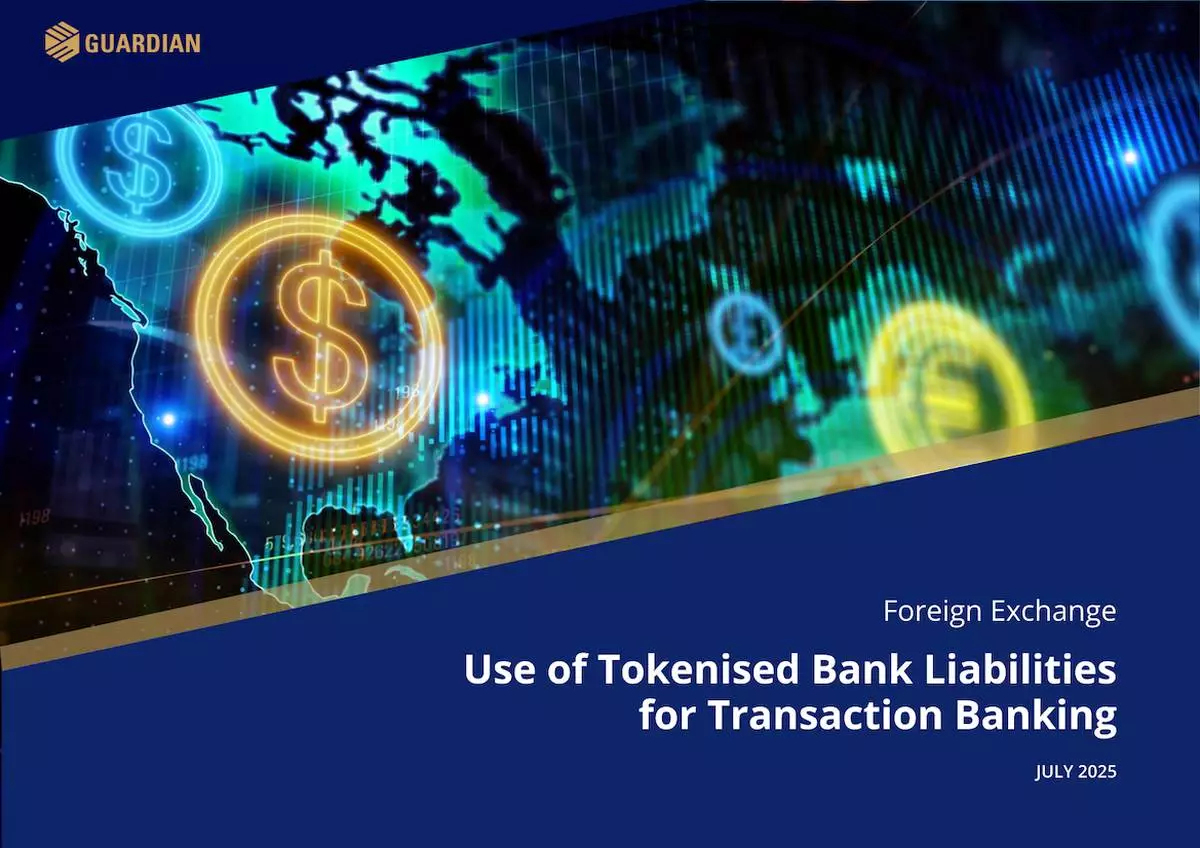
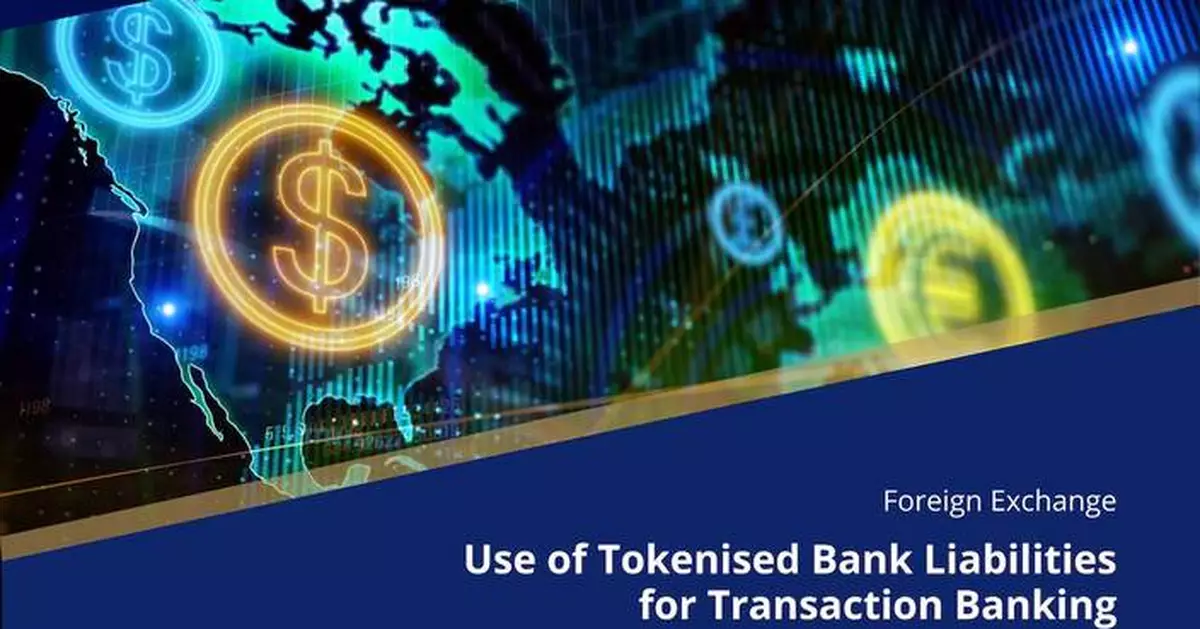
Report on Use of Tokenised Bank Liabilities for Transaction Banking by ISDA and Ant International, under the Monetary Authority of Singapore's (MAS) Project Guardian
WASHINGTON (AP) — In a lightning military strike, the U.S. captured Venezuelan President Nicolás Maduro and his wife, Cilia Flores, and spirited them out of the country to face justice in the United States.
Now President Donald Trump says the U.S. is “going to run” Venezuela until a transition of power can take place, but it's not clear what that will mean on the ground in the South American country.
The overnight operation left Venezuela reeling, with its leadership uncertain and details of casualties and the impact on its military still to emerge. Much is still unknown about how the U.S. ouster of Maduro will ricochet across the country and the region.
Here’s what we know — and what we don’t.
Explosions rang out and low-flying aircraft swept through Venezuela’s capital, Caracas, early Saturday. At least seven blasts were heard in an attack that lasted less than 30 minutes. The targets appeared to include military infrastructure.
Venezuelan ruling party leader Nahum Fernández said Maduro and Flores were captured at their home within the Ft. Tiuna military installation outside Caracas.
Venezuelan officials said people had been killed, but the scale of casualties was unclear.
The attack followed months of escalating pressure by the Trump administration, which has built up naval forces in the waters off South America and since early September has carried out deadly strikes on alleged drug-smuggling boats in the eastern Pacific and Caribbean. Late last month, the CIA carried out a drone strike at a docking area alleged to have been used by drug cartels.
Trump said during a news conference Saturday the U.S. would run the country and gestured to officials arrayed behind him, including Secretary of State Marco Rubio, Defense Secretary Pete Hegseth and Dan Caine, chairman of the Joint Chiefs of Staff, and said they’d be the ones doing it “for a period of time.”
Trump claimed the American presence was already in place, although across Venezuela's capital there were no signs that the U.S. had taken control of the government or military forces.
Trump claimed that Venezuelan Vice President Delcy Rodríguez had been sworn in as president shortly before he spoke to reporters and added she had spoken with Rubio.
“She is essentially willing to do what we think is necessary to make Venezuela great again. Very simple,” Trump said.
Rodriquez made no mention of talking to Rubio or being sworn in during a televised address after Trump's news conference.
Instead, she demanded the U.S. free Maduro and called him the country’s rightful leader. Rodriquez left open the door for dialogue with the U.S., while seeking to calm ruling party supporters.
“Here, we have a government with clarity, and I repeat and repeat again … we are willing to have respectful relations,” she said, referring to the Trump administration. “It is the only thing we will accept for a type of relationship after having attacked (Venezuela).”
Armed individuals and uniformed members of a civilian militia took to the streets of a Caracas neighborhood long considered a stronghold of the ruling party. But in other areas of the city, the streets remained empty hours after the attack. Parts of the city remained without power, but vehicles moved freely.
Trump offered no details on what U.S. leadership in Venezuela would mean or specify whether it would involve more military involvement.
The State Department did not immediately respond to questions about how the U.S. would run Venezuela, what authority it would use to administer it or whether it would involve any American personnel — either civilian or military — on the ground in Caracas or other areas of Venezuela.
Trump mentioned the country's oil infrastructure repeatedly during the news conference. He suggested there would be a substantial U.S. role in Venezuela's oil industry, saying that U.S. oil companies would go in and fix the broken infrastructure.
And Trump said the U.S. would use revenues from oil sales to pay for running the country.
“We’re going to get reimbursed for everything that we spend,” he said.
According to an indictment made public Saturday, Maduro is charged alongside his wife, his son and three others. Maduro is indicted on four counts: narco-terrorism conspiracy, cocaine importation conspiracy, possession of machine guns and destructive devices and conspiracy to possess machine guns and destructive devices.
Authorities allege powerful and violent drug trafficking organizations, such as the Sinaloa Cartel and Tren de Aragua gang, worked directly with the Venezuelan government and then sent profits to high-ranking officials who helped and protected them in exchange.
It was not immediately clear when Maduro and his wife would make their first court appearance in New York or where they would be detained once in the U.S.
Trump gave some details of the operation during a Saturday morning interview on “Fox and Friends," and he and Caine went into more depth during the news conference.
Trump said a few U.S. members of the operation were injured but he believed no one was killed.
He said Maduro was “highly guarded” in a presidential palace akin to a “fortress” and he tried to get to a safe room but wasn’t able to get there in time.
Trump said U.S. forces practiced the operation ahead of time on a replica building, and the U.S. turned off “almost all of the lights in Caracas,” although he didn’t detail how they accomplished that.
Caine said the mission had been “meticulously planned” for months, relying on work by the U.S. intelligence community to find Maduro and detail how he moved, lived, ate and what he wore.
The mission involved more than 150 aircraft launched across the Western Hemisphere, Caine said. Helicopters came under fire as they approached “the target area,” he said, and responded with “overwhelming force.”
The U.S. does not recognize the jurisdiction of the International Criminal Court, and the legal implications of the strike under U.S. law were not immediately clear.
The Trump administration maintains that Maduro is not the legitimate leader of Venezuela and claims he has effectively turned Venezuela into a criminal enterprise at the service of drug traffickers and terrorist groups.
Mike Lee, a U.S. senator from Utah, said on X that the action “likely falls within the president’s inherent authority under Article II of the Constitution to protect U.S. personnel from an actual or imminent attack.”
But some Democrats were more critical.
Sen. Tim Kaine, a Virginia Democrat, said in a statement, “President Trump’s unauthorized military attack on Venezuela to arrest Maduro — however terrible he is — is a sickening return to a day when the United States asserted the right to dominate the internal political affairs of all nations in the Western Hemisphere.”
Venezuelan opposition leader and Nobel Peace Prize winner María Corina Machado had intended to run against Maduro in the 2024 presidential election, but the government barred her from running for office. She went into hiding and wasn't seen for nearly a year.
Trump said Saturday that he hadn't been in touch with Machado and said it would be “very tough” for her to lead Venezuela.
“She doesn’t have the support within or the respect within the country. She’s a very nice woman, but she doesn’t have the respect,” Trump said.
Lawless reported from London. Associated Press Writer Danica Kirka in London contributed to this story.
President Donald Trump speaks at his Mar-a-Lago club, Saturday, Jan. 3, 2026, in Palm Beach, Fla. (AP Photo/Alex Brandon)
FILE - President Nicolas Maduro acknowledges supporters alongside first lady Cilia Flores during his closing election campaign rally in Caracas, Venezuela, July 25, 2024. (AP Photo/Fernando Vergara, File)
Pro-government armed civilians patrol in La Guaira, Venezuela, Saturday, Jan. 3, 2026, after U.S. President Donald Trump announced that President Nicolás Maduro had been captured and flown out of the country. (AP Photo/Matias Delacroix)
Supporters of Venezuelan President Nicolás Maduro embrace in downtown Caracas, Venezuela, Saturday, Jan. 3, 2026, after U.S. President Donald Trump announced that Maduro had been captured and flown out of the country. (AP Photo/Cristian Hernandez)
Men watch smoke rising from a dock after explosions were heard at La Guaira port, Venezuela, Saturday, Jan. 3, 2026. (AP Photo/Matias Delacroix)
Smoke raises at La Carlota airport after explosions and low-flying aircraft were heard in Caracas, Venezuela, Saturday, Jan. 3, 2026. (AP Photo/Matias Delacroix)