China's first floating solar power project operating entirely in a seawater environment has officially been completed and put into use in Qingdao City, east China's Shandong Province, according to China Petroleum and Chemical Corporation (Sinopec) on Wednesday.
Covering an area of about 60,000 square meters with an installed capacity of 7.5 megawatts, the project is expected to generate 16.7 million kilowatt-hours of green electricity annually.
The innovative design allows the photovoltaic panels to float and move with the tides, maintaining a minimal gap between the panels and water surface - only about one-tenth of that seen in traditional pile-based structures. This design optimizes seawater cooling, increasing energy conversion efficiency by 5 to 8 percent.
To tackle the challenges of marine corrosion, biofouling, and tidal fluctuations, the R and D team developed special anti-corrosion floats and barnacle-resistant supports. A robust underwater anchoring system has also been engineered to withstand winds up to Force 13 and adapt to a tidal range of 3.5 meters. These advancements reduce capital investment by around 10 percent compared with conventional installations.
The project is expected to serve as a standardized model for future solar development in coastal and shallow marine environments, supporting the broader push toward lower-cost renewable energy in China.
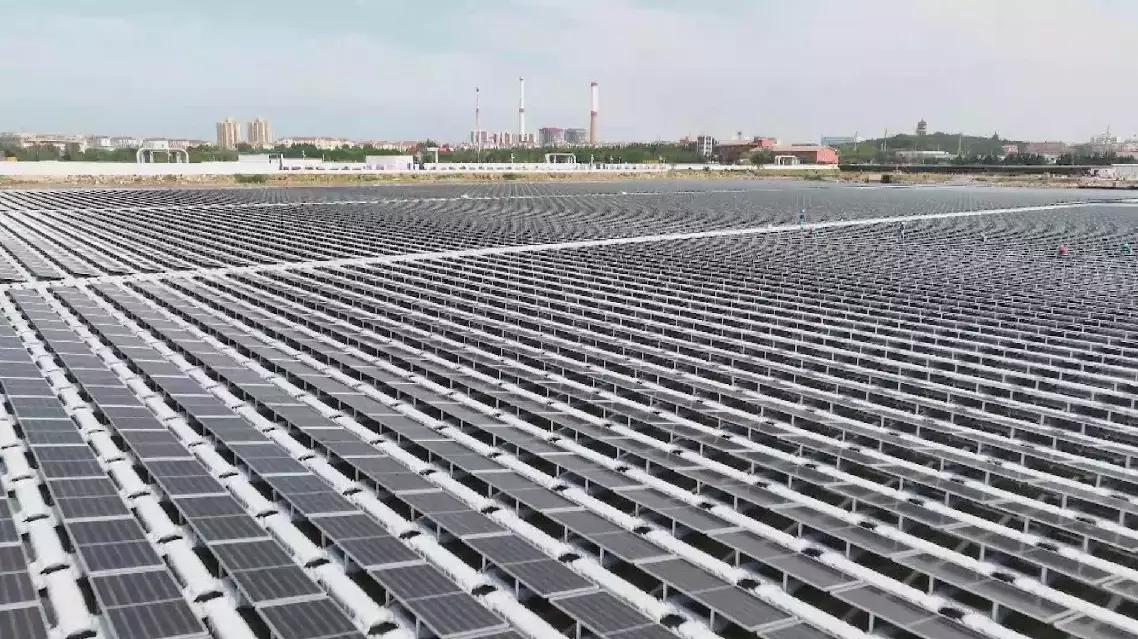
China launches first offshore floating PV project in Qingdao
Israeli Prime Minister Benjamin Netanyahu said Tuesday that Israeli ground forces are intensifying their campaign in Lebanon, seizing what he called "dominating areas" as air and drone strikes hit large parts of the southern region.
Intensive airstrikes were launched on areas in southern Lebanon and the Western Bekaa, with children among the fatalities in the town of Mashghara. Drone strikes also hit the area around the Qaraoun Dam.
Several areas, including the city of Tyre and its densely populated public housing neighborhood which is home to many displaced people received forced evacuation orders.
"This is the public housing area in Tyre. They are striking the elderly, children, and innocent people. There is nothing here [worth targeting militarily], only the homes of innocent people. They issued a warning, ambulances came to evacuate the elderly, and shortly after, the homes were bombed," said a resident of Tyre.
"We received an evacuation warning, and the people left, all of them children and families. Among them were displaced people from villages who had fled the south, and this strike came on top of their tragedy," said another resident.
Hezbollah announced that it had carried out several operations targeting Israeli forces and vehicles in southern Lebanon and northern Israel near the border with Lebanon.
"The enemy is trying to achieve several goals through bombing, destruction and killing. First, it is criminal in its nature. Second, it is trying to drive a wedge between the people and the resistance. Third, it is seeking to portray itself as victorious. Finally, it is doing everything to claim that it has defeated Hezbollah," said Hussein Jishi, member of Lebanese Parliament for Hezbollah.
Despite the questionable U.S.-brokered truce in place, Lebanon and Israel are set to hold a fourth round of talks next week in Washington, preceded by military meetings there at the end of this week.
Hezbollah has denounced the existing truce as "meaningless" without its direct involvement, and insists disarmament of the group remains off the table.
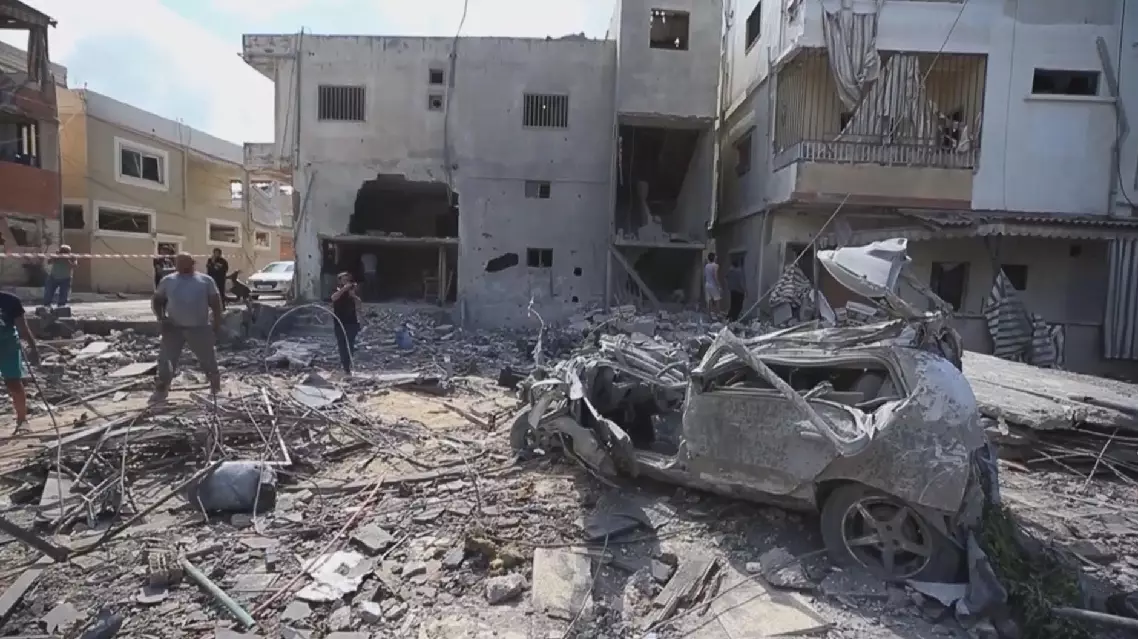
Israeli PM orders "deepening" of military operation in Lebanon