ROME (AP) — Pope Leo XIV spoke publicly about his childhood in Chicago for the first time as pontiff Thursday, recalling that from the age of six he used to get up early to serve as an altar boy at the 6:30 a.m. Mass before going to school.
Leo shared the memories during an unscripted visit with the children of Vatican employees who are attending the Holy See’s summer camp. They were joined by other children, including Ukrainian young people, who are attending summer programs run by Italy’s Caritas charity.
The visit, which was not announced in advance, took place in the Vatican’s main audience hall, which was decked out with huge inflatable bouncy castles for the estimated 600 kids.
One of the young campers, Giulia, asked Leo if he used to go to Mass as a child. The former Robert Prevost, who grew up the youngest of three brothers in the south Chicago suburb of Dolton, said the family always went to Mass on Sundays.
“But starting from when I was around 6 years old, I was also an altar boy in the parish. And so before going to school -- it was a parochial school -- there was Mass at 6:30 a.m.,” he said, emphasizing how early it was. “And Mom would wake us up and say ‘We’re going to Mass!’ Because serving Mass was something we liked because starting from when I was young, they taught us that Jesus was always close to us.”
Leo, who was born in 1955, recalled that at the time, Mass was celebrated in Latin. He said he had to learn it to serve Mass even before he made his First Communion, one of the key sacraments in the church.
“It wasn’t so much the language that it was celebrated in but the experience of getting to know other kids who served the Mass together, the friendship, and this closeness with Jesus in the church,” he said.
Leo's brother, John Prevost, has said his little brother knew from a very young age that he wanted to be a priest. Young Robert used to pretend to celebrate Mass using their mother's ironing board as an altar and Necco candies — a once-popular sweet — as Communion wafers.
History's first American pope spoke in Italian, but he switched to English to address a group of Ukrainian children, some of whom held up Ukrainian flags and snagged Leo autographs. He spoke about the benefits of meeting people from different backgrounds, languages and lands.
It was one of the first times Leo has spoken unscripted at length in public, responding to questions posed to him by the children. He has tended to stick to his prepared texts for his audiences so far in his young pontificate.
Associated Press religion coverage receives support through the AP’s collaboration with The Conversation US, with funding from Lilly Endowment Inc. The AP is solely responsible for this content.
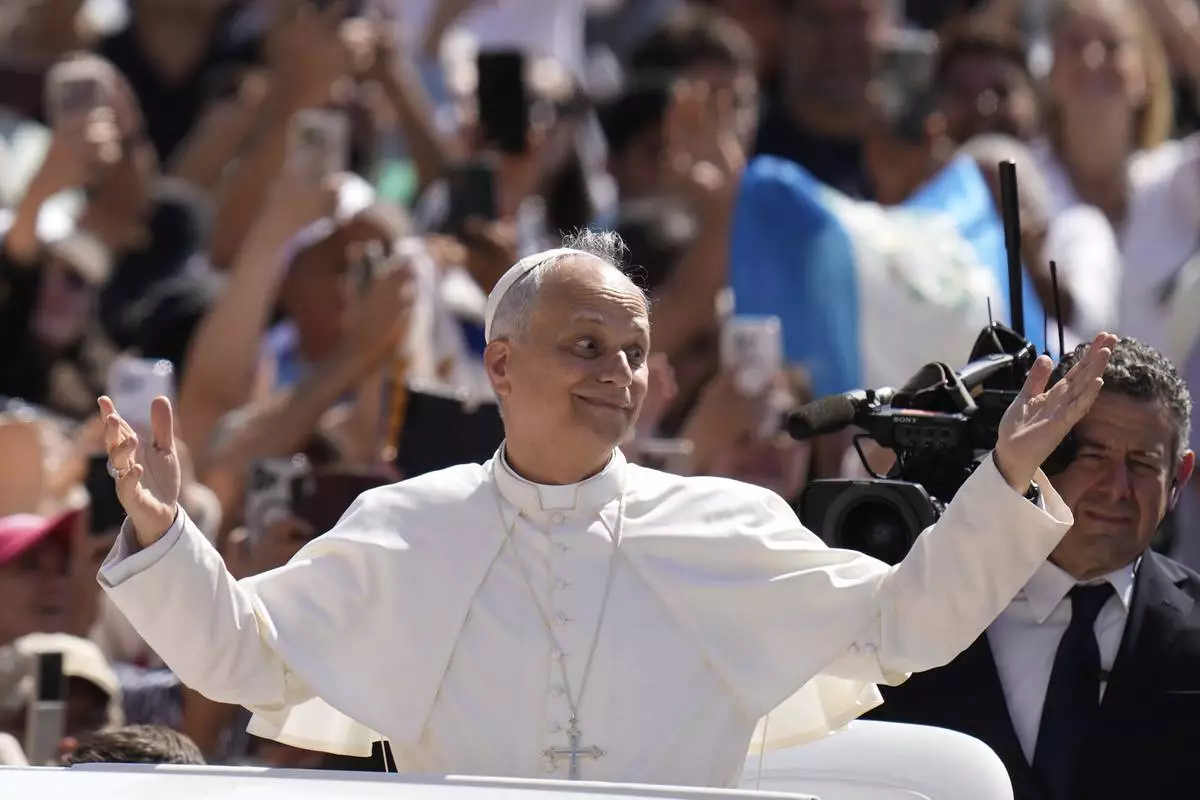
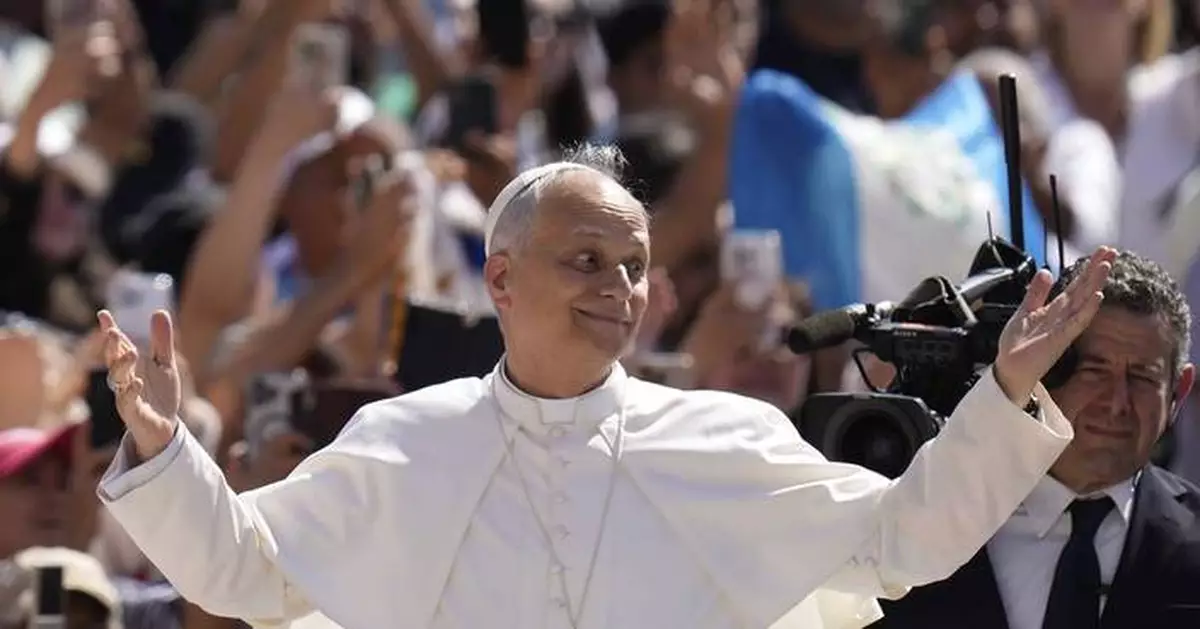
FILE - Pope Leo XIV gestures as he arrives for his weekly general audience in St. Peter's Square at The Vatican, Wednesday, June 4, 2025. (AP Photo/Gregorio Borgia, File)
AUGUSTA, Ga. (AP) — Rory McIlroy took a record six-shot lead into the final 36 holes of the Masters. Here's how the six players who had five-shot leads after 36 holes finished at Augusta National:
In his debut as the No. 1 player in the world, Scheffler looked the part with rounds of 69-67 in a roaring wind to build a five-shot lead over defending champion Hideki Matsuyama, Charl Schwartzel, Shane Lowry and Sungjae Im.
Scheffler had to salvage bogey from the trees on the 18th on Saturday for a 71 as Cameron Smith cut his lead to three shots. Scheffler walked up to the final hole with a five-shot lead and four-putted for double bogey, about the only thing that went wrong for him. He won by three shots over McIlroy, who holed a bunker shot on the last hole for his best finish at the time.
Coming off a runner-up finish in his Masters debut the year before, Spieth opened with rounds of 64-66 to break a 36-hole scoring record that had stood for 39 years. He was at 14-under 130 and led by five shots over Charley Hoffman.
Spieth set the 54-hole scoring record (200) and led by four shots, and went on to win by four over Phil Mickelson and Justin Rose. So dominant was this performance that no one got closer than three shots of Spieth over the final 54 holes.
Floyd opened with rounds of 65-66 to build a five-shot lead over defending champion Jack Nicklaus in what became the most impressive scoring week at the time. Floyd set records for low start by a champion (65), the 36-hole record (131) and the 54-hole record (201), all of which stood until Spieth's win in 2015.
Floyd shot 70 in the third round to expand his lead to eight shots over Nicklaus, and a closing 70 matched the 72-hole record (271) set by Nicklaus in 1965.
Already a four-time Masters champion, Nicklaus opened 68-67 to build a five-shot lead over Arnold Palmer, Billy Casper and Tom Watson. The Golden Bear was prescient when he said he hoped for a 10-shot lead after the third round: “I've been coming to Augusta for many years. I've seen many strange things happen.”
Indeed, Big Jack shot 73 in the third round and was overtaken by Tom Weiskopf, who shot 66. That set up as thrilling a back nine as the Masters has ever seen, marked by Nicklaus making a 40-foot birdie putt on the 16th hole to outlast Weiskopf and Johnny Miller.
Keiser had served three years in the Navy when he returned to the first Masters since the end of World War II. In a field of top stars, Keiser shot 69-68 to build a five-shot lead over Jimmy Thomson, a big hitter from Los Angeles. All the headlines were whether Ben Hogan, Byron Nelson and Sam Snead could track down a player who had only one PGA Tour title.
Keiser finished strong Saturday for a 71 to keep his five-shot lead, this time over Hogan. He shot 74 on the last day and held on to beat Hogan when both three-putted the 18th hole.
The third Masters had so much rain that the first round didn't start until Friday, and when Sunday was washed out, the final two rounds were played on Monday. Cooper shot 70-69 to lead by five shots over Bobby Cruickshank.
In the third round Monday morning, Cooper shot 71 as Horton Smith, the first Masters champion, shot 68 to cut the lead to three shots. Smith rallied on the back nine with a 50-foot chip he sank for birdie on the 14th and a birdie on the par-5 15th. He shot 72 to win by one over Cooper, who faded with a 76. Cooper ended his career without a major.
AP golf: https://apnews.com/hub/golf
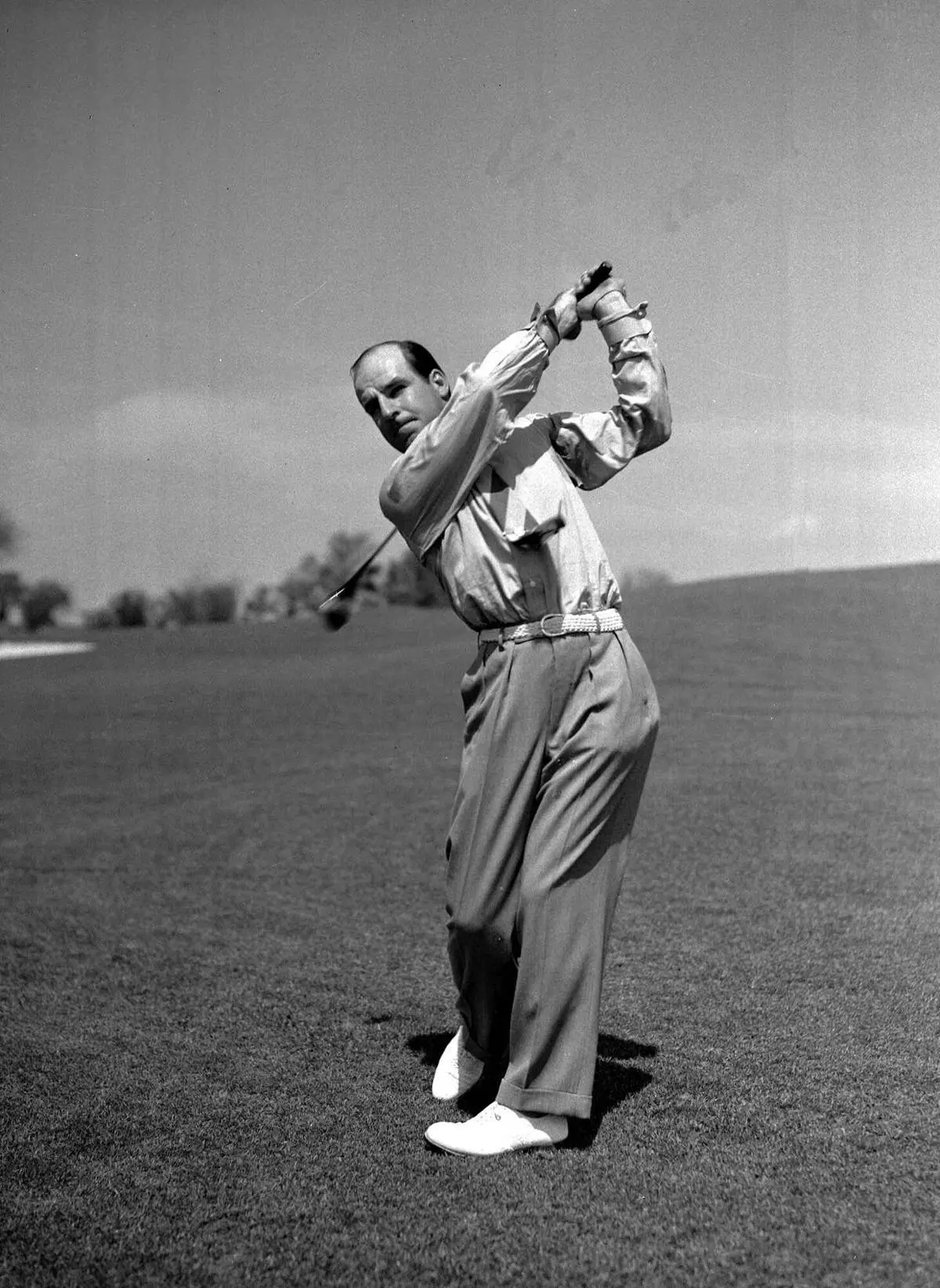
FILE - Harry Cooper watching his shot during the first round of the Augusta National Invitation golf tournament on April 3, 1936, in Augusta, Ga. (AP Photo, File)
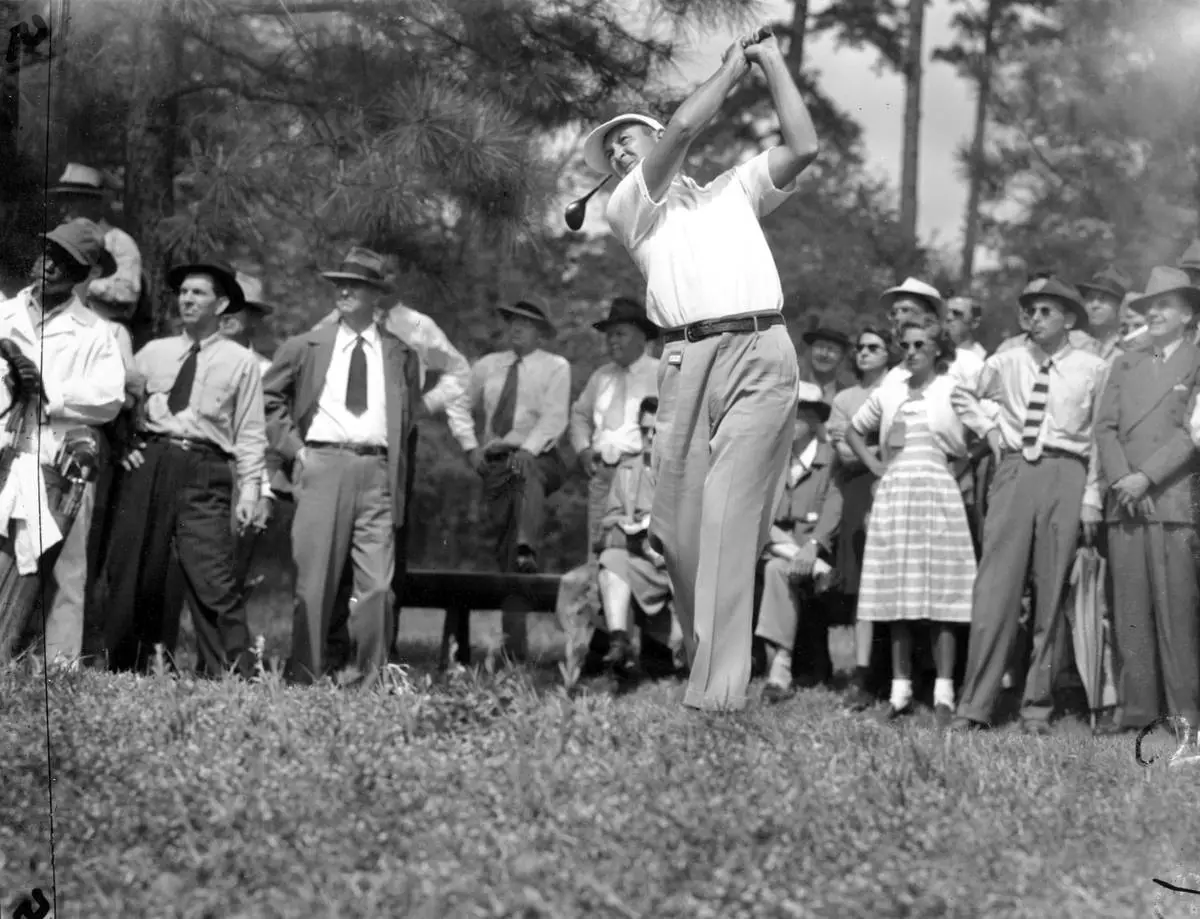
FILE - Herman Keiser drives from the third tee at the Masters golf touranment at Augusta National Golf Club on April 4, 1946, in Augusta, Ga. (AP Photo/File)
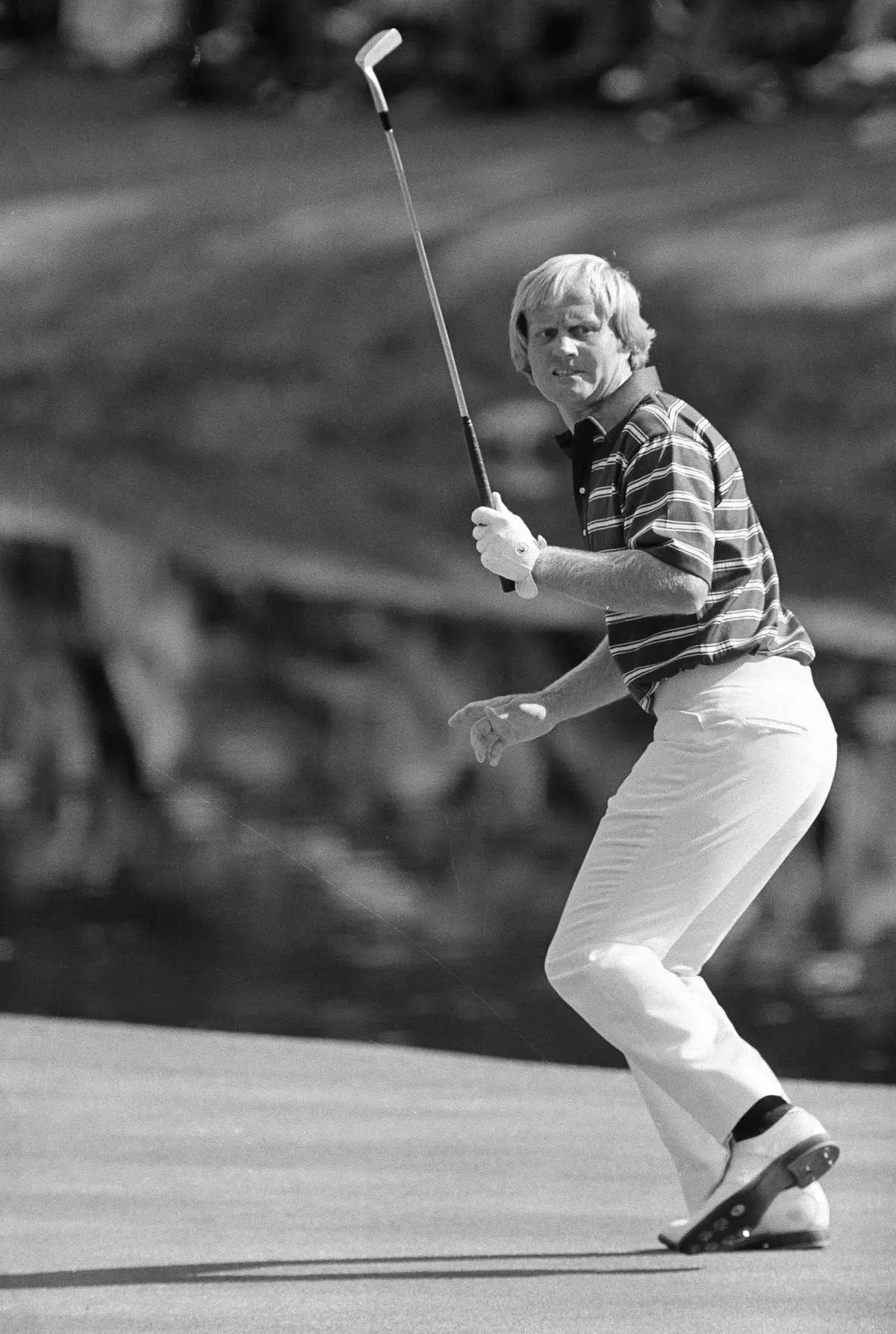
FILE - Jack Nicklaus as he makes a birdie putt on the 16th, on April 13, 1975 at Augusta, Ga. (AP Photo, File)
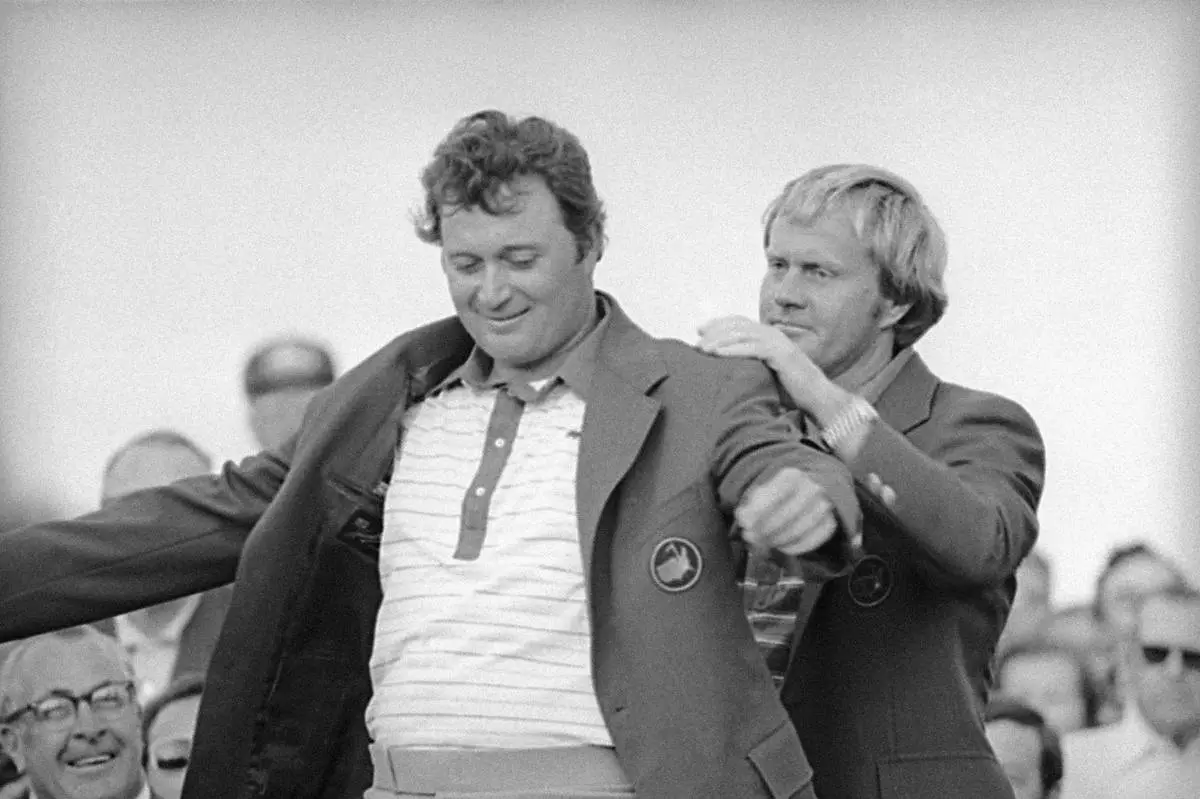
FILE - Jack Nicklaus, right, assists Ray Floyd in putting on his green jacket after Floyd won the Masters Championship, on April 12, 1976, in Augusta, Georgia. (AP Photo, File)
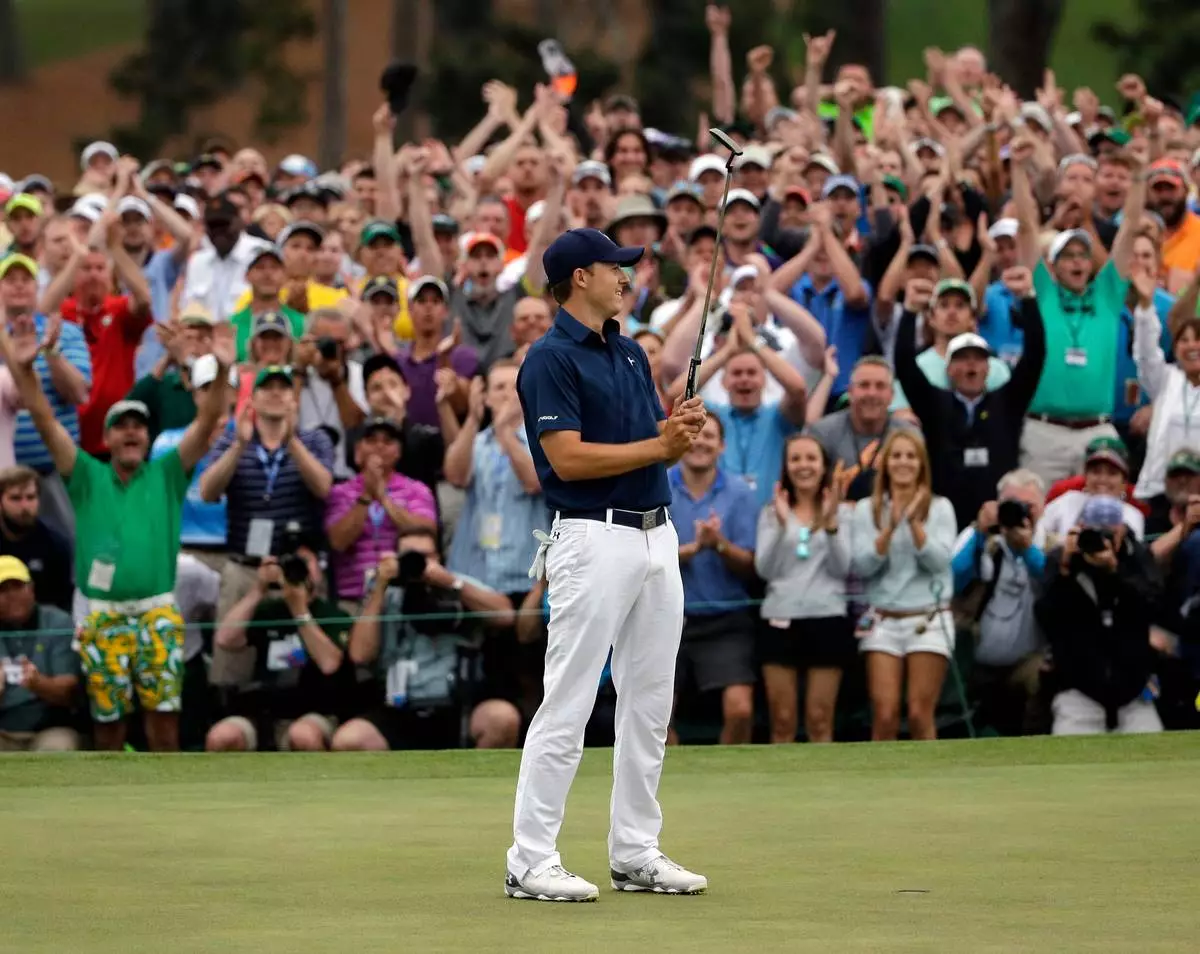
FILE - Jordan Spieth celebrates after winning the Masters golf tournament on April 12, 2015, in Augusta, Ga. (AP Photo/Matt Slocum, File)
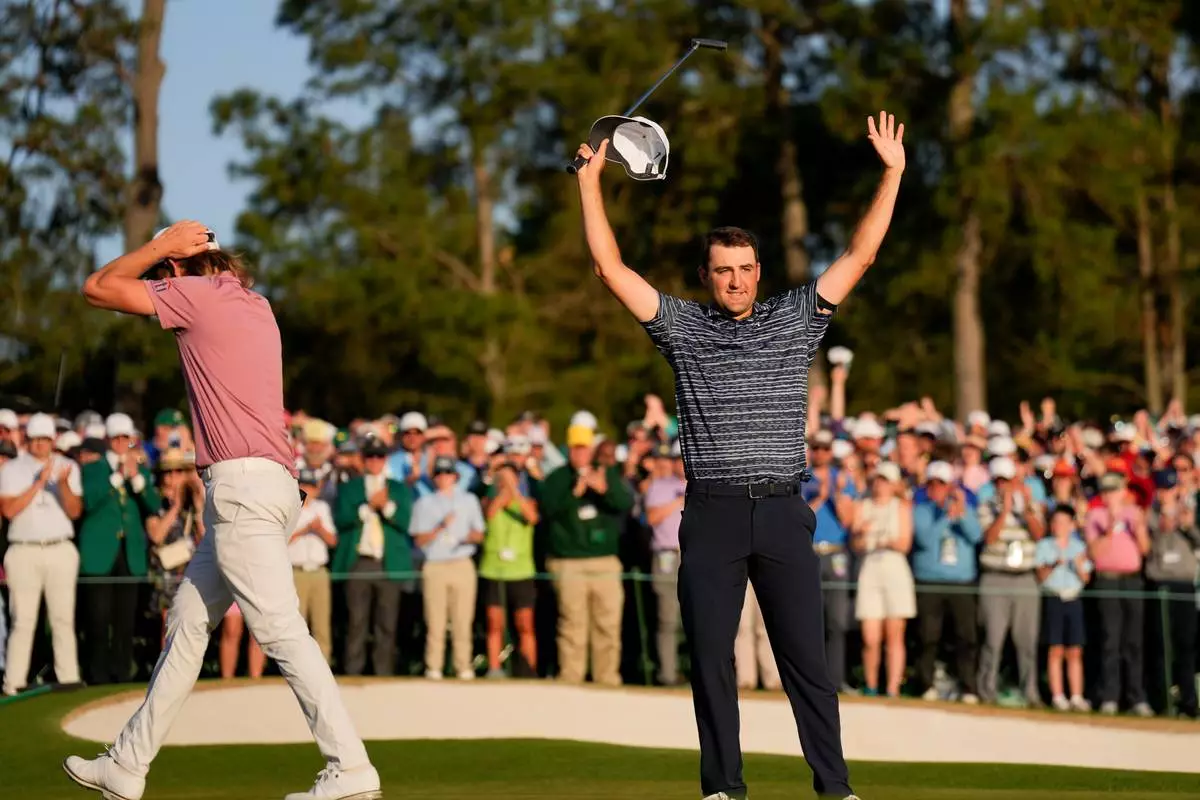
FILE - Cameron Smith, of Australia, walks past as Scottie Scheffler celebrates after winning the 86th Masters golf tournament on April 10, 2022, in Augusta, Ga. (AP Photo/Matt Slocum, File)