Skip to Content Facebook Feature Image

Pakistan’s biggest brewery is evolving from its 165-year-old liquor legacy

ENT

Pakistan’s biggest brewery is evolving from its 165-year-old liquor legacy
ENT

ENT

Pakistan’s biggest brewery is evolving from its 165-year-old liquor legacy

2025-07-04 15:02 Last Updated At:15:10

RAWALPINDI, Pakistan (AP) — A pungent fug of malt and yeastiness hangs over Murree Brewery, Pakistan ’s biggest and oldest producer of alcoholic drinks.

The company is an outlier in a country where alcohol is outlawed for everyone except non-Muslims, who make up some 9 million people out of 241 million. Pakistan, an Islamic republic, banned booze for Muslims in the 1970s.

More Images
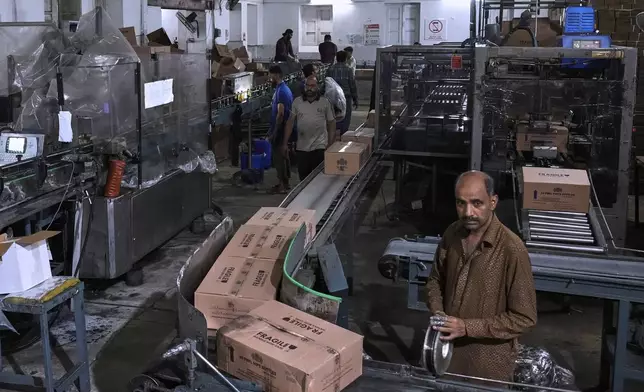
Employees of the Murree Brewery work in a liquor production unit of the factory, in Rawalpindi, Pakistan, Monday, June 23, 2025. (AP Photo/Anjum Naveed)
Employees of the Murree Brewery work in a liquor production unit of the factory, in Rawalpindi, Pakistan, Monday, June 23, 2025. (AP Photo/Anjum Naveed)
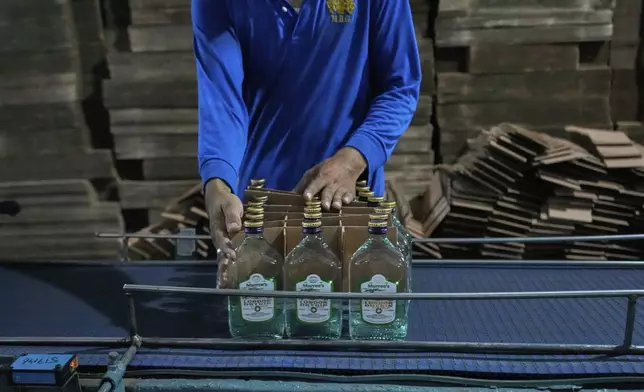
An employee of the Murree Brewery packs liquor bottles at a production unit of the factory, in Rawalpindi, Pakistan, Monday, June 23, 2025. (AP Photo/Anjum Naveed)

An employee of the Murree Brewery packs liquor bottles at a production unit of the factory, in Rawalpindi, Pakistan, Monday, June 23, 2025. (AP Photo/Anjum Naveed)

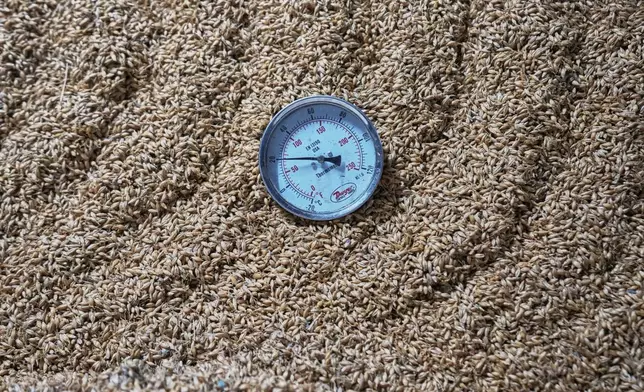
A temperature gauge shows the temperature of barley in a processing unit of the Murree Brewery factory in Rawalpindi, Pakistan, Monday, June 23, 2025. (AP Photo/Anjum Naveed)
A temperature gauge shows the temperature of barley in a processing unit of the Murree Brewery factory in Rawalpindi, Pakistan, Monday, June 23, 2025. (AP Photo/Anjum Naveed)

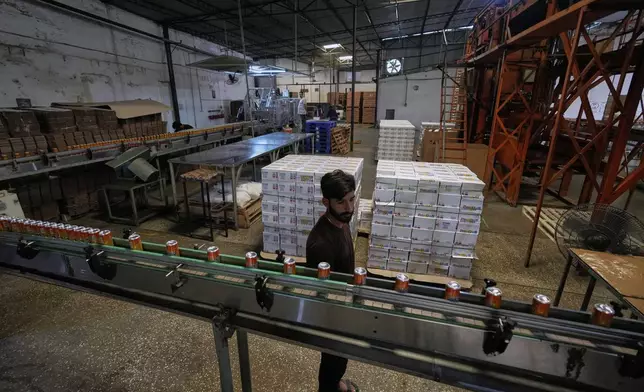
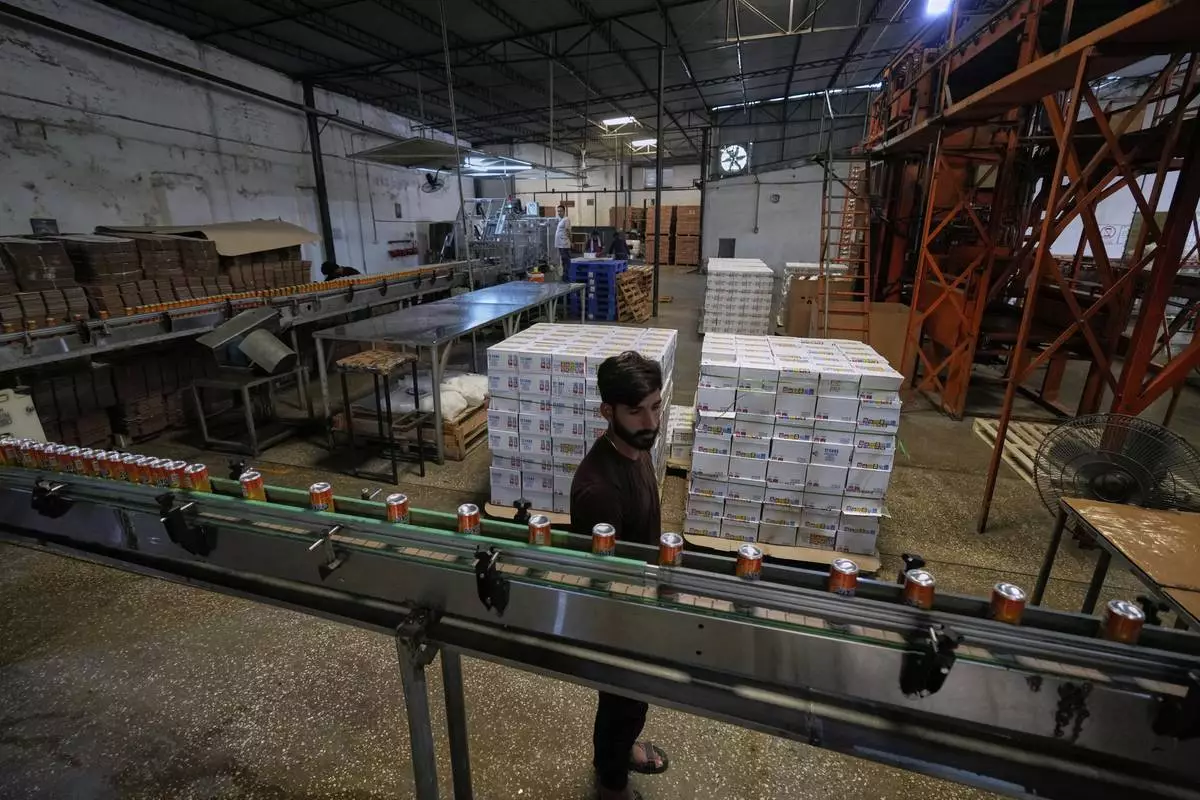
Employees of the Murree Brewery work at a soft drink production unit of the factory, in Rawalpindi, Pakistan, Monday, June 23, 2025. (AP Photo/Anjum Naveed)
Employees of the Murree Brewery work at a soft drink production unit of the factory, in Rawalpindi, Pakistan, Monday, June 23, 2025. (AP Photo/Anjum Naveed)

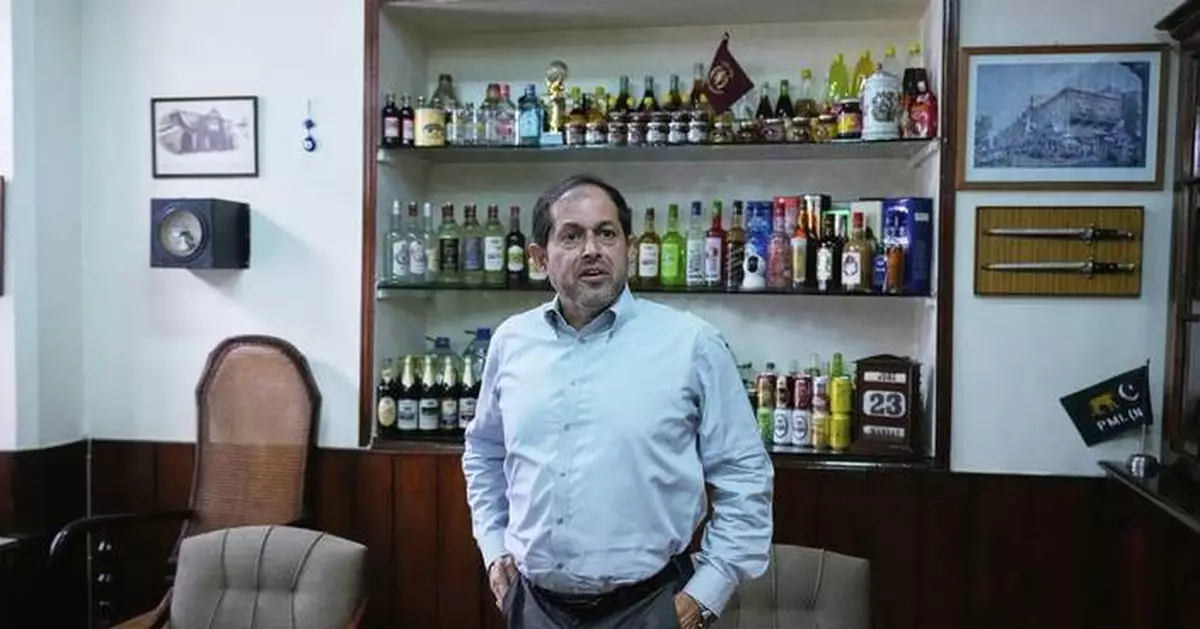
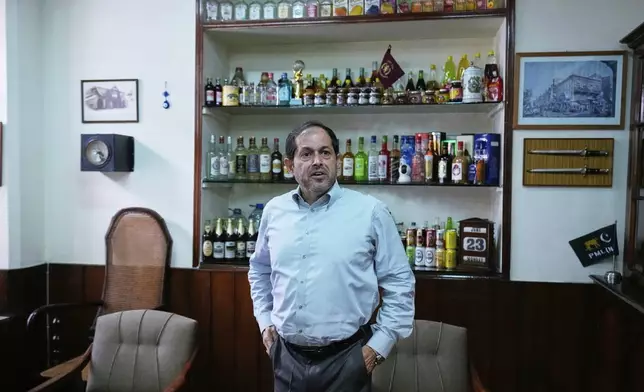
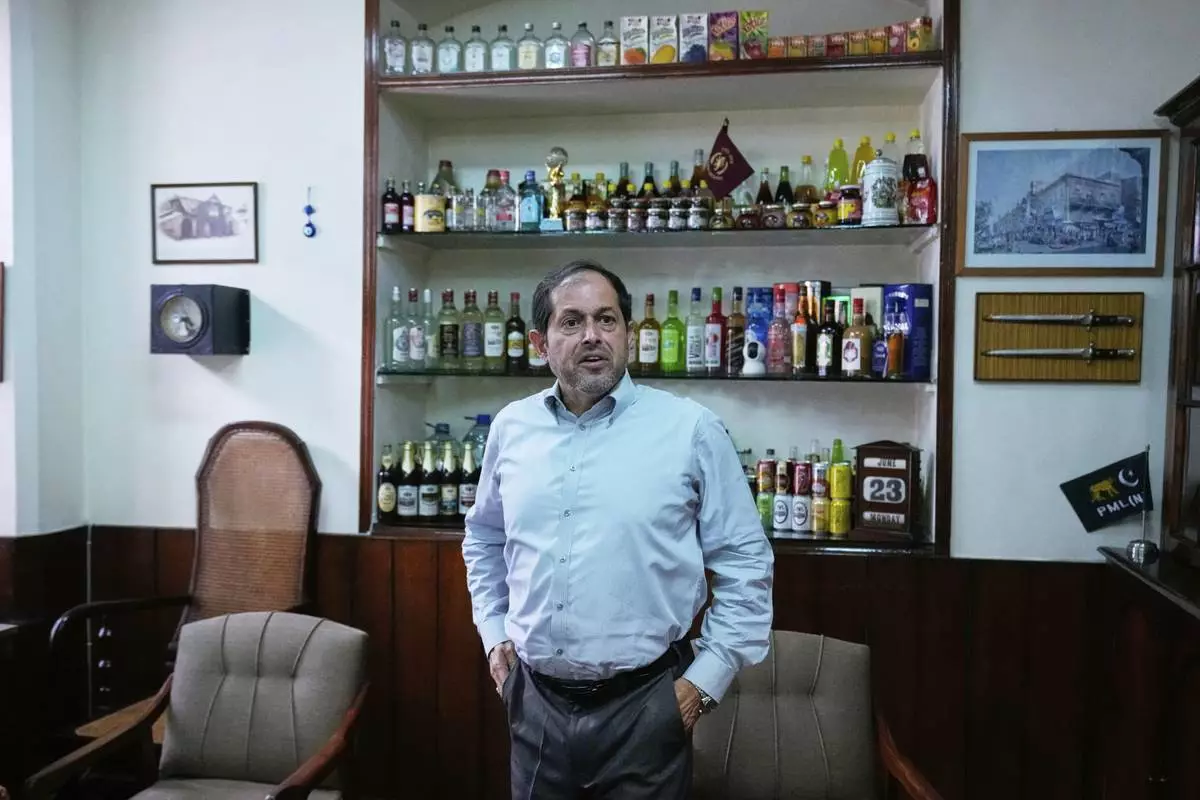
Isphanyar Bandhara, Chief Executive of the Murree Brewery talks with his assistant after an interview with The Associated Press, in Rawalpindi, Pakistan, Monday, June 23, 2025. (AP Photo/Anjum Naveed)

Isphanyar Bandhara, Chief Executive of the Murree Brewery talks with his assistant after an interview with The Associated Press, in Rawalpindi, Pakistan, Monday, June 23, 2025. (AP Photo/Anjum Naveed)

Murree Brewery has strong financials despite the prohibition, thanks to its history, scant competition and a small, thirsty and predominantly elite consumer base.

But the government exerts significant control over the sale and marketing of alcoholic beverages through red tape and high taxes, pushing brewery chairman Isphanyar Bandhara to expand the company's footprint in Pakistan's non-alcoholic drinks industry, which, although bigger, is more crowded and less lucrative.

“Even I tell my staff of about 2,200 that we cannot sit on our laurels by selling alcohol,” said Bandhara, the third generation of his family to run the 165-year-old business that was founded by the British. “It’s a restricted market, so we have to rely and focus more on the non-alcoholic side. That’s where I think I would like to flex my muscles and take credit, rather than being a liquor baron.”

The brewery already manufactures energy drinks, juices and malted beverages, but they are not as well known as products from big international brands. However, this part of the business is registering double-digit growth, and Bandhara wants to cash in on the country's youth bulge. Around 64% of the population is under 30.

Pakistan’s government determines the brewery’s alcohol prices, points of sale and customer base. Last year it took $35 million from the brewery's revenue in taxes. The company cannot advertise its alcoholic beverages or expand that part of the business inside Pakistan. Online shopping is unavailable.

The brewery is permitted to export beer to countries outside the Organization of Islamic Cooperation, a 57-member bloc, even though there is a “big demand for liquor and beer” in Muslim-majority countries, Bandhara said.

Meanwhile, more Pakistanis drink far more sodas and juices, with billions of dollars in sales every year. PepsiCo and Coca-Cola dominate, but there are also homegrown brands.

“The multinationals are thriving in Pakistan,” Bandhara said. “It’s a rewarding market. There might be less money (in non-alcoholic drinks), but it’s more secure.”

Murree Brewery's malted drinks line is packaged in a way that strongly resembles its beery counterparts. The taste, while not unpleasant, is distinctive, sweet and slightly yeasty.

Alcohol is a niche item in Pakistan. Even cooking ingredients like red wine vinegar, and buying essentials like cough medicine, is hard because of their alcohol content, however minuscule.

Five-star hotels slip a drinks list into the in-room dining menu or decant alcohol into a more discreet vessel, like a teapot. Some restaurants, usually upscale, allow diners to bring a bottle but seat them away from others or shield the pour from prying eyes. There is often a windowless, joyless bar in major Pakistani cities.

Non-Muslims — nationals and foreigners — can get a liquor permit allowing them to buy limited amounts of alcohol. Diplomats and the elite are a rich source of booze, with well-stocked cabinets and sometimes entire rooms dedicated to drinks.

There are also wine shops, but only in some provinces and run by non-Muslims. Some wine shops deliver to customers waiting in their cars, for discretion. Home delivery is also available.

“It’s not expensive to buy beer,” said Faisal, a Pakistani Muslim drinker who is in his 30s and lives in the province of Sindh. He only gave his first name because he is breaking the law. “A local beer will cost 500 rupees ($1.76), but you can save 50 rupees if you don’t want it chilled."

He added: “Beer is cheaper than coffee in Pakistan, but you only need one coffee whereas you need a lot of beer."

Non-sanctioned alcohol drinking in Pakistan is punishable by 80 lashes of a whip, although the Federal Shariat Court deemed the penalty un-Islamic in a 2009 ruling.

Alcohol is considered haram, or forbidden, in Islam. Although a sin and not a crime, scholars and religious authorities typically point to a verse in the Quran that calls intoxicants “the work of Satan” and tells believers to avoid them. They also cite sayings of the Prophet Muhammad and the effects of alcohol.

Nonetheless, stacked on pallets at Murree Brewery on a recent day were boxes of booze. The beer was heading to government-authorized retailer Pearl Continental Hotel in the eastern city of Lahore. The whiskey was going to Sindh, home to religious minorities including Hindus and Parsis.

Bandhara, who is Parsi, is one of the brewery’s leading tasters. Only non-Muslims can sample the company’s alcoholic products.

“We can’t just force someone to drink an inferior drink, so it has to be quality,” Bandhara said. “If the German Embassy, the Chinese Embassy and a lot of European embassies are my customers for beer, I’m comfortable on my quality.”

Hundreds of Pakistani distilleries produce the intoxicating agent ethanol, which is mostly exported. Home brewers are another source of alcoholic beverages. But homemade liquor containing poisonous methanol has proved fatal, and dozens of people have died over the years.

Murree Brewery’s closest competition for alcohol is the Chinese-run Hui Coastal Brewery and Distillery Limited, which began making beer in southwestern Balochistan in 2021, largely for the thousands of Chinese workers there.

Nobody from Hui was available to comment.

The granting of a licence to Hui in conservative Balochistan took Bandhara aback. He said he was unafraid of competition but wanted a level playing field.

Decades ago, his family wanted to set up a brewery in Punjab, Pakistan's most populous province. Bandhara said authorities told the family to keep their heads down because they were in a Muslim country.

“If the Islamic lecture is for me, why was the license given to the Chinese brewery?" he asked. "We are a liquor company, and we are the easiest to throw stones at and to criticize.”
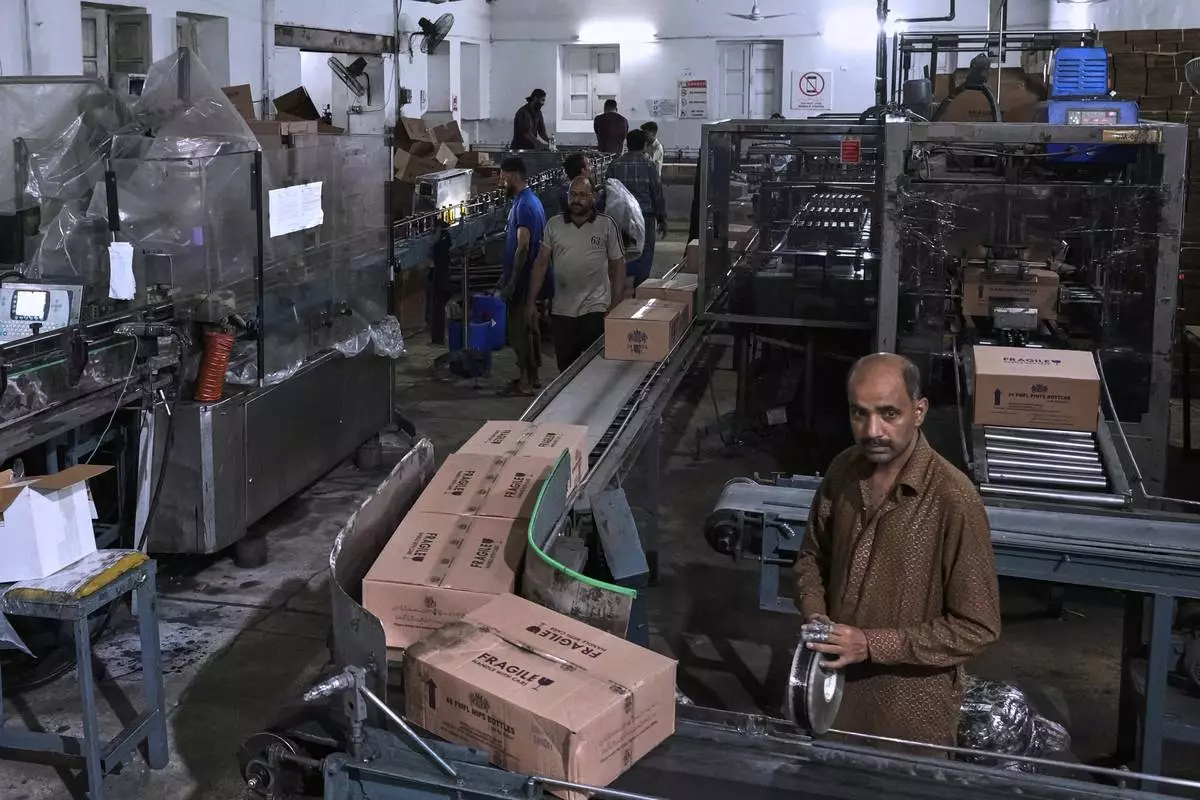
Employees of the Murree Brewery work in a liquor production unit of the factory, in Rawalpindi, Pakistan, Monday, June 23, 2025. (AP Photo/Anjum Naveed)
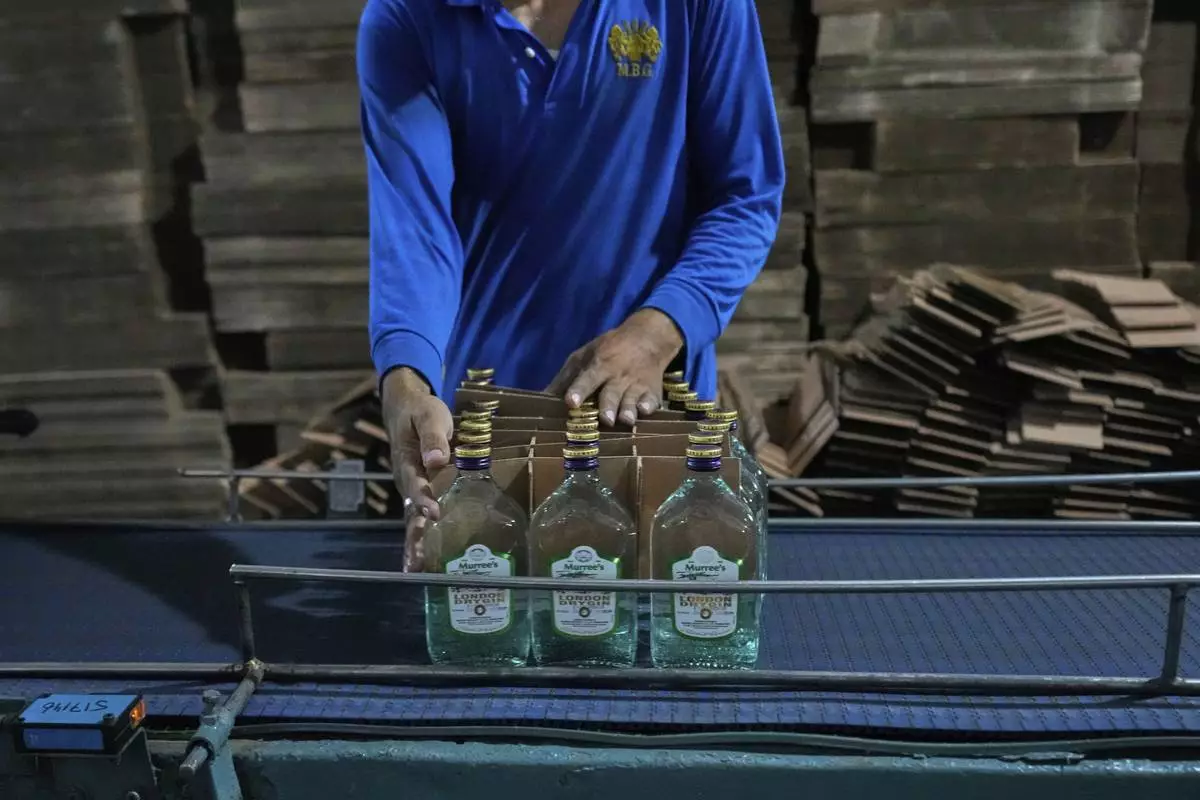
Employees of the Murree Brewery work in a liquor production unit of the factory, in Rawalpindi, Pakistan, Monday, June 23, 2025. (AP Photo/Anjum Naveed)

An employee of the Murree Brewery packs liquor bottles at a production unit of the factory, in Rawalpindi, Pakistan, Monday, June 23, 2025. (AP Photo/Anjum Naveed)

An employee of the Murree Brewery packs liquor bottles at a production unit of the factory, in Rawalpindi, Pakistan, Monday, June 23, 2025. (AP Photo/Anjum Naveed)

A temperature gauge shows the temperature of barley in a processing unit of the Murree Brewery factory in Rawalpindi, Pakistan, Monday, June 23, 2025. (AP Photo/Anjum Naveed)
A temperature gauge shows the temperature of barley in a processing unit of the Murree Brewery factory in Rawalpindi, Pakistan, Monday, June 23, 2025. (AP Photo/Anjum Naveed)

Employees of the Murree Brewery work at a soft drink production unit of the factory, in Rawalpindi, Pakistan, Monday, June 23, 2025. (AP Photo/Anjum Naveed)
Employees of the Murree Brewery work at a soft drink production unit of the factory, in Rawalpindi, Pakistan, Monday, June 23, 2025. (AP Photo/Anjum Naveed)

Isphanyar Bandhara, Chief Executive of the Murree Brewery talks with his assistant after an interview with The Associated Press, in Rawalpindi, Pakistan, Monday, June 23, 2025. (AP Photo/Anjum Naveed)
Isphanyar Bandhara, Chief Executive of the Murree Brewery talks with his assistant after an interview with The Associated Press, in Rawalpindi, Pakistan, Monday, June 23, 2025. (AP Photo/Anjum Naveed)
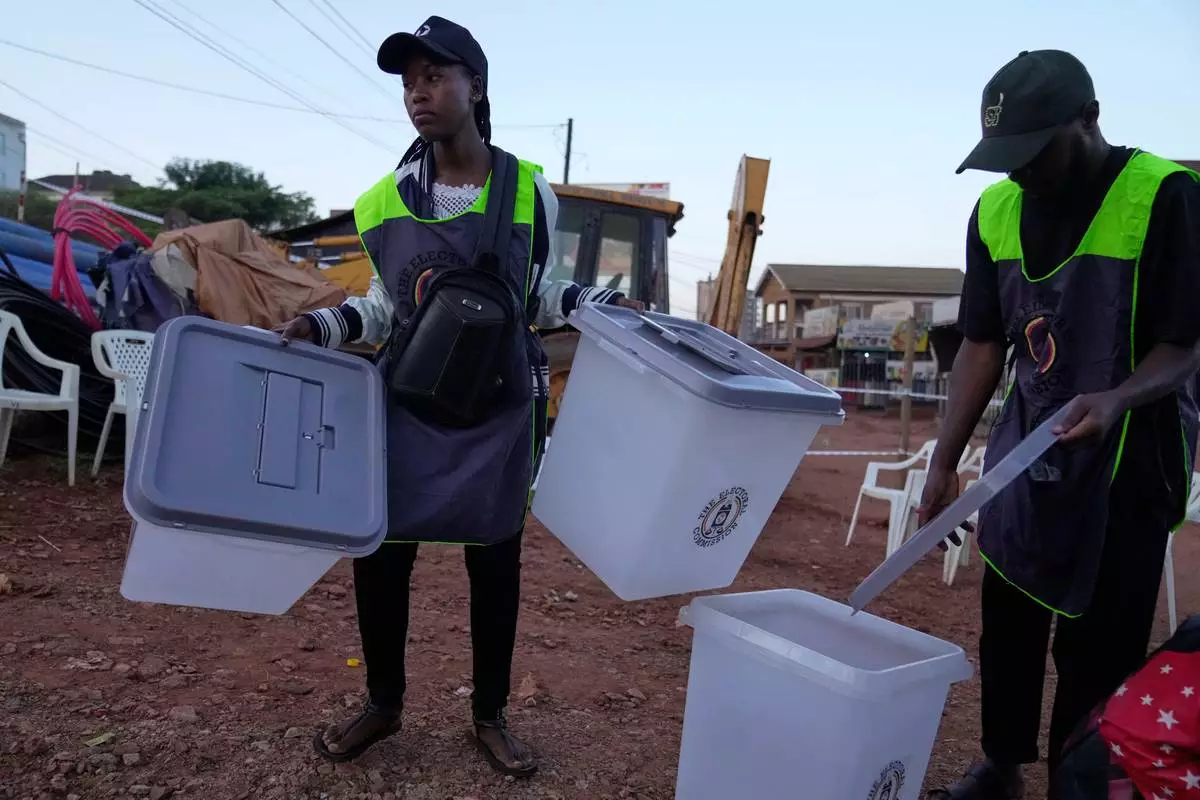
KAMPALA, Uganda (AP) — Uganda’s presidential election was plagued by widespread delays Thursday in addition to a days-long internet shutdown that has been criticized as an anti-democratic tactic in a country where the president has held office since 1986.

Some polling stations remained closed for up to four hours after the scheduled 7 a.m. start time due to “technical challenges," according to the nation's electoral commission, which asked polling officers to use paper registration records to ensure the difficulties did not “disenfranchise any voter.”

President Yoweri Museveni, 81, faces seven other candidates, including Robert Kyagulanyi, a musician-turned-politician best known as Bobi Wine, who is calling for political change.

The East African country of roughly 45 million people has 21.6 million registered voters. Polls were expected to close at 4 p.m., but voting was extended one hour until 5 p.m. local time. Results are constitutionally required to be announced in 48 hours.

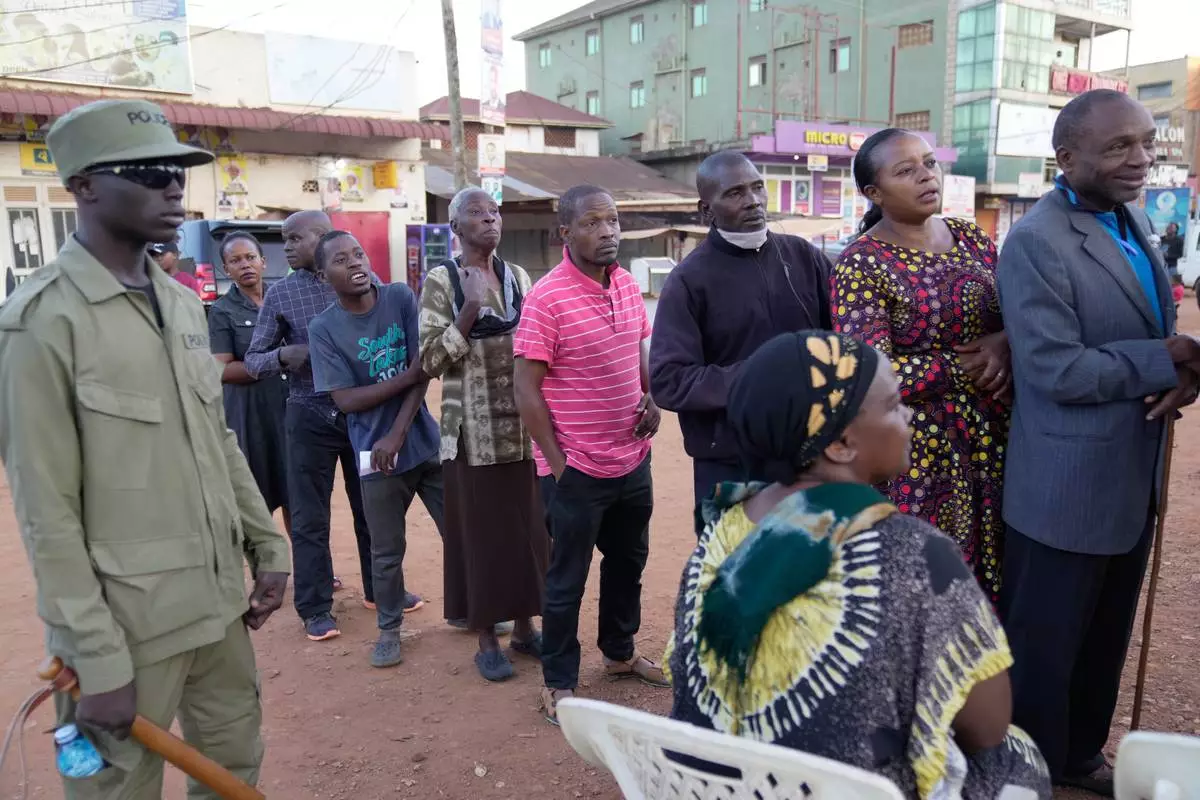
In the morning, impatient crowds gathered outside polling stations expressing concerns over the delays. Umaru Mutyaba, a polling agent for a parliamentary candidate, said it was “frustrating” to be waiting outside a station in the capital Kampala.

“We can’t be standing here waiting to vote as if we have nothing else to do," he said.

Wine, the candidate, alleged electoral fraud, noting that biometric voter identification machines were not working at polling places and claiming that there was “ballot stuffing.”

Wine wrote in a post on X that his party's leaders had been arrested. “Many of our polling agents and supervisors abducted, and others chased off polling stations,” the post said.

Museveni told journalists he was notified that biometric machines weren't working at some stations and that he supported the electoral body's decision to revert to paper registration records. He did not comment on allegations of fraud.

Ssemujju Nganda, a prominent opposition figure and lawmaker seeking reelection in Kira municipality, told The Associated Press he had been waiting in line to vote for three hours.

Nganda said the delays likely would lead to apathy and low turnout in urban areas where the opposition has substantial support. "It’s going to be chaos,” he said.

Nicholas Sengoba, an independent analyst and newspaper columnist, said delays to the start of voting in urban, opposition areas favored the ruling party.

Emmanuel Tusiime, a young man who was among dozens prevented from entering a polling station in Kampala past closing time said the officials had prevented him from participating.

“My vote has not been counted, and, as you can see, I am not alone," he said he was left feeling “very disappointed.”

Uganda has not witnessed a peaceful transfer of presidential power since independence from British colonial rule six decades ago.

Museveni has served the third-longest term of any African leader and is seeking to extend his rule into a fifth decade. The aging president’s authority has become increasingly dependent on the military led by his son, Muhoozi Kainerugaba.

Museveni and Wine are reprising their rivalry from the previous election in 2021, when Wine appealed to mostly young people in urban areas. With voter turnout of 59%, Wine secured 35% of the ballots against Museveni’s 58%, the president’s smallest vote share since his first electoral campaign three decades ago.

The lead-up to Thursday's election produced concerns about transparency, the possibility of hereditary rule, military interference and possible vote tampering.

Uganda's internet was shut down Tuesday by the government communications agency, which cited misinformation, electoral fraud and incitement of violence. The shutdown has affected the public and disrupted critical sectors such as banking.

There has been heavy security leading up to voting, including military units deployed on the streets this week.

Amnesty International said security forces are engaging in a “brutal campaign of repression,” citing a Nov. 28 opposition rally in eastern Uganda where the military blocked exits and opened fire on supporters, killing one person.

Museveni urged voters to come out in large numbers during his final rally Tuesday.

“You go and vote, anybody who tries to interfere with your freedom will be crushed. I am telling you this. We are ready to put an end to this indiscipline,” he said.

The national electoral commission chairperson, Simon Byabakama, urged tolerance among Ugandans as they vote.

“Let us keep the peace that we have,” Byabakama said late Wednesday. “Let us be civil. Let us be courteous. Let’s be tolerant. Even if you know that this person does not support (your) candidate, please give him or her room or opportunity to go and exercise his or her constitutional right."

Authorities also suspended the activities of several civic groups during the campaign season. That Group, a prominent media watchdog, closed its office Wednesday after the interior ministry alleged in a letter that the group was involved in activities “prejudicial to the security and laws of Uganda.”

Veteran opposition figure Kizza Besigye, a four-time presidential candidate, remains in prison after he was charged with treason in February 2025.

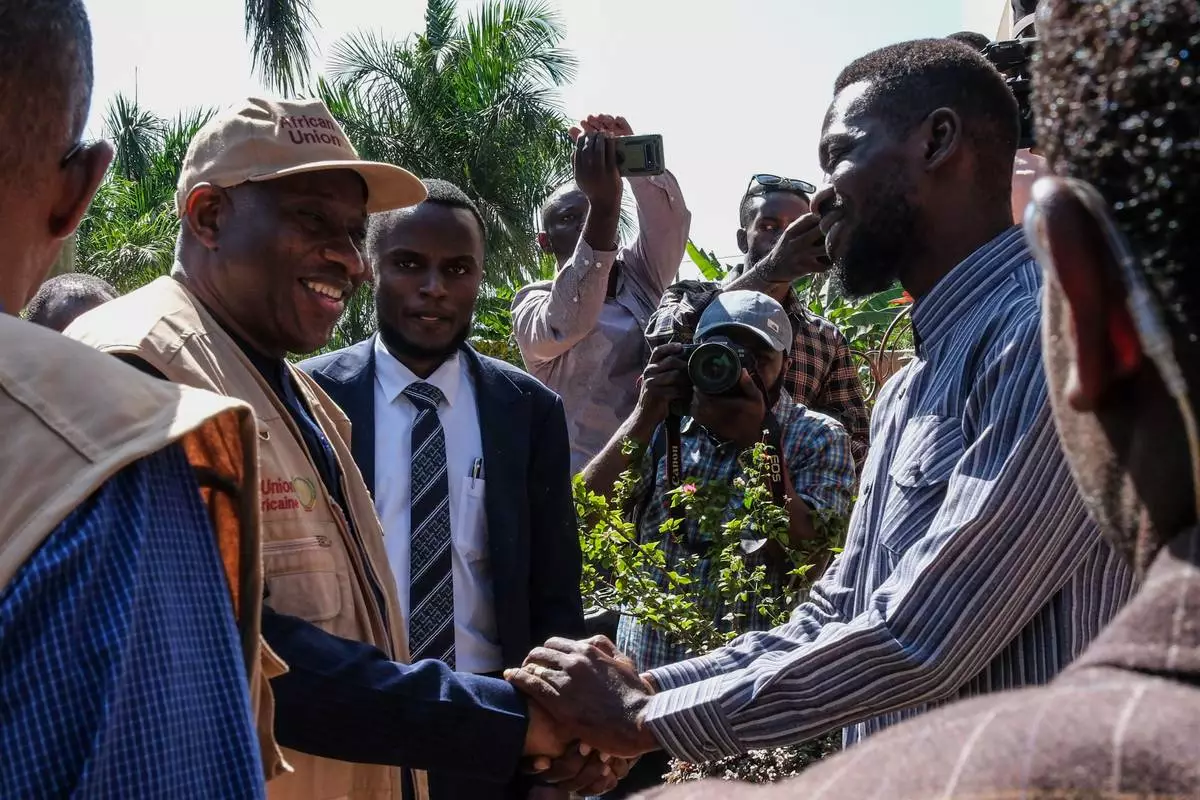
Uganda opposition presidential candidate Robert Kyagulanyi Ssentamu, known as Bobi Wine, right, greets election observers, including former Nigerian President Goodluck Jonathan, at his home in Magere village on the outskirts of Kampala, Uganda, Wednesday, Jan. 14, 2026. (AP Photo/Hajarah Nalwadda)

Uganda opposition presidential candidate Robert Kyagulanyi Ssentamu, known as Bobi Wine, right, greets election observers, including former Nigerian President Goodluck Jonathan, at his home in Magere village on the outskirts of Kampala, Uganda, Wednesday, Jan. 14, 2026. (AP Photo/Hajarah Nalwadda)

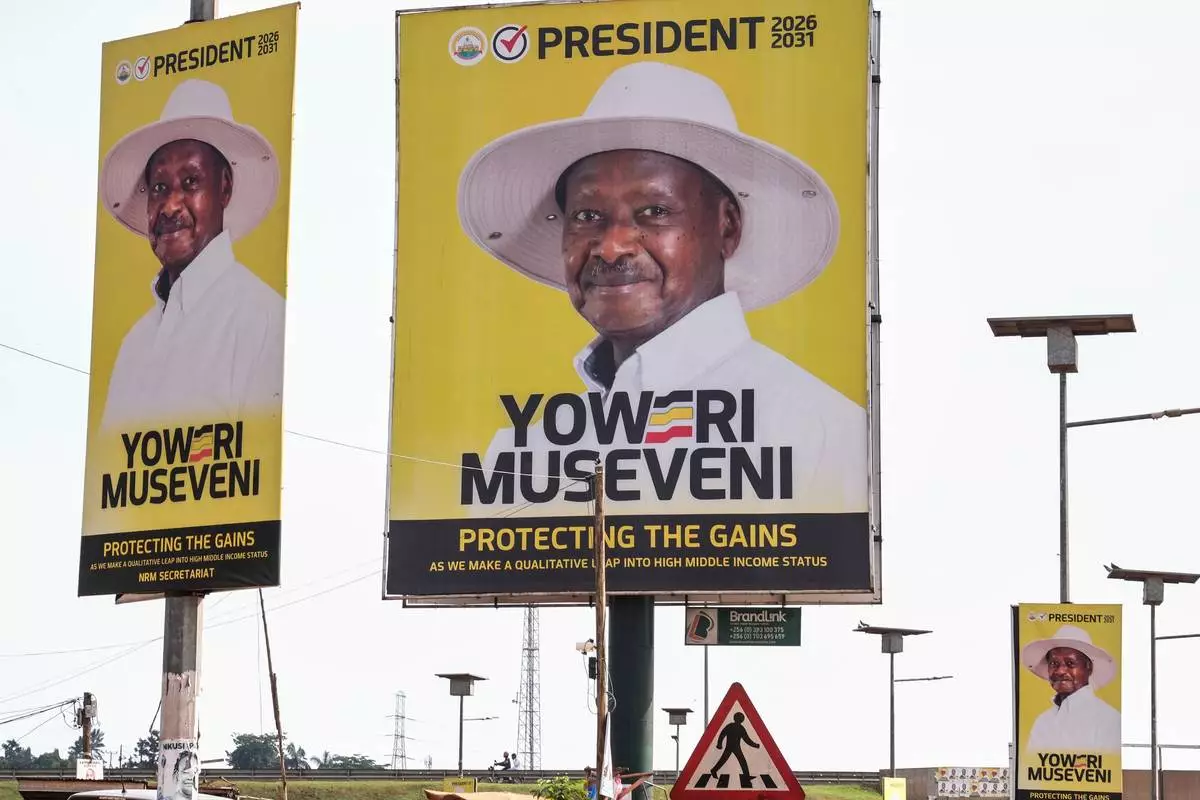
Billboards of Uganda President and National Resistance Movement (NRM) presidential candidate Yoweri Museveni are seen in Kampala, Uganda, Tuesday, Jan. 13, 2026. (AP Photo/Samson Otieno)

Billboards of Uganda President and National Resistance Movement (NRM) presidential candidate Yoweri Museveni are seen in Kampala, Uganda, Tuesday, Jan. 13, 2026. (AP Photo/Samson Otieno)

Electoral workers deliver ballot boxes to a polling station during presidential election in Kampala, Uganda, Thursday, Jan. 15, 2026. (AP Photo/Brian Inganga)

Electoral workers deliver ballot boxes to a polling station during presidential election in Kampala, Uganda, Thursday, Jan. 15, 2026. (AP Photo/Brian Inganga)

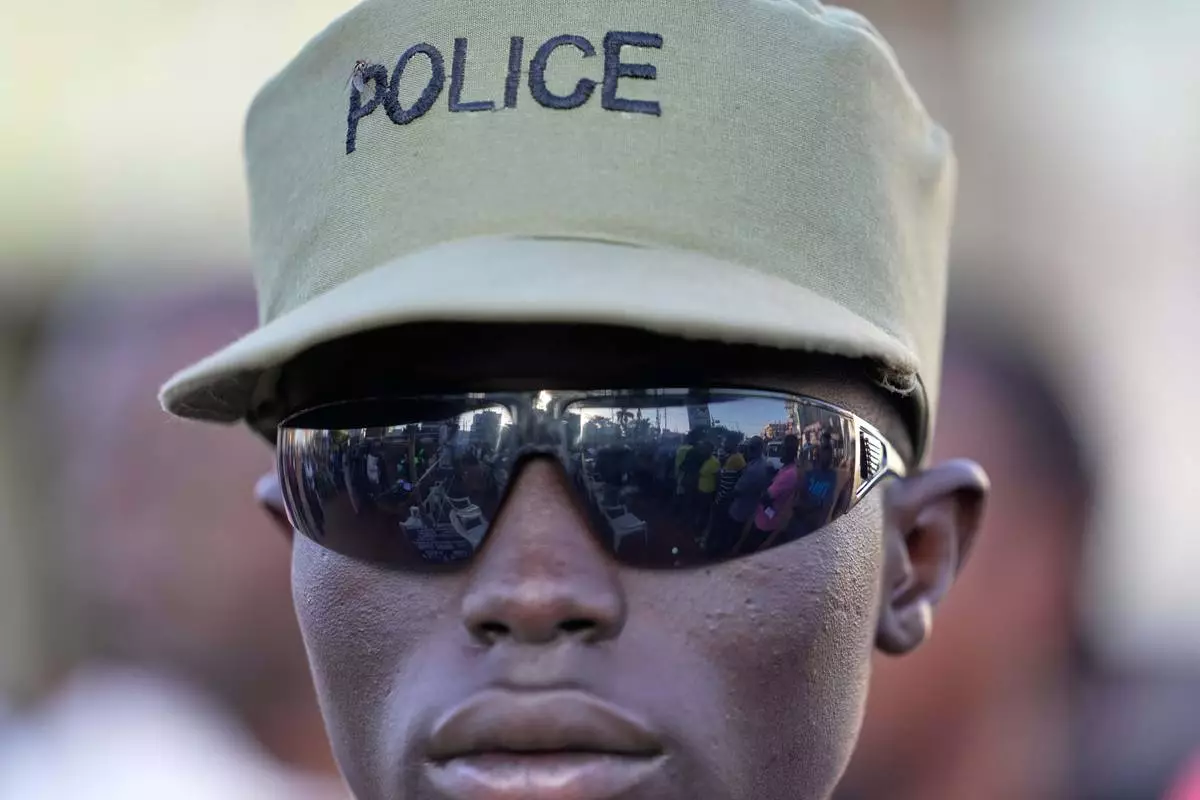
Voters are reflected in a police officer's sunglasses as they wait in line after voting failed to start on time due to system failures during presidential election in Kampala, Uganda, Thursday, Jan. 15, 2026. (AP Photo/Brian Inganga)

Voters are reflected in a police officer's sunglasses as they wait in line after voting failed to start on time due to system failures during presidential election in Kampala, Uganda, Thursday, Jan. 15, 2026. (AP Photo/Brian Inganga)

Voters wait to cast their ballots during the presidential election in Kampala, Uganda, Thursday, Jan. 15, 2026. (AP Photo/Brian Inganga)

Voters wait to cast their ballots during the presidential election in Kampala, Uganda, Thursday, Jan. 15, 2026. (AP Photo/Brian Inganga)

Recommended Articles