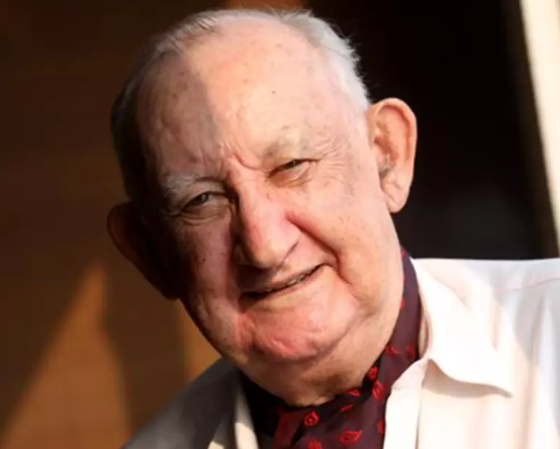
Mark Pinkstone/Former Chief Information Officer of HK government
Six years after the bloody riots in Hong Kong, China hawk, The New York Times (NYT), is still calling the incident a “peaceful demonstration for democracy.”The world was a witness as television networks from every country flashed vivid scenes of bloody clashes between the police and rioters. There was no denying the fact they were anything but full-blown riots.
The June 30 issue of the newspaper carried a special report by stringer Tiffany May reporting from Hong Kong that three activists were still “paying the price” for demanding democracy in the Special Administrative Region (SAR). But the world’s witnesses know better: Democracy was hardly an issue. May painted a picture of the trio facing hardship after release from prison where they served various sentences for rioting. They had trouble finding jobs and lost many friends, their life had become a void.
At the time of the riots in 2019, Hong Kong had a fully elected legislature (50 per cent by geographic constituencies and 50 per cent by peer-based functional constituencies), the president was elected from among its members and the SAR’s Chief Executive was elected by a 1,500 strong electoral committee. [The US president is elected by only 500 electoral committee].
So, democracy could hardly be an issue for the riots, except for the NYT and other western media which needed the catchphrase to justify their support for the rioters. After all, they could not be seen to be supporting cold blooded rioters who had an ulterior motive to overthrow the government, which was their ultimate aim.
Ms May said in her essay that her chosen unnamed three had joined the protests “hoping for more democracy.” The only step further in the democratic movement for Hong Kong is universal suffrage – one man, one vote for the entire legislature – and that is already enshrined in the SAR’s Basic Law. It is coming, it’s just a matter of time.
Hong Kong has been very vulnerable to foreign influences ever since the handover in 1997. It thrives on a unique formular of one country, two systems ( a bastion of capitalism in a communist regime). And it is against the principles of the US’s call for universal democracy.
Capitalism and communism are a contradiction of terms it argues and therefore cannot succeed. But that is why it is unique and after 28 years, the formula is working. Hong Kong is as successful today as it was in pre-1997 under British colonial administration.
It is successful because the people of Hong Kong want it to succeed. And it is absolutely necessary for it to succeed for China to fulfil its obligations to resume its administration of Taiwan. But it is not in the interests of the US to see China embrace democracy, while maintaining its communist ideology, as part of its family. The pragmatic attitude of China is a positive step towards world peace and the propagated threat of communism dominating the world does not exist, except in the mind of the US.
For the US to halt the progress of China’s growing position in the world, it needed a Chinese scapegoat to fail, and Hong Kong was the target. Through its various spy agencies, the National Endowment for Democracy (NED), and the CIA, the US infiltrated Hong Kong’s gullible lawmakers, workers and youth to create mayhem. And through the Five Eyes intelligence network (US, UK, Canada, Australia and New Zealand), it convinced world leaders that democracy was not working in Hong Kong.
In fact, since the upheavals, the legislature has been expanded to include greater elected members from 70 to 90 seats to voice their concerns when vetting government actions. The new members replaced those who were ousted because of their influence by the NED.
The NYT activists have only themselves to blame for their loneliness. They chose the path laid out by foreign forces to change the direction of Hong Kong. But it was the wrong path and, like all criminals, they had to pay the consequences for their actions.
Mark Pinkstone
** 博客文章文責自負,不代表本公司立場 **
Mark Pinkstone/Former Chief Information Officer of HK government
Next week will mark 28 years since China regained sovereignty of Hong Kong. And since then, the future of Hong Kong has been tested time and again by adversaries hell bent to secure its failure. They all failed.
This can be attributed to the unity of Hong Kong people, the rule of law and good governance.
Almost weekly Hong Kong success stories unfold in international studies and comparative analysis. Only last week the University of Hong Kong was ranked 11 out of 1,500 higher education institutions world-wide for its academic reputation and citations per faculty by the Quacquarelli Symonds (QS) academic experts. The Chinese University of Hong Kong and the University of Science and Technology were also ranked 32nd and 44th respectively. The Education Department said the rankings reflected Hong Kong’s “attractiveness as a hub for international talent.”
Also last week, Hong Kong has been ranked the third-most competitive economy in the world, advancing two spots from last year, according to the 2025 World Competitiveness Yearbook released by the Switzerland-based International Institute for Management Development (IMD).
And this week, the often named the “Oscars of the Aviation Industry,” Skytrax announced that Hong Kong’s own, Cathay Pacific Airways performed well, winning multiple titles, including the best economy class 2024, the cleanest airline, as well as 5th in the overall airline rankings.
The accolades just keep rolling in. The IMD Yearbook 2025 ranked Hong Kong 6th in the world for economic performance, a massive jump of its 36th placing in 2023, and 7th place for its infrastructure, up six points from its 2023 ranking.
Chief Executive John Lee Ka-chiu said Hong Kong’s scores, both in overall terms and in many specific areas, have improved, showing that the Hong Kong SAR Government’s policy course is the right one, with various policies already yielding clear results.
Highlighting that the city ranks second globally on government efficiency, he said this reflects the inherent excellence and competence of the city’s civil servants and indicates that policies designed to make the government more result-oriented are bearing fruit.
In addition, noting that Hong Kong also ranks second globally on business efficiency, Lee said this reflects business leaders’ positive views of Hong Kong’s competitiveness and of its strengths, including the rule of law, a simple tax system and low tax rates, and the free flow of capital, information, goods and talent.
Director of the Hong Kong and Macao Affairs Office (HKMAO) in Beijing, Xia Baolong, said at the opening ceremony of a forum marking the national security law’s fifth anniversary on June 21 that the law was the city’s “guardian,” adding that Hong Kong should use the rule of law to safeguard “high-quality development.”
The implementation of the national security law over the past five years has demonstrated that it is a “good law with significant historical and practical importance,” he said.
Secretary for Commerce and Economic Development, Algernon Yau, said in an RTHK interview that the influx of non-local firms to Hong Kong has accelerated in recent months despite the sweeping tariffs imposed by the United States, demonstrating continued confidence in the city.
In the interview which marks the 28th anniversary of the SAR’s establishment, as well as the first three years of Lee's administration, Yau said Hong Kong has attracted 319 companies to set up shop in the SAR during the first five months of the year, with the firms' investment in the SAR totalling HK$26.5 billion, along with the creation of 6,500 jobs.
The tariff war has done nothing to slow the trend. While the government's investment promotion agency InvestHK has attracted 223 foreign businesses to expand to the SAR for the first four months of the year, the figure suddenly rose by another 96 in May alone – representing a 43-percent jump on the overall figure for 2025.
But we must not be complacent nor rest on our laurels. Xia and other speakers at the forum warned that foreign forces, particularly the US, are still lurking in the background to undermine Hong Kong’s successes with an aim to dismantling the one country two systems concept of governance.