Skip to Content Facebook Feature Image

Serbia completes key Chinese-built highway section with country's longest tunnels

China

China

China

Serbia completes key Chinese-built highway section with country's longest tunnels

2025-07-06 14:24 Last Updated At:19:37

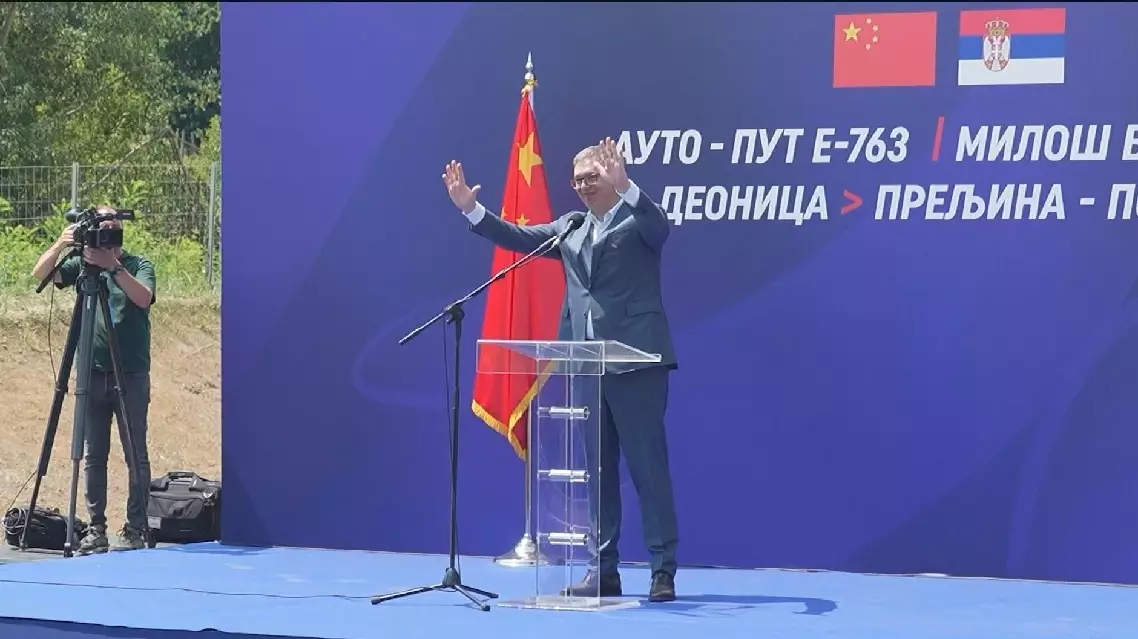
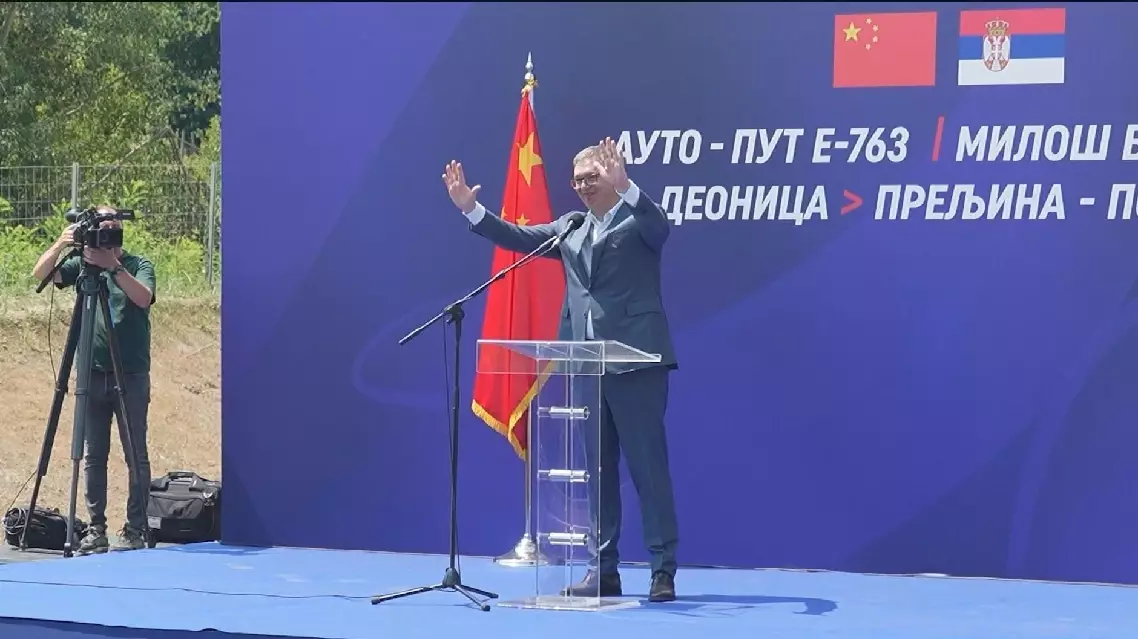
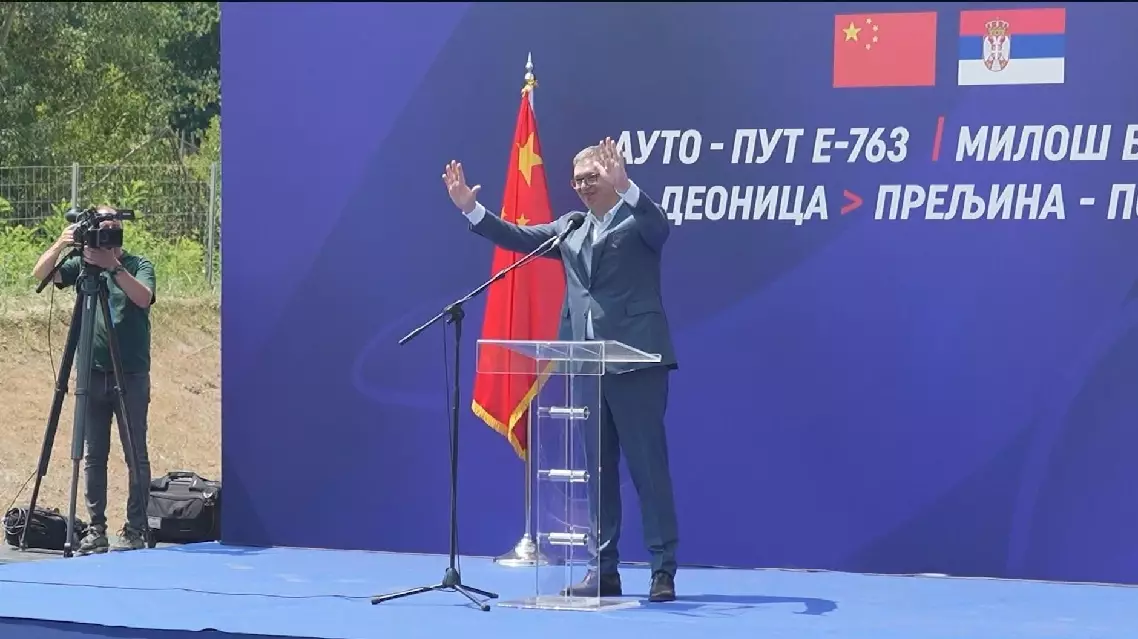
Serbian President Aleksandar Vucic on Saturday inaugurated the final segment of the E-763 "Milos Veliki" highway between Pakovrace and Pozega, completing the entire 30.9-km Preljina-Pozega section.

Strategically linking central and western Serbia, the highway is expected to eventually connect the country to Montenegro and the Adriatic Sea.

The opening ceremony took place at the entrance of the Munjino Brdo tunnel in southwestern Serbia's Lucani municipality. It was attended by Chinese Ambassador to Serbia Li Ming, senior Serbian government officials, representatives of Chinese and Serbian infrastructure companies, and hundreds of local residents.

At the event, emphasizing that the project was one of the most important infrastructure developments in Serbia, Vucic noted that with the help of their Chinese partners and combining Chinese technology with Serbian determination, they had managed to overcome all challenges to finish the project. He particularly highlighted the contribution of China Communications Construction Company (CCCC).

The newly opened 19.56-kilometer stretch includes Serbia's two longest road tunnels -- Laz (2,858 meters) and Munjino Brdo (2,861 meters) -- constructed to international standards using advanced engineering technologies. Vucic said the project reflects Serbia's transformation into a strong and modern state with safe, high-quality highways.

Traversing challenging mountainous terrain, the section required extensive tunneling and bridge-building work.

"What was once a rough, winding road riddled with potholes has now become Serbia's most modern and safest highway. This highway is not only important for local residents, but it's crucial for all people of Serbia," said Vucic.

The president also announced plans to extend the highway with two new branches from Pozega, aimed at improving transport links across western Serbia.

The E-763 corridor is a key regional transport route that strengthens connectivity between Romania, Serbia, Montenegro, and Italy. With a total investment exceeding 520 million U.S. dollars, the Preljina-Pozega segment ranks among Serbia's largest infrastructure undertakings. The first part, between Preljina and Pakovrace, was opened in 2022.

Li described the E-763 highway as a crucial transport artery linking Belgrade with the Montenegrin port of Bar, as well as with western and northern parts of Serbia.

He noted that the newly completed section not only connects northern and western Serbia, but also strengthens people-to-people ties, improves traffic flow, boosts economic development, and enhances quality of life.

Li said the successful completion of the project reflects the expertise and dedication of all involved, and stands as a testament to the ironclad friendship between China and Serbia.

Local residents also expressed gratitude to the Chinese builders involved in the project.

"Without the Chinese builders, none of this would have happened. They worked so hard. We salute them," said a local resident.

"The Chinese have come to Serbia and helped usher in a new chapter for the country. You are our brothers, even closer than family. Thank you so much," said another resident.

Passenger traffic on the new highway section will open at noon on Sunday, local time.
Serbia completes key Chinese-built highway section with country's longest tunnels
Serbia completes key Chinese-built highway section with country's longest tunnels
Serbia completes key Chinese-built highway section with country's longest tunnels

Serbia completes key Chinese-built highway section with country's longest tunnels
Serbia completes key Chinese-built highway section with country's longest tunnels
Serbia completes key Chinese-built highway section with country's longest tunnels

A military expert said that the latest live-fire exercises around Taiwan Island, code-named "Justice Mission 2025," are marked by immediate engagement in live-fire drills, a multidimensional blockade strategy, and unified control over Taiwan and surrounding waters.

In an interview with China Central Television (CCTV), Meng Xiangqing, a professor at the National Defense University of the People's Liberation Army (PLA), outlined four significant highlights of the ongoing drills, which began on Monday.

"The most striking highlight is the immediate engagement in live-fire drills from the outset. In previous exercises, while we conducted live-fire drills, there were times when such drills were absent, which was normal depending on varying exercise requirements. In this exercise, our military, including Army, Navy, Air Force and Rocket Force troops, rapidly deployed capabilities around Taiwan's northern, southeastern, and eastern areas, followed by live-fire exercises. Our artillery featured simulated strikes on moving targets at sea and on land. This is a significant highlight, showcasing our troops' readiness for battle at all times, their capability for combat at all times, and their assurance of victory, and their capability to seamlessly transition from training to combat," he said.

"The second highlight, which is also a central theme of this exercise, is the multidimensional blockade and control strategy. All branches of our military, including the Coast Guard, implemented multidimensional blockade and control measures at crucial ports and regions of Taiwan. According to the latest updates from the Eastern Theater Command this morning, these measures continue be to a vital part of today's exercises. For instance, the designation of two areas in northern Taiwan aims to execute control around the important Keelung Port, while in the southeast, the blockade targets Kaohsiung and the Zuoying maritime and airspace routes, effectively cutting off key ports, areas and military bases critical to Taiwan separatist forces, thereby establishing a 'closing the door to beat the dog' strategy," Meng said.

"The third highlight is that, from yesterday to today, the Fujian Coast Guard has engaged in law enforcement operation near Taiwan Island and surrounding waters, including attached islets, establishing unified control over these areas. This represents a new breakthrough. I particularly noticed that the areas under control have expanded, according to several pieces of information released by the Coast Guard yesterday, including a poster depicting the extent of our multidimensional control yesterday. Under one-China principle, this reaffirms China's sovereignty and security while underscoring the inviolability of our territory," he said.

"The fourth highlight is the demonstration of coordinated operations among the various units participating in the exercises. This included maritime assaults, ground strikes, air defense and anti-submarine operations, validating the strong combat capabilities of our military," the expert added.

Military expert shares key highlights of PLA live-fire drills

Military expert shares key highlights of PLA live-fire drills

Recommended Articles