Ethiopian coffee exporters are set to see greater access to the world's second-largest economy following the announcement of China's zero-tariff treatment for nearly all goods from the country.
The announcement was made in June during the China-Africa Trade and Economic Cooperation Forum in Changsha, capital of central China's Hunan Province. It marks the expansion of a zero-tariff policy rolled out last year for the 33 least developed African nations to now include 20 additional countries from the continent.
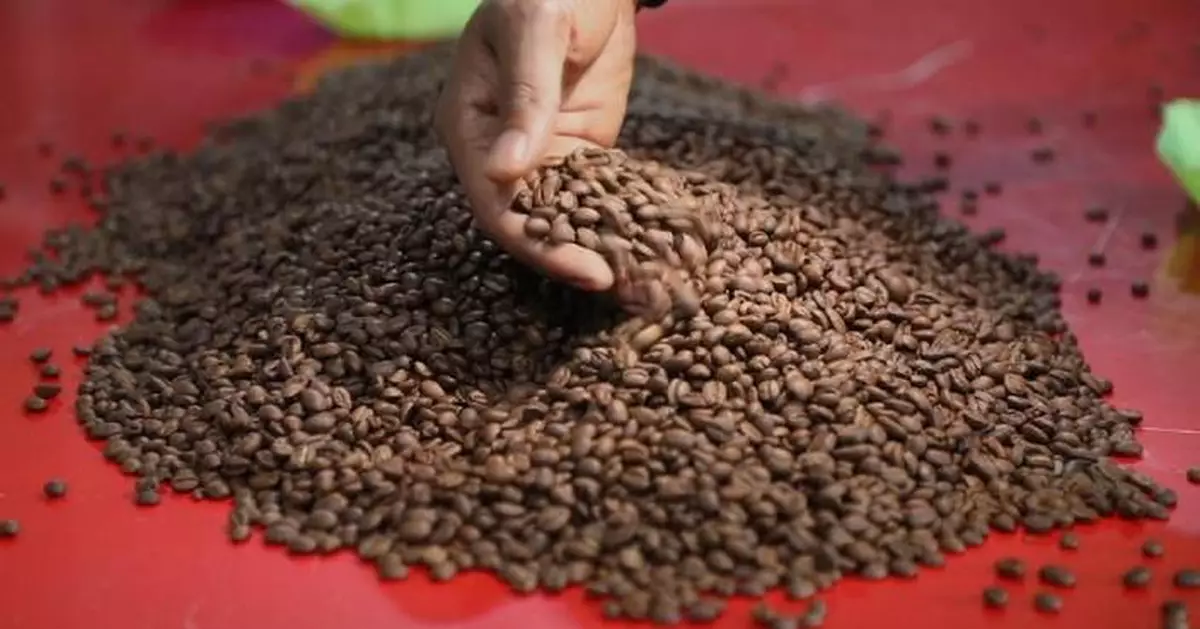
Tracon Trading is one of Ethiopia's leading coffee exporters. For years, they've been shipping specialty beans across the globe. But China's move to lift tariffs has opened an even bigger door.
"It will make our coffee very competitive in China's market. If you think about it, let's say, Brazil coffee or Colombia coffee, which are the main competitors for our coffee, their duty in China is above eight percent. So Ethiopia [tariff] is coming to zero, it will make our coffee very competitive and to sell more volume of coffee in China's market because it's affordable to our clients, it's affordable to the consumers. Due to that, Ethiopia coffee is one of the famous brands [of] coffee all over China nowadays. So it's really, really good news what the (Chinese) government has done for us," said Seid Omer, Managing Director of Tracon Trading.
For years, Ethiopian coffee has been prized globally for its unique aroma and heritage, but stiff tariffs often slowed its momentum in Asian markets.
Now, Chinese demand for Ethiopian coffee is soaring, and with Latin American coffee prices on the rise, traders in Beijing and Shanghai are turning toward Africa's original bean.
"Coffee from Brazil and Colombia has been rising in price rapidly. But we Chinese all know that Ethiopia is the origin of coffee. Combined with the strong and friendly relationship between China and Ethiopia, in the coming year, many Chinese coffee factories and traders are expected to purchase large quantities of coffee from Ethiopia," said a Chinese coffee trader named Wang Jinfeng.
Behind this open trade policy is a broader strategic alignment. As Ethiopia joins BRICS, its government sees the tariff exemption not only as economic relief but as an opening to build sustainable, long-term access to key markets like China.
"With China's high market demand, especially for agricultural products like oil crops, previous trade restrictions are gradually being lifted. Through this zero-tariff agreement, we aim to secure long-term, sustainable access to the Chinese market. Our focus will be on strengthening trade relations with China and building a reliable export pathway," said Tsadik Tasew, a trade relations expert at the Ethiopian Ministry of Trade and Regional Integration.
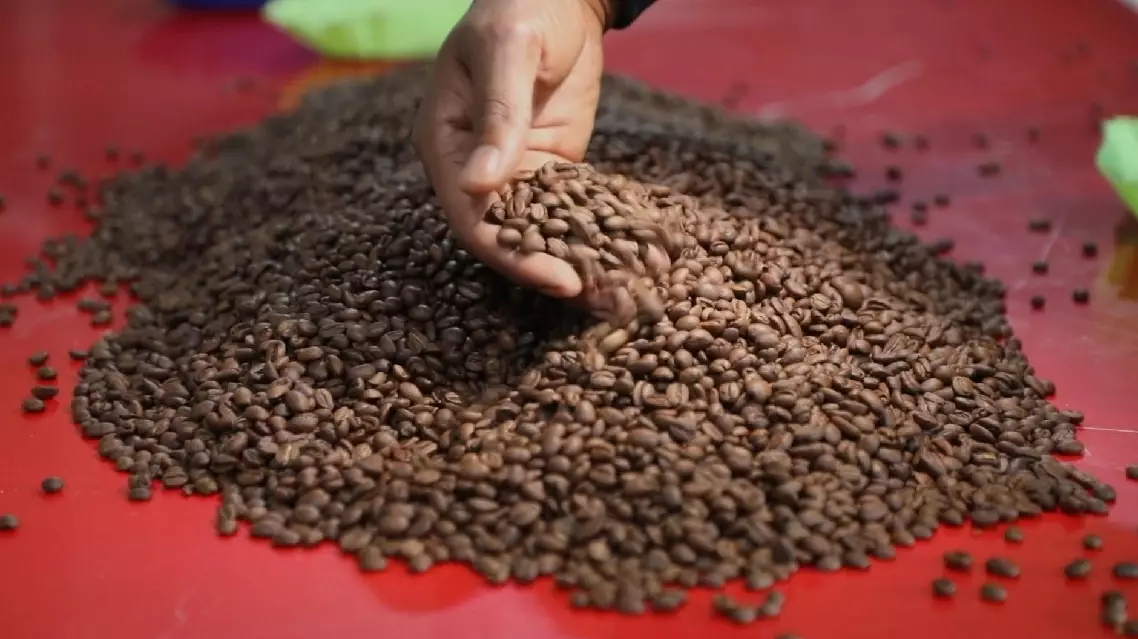
Ethiopia's coffee ready to take bigger market in China thanks to zero tariff treatment
Iranian Foreign Minister Seyed Abbas Araghchi said Thursday U.S. "economic terrorism" threatens global economy and the sovereignty of nations worldwide.
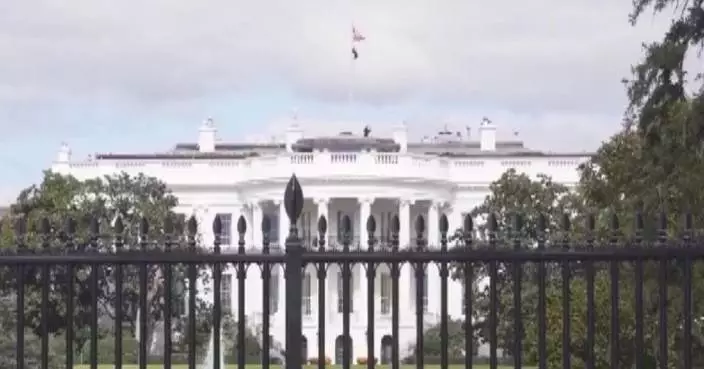
The remarks came after U.S. President Donald Trump announced on Wednesday "the most crushing economic operation ever taken" against any country providing a lifeline to Iran.
"This will be Economic Warfare and Isolation on an unprecedented scale," Trump posted on Truth Social, calling the move "an ECONOMIC D-DAY."
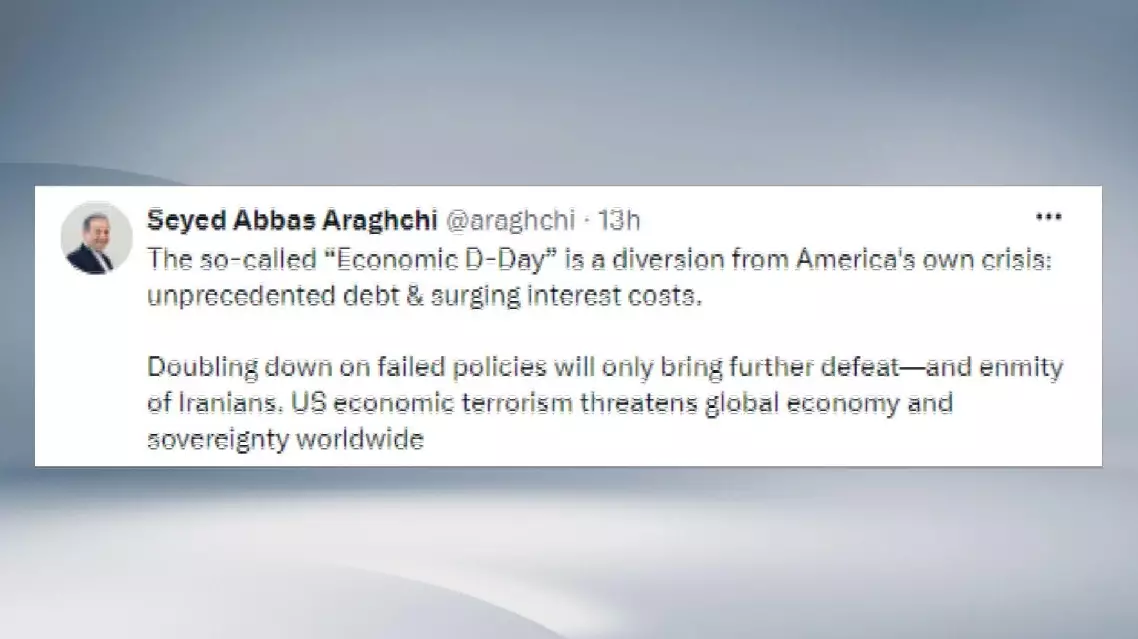
In response, Araghchi said on X that the so-called "Economic D-Day" is a diversion from Washington's own crisis: "unprecedented debt and surging interest costs."
"Doubling down on failed policies will only bring further defeat -- and enmity of Iranians. U.S. economic terrorism threatens global economy and sovereignty worldwide," he added.
On June 18, Iran and the United States signed a memorandum of understanding (MoU) on ending their war in the region on all fronts. Under the MoU, the two countries were scheduled to hold negotiations within a period of 60 days, which ended on Monday, to reach a final agreement. However, the fate of the talks remains unclear following an escalation between the two countries last month.
Washington's anti-Tehran "economic operation" comes as Iran is already under U.S. unilateral sanctions and naval blockade.
Iranian Deputy Foreign Minister for Legal and International Affairs Kazem Gharibabadi said Thursday that the United States is now further pressuring Iran under the label of an "economic war," which he views as an attempt to cover up Washington's previous failure.
Gharibabadi said in a social media post that while the United States claims Iran is "on the verge of collapse," it is reaching out to all its allies for help, Iran's official news agency IRNA reported.
To cover up its failure, the United States has to create an even bigger failure, Gharibabadi said, adding that the military war had failed to deliver results, and Washington was now calling the next defeat an "economic war."
Trump announced on social media Wednesday that the United States would launch "the most crushing economic operation ever taken against any country" against Iran.
Iran's Islamic Revolution Guard Corps (IRGC) has said the country will use more "devastating" weapons if a new war begins against it.
Following the 12-day and 40-day wars imposed against the country in June last year and late February by the United States and Israel, Iran has expanded its military capabilities, IRGC spokesperson Hossein Mohebbi said in an interview with Iran's Defa Press news agency, which was published on Thursday.
"If another war begins, our weapons will definitely be different ... in terms of the generation of missiles' warheads, as well as their precision and range," Mohebbi said.
The spokesperson emphasized that Iran has never stopped its armaments production, adding, "The destruction power of the warheads used in the IRGC's (new) missiles is far greater than the models used in the previous wars."
On Feb. 28, Israel and the United States launched joint attacks on Tehran and other Iranian cities, killing the country's then-Supreme Leader Ali Khamenei, military commanders and civilians. Iran responded with waves of missile and drone attacks targeting Israel and U.S. bases and assets in the region.
Iran's FM says U.S. "economic terrorism" threatens global economy, national sovereignty