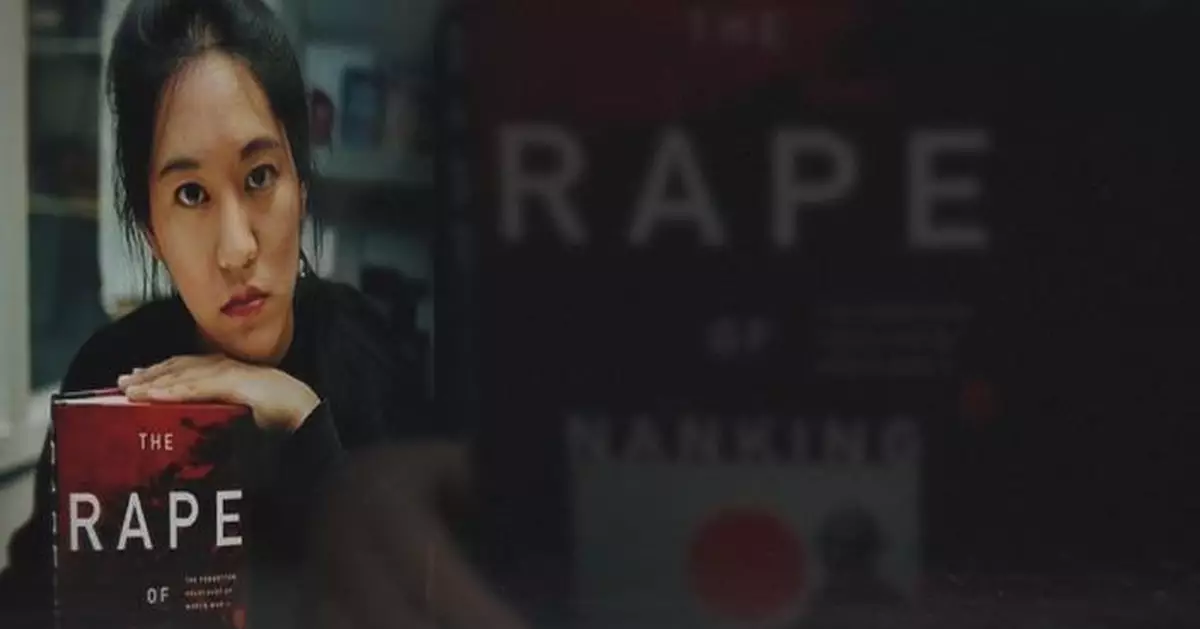
The late Chinese-American writer Iris Chang, renowned for her book "The Rape of Nanking: The Forgotten Holocaust of World War II," restored the historical truth through interviews with survivors of the Nanjing Massacre, according to her mother.
The book was published in 1997 and became China’s best-selling book of the year. Her book brought to light the horrifying atrocities committed by invading Japanese troops in the eastern Chinese city of Nanjing in 1937.
The massacre, which lasted for more than 40 days following Japanese troops' capture of Nanjing, the then Chinese capital, on Dec. 13, 1937, left more than 300,000 Chinese civilians and unarmed soldiers in Nanjing dead and 20,000 women raped.
When Chang, whose Chinese name was Zhang Chunru, discovered the truth after visiting a photo exhibition in the United States, she felt compelled to act.
"When she visited California in 1994, she came across a photo exhibition about the Nanjing Massacre in Cupertino, which brought back her memories of the stories we told her when she was a child. Then she was only half-convinced by our stories about the Nanjing Massacre, as she thought the stories were too bloody. She didn't believe it, so she asked her teachers about it. They claimed to have never heard of the massacre. Even the local library had no information. Seeing the exhibition, however, confirmed that our stories about the massacre were true. The photos deeply shocked her. Realizing Japan neither acknowledged nor taught this history -- and even denied it -- she finally discovered the truth. Discovering no English-language books adequately covered the Nanjing Massacre, she decided to write one herself. Naturally, we of course support her decision," said Zhang Yingying, Chang's mother.
In July 1995, Chang went to Nanjing to collect evidence and to interview survivors of the Nanjing Massacre.
"As a Chinese American, she was not very proficient in Chinese. So she encountered many difficulties in interviewing the survivors. But she did not process the information in a rush. After she interviewed the survivors during the day, she would figure out the survivors' voices word by word at night. She was a very rigorous writer," said Liu Jiawen, who works at the Memorial Hall of the Victims of the Nanjing Massacre by Japanese Invaders and is also the curator of a special exhibition about Chang.
"I think Chang was very gentle when facing the survivors. She cared about their physical conditions and living conditions. But when she faced the right-wing forces in Japan and some public speeches, she was always a very strong fighter who could face these attacks head-on," Liu added.
"Now her book is very famous in the United States. It was a recommended book from my school. It's about 10 years ago when I read it. You can read about history and, for some people, it really becomes real when you are there. I think the imagery, it's hard not to feel so disheartened by. It is truly -- it's so sad. It is so sad," said Stephanie, a visitor to the exhibition from the United States.
Chinese-American author illuminates Nanjing Massacre truth