MARSEILLE, France (AP) — A wildfire that reached France's second-largest city and left around 300 people injured was stabilized but not yet extinguished Wednesday, authorities said. Marseille's mayor lifted a confinement order for tens of thousands of people.
Mayor Benoit Payan said on broadcaster France-Info that the fire was in “net regression” on Wednesday morning after racing toward the historic Mediterranean port city Tuesday, forcing hundreds of people to evacuate and the population of an entire city district to barricade themselves indoors on official orders.
Click to Gallery
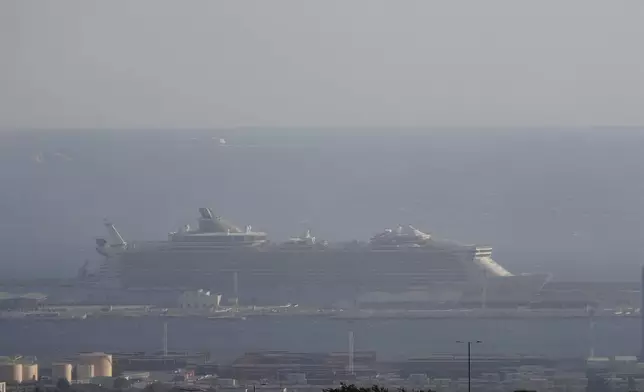
A cruise ship is seen through the smoke during a wild fire Tuesday, July 8, 2025 in the port of Marseille, southern France. (AP Photo/Lewis Joly)
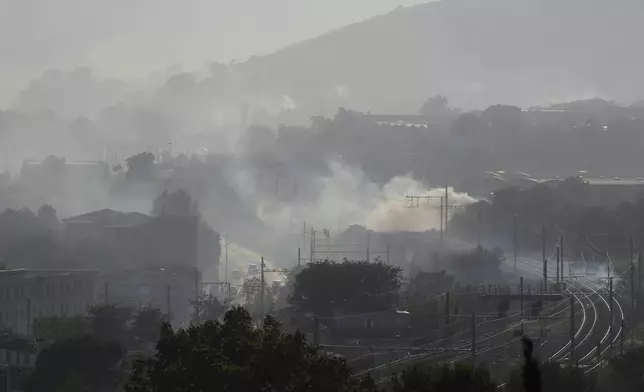
Smoke is seen by rail tracks during a wildfire Tuesday, July 8, 2025 in Marseille, southern France. (AP Photo/Lewis Joly)
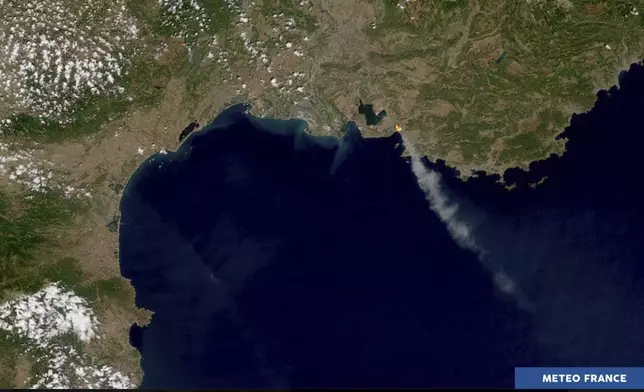
This satellite photo, provided by Meteo-France, shows smoke billowing due to wildfires near Marseille, southern France, Tuesday, July 8, 2025. (Meteo-France /NOAA via AP)
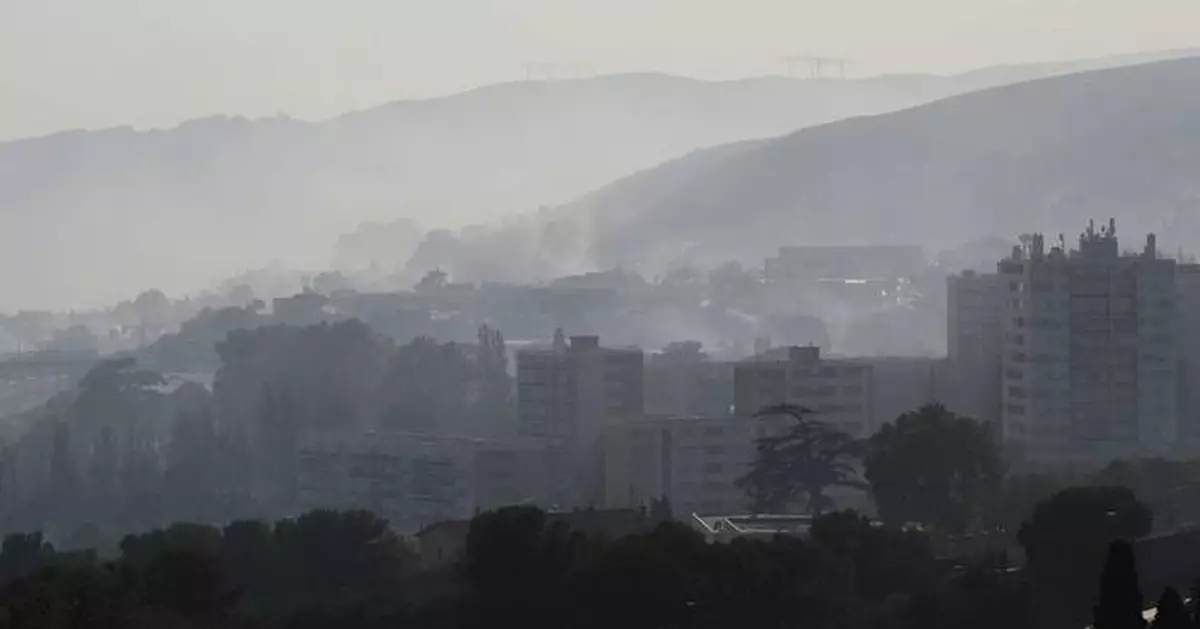
CORRECTS TO CASTELLANE, NOT CATELLANE - Smoke rises behind buildings during wildfire Tuesday, July 8, 2025 in La Castellane district of Marseille, southern France. (AP Photo/Lewis Joly)
Spurred by hot summer winds, the fire grounded all flights to and from Marseille and halted train traffic in most of the surrounding area Tuesday. Train, road and plane traffic remained complicated Wednesday.
The prefecture, or local administration, said that 303 people sought treatment for smoke inhalation or other injuries, 24 of whom were hospitalized including residents, firefighters and police.
More than 1,000 firefighters were deployed to tackle the fire, which broke out near the town of Les Pennes-Mirabeau before advancing toward Marseille. Scores of homes were damaged or destroyed as well as warehouses and vehicles, and some 720 hectares of land were burned by the blaze, the prefecture said.
The prefecture described the fire as ’’particularly virulent.″ It came on a cloudless, windy day after a lengthy heat wave around Europe left the area parched and at heightened risk for wildfires. Several have broken out in southern France in recent days, including one in the Aude region that has burned some 2,000 hectares and continued to rage Wednesday.
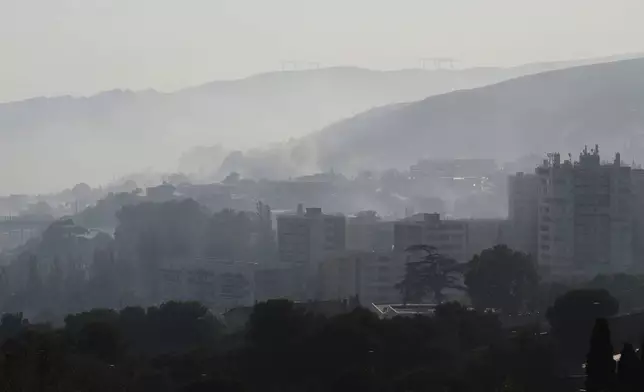
Light gray smoke gave the sky over Marseille’s old port a dusty aspect as water-dropping planes tried to extinguish the fire in the outskirts of the city, which has some 900,000 inhabitants.
’’A fire that is stabilized is a fire that is no longer evolving,″ local authorities said in post on social networks Wednesday afternoon, noting that firefighters were still working to extinguish it.
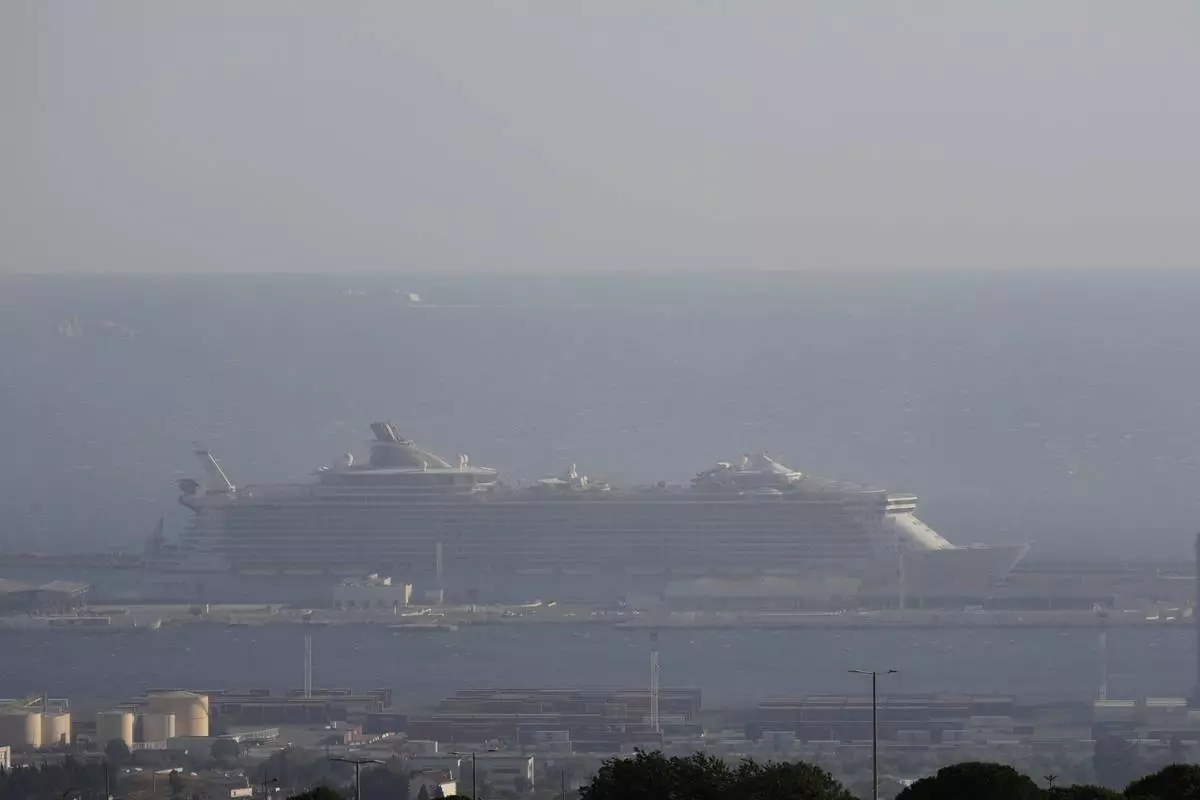
A cruise ship is seen through the smoke during a wild fire Tuesday, July 8, 2025 in the port of Marseille, southern France. (AP Photo/Lewis Joly)
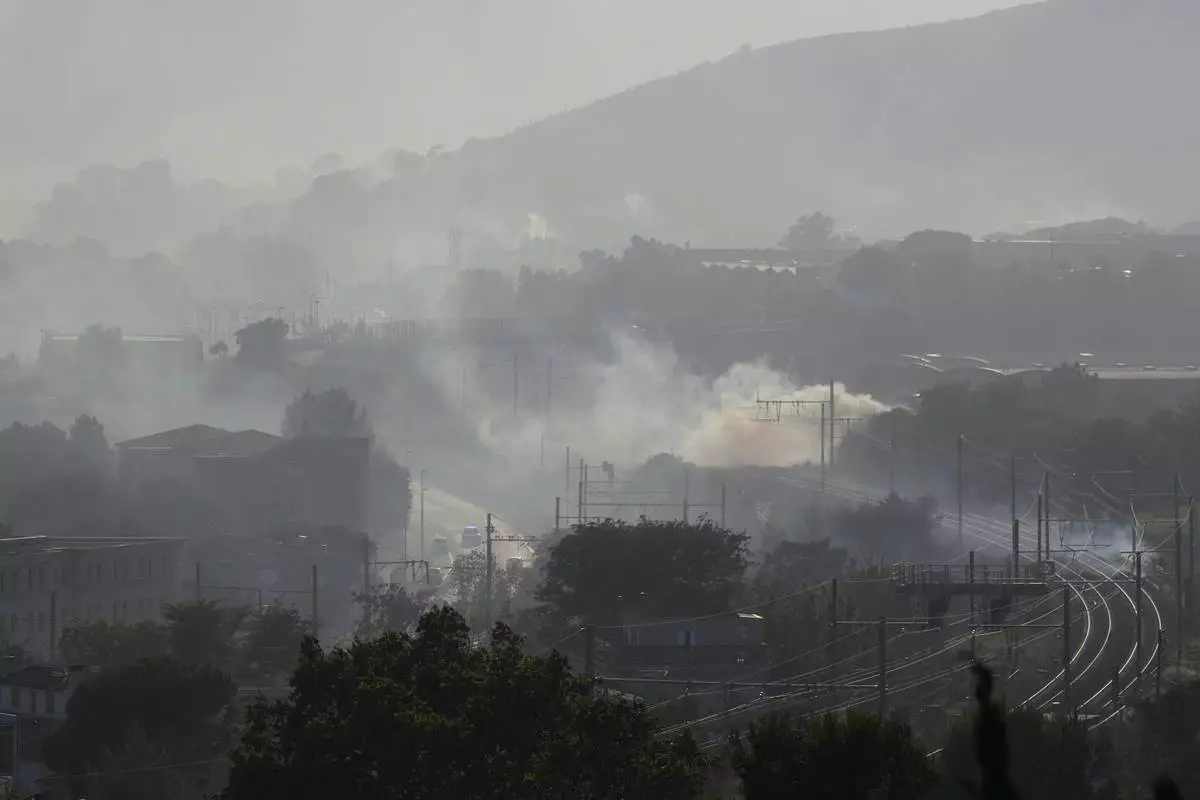
Smoke is seen by rail tracks during a wildfire Tuesday, July 8, 2025 in Marseille, southern France. (AP Photo/Lewis Joly)
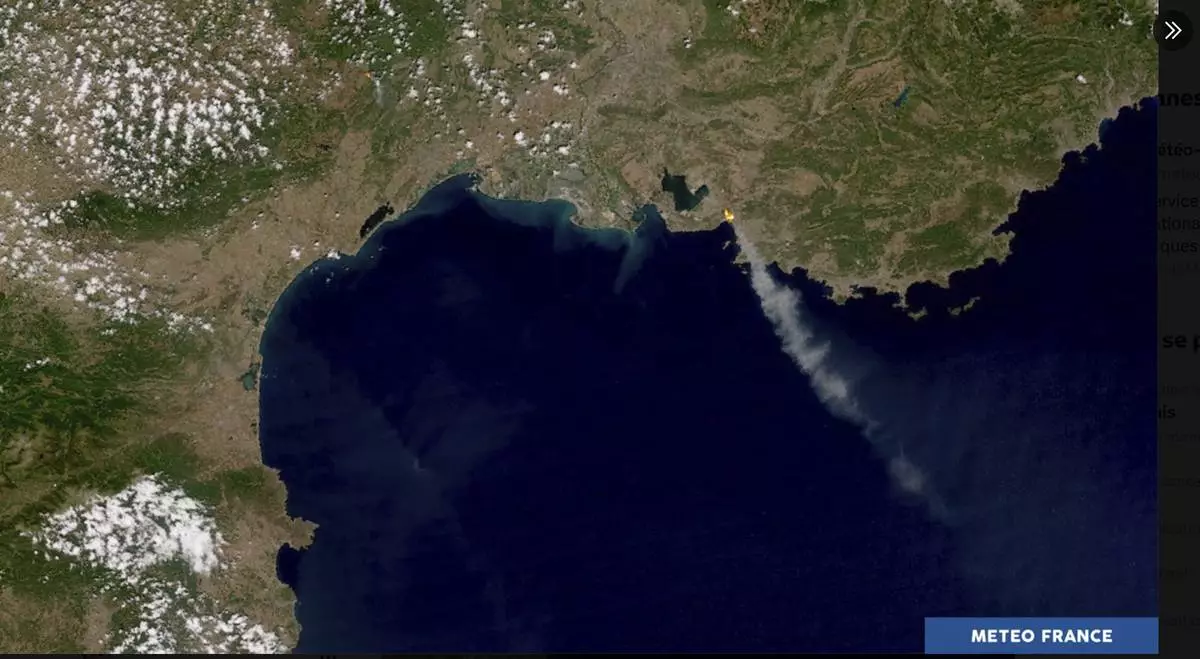
This satellite photo, provided by Meteo-France, shows smoke billowing due to wildfires near Marseille, southern France, Tuesday, July 8, 2025. (Meteo-France /NOAA via AP)
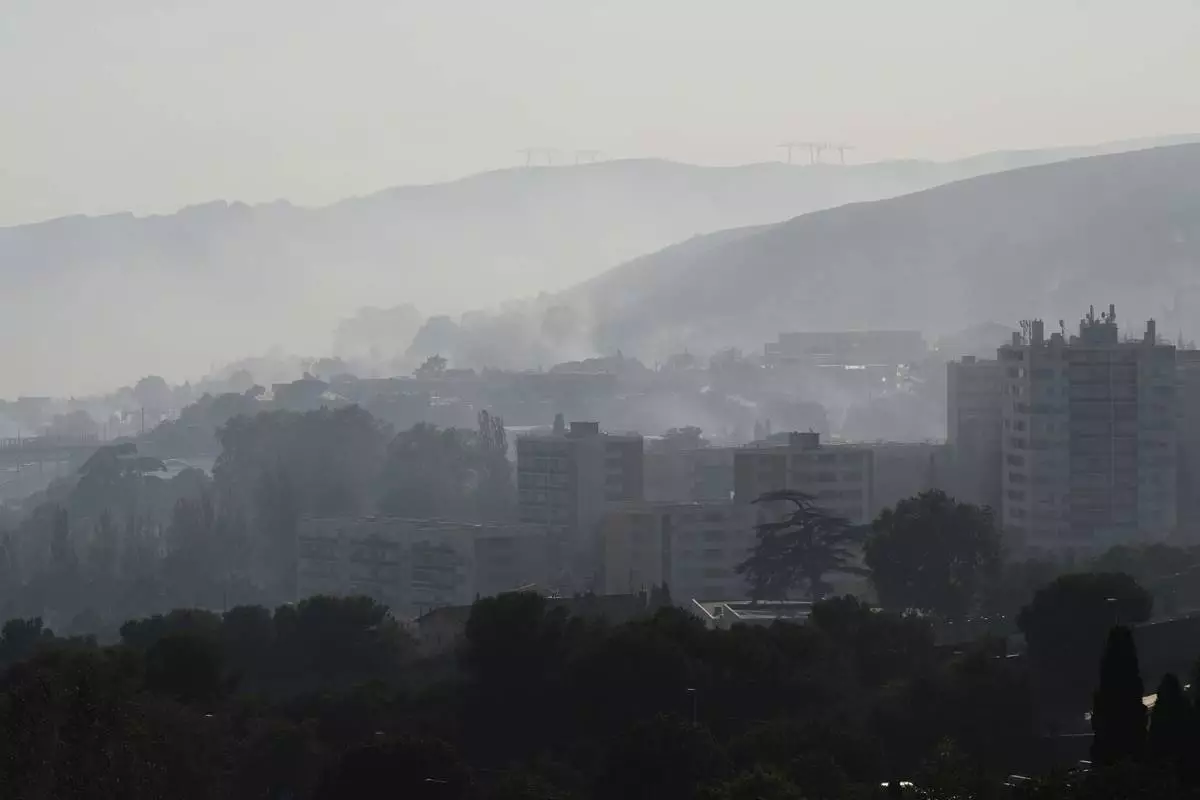
CORRECTS TO CASTELLANE, NOT CATELLANE - Smoke rises behind buildings during wildfire Tuesday, July 8, 2025 in La Castellane district of Marseille, southern France. (AP Photo/Lewis Joly)
The U.S. government admitted Wednesday that the actions of an air traffic controller and Army helicopter pilot played a role in causing the collision last January between an airliner and a Black Hawk near the nation's capital, killing 67 people.
It was the deadliest crash on American soil in more than two decades.
The official response to the first lawsuit filed by one of the victims’ families said that the government is liable in the crash partly because the air traffic controller violated procedures about when to rely on pilots to maintain visual separation that night. Plus, the filing said, the Army helicopter pilots' “failure to maintain vigilance so as to see and avoid” the airline jet makes the government liable.
But the filing suggested that others, including the pilots of the jet and the airlines, may also have played a role. The lawsuit also blamed American Airlines and its regional partner, PSA Airlines, for roles in the crash, but those airlines have filed motions to dismiss.
And the government denied that any air traffic controllers or officials at the Federal Aviation Administration or Army were negligent.
At least 28 bodies were pulled from the icy waters of the Potomac River after the helicopter collided with the American Airlines regional jet while it was landing at Ronald Reagan National Airport in northern Virginia, just across the river from Washington, D.C., officials said. The plane carried 60 passengers and four crew members, and three soldiers were aboard the helicopter.
Robert Clifford, one of the attorneys for the family of victim Casey Crafton, said the government admitted “the Army’s responsibility for the needless loss of life” and the FAA’s failure to follow air traffic control procedures while “rightfully” acknowledging others –- American Airlines and PSA Airlines -– also contributed to the deaths.
The families of the victims “remain deeply saddened and anchored in the grief caused by this tragic loss of life,” he said.
The government's lawyers said in the filing that “the United States admits that it owed a duty of care to plaintiffs, which it breached, thereby proximately causing the tragic accident.”
An American spokesman declined to comment on the filing, but in the airline's motion to dismiss, American said "plaintiffs’ proper legal recourse is not against American. It is against the United States government ... The Court should therefore dismiss American from this lawsuit.” The airline said that since the crash it has focused on supporting the families of the victims.
The National Transportation Safety Board will release its report on the cause of the crash early next year, but investigators have already highlighted a number of factors that contributed, including the helicopter flying 78 feet higher (24 meters) than the 200-foot (61-meter) limit on a route that allowed only scant separation between planes landing on Reagan's secondary runway and helicopters passing below. Plus, the NTSB said, the FAA failed to recognize the dangers around the busy airport even after 85 near misses in the three years before the crash.
The government admitted in its filing that the United States “was on notice of certain near-miss events between its Army-operated Black Hawk helicopters and aircraft traffic transiting in and around helicopter routes 1 and 4” around Washington.
Before the collision, the controller twice asked the helicopter pilots whether they had the jet in sight, and the pilots said they did and asked for visual separation approval so they could use their own eyes to maintain distance. FAA officials acknowledged at the NTSB’s investigative hearings that the controllers at Reagan had become overly reliant on the use of visual separation. That’s a practice the agency has since ended.
Witnesses told the NTSB that they have serious questions about how well the helicopter crew could spot the plane while wearing night vision goggles and whether the pilots were even looking in the right spot.
Investigators have said the helicopter pilots might not have realized how high they were because the barometric altimeter they were relying on was reading 80 to 100 feet (24 to 30 meters) lower than the altitude registered by the flight data recorder.
The crash victims included a group of elite young figure skaters, their parents and coaches who had just attended a competition in Wichita, Kansas, and four union steamfitters from the Washington area.
.

FILE - Attorney Bob Clifford speaks during a news conference regarding the Jan. 29, 2025, mid-air collision between American Eagle flight 5342 and a U.S. Army Black Hawk Helicopter, at the National Press Club, Sept. 24, 2025, in Washington. (AP Photo/Rod Lamkey, Jr., File)
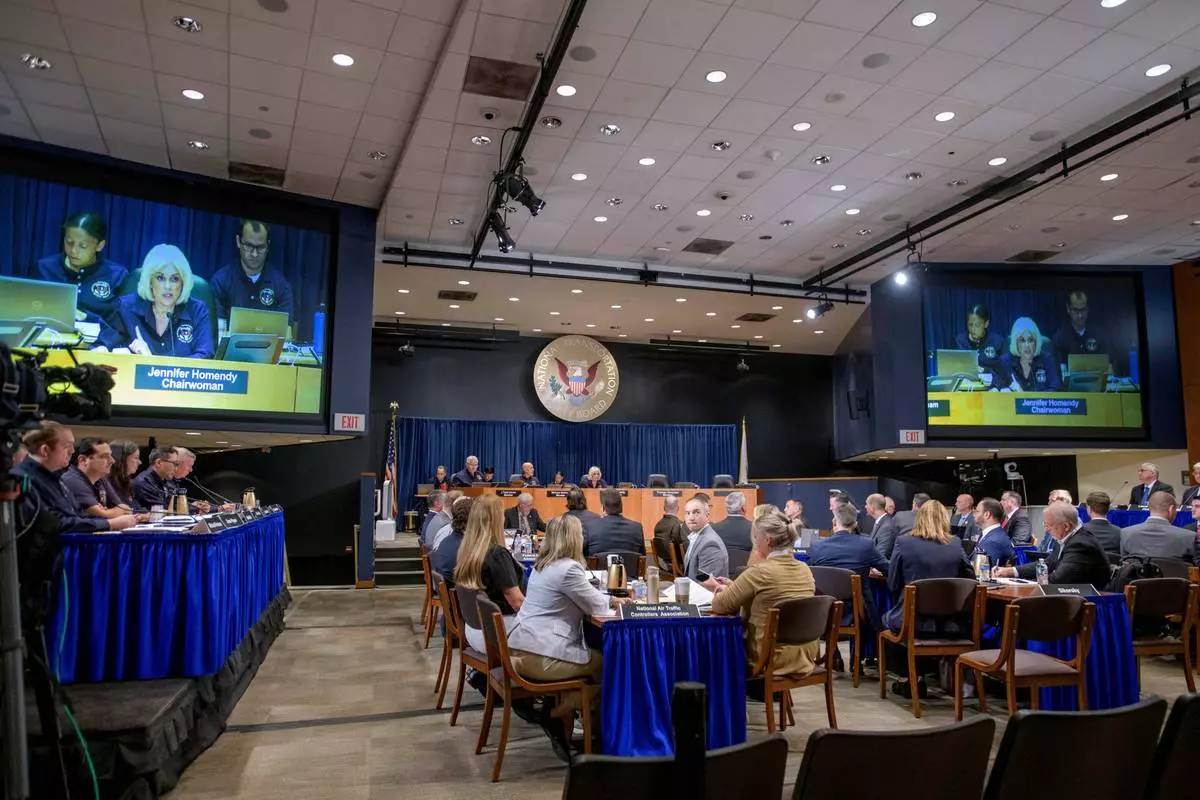
FILE - National Transportation Safety Board Chairwoman Jennifer Homendy speaks during the NTSB fact-finding hearing on the DCA midair collision accident, at the National Transportation and Safety Board boardroom, July 30, 2025, in Washington. (AP Photo/Rod Lamkey, Jr., File)